Top videos

Oliver Stone has not left the assassination of John F. Kennedy behind. One of his best films, 1991’s “JFK” became a major event in the analysis of the death of one of the most popular world leaders in history, adding fuel to the fires already burning around The Warren Commission Report that, bluntly, a lot of people don’t believe. Three decades after that narrative feature that's as much about obsession as it is assassination, Stone has returned with a documentary that basically reiterates many of the details of the case with a heavy focus on what’s been learned via declassified reports, books by witnesses, and other analysis in the last 30 years.
Playing in theaters today and on Showtime's streaming app, and airing on Showtime on the anniversary of the assassination on November 22rd, “JFK Revisited: Through the Looking Glass” is an exhaustive and sometimes exhausting documentary, a film that can sometimes feel like it’s so packed with information and detail that Stone has lost the path through this dense forest of conspiracy theories.
At its best, it reminds one how tightly Stone can assemble a film like this one as he makes a convincing case that some things about the assassination of JFK don’t add up. At its worst, it can be like a drunken conversation, moving wildly from point to point in a way that gives you no time to stop and ask some pertinent questions. One thing is true in both cases—it’s never boring. And our true crime-obsessed era seems primed to revisit one of the most famous crimes of all time.
Stone was smart to basically divide “JFK Revisited” into two hour-long chapters—it leads one to wonder if he wasn’t considering making this into a docuseries instead of a film. The first half, narrated by Stone and Whoopi Goldberg, focuses heavily on the evidence of that day in 1963—ballistics, exit wounds, reports from people who saw Kennedy’s body. Was the bullet entry wound in the back, as the Warren Commission asserted, or in the front, as several witnesses claimed after seeing the body?
Why are the memories of the state of Kennedy's brain different than the photographs? And how does one possibly explain the retrieved bullet that reportedly went through Kennedy and hit John Connally looking practically pristine when it was recovered? Stone’s approach is to layer inconsistency on inconsistency. Some don’t add up to much—a witness is not going to be able to remember exactly how long it took her to descend the book depository stairs on a good day much less a historic one—but there is an unsettling sense that, at the very least, mistakes were made in the investigation. (Just the chain of custody of some of the evidence was clearly messed up.)
The second half of “JFK Revisited,” narrated by Donald Sutherland (who had a pivotal role in “JFK”), isn’t as strong because it feels more rushed and leans into some of the wilder ideas with less focus. In this half, Stone sets out to provide motives for an assassination and cover-up, basically pointing the finger at the CIA. He flies down the rabbit hole of history, compiling stories about Castro, Vietnam, and the Military-Industrial Complex in a manner that sometimes feels haphazard, and then he ends far too abruptly, suggesting that conspiracy and assassination destroys the fabric of society without really digging into what that means in 2021.
Stone can get a little too confident for his own good—“Conspiracy theories are now conspiracy facts,” he says in one such moment—but when one has devoted as much of his life to the death of Kennedy as the Oscar-winning director has then hesitancy isn’t an option. I was concerned going into the film that Stone’s obsession would lead to a documentary that only he could understand—conspiracy theorists have a habit of foregoing accessibility to those who haven’t read dozens of books on the subject—but I was reminded how expertly Stone can orchestrate a film like this one, even as the second half was spinning theory after theory. Most of all, I was left thinking that this isn’t so much Stone's final word on the subject as it is a hope to restart the conversation.
RESOURCE: https://www.rogerebert.com/rev....iews/jfk-revisited-t

Rodney Ascher's wry and provocative Room 237 fuses fact and fiction through interviews with cultists and scholars, creating a kaleidoscopic deconstruction of Kubrick's still-controversial classic The Shining.
What is "Room 237" really about? On the surface, Rodney Ascher's documentary exhibits the theories a few obsessive fans have put forward to reveal what they think Stanley Kubrick's "The Shining" is really about. According to them, Kubrick stashed "hidden meanings" in the vacancies, hallways, ballrooms, bathrooms, walk-in storage areas and hedge-mazes of the Overlook Hotel in his 1980 horror film.
Trouble is, the "Room 237" conspirators — er, contributors — don't seem to realize that those meanings are either not hidden, not meanings or not remotely supported by the secret evidence they think they've uncovered. "Room 237" isn't film criticism, it isn't coherent analysis, but listening to fanatics go on and on about their fixations can be kind of fun. For a while, at least.
Five off-screen narrators pitch various interpretations of "The Shining," accompanied by stock footage, illustrative recreations and clips from Kubrick's filmography. For Bill Blakemore, the subject of Kubrick's "Masterpiece of Modern Horror" is the genocidal slaughter of Native Americans by white European settlers; for Geoffrey Cocks, it's about the Holocaust in Nazi-dominated Europe; for Juli Kearns, it's an exploration of an impossible, Escher-like maze called the Overlook Hotel.
John Fell Ryan has discovered some interesting juxtapositions that occur if you project two prints of "The Shining" on top of each other at the same time, with one running forward and the other running backward. Jay Weidner, who characterizes himself as a "conspiracy hunter," insists "The Shining" is Kubrick's belated, life-risking confession/apology for faking the television footage of the Apollo 11 moon landing on the sets for "2001: A Space Odyssey" at the behest of the U.S. government.
"Room 237" could easily be (mis)taken for a comedic satire of fervent movie-geekery if the theories it presents — some more cockeyed than others — hadn't appeared on the Internet years ago. That's where Ascher found the inspirations for his documentary.
It starts off with a visual trick: In a digitally modified clip from Kubrick's final film, "Eyes Wide Shut" (1999), Dr. Bill Harford (Tom Cruise) stands outside the Sonata Cafe in Greenwich Village, which is actually a set at Pinewood Studios near London (which is the source of a little in-joke: The location is identified as "EUROPE"). But instead of inspecting a display featuring his old friend, pianist Nick Nightingale, he's looking at promotional materials for "The Shining." You could say that "Room 237" is based on a similar illusion, getting us to see things in a movie that either aren't there or aren't what they appear to be.
Let's rewind: Back in 2010, Ascher made a notably similar short film called "The S From Hell," a parodic inquiry into the off-the-wall proposition that the Screen Gems logo, which appeared after episodes of popular TV series such as "Bewitched" and "The Partridge Family" from 1965 to 1974, was so frightening, it traumatized a generation of unsuspecting children. Maybe you don't recall being terrified by this or any other logo? Me, neither. But we could've repressed it.
The goofy premise of "The S from Hell" is no less unlikely than some of the blarney put forward in "Room 237." The movie doesn't judge the relative merits of its subjects' opinions, probably because that might be construed as favoritism. That's understandable. But as a result, the movie lacks examples of sound critical thinking. All we have here are do-it-yourself interactive fan games.
In "The Shining," the genial hotel manager (played by Barry Nelson) mentions that the Overlook was built on an ancient Indian burial ground — a familiar horror-movie trope. Sure enough, the hotel decor is inspired by Native American motifs, as we can plainly see. But what, then, is the movie supposedly saying about the genocide of Native Americans? That their vengeful spirits might come back and kill people at a hotel? As the saying goes, that's not subtext, it's text.
The proponents of the Holocaust and staged-moon-landing scenarios undermine their own hypotheses by backing into them. They start with extraneous information (Kubrick wanted to make a Holocaust movie but could never figure out how; nobody was in a better position than Kubrick to fake moon footage in 1969). Then they scour the nooks and crannies of "The Shining" for anything that could be construed to support, or at least reference, their chosen preconceptions.
So is the recurrence of the number 42 (on Danny's jersey; in the movie "Summer of '42" on TV) an allusion to 1942, the year of the Wannsee Conference when Nazi officials met to plan the Final Solution? What about that German typewriter? And is Danny's hand-knit Apollo 11 sweater linked to the ultra-scary Room 237 because the average distance between the Earth and the moon is 237,000 miles? Even though it isn't 237,000 miles, but let's not allow facts and a few extra zeroes to spoil a juicy conspiracy plot. What if the first word in the famous typewritten "All work and no play makes Jack a dull boy" manuscript could be read as "A11" — as in "Apollo 11"?! What if, indeed.
The double-projection trick isn't a theory at all, just a nifty experiment in randomness somewhat less remarkable than the discovery that Pink Floyd's "Dark Side of the Moon" produces some striking juxtapositions when played along with "The Wizard of Oz." Likewise, it's sorta neat that the Outlook does not have an intelligible floor plan, as it fits with the movie's "lost in the maze" motif. But there's nothing unusual about it. That's the way movie sets are usually built — in disconnected bits and pieces, not as integral units.
Kubrick's longtime assistant and collaborator Leon Vitali (who played Lord Bullingdon in "Barry Lyndon") recently said that "Room 237" had him "falling about laughing most of the time" because he knows these ideas are "absolute balderdash." The Adler typewriter, for example, belonged to Kubrick himself, and that particular model was once as commonplace as late-model iPhones.
Any movie is the product of forethought, accident and improvisation. In the end, once the film is released, the filmmakers' intentions don't really matter anymore because it belongs to the audience. At that point, if something's there, it's there. "Room 237," regrettably, isn't all there.

Searching for Sugar Man is a 2012 Swedish–British–Finnish documentary film about a South African cultural phenomenon, directed and written by Malik Bendjelloul, which details the efforts in the late 1990s of two Cape Town fans, Stephen "Sugar" Segerman and Craig Bartholomew Strydom, to find out whether the rumoured death of American musician Sixto Rodriguez was true and, if not, to discover what had become of him.
Rodriguez's music, which had never achieved success in the United States, had become very popular in South Africa although little was known about him in that country.
On 10 February 2013, the film won the BAFTA Award for Best Documentary at the 66th British Academy Film Awards in London, and two weeks later it won the Academy Award for Best Documentary Feature at the 85th Academy Awards in Hollywood. Production:
Initially using Super 8 film to record stylised shots for the film, director Malik Bendjelloul ran out of money for more film to record the final few shots. After three years of cutting-room work the main financial backers of the film threatened to withdraw funding to finish it. He resorted to filming the remaining stylised shots on his smartphone using an iPhone app called 8mm Vintage Camera.
Release
Searching for Sugar Man was the opening film at the Sundance Film Festival in January 2012, where it won the Special Jury Prize and the Audience Award for best international documentary. It was released in the United Kingdom on 26 July 2012, and had a limited release (New York and Los Angeles) in the United States the following day.
Searching for Sugar Man performed well during its theatrical release, earning $3,696,196 at the US box office (47th of all US docs on Box Office Mojo)

Doctor Roger Lier is a polarizing figure in the world of UFO enthusiasts and the new mystery/documentary, Patient Seventeen, seeks to provide more information about Lier and his beliefs.
Roger Leir claims to be a leading surgeon that removes nanotechnology from human beings that were placed in them by aliens from another world and Patient Seventeen looks to verify the authenticity of Leir's claims through the thought provoking documentary. The real-life Patient Seventeen is a man from Southern California in his forties and he claims that he was visited by aliens when he was a child. Leir recently put him under the knife to remove a metallic object from his calf, which he believes was put there by extraterrestrial beings. The official synopsis for the documentary reads.
"Meet a surgeon who claims to remove highly advanced implants, nanotechnology microchips imbedded by aliens, non-humans monitoring our earth. Discover the world of abductions, scalar wave transmissions, and a program to study or manipulate the human race. Armed with a patient, a scalpel, black lights and a stud finder; we seek to verify the authenticity of this alleged Off-World Implant Technology."
Filmmaker Jeremy Kenyon Locker Corbell aims to find the truth in Leir's work and interviews him and Patient Seventeen at length throughout the course of the unsettling movie that is sure to raise a few eyebrows. Patient Seventeen is the latest movie in a series that Corbell calls his "investigative film series" through his Extraordinary Beliefs productions.
A podiatrist by training, from the late 1980s Roger Leir became increasingly involved with his local branch of the Mutual UFO Network (MUFON). Attending one of its conferences in 1995, he was presented with several foot X-rays from a woman who believed that she had been abducted by aliens. Despite Leir's skepticism, the scans did indicate that there was something in her big toe, and to satisfy his curiosity he offered to operate on her, free of charge.
On August 19th, 1995 he extracted two very small foreign objects from the patient, each one metallic in appearance. A second patient underwent surgery that same day for an object about the size of a watermelon seed, between his thumb and index finger.
By the late 1990s, Leir's findings had established him as a prominent, though controversial, spokesperson for the alien abduction and UFO communities. The Aliens and the Scalpel, detailing his experiences with "implant" surgery, was published in 1999, followed by Casebook: Alien Implants. He made appearances in various television documentaries, including the History Channel's UFO Hunters, and attended conferences in more than 40 countries. In 2003, he travelled to Varginha, Brazil, to conduct his own research into the alleged crash of an alien craft there seven years previously, an event dubbed "the Brazilian Roswell." The investigation formed the basis of his final book, UFO Crash in Brazil.

It can even be funny - unfortunately, it sounds like a very grim joke - especially if someone who got their misfortune injection is listening.
Billionaire Bill Gates said the omicron variant moved faster than COVID-19 vaccines, creating a high level of natural immunity.
While speaking at the Munich Security Conference, Gates, who has helped to fund the development and distribution of COVID-19 vaccines, was asked for his opinion on where the pandemic stands.
“Sadly, the virus itself, particularly, the variant called omicron, is a type of vaccine, that is, it creates both B-cell and T-cell immunity, and it’s done a better job getting out to the world population than we have with vaccines,” the Microsoft co-founder said. “That means the chance of severe disease, which is mainly associated with being elderly and having obesity or diabetes, those risks are now dramatically reduced because of that infection, exposure.”
Gates, who is not a medical doctor, noted that vaccination efforts moved too slowly for his liking.
“It’s sad we didn’t do a great job on therapeutics, only two years in, and we have a good therapeutic,” Gates said. “Vaccines have took us two years to be in oversupply. Today, there are more vaccines than there is demand for vaccines.”

Dave Grohl takes another step toward Renaissance-man status with “Sound City,” his likable debut as a documentary director.
Mr. Grohl has already had considerable success as a drummer, guitarist and vocalist in groups like Nirvana and Foo Fighters and has shown a boundless curiosity with various side projects. (Yes, that was him in a cameo in the 2011 movie “The Muppets.”) Directing “Sound City,” about the recording studio of that name, now defunct, in the San Fernando Valley of California, he shows a decent grasp of how to pace a documentary and how to push nostalgia buttons, avoiding the marsh of smarminess most — though not quite all — of the time.
But “Sound City” is not merely a those-were-the-days eulogy for the studio, which closed in 2011. It’s really three films. The first third is a pleasant, somewhat glossy-feeling look back at the albums that were made there and the stars who made them, with anecdotes from Fleetwood Mac, Rick Springfield and many others that will be candy to several generations’ worth of rock fans. The studio, an unimposing-looking place to say the least, had a knack for turning out a big album just when it seemed on the brink of failure: Fleetwood Mac’s self-titled 1975 album and “Rumours” two years later, Mr. Springfield’s “Working Class Dog” in 1981, Nirvana’s seminal “Nevermind” in 1991.
The film then becomes a chronicle of the slow death of the studio, an analog operation whose heart was a Neve soundboard that recorded on tape, which by the 1980s had begun to be supplanted by digital technology. Mr. Grohl has become something of a musical preservationist, and he and others lament the loss of the human element of the analog era and the emergence of music created and manipulated on computers. It’s not an antidigital argument — Trent Reznor of Nine Inch Nails makes a case for digital technology as a creative tool — so much as an antiblandness argument.
And then Mr. Grohl turns his attention to making some new music. He bought the Neve board when Sound City closed and installed it in his own studio, and we see him and others putting it to use.
The big draw is Paul McCartney, who is shown recording a song called “Cut Me Some Slack,” seemingly making it up on the spot. It’s a little incongruous to hear Mr. Grohl advocate for a quick-and-dirty approach — “Do it,” he says. “Make it simple. Make it fast. Don’t overthink it.” — while working with Mr. McCartney, whose résumé includes some beloved Beatles songs that were painstakingly assembled track by track. But hey, don’t overthink it.
Mr. Grohl has put a lot of affection into this film, and it shows. One of the nicest touches may go unnoticed. Over the ending credits a catchy song called “Sound City” plays. The vocals are credited to Doug Deep and Paula Salvatore — Ms. Salvatore having been the manager of the studio in the 1980s. Earlier in the film she had spoken wistfully about having dreamed of her own musical career.
REVIEW RESOURCE: https://www.nytimes.com/2013/0....1/31/movies/sound-ci

This exciting documentary will build on the successes of 'State of Mind: The Psychology of Control' - Free Mind Films' follow up to the multiple award winning documentary exposé 'A Noble Lie: Oklahoma City 1995' .
Free Mind Films has decided to work with international best-selling author - James Perloff to tell the virtually unknown story of the Council On Foreign Relations (CFR) and how that organization is the key to understanding how our world has become what we today.
Mr. Perloff literally wrote the book on the CFRs existence than 20 years ago and now he's back with a new book titled Truth is a Lonely Warrior which he is used as the research platform to write the script for 'ShadowRing'. ShadowRing will entertainingly unfold the events that led to the creation of the CFR, the important players who were instrumental in the council's success within American politics, and how the CFR wields unimaginable influence over the geo-political agenda of the United States and consequently the events that have shaped our world for the last 100 years.
Expert witnesses and testimony will be weaved together with a historical visual landscape designed to present the inherent complexity of this subject in a way that is palatable for someone who has no prior knowledge of the CFR or what power it has over our lives. Source documents will give credibility to these incredible and life shattering revelations.
By providing the audience with the facts and avoiding opinions or conjecture, ShadowRing will break down the dis-information and unlock the secrets of the CFR providing fertile ground to encourage a new public debate on the ethical and moral implications of allowing such a small group of individuals to command such power and influence over our lives.
REVIEW RESOURCE: https://www.komparify.com/ente....rtainment/movie/shad
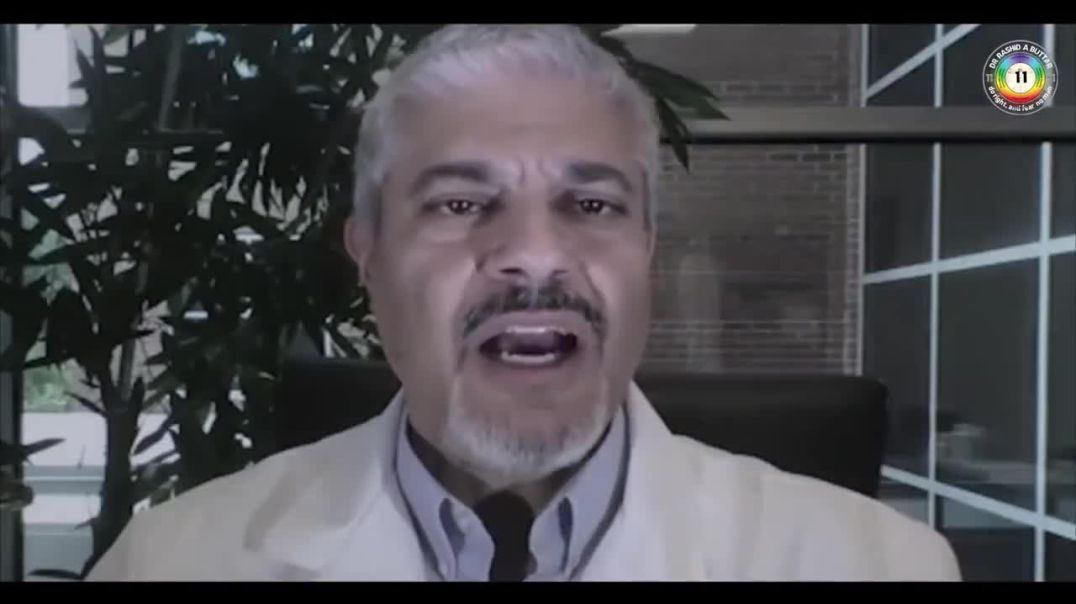
The truth about vaccines perfectily explained by Dr Rashid A Buttar in less than 10 minutes.
He wasn't anti-vax; he was anti-stupidity.
With knowledge, you cannot be mislead.
Originally uploaded to YouTube in May 2020.

“Project Nim,” a new documentary by James Marsh, is a probing, unsettling study of primate behavior, focusing on the complex dynamics of power, sex and group bonding in a species whose startling capacity for selfishness and aggression is offset by occasional displays of intelligence and compassion.
His name — a human imposition, like everything else in this creature’s remarkable, heartbreaking life — is Nim Chimpsky. In the 1970s he enjoyed (or endured) a season of fame as a research subject. Shortly after his birth at an primate behavior, Nim was taken from his mother’s side and delivered to New York, where he became part of an experiment, led by a Columbia professor, Herbert Terrace, to determine whether an ape could be taught human language.
It is a bit curious that Mr. Marsh’s film has nothing to say about the roots of Nim’s name, a jab at the influential linguist Noam Chomsky, whose theories about the innateness and uniqueness of language to humans were the implicit target of Dr. Terrace’s work. His project was an effort to discern if a chimpanzee could learn sign language and if that learning could proceed beyond the mimicry of specific gestures into the creation of grammatical sentences. If Nim could be raised more or less as a human child, and could master human communication, that would challenge the Chomskyan idea of language as a special, hard-wired trait fundamentally separating us from other animals. (Koko the gorilla, another celebrated signing ape born around the same time as Nim, also tested this hypothesis.)
“Project Nim” glances briefly at the scientific controversy that shaped Nim’s fate, but Mr. Marsh is less interested in comparatively dry matters of linguistics or neurobiology than in a humid, messy domain of identity and emotion that has, in the past, been the terrain of psychoanalysis. And of literature: Nim, thrown from one home to another, vulnerable to cruelty and neglect and dependent on the kindness of strangers, resembles the titular hero of a Dickens novel, an orphan buffeted by circumstances whose biography is also a fable of individual virtue and social injustice.
A helpless innocent compared with his protectors and tormentors, Nim bounces like a long-armed David Copperfield from one unnatural home to another — a Manhattan brownstone, an estate in the Bronx, a medical testing center upstate — living through periods of pastoral bliss and gothic horror. His tale is Dickensian, but also Kafkaesque, since he is at the mercy of powerful forces beyond his ken or control.
Red Peter, the learned ape in Kafka’s devastating “Report to an Academy,” dreams, above all else, of a “way out,” and to watch footage of the young Nim at play and in confinement is to infer that he must have known a similar longing. Unlike the Kafka character, however, this educated primate never acquired enough words to tell us his story, and so “Project Nim” relies on human interlocutors, some of whom cared about Nim a great deal, almost all of whom wind up telling us more about themselves.
They are a remarkable collection, often at odds and sometimes in bed with one another, with Nim as their pawn, rival or surrogate child as well as the blank slate on which they inscribe their fantasies and intellectual conceits. Dr. Terrace, speaking with precision and detachment in present-day interviews, is either resigned to being the film’s designated villain or oblivious to being set up for that role. His former colleagues, some of them also former lovers, don’t have much good to say, and the ’70s footage, showing an academic dandy with a comb-over, a BMW and a Burt Reynolds mustache, is hardly flattering.
For the first few years of Nim’s life, Dr. Terrace was the master of his fate, though not always a significant presence in the chimp’s day-to-day routine. After leaving Oklahoma, Nim was installed in the home of Stephanie LaFarge, where he became part of a household that included seven children, at least one dog and Ms. LaFarge’s husband, a poet and “rich hippie” who appears to have been Nim’s romantic rival.
Ms. LaFarge, an open and genial interview subject, drops a few casual bombshells testifying to what the psychobabble of our own time might call boundary issues. “It was the ’70s,” her now grown-up daughter Jenny Lee says, but even then, and even on the Upper West Side, it might have been a bit unusual for a woman to breastfeed a baby chimpanzee.
After a while, Nim was transferred to an estate in Riverdale, cared for and tutored by young people — most of them women — who come before Mr. Marsh’s camera in middle age to recall the pleasures and dangers of working with their spirited simian charge. It is hard not to be charmed by the affection that passes between these humans and the chimp, or to appreciate what seems to be a reciprocated effort at communication. But at the same time it is difficult to avoid a certain queasiness at the sight of a wild creature forcibly and irrevocably alienated from his nature — dressed in clothes, tethered and caged, smoking a joint out in the woods with his pals. You laugh, sometimes, to force the lump out of your throat.
There is no doubt that Nim was exploited, and also no doubt that he was loved. Mr. Marsh, by allowing those closest to Nim plenty of room to explain themselves, examines the moral complexity of this story without didacticism. He allows the viewer, alternately appalled, touched and fascinated, to be snagged on some of its ethical thorns. He also engages in a bit of manipulation, using sleight-of-hand re-enactments and Dickon Hinchliffe’s nerve-rackingly melodramatic score to sensationalize a drama that hardly requires it.
Mr. Marsh, whose last documentary was the lovely, Oscar-winning “Man on Wire,” is a patient listener and an able storyteller, but the subject of “Project Nim” is so rich and strange that it might have benefited from the hand of a wilder, bolder filmmaker. An obsessive like Errol Morris or Werner Herzog might have pushed beyond pathos and curiosity, deeper into the literal no man’s land that lies between us and our estranged animal relations. But it is also possible that our language and our science do not equip us to understand the truth about Nim — or the truth about us that he may have discovered through years of rigorous, involuntary research.
“Project Nim” is rated PG-13 (Parents strongly cautioned). Strong language, drug use, sexual references and depictions of animal suffering.
REVIEW RESOURCE: https://www.nytimes.com/2011/0....7/08/movies/project-

Federal Reserve, Bank Of England, NWO, Rockefeller, Goldman Sachs, Grat Reset, Baksters, Banking Cartels, Depopulation, Mind Control, Genocide
Though Bill Gates, Warren Buffet, and Carlos Slim are supposedly "the richest men in the world," their combined wealth of $180 billion would qualify them as mere servants for the House of Rothschild.
Rothschild owns the Bank of England and the London gold bullion exchange where Rothschild sets the daily international market price for gold. Rothschild owns the gold and diamond mines of S. Africa and major extractive industries such as Rio Tinto and British Petroleum.
Rothschild financed England and France in the Napoleonic wars. Rothschild knew who won the Battle of Waterloo a day before the King of England and British investors. Rothschild caused a selling panic in the London bond "consul" market intimating to investors that England lost to Napoleon. Bonds issued by the Bank of England to finance the war crashed and sold for pennies on the dollar.
Rothschild sold to drive the price down and then bought all the bonds back at rock bottom prices. The next day when word of England's victory over Napoleon hit the market, bond prices soared. Rothschild made 40 times his investment in one day on insider knowledge. Rothschild also made 30 percent interest on the gold he loaned to the kings to fight each other.
The king issued bonds as a debt obligation to Rothschild to be paid by future taxes on British citizens. The ensuing debt was so much that Rothschild was able to take over ownership of the Bank of England, which subsequently financed the mercenary German Hessians to fight the American revolutionaries in colonial America because Washington issued its own money called greenbacks. It wasn't about tea.
Rothschild owns major European Central Banks: England, Switzerland, France, Germany, and Belgium – central bank for the Euro. Rothschild partnered with the original seven American families who became the regional depository banks in the US Federal Reserve. The Bush family and J.P. Morgan are the political and financial dynasties evolved from their original ownership of the Federal Reserve. Political propaganda confuses American citizens into thinking the U.S. government owns and prints its own money. Not so. Bush, J.P. Morgan and five other banking family institutions own the Federal Reserve in partnership with Rothschild.
Rothschild owns Reuters News Service, which bought the Associated Press. Rothschild owns or virtually controls every major media outlet in America, Europe and Israel. Rothschild controls the message of who really owns $500 trillion of hidden untaxed wealth equal to half of annual world GDP.
https://www.tabletmag.com/sect....ions/arts-letters/ar
https://paulsalmons.associates..../blog/conspiracy-the

Anthony Summers, the author of the book Goddess (1985), explains he began researching Marilyn Monroe after he learned that the Los Angeles County District Attorney was reopening the case of her death. Summers subsequently spent three years collecting 650 tape-recorded interviews with people who either knew Monroe in her lifetime or had knowledge concerning her death. The audio of the interviews is original, but actors perform lip-synced reenactments.
As Monroe began acting, she had affairs with multiple powerful men who helped advance her career. Fellow actor Jane Russell notes Monroe had a particularly strong work ethic. However, Monroe suffered from poor mental health stemming from a troubled childhood.
Monroe's third husband, writer Arthur Miller, was affiliated with communism. Both he and Monroe were observed by the FBI, and the couple was known to socialize with communist American ex-pats while abroad. As their marriage deteriorated, Monroe abused prescription drugs and she became increasingly difficult to work with. In 1961, she and Miller divorced.
In 1954, Arthur James, who knew Monroe from Charles Chaplin Jr. in the late 1940s, saw Kennedy with Monroe, walking on the shore, near the Malibu pier, and drinking at the hangout, Malibu Cottage. Monroe met the Kennedy family in the early 1950s, through Hollywood connections that likely evolved from the founding role of Joseph P. Kennedy Sr. at RKO Pictures during the 1920s. In the early 1960s, actor Peter Lawford and his wife, Patricia Kennedy Lawford, had a beach house in Malibu, California, where they hosted many social gatherings. Monroe had affairs with both President John F. Kennedy and United States Attorney General Robert F. Kennedy, often meeting them at the beach house.
Summers pieces together that Monroe was in a risky political position, as the Kennedy brothers would discuss with her current events including nuclear weapons testing. This was in 1962, during the height of the Cold War. Because of Monroe's leftist politics, the FBI worried she could pass along or make public anything the Kennedys told her. As a result, the Kennedy brothers eventually attempted to cut off all contact with her.
Monroe died on August 4, 1962, and it was ruled a probable suicide. The official timeline reports Monroe's housekeeper, Eunice Murray, checked on Monroe around 3am and found the bedroom door locked. Murray called Monroe's psychiatrist, Dr. Ralph Greenson, who arrived around 3:30am, broke in through a window, and discovered Monroe was dead. Paramedics and police arrived at 4:25am. Her death was ruled a probable suicide due to a drug overdose.
Summers discounts this timeline, as multiple interview subjects corroborate a rough sequence of events, although there are discrepancies. In this version, Monroe's medical emergency began earlier that night. Her public relations manager, Arthur Jacobs, arrived at Monroe's residence as early as 11pm. An ambulance was called, and Dr. Greenson rode with a comatose Monroe as she was transported to a hospital. She either died at the hospital or on the way. Her body was returned to her house, where she was placed in her bed and "discovered" in the early morning hours. Private investigator Fred Otash and surveillance expert Reed Wilson claim they were hired by Peter Lawford to clear Monroe's home of any evidence that connected her to the Kennedy family before police and reporters arrived.
Despite Summers having accumulated information that was previously unknown about Monroe's death, he doesn't believe she was murdered. Rather, he maintains Monroe died by suicide or an accidental drug overdose. He suspects any type of cover-up was due to her connection with the Kennedy brothers. In 1982, the Los Angeles district attorney ended its review of the case and upheld the original recorded cause of death.

Here's a fair analysis that clearly explains the complete uselessness of Pfizer's Covid-19 vaccines - even more - it is clear from this analysis that Pfizer's suspect substances harm far more than the real viral threat.
Pfizer's own 6 month report data on its COVID-19 inoculation shows that greater illness and death in the inoculation arm than the placebo arm. Plus, poor trial design, missing data, underpowered studies, passive surveillance and more.
For the PDF of this presentation visit:
https://www.canadiancovidcarea....lliance.org/media-re
The official document below contain a list nearly 2,200 medical conditions and clinical ailments caused by Pfizer substances.
Attachment - PDF icon Pfizer Adverse Events Report <=
RESOURCE: https://www.datascienceassn.or....g/content/pfizer-adv

The original Zeitgeist was actually not a “film”, but a performance piece, which consisted of a vaudevillian style multi-media event using recorded music, live instruments and video. The event was given over a 6-night period in New York City and then, without any interest to professionally release or produce the work, was “tossed” up on the Internet arbitrarily. The work was never designed as a film or even a documentary in a traditional sense - it was designed as a creative, provoking, emotionally driven expression, full of artistic extremity and heavily stylized gestures. However, once online, an unexpected flood of interest began to generate. Within 6 months over 50 Million views were recorded on Google Video counters. Suddenly “Zeitgeist” the event, became “Zeitgeist: The Movie”.
Zeitgeist: The Movie (2007) is a treatment on Mythology and Belief in society today, presenting uncommon perspectives of common cultural issues.
Chapter 1, “The Greatest Story Ever Told”, presents historical data relating to the astronomical/astrological origins of the Judeo-Christian theology (which can be extended to Islam as well), along with the understanding that these respective stories, beliefs & traditions are really an adaptation-extension of prior Pagan beliefs.
Chapter 2, “All the World’s a Stage”, presents a controversial view of the events of Sept. 11th 2001. It describes how the event has been transformed into a sacred, near religious act and to challenge the orthodox view, regardless of the quality of the contrary arguments, is considered blasphemy and rejected.
Chapter 3, “Don’t Mind the Men Behind The Curtain “, presents a shotgun tour through the subjects of Central Banking, War Pretexts, Banking Panics, the Military Industrial Complex, Media Culture and ultimately the mental neurosis and deadly addiction known as “Power.” The central theme is how society is often misled when it comes to certain pivotal historical events, what those events serve in function, along with how the overall social conditioning patterns we see today function to create values and perspectives which support and perpetuate the static, established order/power structure, as opposed to fluid social change and productive evolution for the betterment of the society as a whole.

Dr. David Martin: Who “they” are? - The names of the people who are killing Humanity
So called Viruses are by products of diseased tissues. (Exosomes)
They are cellular debris.
We have been tricked into thinking they are the cause of disease,
so we 'combat' them by injecting ourselves with synthetic chemicals,
which ironically leads to more diseased tissue and more so called viruses(exosomes)
Original channel : Algora Blog
https://edcdeveloper.wordpress.....com/2021/11/11/dr-d
Related posts: https://t.me/robinmg/11281, https://t.me/robinmg/11277
1. Al Gore, Vice-President of the United States (1993-2001), Chairman and Co-Founder, Generation Investment Management LLP
2. Andre Hoffmann, Vice- Chairman, Roche
3. Angel Gurria, QECD
4. Bill Gates, Bill & Melinda Gates Foundation
5. Christine Lagarde, President European Central Bank
6. Chrystia Freeland, Deputy Prime Minister & Minister of Finance, Office of the Deputy Prime minister of Canada
7. David M. Rubenstein, Co-Founder and Co-Executive Chairman, Carlyle Group
8. Dustin Moskovitz, Open Philanthropy
9. Fabiola Gianotti, Director-General, European Organisation for Nuclear Research (CERN)
10. Feike Sybesma, Chairman of the Supervisory Board, Royal Philips
11. H.M. Queen Rania Al Abdullah of the Hashemite Kingdom of Jordan, Queen of the Hashemite Kingdom of Jordan, Office of H.M Queen Rania Al Abdullah
12. Heizo Takenaka, Professor Emeritus, Keio University
13. Herman Gref, Chief Executive Officer and Chairman of the Board, Sberbank
14. Jim Hagemann Snabe,Chairman Siemens
15. Julie Sweet , Chief Executive Officer, Accenture
16. Klaus Schwab, Founder and Executive Chairman, World Economic Forum
17. Kristalina Georgeva, Managing Director, International Monetary Fund (IMF)
18. L. Rafael Reif, President, Massachusetts Institute of Technology
19. Larry Page, Google
20. Laurence D Fink, Chair and Chief Executive Officer, BlackRock
21. Luis Alberto Moreno, Member of the Board of Trustees World Economic Forum
22. Marc Benioff, Chair and Chief Executive Officer, Salesforce
23. Mark Carney, United Nations Special Envoy for Climate Action and Finance, United Nations
24. Mark Schneider, Chief Executive Officer, Nestle
25. Mark Zuckerberg, Facebook
26. Mukesh D Ambani, Chairman and Managing Director of Reliance Industries
27. Orit Gadiesh, Chairman, Bain & Company
28. Patrice Motsepe, Founder and Executive Chairman, African Rainbow Minerals
29. Paula Ingabire, Minister of Information Technology and Innovation, Ministry of Information Communication Technology and Innovation of Rwanda
30. Peter Brabeck-Latmathe, Vice Chairman of the Board of Trustees, World Economic Forum
31. Peter Maurer, President, International Committee of the Red Cross (ICRC)
32. Robert Mercer, Renaissance Fund
33. Tharman Shanmugaratnam, Senior Minister, Government of Singapore
34. Thomas Buberi, Chief Executive Officer, AXA
35. Yo-Yo Ma, Cellist
36. Zhu Min, Chairman, National Institute of Financial Research
==
Dr. David Martin spills the beans
Exposing organisations and names of psychopaths behind this genocide attempt.
https://www.algora.com/Algora_....blog/2021/11/20/dr-d
Dr. David Martin Exposes the Names and Faces of the People Who Are Killing Humanity
Red Pill Expo, November 19, 2021
If you thought the last Dr David Martin talk was exciting, this one, which he gave at the Red Pill Expo is positively electrifying.
He says that this is “final” speech but that we will be hearing from him, only it will be a new version: No more Mr Nice Guy. We get to see a bit of that in this presentation. He is angry.
David has put the names and faces of all of the major players in the theater of the COVID War onto one slide, which he says is important, because “We energize the forces of darkness when we anonymize them and when we see their faces on a screen, we realize that they’re merely individuals that have lost the social contract with humanity.”
The purpose of this talk is to de-mystify the “they” of the COVID War.
THE COVID PRIVATEERS
“How many of you are familiar with the company, Anser? I love having this moment. Do you know they are the single largest contractor in the entire COVID terrorism campaign?…
“The companies on the right, that you think are the ones running this show [Pfizer, Moderna, Johnson & Johnson, Merck Ridgeback, Gilead Sciences], are in fact a front [for the companies on the left, Anser, Fors-Marsh, Palantir, Publicis Sapient].
“And you know what a front organization is? They’re the ones that are supposed to take the flack and take the heat. The ones on the left are the ones that actually got the money. Operation Warp Speed went to Anser.
“You didn’t know that, because you were told by the media that it went to Pfizer, Moderna, Johnson & Johnson and all that kind of stuff. That’s not true. The prime contract of Operation Warp Speed went through Anser, a company none of you had heard of!
“And you didn’t hear about them because the contract was signed by ATI, a company based in South Carolina, a company whose history has been government defense contracts for the purposes of propaganda! I wish I made that up. The prime contractor selected to run Operation Warp Speed was a propaganda expert for the US Department of Defense…
“Anser is the way for the Federal Government never to be liable for the criminal conspiracy they know they ran. They are now one of the top ten Federal Contractors in history, below Lockheed-Martin, Raytheon and all those guys.
“Those names you know. You don’t know Anser, the single company that, by COVID rose – the highest-ranked rise in the history of federal contracting; the highest single-year rise, ever was Anser – and none of you know who they are!…
“Anser Corporation, they’re the ones running Operation Warp Speed and they’ve been set up to shield these manufacturers from ever taking the financial liability for their willful misconduct. And one day, everybody’s gonna go, ‘Let’s sue Pfizer! Let’s go sue everybody else! And the only problem is when we go to sue them, they say, ‘Hey! It wasn’t us!’ And they’re right and all of us were asleep. And I’m talking to a woke crowd, here and all of you were asleep.
“Don’t tell me you’re awake if you’re still sleeping, because if you didn’t know who Anser is, you’re still asleep!
IT GETS WORSE…
“It gets worse. Fors-Marsh, anybody know Fors-Marsh?…They’re the branding agency that branded COVID. They’re the ones who make sure we find hospitals that are overrun with people. They’re the ones who find kids that died of COVID right before the FDA needs to vote on giving kids injections. They’re the ones that go around the world, making sure every message is always the same: ‘We will not return to normal until we have a vaccine.’ Thank you, Justin Trudeau! Where’d you get the script? From Fors-Marsh! And how many of you knew that? None of ya!
“How about Palantir? Hey, that’s a weird one, isn’t it? Peter Thiel, who has successfully run a company that has lost $200 million plus, every year for about seven or eight years, goes public in the middle of COVID. Isn’t timing interesting? Isn’t it fascinating that a company that’s done nothing but lose billions of dollars goes public in the middle of the worst economic cycle we’ve had? Isn’t that funny? And did you actually go back and read their public offering? Hah! Funny! I know you didn’t, because there really wasn’t one, that’s why you didn’t read it!
“Because they went public in this very bizarre, backdoor way of actually selling founder’s stock into the market, so we got personally-enriched – personally-enriched – using the public market as the laundering facility. Isn’t that brilliant?
“But let’s look at what they did for our COVID scandal. They actually came up with a thing called Gotham Data Tracking…you know what that does? That’s making sure that every time you turn your phone on, when you get off the plane, when you cross the state line, it gives you a little tag that goes, ‘Hey, do you want a COVID alert in your neighborhood?’ You know why? Because you are being monitored. Your phone is being monitored. Your transactions are being monitored, your credit cards are being monitored, your health behavior’s being monitored, your vaccine status is being monitored and it’s all done under the contract run by Gotham Data Sciences, the company that went public during COVID – and none of you knew about this.
“And you’ve been to Red Pills! And you still haven’t taken the Red Pill! And by the way, I’m not even to the good slide, yet. So be depressed! ‘Cause it’s getting worse!
“Publicis Sapient, the Health and Human Services’ IT contract. Have you ever wondered how the data never seems to add up? Somebody always has allegedly the same reportable data?
“Publicis Sapient has the Health and Human Services’ IT contract to consolidate all of the data, so guess what happens? Everybody has the same number of COVID cases to report, when somebody from the media calls and says, ‘Hey, how many cases do we have?’ ‘Oh, 40,000’. ‘Oh, round number, 40,000’…
“When, in the course of human history has a round number involving the word ‘thousand’ ever happened? There’s never been a 10,000 heart day, there’s never been a round number day – until you actually control the Department of Health and Human Services’ entire IT platform and not one of you knows that that’s a single contract, run by Publicis Sapient…
“You’ve been focused on the right hand side the whole time and the left hand side is doing the dirty work.
THE COVID PIRATES
“Now, why do I call them ‘privateers’? How many are familiar with the difference between a pirate and a privateer? Pirates go rape and marauding and stealing and…a privateer is the same thing, that has permission to do it by a government that’s gone corrupt. That’s what these are (points to the slide of COVID contractors). They’re the privateers. But hey, since we have privateers, it feels only appropriate that if we have a world of privateers, we should also…have a world of pirates. And here’s our pirates.”
New slide shows the universities who’ve been involved in the COVID War: UNC Chapel Hill, Vanderbilt, Emory, Johns Hopkins, University of California System, MIT, NYU Langone, DZIF, Imperial College, IHME, Erasmus Medical Center.
“Pirates. UNC Chapel Hill, I talked about that. That’s the guy who actually made the weapon, Ralph Baric. Since 1999, $100 million to weaponize the particles of coronavirus. Over $100 million. You’ve heard about $3.7 million going to Wuhan – ohhhh – 3.7 million, that feels like a bad number.
“And how ’bout $28 billion of that coming from DARPA for their bioweapons initiative? Anybody heard of $28 billion that went through Anthony Fauci at NIAID? Anyone hear about the $20 billion that went directly to UNC Chapel Hill, that weaponized spike protein?
“You haven’t heard about that, you haven’t heard about that because we’ve been talking about $3.7 million going to Wuhan. Stop being distracted by the cover story!…Because the distraction is where the interesting thing is.
“UNC Chapel Hill, Vanderbilt, Emory, Johns Hopkins and University of California: those are the pirates that have made the most money on federally-granted, disclosed money going into the university sector. I’m calling them ‘pirates’ for a very good reason. They justify all of this in the name of science and education…
“I don’t even care whether these people pretend to hide behind the ‘It’s an academic research project’ to try and get out of the bioweapons definition. The bioweapons definition says that if you enable a foreign entity to build something known to harm humanity, you have already created a felony, you are going to jail for the rest of your life and you are liable for $100 million penalty.
“So guess what? Welcome to Hell, all five of these universities! Because they’re all felons! All of ’em!
“And how ’bout the right hand side? MIT, New York University Langone – hey, by the way, Langone? Where did that name come from? Ken Langone? Anybody? Oh! I’m not supposed to say that name out loud, Ken Langone, except I just did, didn’t I? Ken Langone…
“They’re actually putting their name on the letterhead and you don’t know who to look for! You’re still being told, ‘Oh, it’s the Rothschilds and it’s the Rockefellers!
“No, it’s not! It’s the guy who put his name on the facility! How many of you know who Ken Langone is? Guess what? Look it up! Because that’s a pretty big thing that you should be aware of and unfortunately, you’re not aware of it, for a very good reason because he hid it in plain site, on the name of the medical center. New York University Langone, like that’s a really hard thing to find.
“DZIF Charité…you’ve heard of Dr Christian Drosten, the Crazy-in-Chief in Germany who’s kind of Anthony Fauci and Ralph Baric’s evil stepchild, Imperial College, the criminal conspirators who came up with the fear porn of how many people were going to die, IHME, the University of Washington program, but the one I want to bring your attention to is the one at the bottom, Erasmus Medical Center.
“Bart Haagmans…In 2002,Bart Haagmans was an interesting dude, because he actually figured out a way to build a bunch of patents around the vaccines for the coronavirus. Mysteriously, the European Union in 2012 started giving him massive, massive grants to run a thing called Zapi.
“And Zapi was the zoonotic disease transmission laboratory for the European Union. And Bart seemed to always get the money. Now, this is fascinating because Bart was also the one who decided to patent MERS. The Middle Eastern Respiratory Syndrome, remember that one? The one that never really happened but kinda happened in 2012-13? Bart was the one that patented MERS…
“Erasmus Medical Center, actually, in their public statement, when they were confronted with the lie, where they said that they hadn’t filed a patent on the actual genome – kinda like the CDC said in 2007 – when confronted with the lie, they said in public – and you can’t make this sh!t up, People, it’s so funny! They said, ‘Well, what we said was not entirely false in all jurisdictions in the world.’
THE COVID ORCHESTRA
“But this, Ladies and Gentlemen is the slide you wanted to see. This is actually the names and faces of the people who are, in fact killing humanity. And that’s ALL of them. Now, here’s the bad news: There’s a lot of people on that slide, aren’t there? Here’s the better news…I’ll actually give you all this slide, because why not? Lets make sure that we don’t ever forget the names and the faces of the people who decided to kill us…”
Here is a list of all the people in that slide:
· Mukesh D. Ambani, Chairman, Reliance Industries
· Peter Brabeck-Letmathe, Vice-Chairman of the Board of Trustees WEF
· Mark Carney, UN Special Envoy for Climate Action
· Chrystia Freeland, Deputy Prime Minister and Minister of Finance, Canada
· Kristalina Georgieva, Managing Director of the IMF
· Queen Rania of Jordan
· David M. Rubenstein, Co-Founder and Executive Chairman, Carlyle Group
· Klaus Schwab, Founder and Executive Chairman, WEF
· Marc Benioff, Chair and Chief Executive Officer, Salesforce
· Thomas Buberl, CEO, AXA
· Laurence Fink, Chairman & CEO, BlackRock
· Orit Gadiesh, Chairman, Bain & Company
· Fabiola Gianotti, Director General, CERN
· L. Rafael Reif, President of MIT
· Mark Schneider, CEO, Nestlé
· Tharman Shanmugaratnam, Defense Minister, Singapore
· Robert Mercer, Renaissance Fund
· Larry Page, Google
· Al Gore, Environmentalist
· Angel Gurría, Secretary General OECD
· Paula Ingabire, Minister of Information Communication Technology, Rwanda
· Yo-Yo Ma, Cellist
· Luis Alberto Moreno, WEF
· Jim Hagemann Snabe, Chairman of Siemens and of Maersk
· Feike Sijbesma, Philco
· Zhu Min, Deputy Managing Director, IMF
· Mark Zuckerberg, Facebook/Meta
· Bill Gates, Microsoft
· Herman Gref, CEO, Sberbank
· André Hoffmann, Vice-Chairman Hoffman-La Roche
· Christine Lagarde, President, European Central Bank
· Peter Maurer, President, Red Cross
· Patrice Motsepe, Chairman, African Rainbow Minerals
· Julie Sweet, CEO, Accenture
· Heizo Takenaka, Economist
· Dustin Moskovitz, Open Philanthropy
David continues, “I want you to have some looks on there. Some are kind of interesting, like cellist Yo-Yo Ma. Did you hear me say that? Cellist, Yo-Yo Ma.
“How about the head of the Wellcome Trust? Not surprising, there, right? How about Princess Rania of Jordan? Ooh, that’s weird.
“How about the woman who happens to be sitting at the helm of the leadership of the government of Canada but conveniently out of sight but running 100% of the money for the government of Canada.
“How about all of these interesting people like, Jim Hagemann Snabe, how about Zhu Min, Chairman of the National Institute of Financial Research in China?
“And what makes these individuals interesting is that when you look at them, you find out something very important. Almost none of them have sought public visibility. Isn’t that funny? Which makes me pick on one of them. The guy I have here, at the bottom corner. And I have to give him credit. He has done so much to stay out of sight.
“I’ve got 12 minutes left. I’ve got to spend a couple of minutes on the guy who’s paid every search engine optimization to keep his name out of search engines and I’m doing it so that is costs him sh!tloads to keep all of you silent.
DUSTIN MOSKOVITZ: EDITING THE HUMAN GENOME
“So let’s get really clear on Dustin Moskovitz. Shall we, Dustin Moskovitz?…You little piece of sh!t! Let’s talk about him for a minute. The Co-Founder of Facebook that you’ve never heard of…also the guy who founded Open Philanthropy, who was the actual check-writer for Event201. You were told that it was the World Economic Forum. You were told it was the Bill and Melinda Gates Foundation. You were told it was Johns Hopkins University. But the actual check that cleared for the program was signed by none other than Dustin Moskovitz…
“Now, I’m picking on him for a good reason. He’s a felon, he’s a criminal. He is one of the most sociopathic, psychopathic, crazy people walking the planet and he’s paid to keep his name in private. So guess what? Don’t let him! The reason why I want to give you this slide is because I want every one of them named. I want them all publicly named.
“Because it’s time that we start going through the reality of saying, ‘We the People are not going to let mass-murderers get away anonymously mass-murdering people. We are not going to allow that to happen! Not on our watch! And that’s why you have this slide…
“But let’s go back to Dustin. Isn’t it interesting that Dustin conveniently decided to shroud this entire public health crisis in a self-serving, self-interested investment objective? He owns Sherlock biosciences. Sherlock Bioscienceshappens to be the company that owns the CRISPR technology that is the joint venture between the United States and China on gene editing the human genome…
“Dustin Moskovitz knew that if he actually tried to take this technology into the public, nobody would be willing to do it, particularly, given the fact that it’s a JV [joint venture] between him and the government of China. That’s the reason why we’d have a problem with it. Because it feels like eugenics. You know why it feels like eugenics? Because it iseugenics, that’s why it feels like it! That’s why it feels like Cold Spring Harbor Labs…
“The only way we could get gene editing technology approved was with an Emergency Use Authorization. Not surprisingly, once everybody was distracted on vaccines and everybody was distracted on RTPCR and everybody was distracted on everything else, Sherlock Biosciences slipped their Emergency Use Authorization application into the FDA – and got it. In other words, using the cover of COVID, which all of us are pretending to talk about, the editing of the human genome was approved and not one of us said a thing.
“Now, if you were going to edit the human genome, do you think you’d need a good cover story to actually hide what you’re really doing? You’d probably find the guy who has the biggest financial interest in doing it and make sure, that while everyone is looking over at coronavirus and COVID and trying to figure out these Lab Leak Hypothesis – there’s no Lab Leak Hypothesis, because there’s no lab leak!
“So stop taking about lab leaks! there is no lab leak. This is the willful weaponization of a spike protein, that’s what it is. It’s an act of war, it’s not a leak. We need to start calling it what it is. It’s an act of war. It’s an act of war against humanity.
“We stop pretending to take their bait and follow their stupid rabbit trails and follow stupid rabbit trails into stupid rabbit holes and wonder why there’s a bunch of pee and piss and poo that smells like rabbit warrens. Well, it smells like it because that’s what you find at the end of a rabbit trail.
“We need to be focused on the point and people like Dustin Moskovitz and this slide is going to be shared with everyone in this room, because it is incumbent on you. Now you know. Now you must act. Because when we talk about the ‘they’, we empower the ‘they’.
“But when we talk about the names of people, we humanize the sociopathic behavior. We humanize the fact that there are individuals and organizations that are willfully murdering the humanity that we know and love and we cannot let that hapen on our watch. It is incumbent on all us to get those words out.”
Watch the full presentation below:
THE COVID CONSPIRING STATES
The next slide shows the countries of the US, Canada, UK, Germany, South Africa, China and Australia and the logos of the following corporations: BlackRock, AXA, HSBC, International Monetary Fund, United Healthcare, Insurance Corporation of British Columbia.
David says, “The most important part of this slide is what I put in the Atlantic Ocean, because the real nation-state isn’t a nation-state. Listen!…The Treaty of Westphalia, the stupid idea of drawing lines on maps and calling them countries has long been dead.
“The real control is that,” (points to the slide), “what I call the ‘Atlantic Coalition of Doom.’ The Atlantic Coalition of Doom: BlackRock, AXA, the International Monetary Fund, HSBC, ICBC and you guessed it, United Healthcare…
“United Healthcare is a corrupt organization. It is a corrupt organization. It must be called what it is. It is actually the most manipulative corporate structures known to humanity, because what it does is it matches life insurance and insurance products with the delivery of healthcare, so they can so what? Manage your health? Oh-ho-ho no! Bet against the timing of your death.
“That’s the internal arbitrage. It is the wet dream of the Lloyd’s of London syndicate. They would have loved to have had this opportunity. But guess what? They didn’t. United Healthcare did. They put two things together, which means they get to manage your life so they can time your death, so they can profit on both.”
-----
Below given info is not mentioned by Dr David Martin!
I found this info under comments which I cut and pasted here.
The main orchestrators of this GENOCIDE.
THEY are The ROTHSCHILD and ROCKEFELLER bloodlines with their dirty allies: DuPont, Carnegie, Clinton (a Rockefeller), Koch, Walton, Al-Saud, Cargill-MacMillan, Astor, Bundy, Collins, Freeman, The Vatican, Li, Onassis, Van Duyn, Merovingian, Soros, Buffet, Morgan, the British bloodline.
The useful idiots are Gates, Fauci & wife Christine Grady, chief of Department of Bioethics at the National Institutes of Health Clinical Center (NIH), Bezos, Henry Kissinger, Zuckerberg (a Rothschild).
All are guilty of CRIMES AGAINST HUMANITY - COMMITTING GLOBAL GENOCIDE and need to be severely punished.
No virus has ever been isolated in any shape or form, and therefore no vaccine needed.

Filmworker charts the multiple decades that Leon Vitali spent as the jack-of-all-trades assistant to famously demanding film director Stanley Kubrick. It’s a glimpse into the ways Kubrick worked that is both fascinating and heartbreaking, especially in the ways the director, and then his estate after his death, treated someone who was unwaveringly loyal. The lone bonus feature is a Q&A with Vitali and director Tony Ziera.
Behind every Hollywood legend there’s usually at least one assistant who helps keep that person’s world turning in countless unsung ways. In the case of famous film director Stanley Kubrick, there was Leon Vitali, who was different from other assistants in film lore because he cut short a promising acting career to take on a thankless role.
He was also different because he did so much more than keep the trains running on time, so to speak. When needed, Vitali served as casting director, editor, film archivist and restorationist, and more. He even stepped in to play a masked role in Kubrick’s final film, Eyes Wide Shut, which, of course, didn’t allow him to shirk his other duties even as he was filming his lines over and over again, as the director famously liked to do.
Director Tony Zierra’s documentary about Vitali, Filmworker, takes its name from the occupation Vitali put on various forms. It was something he came up with, he says, because he saw himself simply as someone who works in film. He acted in many British TV shows and movies before being cast as Lord Bullingdon in the 1975 Kubrick film Barry Lyndon. While on the Lyndon set, he was fascinated by how the director was involved in every aspect of the production and how every crew member around him had a key role to play.
That fascination led him to essentially creating a job for himself with Kubrick, who, as Vitali tells it, was masterful at coming across as benign and gentle at first before later revealing his controlling and demanding side. In that context, Vitali notes that Kubrick loved to play chess, but I don’t know if that’s a masterful relationship move as much as someone who wants to hide their distorted personality until the other person is in too deep. Kubrick was brilliant, but he was also abusive – I’ve long felt that his infamous obsession with shooting even the most mundane moments over and over wasn’t so much about perfectionism as it was about a sadistic tendency to see how far he could push people.
In Vitali’s case, I don’t think there was ever a notion that he was in too deep. He seemed to revel in his relationship with Kubrick, enjoying the fact that he worked long hours seven days a week to serve all of the director’s whims and needs. The only times cracks seem to appear in that happy façade are when he relates moments where he’s perhaps considering that Kubrick went too far – such as when he horribly mistreated Vitali on Christmas Eve, gave him a present and sent him home, and then started calling him on Christmas Day to hound him about many tasks that needed to be done.
When Kubrick died, Vitali seemed to be cast aside by people closest to the director who took over his estate. It’s telling, for example, that this documentary doesn’t feature interviews with Kubrick’s widow Christiane and her brother Jan Harlan, who executive produced several of the director’s movies and was known as his right-hand man. Vitali was constantly at Kubrick’s home when he wasn’t on movie sets or doing prep work for movies such as location scouting and casting, so obviously the two of them would have been around him quite a bit.
REVIEW RESOURCE: https://www.flickeringmyth.com..../2021/03/blu-ray-rev

Nobody owns the air. A look at the deception being perpetrated by the aircraft manufacturers and airlines charging for fuel they don't use.
Copyright Disclaimer Under Section 107 of the Copyright Act 1976, allowance is made for "fair use" for purposes such as criticism, comment, news reporting, teaching, scholarship, and research. Fair use is a use permitted by copyright statute that might otherwise be infringing. Non-profit, educational or personal use tips the balance of fair use.

A detailed and engaging look into the world of a personal favourite album, covering Porcupine Tree's backstory and how this career pinnacle was born, over nearly two hours that fly by.
PT main man Steven Wilson has a lot of interesting thoughts and insights about music - both his and more generally - but it's hard to deny that he also has some occasionally pretty cringey takes that verge on typical, jaded, middle-aged "everything was better in my day" views (this tracks pretty well with the content of his recent solo material, too). It's also quite sad hearing some of Gavin Harrison and Colin Edwin's concluding statements about the synergy and chemistry in the band, and how any other lineup would just not be the same, in the light of the announcement of the recent Porcupine Tree reunion which features neither Edwin or long-time live guitarist/backing vocalist John Wesley. Also, Richard Barbieri seems weirdly uncomfortable and almost scared of visual mastermind Lasse Hoile, though that could just be general awkwardness.
Regardless of any of that, all four members give their share of entertaining and informative peaks behind the curtain that will be of great interest to any fan of the band and/or album.
REVIEW RESOURCE: https://letterboxd.com/film/po....rcupine-tree-in-abse
LISTEN TO FULL ALBUM HERE: https://www.youtube.com/watch?v=U8sfqB0J7i4&ab_channel=ProgressiveVinyl
Let me know your thoughts in the comments below 👇

Evidence of Internment Camps in America. Recent legislation attempting to legitimize the use of internment camps to detain U.S. citizens in the event of an uprising or civil unrest has many people asking what nation they live in. In a country born out of political dissent, we watch our leaders in Washington slowly pass bills that label ordinary Americans as thought criminals and potential domestic terrorists for simply questioning the actions of their government.
We see third party candidates and their impassioned supporters listed in secret government reports that call their allegiance into question and brand them as fanatics and extremists. Senate committee hearings and official FBI documents further illustrate the mindset of our elected officials as they classify homeschoolers, gun rights activists and anti-abortionists as threats against the existing social and political order; by default creating an entire nation of radicals and revolutionaries - where everyone is a suspect… equally guilty until proven otherwise.
How has our government shown that they will deal with these people? The same way as every other totalitarian regime throughout history - marginalize their activities then lock them up. Prisons are being built; internment camps constructed and laws passed that deal severely with anyone who dares to step out of line or ask too many questions.
Who are the potential domestic terrorists that will end up in these camps? Read the documentation for yourself and hear what our experts have to say. States rights take a front row seat in this new political thriller that is guaranteed to send shivers up your spine.

Safe and Effective: A Second Opinion shines a light on Covid-19 vaccine injuries and bereavements, but also to takes an encompassing look at the systemic failings that appear to have enabled them. We look at leading analysis of pharmaceutical trials, the role of the MHRA in regulating these products, the role of the SAGE behavioural scientists in influencing policy and the role of the media and Big Tech companies in supressing free and open debate on the subject.
Produced in collaboration with Oracle Films and Mark Sharman; Former ITV and BSkyB Executive and News Uncut, it's a self-financed, one-hour TV programme, formatted for 2 commercial breaks.
Join the discussion by following us on Telegram: t.me/OracleFilms
RESOURCE: https://www.oraclefilms.com/safeandeffective
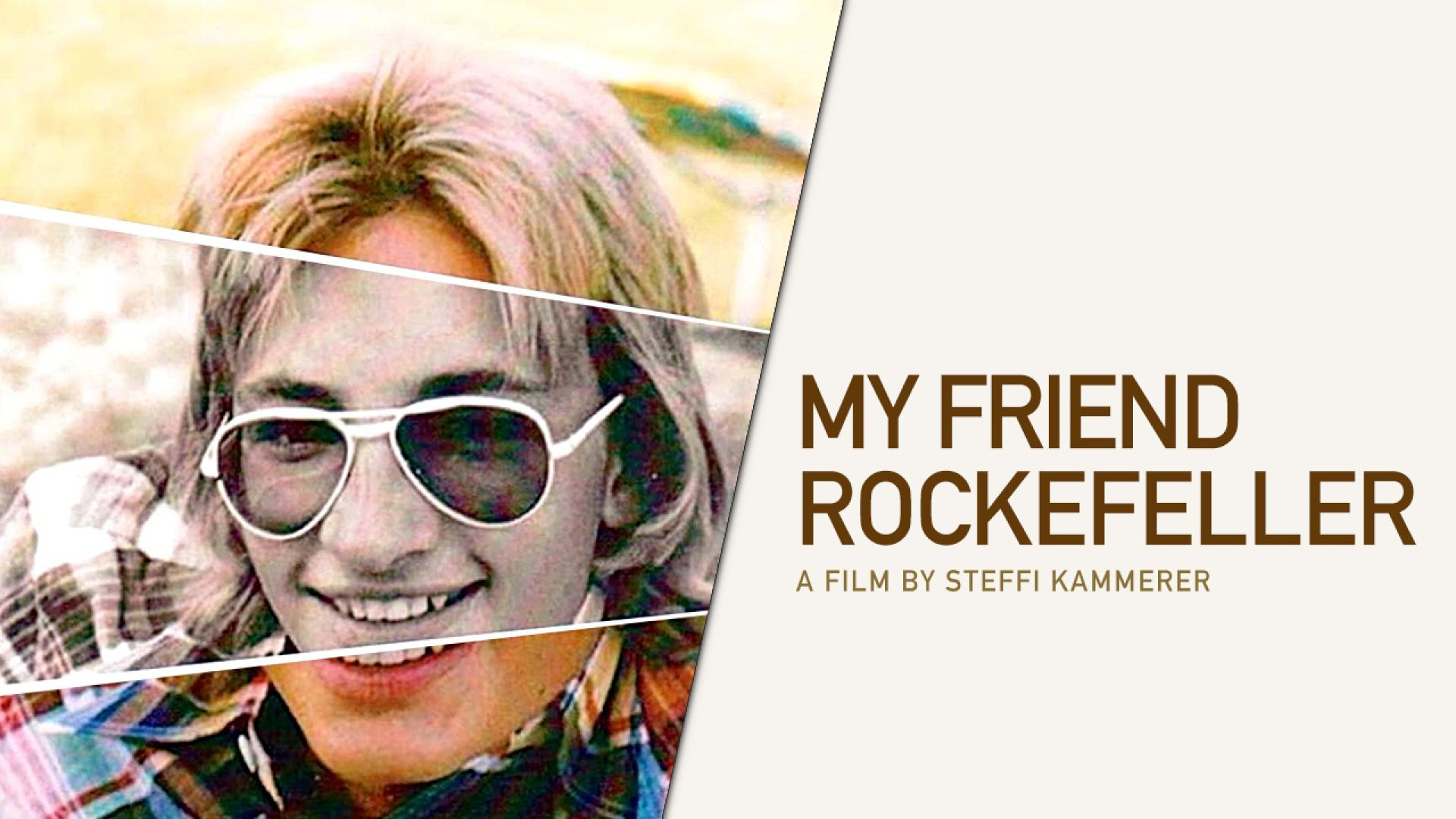
My Friend Rockefeller’Tells The Story Of The Infamous Imposter, Christian Karl Gerhartsreiter.
There's no shortage of shocking stories about feigned identities - from Anna Delvey to John Meehan, con men and women are ubiquitous. But few stories involve a move from Germany, five identities, and the Rockefeller family name. The fascinating story of Christian Gerhartsreiter manages to include all three. Gerhartsreiter made his way across the US, ingratiating himself into wealthy communities until he settled in New York City. There, Gerhartsreiter married a Harvard grad and pretended to work in prestigious philanthropic positions, all the while hobnobbing with some of the richest and most prominent members of American high society.
Gerhartsreiter's life imploded when his wife decided to seek a divorce. Gerhartsreiter took their daughter, of whom he had lost custody, and prepared to sail abroad under a different identity. Police discovered the plan before he could escape and soon detained him. Authorities uncovered Gerhartsreiter's trail of lies, one of which implicated him in the slaying of a man and a missing woman.
The documentary My Friend Rockefeller tells Christian Karl Gerhartsreiter's real story. My Friend Rockefeller reviews suggest the film successfully analyzes why Christian Karl Gerhartsreiter used the name Clark Rockefeller, and describes what has happened since he was apprehended in 2008. As of 2019, he's serving time, possibly for the rest of his life. His story has inspired a movie called Who Is Clark Rockefeller?, as well as several books and podcast episodes. Gerhartsreiter will live in infamy, though likely not for the reasons he hoped.
Gerhartsreiter Used Five Different Identities Over 30 Years
After Gerhartsreiter took his daughter, police discovered that his friends knew him as a number of different identities. Some knew him as Chris Gerhart, a film student at the University of Wisconsin. He had also gone by Christopher C. Crowe when he worked as a TV producer in the late '80s. Others knew him as an alleged British royal, Christopher Chichester, who suddenly left Los Angeles in the 1980s following a couple's disappearance.
By the time Gerhartsreiter fled Boston with his daughter, his friends and his wife Sandra Boss knew him as Clark Rockefeller. The alleged Rockefeller worked and lived among some of the country's most wealthy.
Gerhartsreiter Successfully Convinced An Entire Community That He Inherited A Part Of The Rockefeller Fortune
The alleged Rockefeller convinced not one, but two communities of lawyers, doctors, artists, and writers that he was a descendant of the Rockefeller family. In New York, he took his prestigious friends to country clubs and showed off his "art collection," which authorities later determined was fake.
In Boston, Gerhartsreiter ingratiated himself with a community of wealthy people who often met at a Starbucks near his daughter's school. Gerhartsreiter became the director of the Algonquin Club and invited his elite friends, even if he did charge them for their visits. John Greene, who was adjacent to Gerhartsreiter's circle, said he easily convinced them he was a Rockefeller, claiming, "At a club like that - very Yankee, old-boys, blue blood - people get [excited] over the name."
REVIEW RESOURCE: https://www.ranker.com/list/my....-friend-rockefeller-
