סרטונים מובילים

Jeremy Lee. 1991, wow! Way ahead of his time. We were warned but few people seem to notice, even fewer seem to care. Listen now and tell me how much you think has come to pass in the last 30 years. If only every Australian had seen this I don't believe we would be where we are today.
Absolutely brilliant video. Concise, logical and spelt out in layman's terms so that any, every person can understand this. Pinpoints where, how, when and who.
Its actually very sad to think in so many ways we have done this to ourselves. Yes government have orchestrated it and sold us all out BUT it was our apathy as a nation as Australians that allowed it all to happen.
OPEN LETTER TO GOVERNMENTS. PRINT IT OFF & HAND IT TO ALL POLICY ENFORCES (Fake Police)
https://www.knowyourrightsgroup.com.au

Carlos Castaneda (1925-1998) is often called the "godfather" of the human potential movement. His name and life are surrounded by many contradictions, fictions and legends.
This film feature Castaneda's closest apprentices as well as major experts in modern spiritually oriented psychology who lift the veil on the greatest mystery of his life: the stormy search of how to become real.

The Light Bulb Conspiracy uncovers how planned obsolescence has shaped our lives and economy since the 1920’s, when manufacturers deliberately started shortening the life of consumer products to increase demand. The film also profiles a new generation of consumers, designers and business people who have started challenging planned obsolescence as an unsustainable economic driver.
The documentary begins by visiting the longest running light bulb in the world, which has burned continuously for over 110 years in Livermore, California. Initially, light bulbs were built to last. But the film finds historical evidence revealing how a cartel in the 1920’s decided to produce bulbs limited to a maximum life of 1000 hours, making the humble light bulb one of the first examples of planned obsolescence and a model for increasing profits on other products.
Shot over three years in Europe, the U.S. and Ghana, The Light Bulb Conspiracy investigates the evolution and impact of planned obsolescence through interviews with historians, economists, designers and manufacturers, along with archival footage and internal company documents. The film profiles several well-known historical advocates -- Bernard London, who famously proposed ending the Great Depression by mandating planned obsolescence, and Brook Stevens, whose post-war ideas became the gospel of the 1950’s and helped shape the throwaway consumer society of today.
The Light Bulb Conspiracy also looks at modern examples of planned obsolescence, including computer printers and the controversy over the inability to replace iPod batteries. Environmental consequences are seen most dramatically in the massive amounts of electronic waste that end up in uncontrolled dump sites in Third World countries such as Ghana. The film concludes with examples of consumers and businesses moving towards more sustainable practices and products, including Warner Philips, great grandson of the founder of Philips Electronics, who is producing an LED bulb designed to last 25 years.
REVIEW RESOURCE: https://www.videoproject.org/L....ight-Bulb-Conspiracy

Stanley Kubrick: A Life in Pictures is a 2001 documentary about the life and work of Stanley Kubrick, famed film director, made by his long-time assistant and brother-in-law Jan Harlan. Its running time is 142 minutes long, it consists of several 15-minute chapters, each detailing the making of one of his films – and two more showing his childhood and life.
Jan Harlan got many of Kubrick's collaborators for interviews, including Tom Cruise, Nicole Kidman, Keir Dullea, Arthur C. Clarke, Malcolm McDowell, Peter Ustinov, Jack Nicholson, György Ligeti and Matthew Modine. It also has interviews from film directors who were inspired by Kubrick such as Woody Allen, Steven Spielberg, Martin Scorsese and Sydney Pollack.
The film contains some rare footage, including from the Kubrick family home videos and on film sets, and clips from Fear and Desire - Kubrick's first feature-length film.
It was released on DVD on October 23, 2007, and was featured on the tenth disc of Stanley Kubrick: The Essential Collection and Stanley Kubrick: Limited Edition Collection DVD and Blu-ray released May 31, 2011, respectively. The documentary was also bundled in a box set of some of Kubrick's other films released January 22, 2008.
The soundtrack of the film is by composer and musician Jocelyn Pook, who had previously worked with Kubrick on Eyes Wide Shut (1999).
Stanley Kubrick is one of the first names you hear when the word "director" is brought up. His career spanned many decades, and the movies he worked on were given his undivided attention. He was obsessive, reclusive, and demanding.
And if you've ever wanted to learn pretty much everything you could ever want to know about the iconic director, well, there's a movie for that. Originally released back in 2001, Stanley Kubrick: A Life in Pictures is a documentary that spans his life, offering behind the scenes looks at what went into his directing and thought process. As luck would have it, Warner Bros. has made it available to watch for free online, complete with an introduction by ReelBlend podcast hosts Sean O'Connell, Kevin McCarthy, and Jake Hamilton.
There are some real gems in this thing, from Jack Nicholson talking about the ways Kubrick made him feel satisfied as an actor to looking at the newsreels that helped him understand how to make Dr. Strangelove...including Martin Scorsese's reactions to watching Kubrick movies.
What about the music in A Clockwork Orange—what could be behind playing the William Tell Overture five times fast?
Kubrick's work has touched us all, and the step to understanding the themes and ideas he explores are all captured in this doc.

Three Identical Strangers: the bizarre tale of triplets separated at birth
“Ideas are my bread and butter,” says film-maker Tim Wardle. “But it’s hard to find ideas that make you want to get out of bed at 3am and go film somewhere.”
That, however, was not the case when a producer at Raw, the London-based production company where Wardle works, brought to his attention the story of Bobby Shafran, Eddy Galland and David Kellman, a set of identical triplets who knew nothing of one another until they were reunited by happenstance at age 19. That alone would make for a compelling documentary, but their story doesn’t end there.
Bobby, Eddy and David are the subjects of Wardle’s new film Three Identical Strangers, an extraordinary documentary that starts as a feelgood human interest story and, by the end, has you questioning the nature of existence. As far as documentary subjects go, this one is nonpareil, a fact that was heavy on Wardle’s mind as he set out to tell the brothers’ story on film. “There’s huge pressure not to fuck up the story,” he admits. “I wasn’t worried about money or anything like that. I was just like, ‘I can’t blow this.’”
Three Identical Strangers begins in 1980, as a 19-year-old Bobby Shafran attends his first day of university only to find unfamiliar classmates greeting him as Eddy. While it’s only the first in a series of fortuitous revelations, most of which are better seen than read about here, Wardle is smart to tell the first half of the documentary through narration and recreated scenes, a tactic that allows the viewer to get a sense of how uncanny it must be to move into your dorm room and find you’re already an on-campus celebrity. Eventually, Bobby and Eddy meet and are contacted by David, whose adoptive mother noticed a pair of twins in the newspaper who looked exactly like her son, down to their shared pudgy hands.
Those alive in the early 80s might remember what followed, a period of pre-internet virality that took the triplets from the Phil Donahue Show to a cameo alongside Madonna in Desperately Seeking Susan. As they made the rounds, audiences lapped up the brothers’ likeness: they finished each other’s sentences, smoked the same brand of cigarettes, even had the same taste in women. When one brother crossed his legs, the others followed. So, in the ensuing decade, they made good on the frenzy by opening a steakhouse in Soho, New York, called Triplets, which thrived until things between them went sour.
To Wardle, the honeymoon period served as wish-fulfillment for the brothers and the media. “There’s been an obsession with identicals going back to Romulus and Remus,” he says. “And the siblings wanted to believe that they were similar, too. It’s that thing where you fall in love with someone for the first time, you try and find everything you have in common. ‘Oh my God, we like the same music!’ But you sort of tone down the differences.”
The brothers, as they discovered on account of their own detective skills, were separated by a ritzy New York City adoption agency called Louise Wise Services, which declined to tell their adoptive parents they were a set of three. It’s at this juncture that the documentary turns – tonally, structurally, thematically – and embraces a very au courant style of leather-shoe reporting in Wardle’s efforts to uncover the bizarre and nefarious reasons for the brothers’ 19-year estrangement. But convincing producers he’d get there wasn’t easy.
“They kept saying, ‘What’s the third act? What’s the third act?’ And I’m like, it’s a documentary, you don’t always know!” recalls Wardle, who was accustomed to inconclusive, even plotless projects after making a documentary about prisoners serving life-sentences. Too many documentaries, he believes, explore “weighty”, ethically fraught issues without a human element to provide connective tissue. But since he had that in the first act, Wardle was confident he’d end up with a finished product whether or not his own sleuthing yielded results.
The question at the center of Three Identical Strangers essentially concerns nature versus nurture, which led Wardle to California, where he interviewed Natasha Josefowitz, the 90-year-old research assistant who contributed to psychoanalyst Peter Neubauer’s study of siblings separated at birth.
For Wardle and Lawrence Wright, the Pulitzer-prize winning journalist who is featured in the film, the idea that nature is more determinative than nurture is an unsettling one, especially as articulated in Josefowitz’s frank, unsparing style.
“She would talk to me about how much of what I’ve done in my life was a function of biology and genes, how little agency I had, which was kind of mind-blowing,” says Wardle, who gives equal weight in the film to both theses while endorsing neither. “A lot of liberal ideology is based on the idea that nurture is really, really important. So when you start down the nature perspective you end up in quite a politically and scientifically dark place, a kind of eugenicist paradise where, ‘Why bother trying to help people?’ It’s all determined by biology anyway.”
Or is it? As Three Identical Strangers proceeds, you find yourself seduced by both prospects, the relative liberty afforded by nurture and the ice cold-comfort of nature. Mostly, though, it’s the brothers who keep the film grounded in reality, which turned out far different than it looked when they got their first taste of fame on the talkshow circuit.
When Wardle recently showed them the film, they were surprised to find he delivered as he’d promised. “I realized at that point how much they’d been disappointed and let down in their lives,” he says. “Documentaries are only as good as the contributors and what they give you. And they gave me pretty much everything.”
REVIEW RESOURCE: https://www.theguardian.com/fi....lm/2018/jun/27/miste

THRIVE II explores breakthrough innovations from around the world, unpacks the principles they have in common and offers insights, tools and strategies for reclaiming our lives and our future.
Note: While we do vouch for the efficacy of the technology that we vetted as seen in THRIVE II, Foster Gamble and Clear Compass Media make no claims about the on-going technical efficacy or the business reliability of Saith Group or any other inventors. We are not involved in their business dealings and are not responsible for any contractual outcomes.
As of mid-June 2021, Saith Group is seriously delinquent on delivery of devices internationally. Therefore, we recommend that potential customers and licensees wait on commitment of resources until there is evidence that these prior orders are fulfilled.
We will update this page if and when we hear that he has successfully fulfilled on his current obligations.
For more information from Foster Gamble, visit: www.freetothrive.com
RESOURCE: https://closed.thrivemovement.com

A personal look at the extraordinary life, career and artistry of Alexander McQueen. Through exclusive interviews with his closest friends and family, recovered archives, exquisite visuals and music, McQueen is an authentic celebration and thrilling portrait of an inspired yet tortured fashion visionary. Directed by Ian Bonhôte and co-directed/written by Peter Ettedgui.
This moving documentary looks at the legacy of Lee A McQueen, the mercurial, anti-establishment fashion designer better known as Alexander McQueen. Co-directed by Ian Bonhôte and Peter Ettedgui, it divides his life into chapters or “tapes” titled after his most iconic collections. It’s a thrill to relive McQueen’s shows, from Jack the Ripper Stalks His Victims to Highland Rape and Plato’s Atlantis. Their theatrics have a tense, cinematic quality, only helped by Michael Nyman’s twisting, needling score.
McQueen grew up daydreaming of dresses in Stratford, east London, before an apprenticeship at Anderson & Sheppard of Savile Row that would eventually lead to a creative director role at Givenchy. Described as “funny and disrespectful”, McQueen had an equal interest in sabotage and tradition (and an obsession with Sinéad O’Connor), and was inspired by fetish culture, Francis Bacon and the grim history of London’s East End. The film does well to capture its subject’s cheekiness.
Bonhôte and Ettedgui stress that he came of age at Central Saint Martins, catching the attention of soon-to-be mentor Isabella Blow, who was struck by the emotional quality of his work. By combining cheaply shot home videos of the designer goofing off in the studio with archive of his shows and talking head interviews with some of his closest colleagues (though not all – fashion heads will surely spot the omissions), the film-makers capture the impact he had on the people around him.
However, this is also a film about McQueen the Londoner, surviving on unemployment benefit while he established himself and coming up in the 90s among controversial celebrity artists like Tracey Emin and Damien Hirst. Much of the film’s context is cocaine and overwork, liposuction and New Labour – a cocktail of unhappiness that drove McQueen to suicide in 2010.
RESOURCE: https://bleeckerstreetmedia.com/mcqueen

With unfettered access to the Zappa family trust and all archival footage, ZAPPA explores the private life behind the mammoth musical career that never shied away from the political turbulence of its time.
Alex Winter’s assembly features appearances by Frank’s widow Gail Zappa and several of Frank’s musical collaborators including Mike Keneally, Ian Underwood, Steve Vai, Pamela Des Barres, Bunk Gardner, David Harrington, Scott Thunes, Ruth Underwood, Ray White and others.
Directed by Alex Winter
http://www.thezappamovie.com/
For more great titles, check out Magnolia Selects:
https://www.magnoliaselects.com
'Frank didn't adhere to any movements': behind the Zappa documentary (The Guardian)

Will you be a part of the golden horde?
How can you prepare for unruly crowds, and how bad will the desperate mobs get?

New restrictions, New Lockdowns, New Travelling regulations.
WHO’s Global Digital Health Certification Network
EU-WHO digital partnership

"State of control", the control society is increasingly becoming a reality.
What is the price of convenience?
The CBDC (Central Bank Digital Currency) and the digital passport can make our lives easier and more efficient. But new international legislation shows that the purpose of these possibilities, has far-reaching implications for our privacy.
In this documentary international experts such as Edward Snowden, Arno Wellens, Catherine Austin Fitts express their serious concerns and criticisms. It compiles the range of facts and opinions, creating a shocking picture about the future of mankind. A crystal-clear narrative that can''t be ignored.
RESOURCE: https://debunkproductions.com

Watch Part ONE (1) here => https://vajratube.com/watch/ge....orge-harrison-living
George Harrison first became known to the world as 'The Quiet Beatle', but there was far more to his life than simply being a part of The Beatles. This film explores the life and career of this seminal musician, philanthropist, film producer and amateur race car driver who grew to make his own mark on the world.
Through his music, archival footage and the memories of friends and family, Harrison's deep spirituality and humanity are explored in his singular life as he took on artistic challenges and important causes as only he could.
Using unseen photos and footage, Academy Award®-winning director Martin Scorsese traces the life of George Harrison in a personal film, weaving together performance footage, home movies, rare archival materials and interviews with his family and friends including Eric Clapton, Terry Gilliam, Eric Idle, George Martin, Paul McCartney, Yoko Ono, Tom Petty, Phil Spector, Ringo Starr and Jackie Stewart.

Soaked in Bleach. 2015. Directed by Benjamin Statler. Written by Donnie Eichar, Richard Middleton, and Benjamin Statler.
Starring Tyler Bryan as Kurt Cobain, Sarah Scott as Courtney Love; featuring, as themselves, Tom Grant, Brett Ball, Max Wallace, and Norm Stamper.
Admittedly, even though I’ve always thought Courtney Love is bat shit crazy, I never believed she (or anyone else) might’ve been covering anything up or hiding information concerning Kurt Cobain’s suicide. As much as I loved Cobain, worshiped Nirvana as a young musician with a bad attitude and even worse fashion sense, I just took what the media fed me about his depression and how he’d always seemed suicidal, that he took his I.D out and put it on his wallet so that when he shot himself they’d be able to identify his body easily… and so much more.
After watching this, the other reviews and articles touting this documentary as a ‘conspiracy theory’ are way off base. There’s too much in this film to deny, from actual police documents, the tapes Private Investigator Tom Grant has with Courtney Love on it saying some downright incriminating things and even some with Rosemary Carroll (the Cobain/Love lawyer) saying things against Love. See for yourself. Judge on your own. But here’s my take:
The first thing we hear is a conversation between Tom Grant and Courtney. She hired him to investigate after Kurt went missing, this was only briefly before his alleged suicide. On this first tape, Grant questions Courtney about where she’d found some other letter, supposedly from Kurt, and she is telling him it was under the pillows on her bed. Grant, being there the night before Kurt was found dead, knew different; he’d tossed the bed and found Rohypnol, which Kurt had a prescription for. He knew the difference, and yet Courtney tried sticking to her guns even when Tom told her otherwise. So right off the bat, we get this very real, raw version of Courtney – outside of the media, outside of other celebrities and what they think of her or the general public and their view – right from a tape. It’s damning.
From there, we learn a little about Grant whose life story reads much like a lot of police/military officers. The thing I kept wondering is, for those who don’t believe the man or doubt he is credible – what does he have to gain from this? He’s pretty much haunted with what he sees as the facts. He’s not exactly a celebrity himself because of Kurt or Courtney; most people pass him off as just another conspiracy theorist. Yet, as he mentions later, Tom still gets letters, e-mails, all sorts of communication asking about Kurt, wondering why nothing has been done when there’s actually a lot of evidence suggesting he did not die by suicide. It isn’t only Tom who believes, but unfortunately the police seem to be the real roadblock.
It becomes very clear that police negligence really had a hand in what came to pass. On top of that, Courtney Love set the stage for this “suicide” – when she hired Tom Grant, filed a police report (and did so in fake fashion using Cobain’s own mother’s name – the media promptly reported his mom was worried he was suicidal and filed a Missing Persons), and then perpetuated the myth of Cobain being frequently suicidal. What really troubles me is this idea of the myth – that Kurt really wasn’t a suicidal person. Yes, he was depressed. Yes, he had killer stomach pains that put him in agony. But he was happy with his friends and people around him. After the stomach pains were cleared up and doctors put him on the correct medication after many stressful years, Cobain himself told an interviewer he felt the best he’d ever felt and he was plenty happy. Sure, no one knows what’s going on in the mind of someone behind closed doors – ultimately, we never know. I had a friend who killed himself and none of us in our circle of friends ever expected it. Yet so many close friends claim Kurt never ever talked about suicide once.
Furthermore, he’s not in the movie but Buzz Osborne knew Kurt, and the rest of Nirvana, from the beginning – he and Kurt went to high school together, he knew him before and after Nirvana hit the bigtime. Buzz claims Kurt was never suicidal, it was all a lie. He has harsh words for the other Cobain documentary that recently came out, Montage of Heck, because aside from the suicide myth it portrays other stories that are not actually true (the story that Kurt supposedly had sex with an overweight, mentally handicapped girl when he was young is a total fabrication, according to King Buzzo). So during Soaked in Bleach, we get a lot of other opinions from people very close with Cobain that jive with that of Osborne – that Kurt could be quiet, shy, but the idea that he was a suicide case is untrue.
What really drove this home is Courtney Love. When Cobain accidentally overdosed on his Rohypnol prescription after having a glass of champagne, the incident was not called a suicide at the time. At first people speculated it was an attempt, but it was confirmed as being accidental afterwards. Love did not, at the time, claim Kurt tried to kill himself. Nobody did. Then, after Kurt was found dead, immediately Courtney began telling the media how he tried it in Rome, he tried before, so it wasn’t exactly a surprise. This is categorically untrue. Max Wallace brings up the fact they even talked with the doctor who attended to Kurt that night in Rome, and the doctor also denies to the bone it was a suicide attempt confirming it was most certainly an accidental overdose. It isn’t hard to see Love helped the media run with the image of Kurt as a suicidal persona.
Once things get to the real down and dirty faces, looks at the crime scene and all that, it’s even more of an affirmation that Tom Grant is not just some ‘conspiracy nut’. The tapes are one thing, hearing Courtney go on about how maybe Kurt disappearing and all that before his death would be good for publicity on Hole’s next album and hearing her just lie to Grant over and over, but the crime scene is a whole other beast. I don’t want to say too much more because the evidence is some of the real knock-out stuff in this film.
I did like the little drama recreations they did with actors playing Love, Grant, Cobain, and others involved. Some of it was pretty decent. Not that she doesn’t deserve it after seeing this movie, but they really went hard at Love with their portrayal. However, I don’t see it as being that far off base. If you didn’t think Love was crazy before, you absolutely will after watching this. It’s hard not to.
A lot of the evidence presented makes you wonder how this case isn’t being re-opened and investigated again. Truly. This was an eye-opener of a documentary. Even worse, it’s coming out that apparently Courtney Love has bought Twitter followers, et cetera, to help tank ratings on websites for the film; IMDB is usually bad for ratings, but the skewed low rating for this was ridiculous as about 1,000 ratings of 1 before the release drove it down. Suspicious? Make up your own mind.
This is absolutely a 5 star documentary. I love Cobain, his music, all of it, but to see this was truly fascinating. I can’t get over it, honestly. I want to watch it again several times just to take in all the information. The whole thing is spooky. I’ll say no more other than – the directing is great, this whole film is put together well, and Tom Grant is a saint for offering himself up all these years as “that conspiracy guy” who has actually been fighting the fight for real justice.
One thing resonated with me deeply. Tom brought up how there have been tons of suicides that have been copycats of Kurt – either they did what he did exactly, or their suicide notes quoted Nirvana and related to the late rockstar – and he just wants the truth out there. Because it’s a shame for any kid to kill themselves, but if it’s partly due to the fact Kurt supposedly did, when he might not have, then there is a real need to have the truth known. Not only for all those kids, future kids possibly, but also for Kurt, for Frances Bean, and for all the people of a generation who related to him through his music.
REVIEW RESOURCE: https://fathersonholygore.com/....2015/06/15/soaked-in

If you want to understand that the virus can be sent like simple email you have to watch this documentary.
Water is the key element of life, but new information is coming to light on the element which we thought we were so familiar with: information which could potentially reimagine our tree of life.
That is the belief shared by the advocates of a surprising theory called "water memory". For Prof. Luc Montagnier, water has the ability to reproduce the properties of any substance it once contained. Water would have the ability to retain a memory of the properties of the molecules.
What if Alzheimer's, Parkinson's, autism, HIV and even cancer could be treated thanks to this controversial theory?
Prof. Montagnier is President of the World Foundation for AIDS Research and Prevention, which he founded in 1983 together with Federico Mayor, former General Director of the United Nations Educational, Scientific and Cultural Organization (UNESCO).
Luc Montagnier contributed to the creation of many biotech companies in the United States and in France.
He has been awarded the CNRS Silver Medal, the Rosen Prize of Cancerology (1971), the Lasker Award (1986), the Gairdner Award (1987), the Gallien Prize (1985), the Jeantet Prize, the Prize of Japan (1988) and the King Faisal International Prize (1993), the Amsterdam Foundation Prize (1994), the Warren Alpert Prize (1998), the Prince of Asturias Prize (2000) and the introduction to the National Invention Hall of Fame (2004). He is also Grand Officer in the Order of the Légion d’Honneur and Commander in the National Order of Merit (1986).
Let me know your thoughts in the comments?
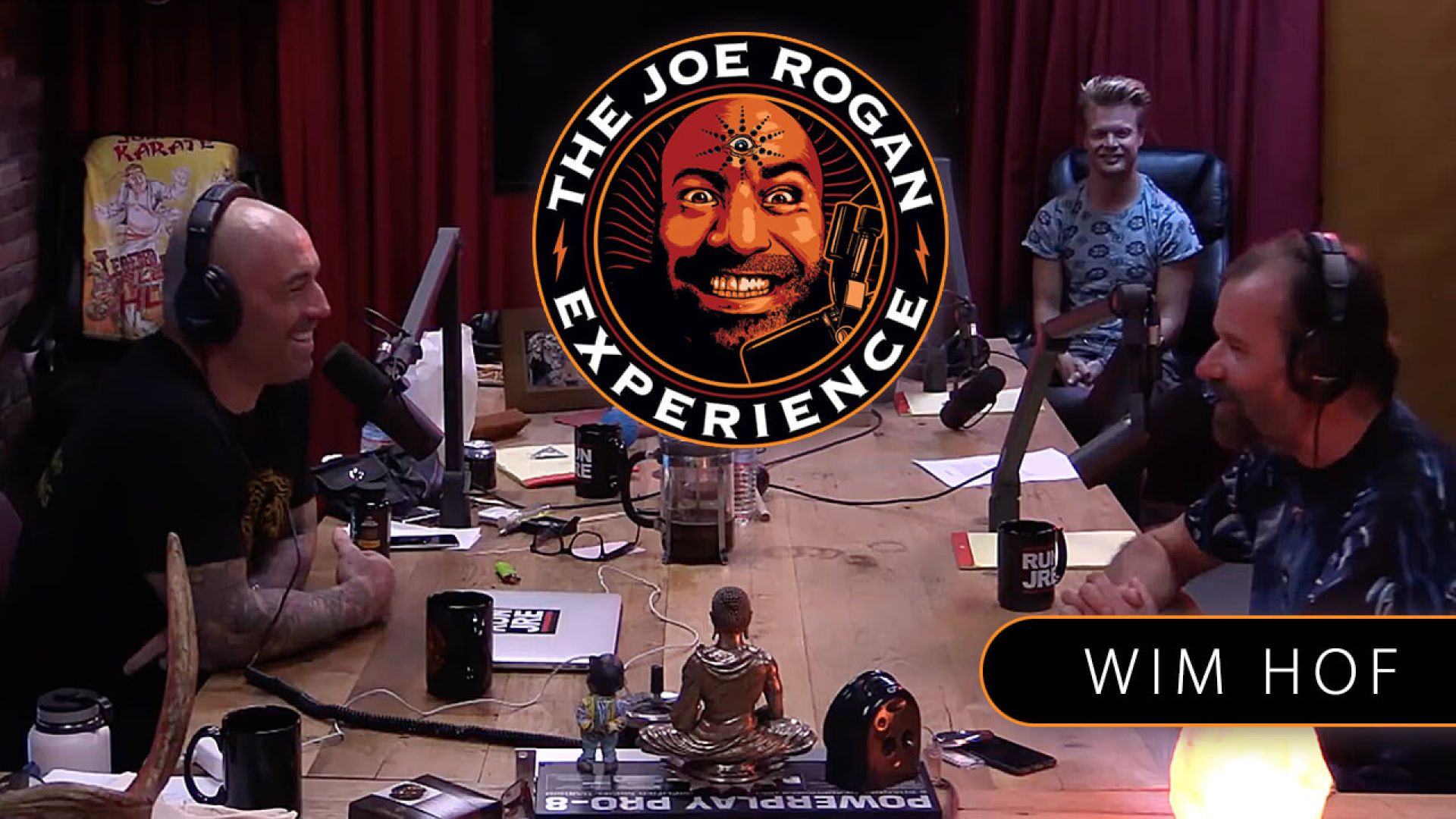
Wim Hof is a Dutch world record holder, adventurer and daredevil, commonly nicknamed the Iceman for his ability to withstand extreme cold.
Undoubtedly one of the most fascinating guests ever to have appeared on the JRE, Wim Hof is a Dutch extreme athlete nicknamed The Iceman for his incredible ability to thrive in completely inhospitable temperatures.
Hof espouses the benefits of learning to control your breathing through a meditative system he refers to as the Wim Hof Method, in which he denotes just how important one's mental state is in influencing physical performance.
Like many of the other athletes featured on this list, listening to Hof isn't just motivational for the things that he has achieved, but rather the perspectives he offers to help you or me to achieve feats that we didn't believe possible.
Joe has shown repeatedly throughout the years that the quality of the podcast significantly improves the more he appears to respect the guest which is particularly evident here. If anyone is looking for a way to better endure physical pain, while also becoming more in tune with their thoughts this podcast is a must-watch.
RESOURCE: Joe Rogan Experience #712

Webinar: COVID-19 Early Home-based Treatment with Dr. Peter McCullough.

Nikola Tesla did countless mysterious experiments, but he was a whole other mystery on his own. Almost all genius minds have a certain obsession. Nikola Tesla had a pretty big one!
He was walking around a block repeatedly for three times before entering a building, he would clean his plates with 18 napkins, he lived in hotel rooms only with a number devisable by 3. He would make calculations about things in his immediate environment to make sure the result is devisable by 3 and base his choices upon the results. He would do everything in sets of 3.
Some say he had OCD, some say he was very superstitious.
However, the truth is a lot deeper.
“If you knew the magnificence of the three, six and nine, you would have a key to the universe.” – Nikola Tesla
RESOURCE: https://garylite.com/2018/09/0....9/the-secret-behind-

Exit Through the Gift Shop: A Banksy Film is a 2010 British documentary film, directed by street artist Banksy. It tells the story of Thierry Guetta, a French immigrant in Los Angeles, and his obsession with street art.
The film charts Guetta's constant documenting of his every waking moment on film, from a chance encounter with his cousin, the artist Invader, to his introduction to a host of street artists with a focus on Shepard Fairey and Banksy, whose anonymity is preserved by obscuring his face and altering his voice, to Guetta's eventual fame as a street artist himself. It is narrated by Rhys Ifans. The music is by Geoff Barrow. It includes Richard Hawley's "Tonight The Streets Are Ours".
The film premiered at the 2010 Sundance Film Festival on 24 January 2010, and it was nominated for the Academy Award for Best Documentary Feature.
Since its release, there has been extensive debate over whether the documentary is genuine or a mockumentary, although Banksy answered "Yes" when asked if the film is real.
Thierry Guetta is a French immigrant living in Los Angeles who runs a vintage clothing shop. He also has an obsession with carrying a camera everywhere and constantly filming his surroundings. On a holiday in France, he discovers his cousin is Invader, an internationally known street artist. Thierry finds this fascinating, and accompanies Invader and his friends, including the artists Monsieur André and Zevs on their nocturnal adventures, documenting their activities.
A few months later, Invader visits Thierry in LA, and arranges a meeting with Shepard Fairey. Thierry continues filming Fairey's activities even after Invader has returned home to France. While Fairey is confused by Thierry's enthusiasm, Thierry states that he wishes to make a complete documentary about street art, and the two cross the nation, filming other artists at work, including Poster Boy, Seizer, Neck Face, Sweet Toof, Cyclops, Ron English, Dotmasters, Swoon, Azil, Borf and Buff Monster. What Guetta fails to tell Fairey is that he has no plan to compile his footage into an actual film, and never looks at his footage.
Archival footage The film's opening montage includes archival footage from the following street art films: Dirty Hands: The Art and Crimes of David Choe, Infamy, Megpoid, Next, Open Air, The Lyfe, Popaganda: The Art and Crimes of Ron English, Rash, Restless Debt of the Third World, Spending Time, Turf War, Elis G The Life of a Shadow, Memoria Canalla, C215 in London, Beautiful Losers.
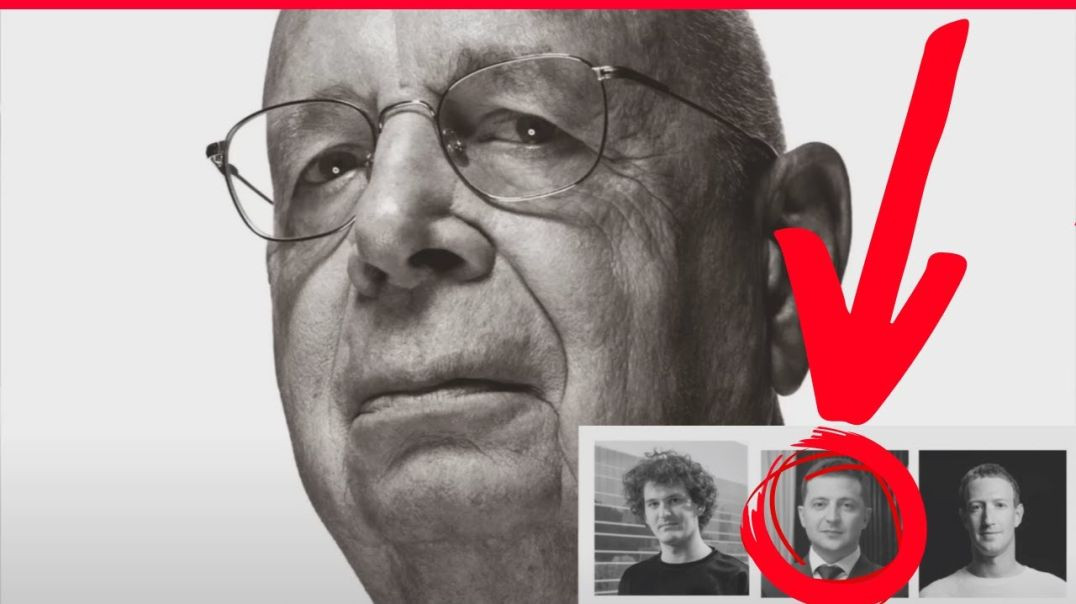
Zdefraudowali wsparcie dla Ukrainy za ponad $80MLD USD. Pominięte przez mainstream afery finansowe, w które zamieszana jest Partia Demokratyczna, Joe Biden, tajemniczy inwestorzy i prezydent Ukrainy.

In this ground-breaking original series, experts explore the history and use of psychedelic plants including political ambitions, the perceived shadow side and the proper environment to experience these substances.
From the origins of Shamanism to the spiritual expression of modern awakenings, discover the role of sacred medicine as a gateway to expanded consciousness, and its continued influence on humanity.
“Psychedelics are illegal not because a loving government is concerned that you may jump out of a third story window. Psychedelics are illegal because they dissolve opinion structures and culturally laid down models of behaviour and information processing. They open you up to the possibility that everything you know is wrong.” ― Terence McKenna
RESOURCE: https://www.gaia.com/seeking-t....ruth/original-progra
