Top videos

Dr Jordan B Peterson and Dr. Dennis McKenna discuss the science behind psychedelics, the entities found through the looking glass, the current pharmaceutical approach to long life, and why it needs to change.
Dr. Dennis McKenna is an American ethnopharmacologist, lecturer and author. He is a founding board member and the director of ethnopharmacology at the Heffter Research Institute, a non-profit exploring the therapeutic uses of psychedelic medicines. McKenna received his masters in botany at the University of Hawaii in 1979, followed by his doctorate in the same field at the University of British Columbia in 1984. Dennis is the brother of Terrence McKenna, a cultural figure and proponent for the exploration of psychedelics.
Together they co-authored The Invisible Landscape. Much later McKenna would write a memoir, Brotherhood of the Screaming Abyss, detailing he and his brothers exploits in the field. Today, Dennis tours and lectures, while also running the McKenna Academy of Natural Philosophy, which seeks to uncover the mysteries of consciousness held within the realm of botany and pharmacology.
Dr Peterson's extensive catalog is available now on DailyWire+: https://utm.io/ueSXh
McKenna Academy: https://mckenna.academy
The Experiment at La Chorrera https://mckenna.academy/events?id=32
ESPD55 Livestream Symposium ESPD55.com Those interested in donations may contact connect@mckenna.academy
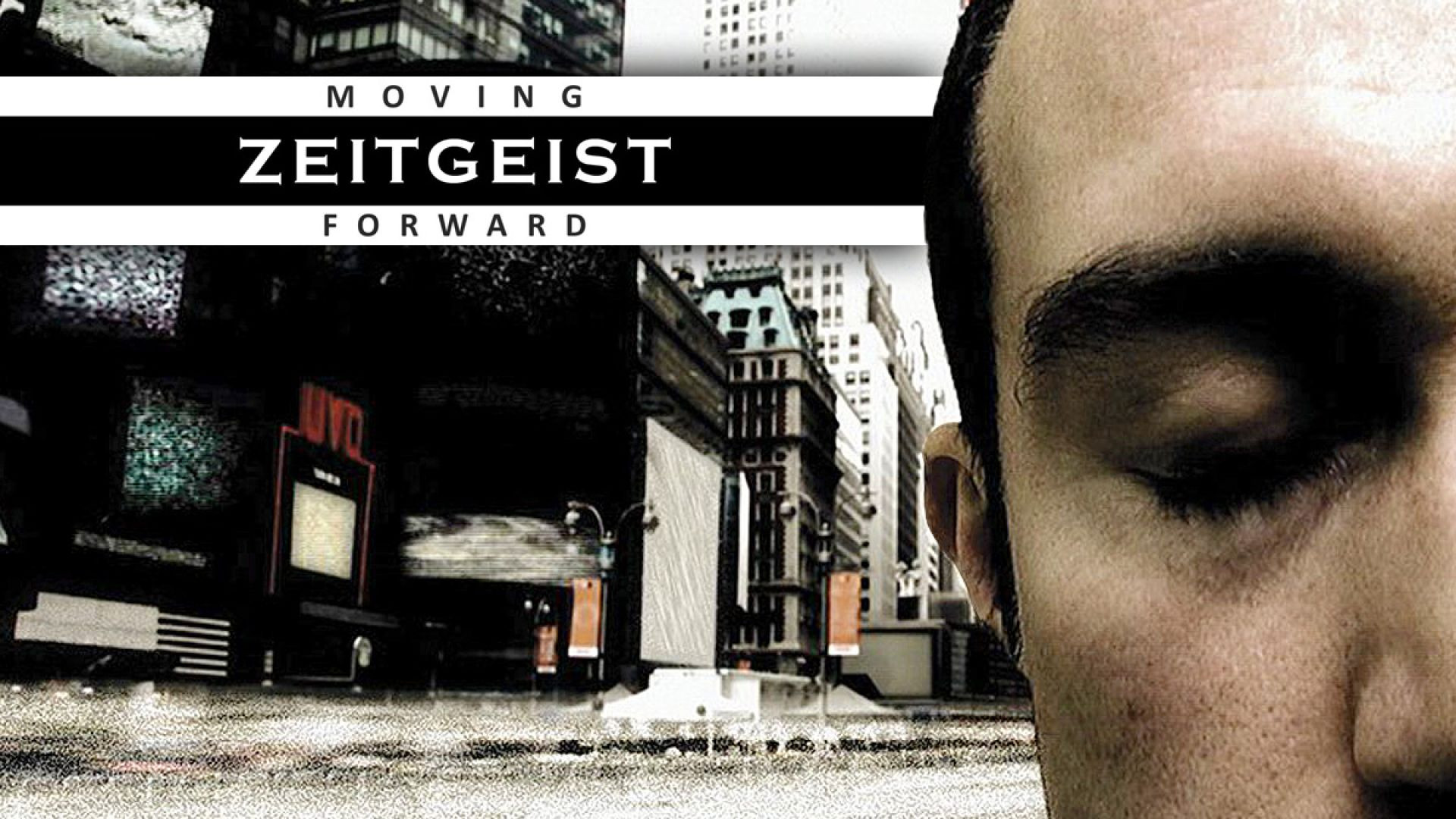
Zeitgeist: Moving Forward, by director Peter Joseph, is a feature length documentary work which will present a case for a needed transition out of the current socioeconomic monetary paradigm which governs the entire world society.
This subject matter will transcend the issues of cultural relativism and traditional ideology and move to relate the core, empirical “life ground” attributes of human and social survival, extrapolating those immutable natural laws into a new sustainable social paradigm called a “Resource-Based Economy”. This film will feature experts in the fields of public health, anthropology, neurobiology, economics, energy, technology, social science and other relevant subjects which relate to social operation and culture.
The three central themes of the work are Human Behavior, Monetary Economics, and Applied Science. Put together the work creates a model of understanding the current social paradigm; why it is critical to move out of it - coupled with a new, radical, yet practical social approach based on advanced understandings which would resolve the current social woes facing the world today.
One of the unique attributes of this work, which separates it in style from most documentaries, is that it has a parallel dramatic/cinematic theme, with notable actors, which abstractly play out various gestures related to the overall message of the film. The work also vigorously employs numerous 2d and 3d visual abstracts/animations, while returning to the standard, traditional documentary orientation as the foundation.

The film documents Becker's rise to near-stardom, following him from the first time he touched a guitar as a five-year-old to when he was drafted into The David Lee Roth Band as lead guitarist at the age of 19. In 1990, this was considered perhaps the most coveted rock guitar gig on the planet, as Becker would be following in the footsteps of acclaimed guitarists Eddie van Halen and Steve Vai, both of whom played with David Lee Roth as lead guitar player. It was shortly after that Becker was diagnosed with Amyotrophic Lateral Sclerosis, more popularly known as Lou Gehrig's disease, and given just 3 to 5 years to live. Becker was able to finish the recording of Roth's third full-length studio album A Little Ain't Enough but was unable to make the tour due to his physical decline.
Despite his diagnosis, Becker continued to write music even after losing all the ability to move and speak. Becker would go on to write and record two full-length studio albums Perspective (1996) and Collection (2008). Becker communicates exclusively via an eye pattern chart invented by his father, artist and poet, Gary Becker.
Although the film examines Becker's physical decline and his missed shot at rock superstardom, the film is a positive account of Becker's strength and survival for the past 22 years of his life.
The film makes extensive use of Becker's family archives through photographs, Super 8mm film and VHS footage. The film features interviews with Becker's family and friends as well as notable guitarists Joe Satriani and Steve Vai.
<img src="https://m.media-amazon.com/images/I/91nMvT2XrLL._AC_SY741_.jpg" alt="Poster" />
Buy Original DVD <a href="https://www.amazon.com.au/Jason-Becker-Not-Dead-Yet/dp/B009CSVQ7C" target="_blank" >here</a>

What’s it like to be cajoled, threatened and blackmailed by a sexual predator who has power, history and society on his side?
Untouchable: The Rise and Fall of Harvey Weinstein (BBC Two), directed by Ursula MacFarlane, is a film of halting testimonies, long pauses, lips pressed tightly together and eyes filling with tears. Of women struggling to articulate what they have left unsaid sometimes for decades, and what has gone unsaid by our sex – en masse – throughout history, until now.
You probably know the basic story – by osmosis if nothing else - so heavily was the media mogul’s eventual fall covered when the weight of evidence finally became too much for a man of even his resources to withstand.
It shows the uniformity of the women’s responses to suddenly finding themselves in terrifying situations
MacFarlane tells the story well. She gives due recognition to the journalists, especially Megan Twohey and Jodi Kantor, who broke the story in the New York Times, and Ronan Farrow’s gathering of 13 witness accounts in the New Yorker after painstaking investigations. But, like Dream Hampton’s Surviving R Kelly, Untouchable prioritises the victims’ stories (regardless of their personal celebrity or lack thereof – here “names” such as Rosanna Arquette simply slip in next to those without public profiles) and fills in the perpetrator’s to explain his relative power or position at the time. As with the R Kelly film – thought to have been instrumental in the R’n’B star’s latest arrest on federal sex trafficking charges – a pattern of predatory behaviour emerges, painted stroke by painful stroke by those who found themselves first charmed and cajoled by one version of Weinstein, then confronted with a very different one behind closed doors.
Whether we should be profoundly glad, deeply sad or simply exhausted to be living in a time where “examination of the lives of serial sexual predators unmasked after years of hiding in plain sight” is on the verge of becoming a recognised TV genre, let alone one taking up the slack left by uninterested police and legislative forces, I leave to you to decide. But we are where we are. Which is, waiting to see who gets their Jeffrey Epstein production off the blocks first.
Beyond a specific modus operandi – Weinstein’s involved hotel suites, towelling robes, forcible massages, volcanic rage and threats such as: “Do you really want to make an enemy of me for five minutes of your time?” – as an insight into one man’s apparent prelude to rape or assault (Weinstein denies all claims), such documentaries render a more valuable service in demonstrating, relentlessly and unavoidably, two things.
The first is how perfectly our world is built for predators to function. Of Weinstein’s staff who admit they knew something – something – was happening, a common refrain is that they assumed “some sort of agreement” had been reached between the would-be actors and the mogul. If you live in a society that already believes in the casting couch, because the concept of young women as more-or-less sexual resources to be exploited is so embedded in the psyche, half your work – to normalise your predilections, to secure complicity – is done. With the likes of the gossip columnist AJ Benza out there – “You put a light on the porch,” he says of Weinstein’s power, “you’re gonna get a lot of moths” – the world is yours to do with as you will.
The second, perhaps even more valuable, service it renders is to show the uniformity of the women’s responses to suddenly finding themselves in terrifying situations, and how far they deviate from “common sense” or “natural” expectations (words defined almost entirely by men, who have least need of them). They don’t fight. They compute their chances against a much taller, heavier opponent (“He’s huge, you know,” says Hope d’Amore, who worked for him in the early days and says she was assaulted in 1978) and they go still. “The freeze thing kicks in,” says the actor Caitlin Delaney. “You just want it to be over.” They maximise their chances of survival (“I felt leaving would be worse,” says actor Erika Rosenbaum, when she saw a smashed and bloody toilet seat in his bathroom) and try and leave in other ways instead. Actor Paz de la Huerta remembers “hovering over my body” as, she says, Weinstein raped her. “I definitely went somewhere else,” says Delaney. Rosenbaum remembers hoping that if she kept still enough she would somehow disappear.
Almost every woman watching will understand. Some men will, too. If these films add to their number, maybe we can begin to change the world.
REVIEW RESOURCE: https://www.theguardian.com/tv....-and-radio/2019/sep/

An interview with Dr. Robert W. Malone on the suspicion of an alarming increase in mortality and its correlation with the widespread vaccination of US citizens against Covid 19.

I reviewed materials from Pfizer and Moderna in regard to the preclinical assessments of reproductive toxicities from recently obtained documents from FOIA lawsuits.
The results indicate shocking disregard to safety and potential for reproductive harm that will span generations. Pfizer's published data is here:
https://www.sciencedirect.com/....science/article/pii/
Note the study is authored by Pfizer employees with extremely biased interpretation of their results, so you should read the methods and results sections yourself.

Certainly one of the best interviews of the series, this interview with epidemiologist and biostatician Knut Wittkowski is hard hitting and touching. We interviewed him on a hot July day in 2020 in a corner of the park and later in front of an empty great lawn, which normally has 1000 people on it in a midsummer day. He is a caring and thoughtful man that is highly alarmed by the turn of events of this last year. He has a tremendous amount of courage to speak out and a big heart. This all comes through.
Watch more full interviews and educate yourself!
https://planetlockdownfilm.com/full-interviews/
Please share and enjoy!

It is now beyond doubt that strange, anomalous objects filling our skies and caught on camera are the real deal. Even the Pentagon admits it’s true. These seemingly intelligently controlled craft are operating above the clouds, in our oceans and in our orbit – travelling at hypersonic speeds far beyond any known human technology and completing manoeuvres unknown to science.
The subject of conspiracy and derision for years, UFOs are now the hottest topic in Washington and the world.
Five-time Walkley Award-winning investigative journalist Ross Coulthart – who has been investigating the phenomena for the past two years – led the 7NEWS Spotlight team across the US, amassing never-before-seen compelling evidence and speaking to the key players behind an event that will change the course of history.
Featuring interviews with the highest echelons of military defence and intelligence officials, leading researchers, scientists and witnesses in America and Australia, this mind-blowing documentary years in the making seeks to answer the most fundamental question there is: are we alone?
The US director of national intelligence is expected to hand down an unclassified report next month that will change our understanding of life itself. On Spotlight, we reveal what is in that report.
7NEWS Spotlight: The UFO Phenomenon unearths startling new evidence of Australian Government cover-ups and extraordinary vision of unidentified aerial phenomena in Western Australia, Victoria and Queensland – all credible and important additions to the worldwide data being accumulated by the US.
For Coulthart, the project has become the most fascinating and challenging of his career, becoming the focus of his new book 'In Plain Sight', available now in Australia and soon in other territories:
Australia: https://7news.link/3AuawFz

Journalist Whitney Webb has worked to uncover some of the most dangerous stories of our lifetime, and she joins Glenn to reveal just how eye-opening it’s been. Her new two-volume book, “One Nation Under Blackmail: The Sordid Union Between Intelligence and Crime that Gave Rise to Jeffrey Epstein,” examines Epstein’s elaborate network of corruption and power, from Bill Clinton to Ghislaine Maxwell and many more.
Her research into transhumanism has given her a terrifying perspective on the World Economic Forum and tech elites, including Elon Musk. And she tells Glenn the dark truth about Biden’s push for electric vehicles that she noticed while living in Chile.

A Journey with Ayahuasca
Reconnect is London Real’s fifth feature-length documentary film and documents Brian Rose’s journey to Costa Rica where he participates in multiple ceremonies with the plant medicine Ayahausca. The movie stars Graham Hancock, Dr. Jordan Peterson, Dennis McKenna, Sadhguru, Dorian Yates, Dr. Gabor Mate, Dr. Joe Dispenza, Michael Pollan, and Dan Pena.
As the founder and host of London Real, Brian Rose has spoken to over 1,000 of the greatest minds on the planet for the past eight years including Dan Peña, Dan Bilzerian, Robert Kiyosaki, Jocko Willink and more.
With an aim to spread transformational ideas to the world, London Real reaches millions of people each month with its message and yet, when Brian looked outside his studio, he saw a very different reality: a world full of division, tribalism, hatred, anger, and disconnection from our environment.
Against that background, Brian also felt extremely disconnected from his purpose, his mission, and his family.
Under the advice of legendary psychedelic researcher Dennis McKenna (brother of the late Terence McKenna), Brian decided to travel to Costa Rica to participate in three ceremonies with the ancient plant medicine Ayahuasca, known for inducing powerful visions, painful experiences, and transformational lessons.
There he reconnects with his vision and purpose but also uncovers childhood trauma that created an existential crisis in his life. After returning to London with clear visions about the future, he soon realised that things are not what he expected, and that real transformation and healing must include painful challenges and uncomfortable situations.
Along the way, Brian is advised and mentored by a number of London Real guests including Jordan Peterson, the best selling author Michael Pollan, Graham Hancock, childhood trauma specialist Dr. Gabor Mate, the Indian mystic Sadhguru, Dr. Robin Carhart-Harris of Imperial College London, former bodybuilder Dorian Yates, Dr. Joe Dispenza, and high-performance coach Dan Peña, the $50 Billion Man.
Despite this incredible guidance, Brian struggles to address his personal demons, and ultimately decides to confront the people who caused his trauma. So he embarks on a trip home to speak separately to his mother and father, in order to heal himself and ultimately create a new future for his children, his company, and his movement.
Watch Reconnect now and share in Brian’s story through his Ayahuasca ceremony and beyond to his integration exclusively here on London Real.
RESOURCE: https://londonreal.tv/reconnect-the-movie/

How to generate homemade infinite energy with a washing machine motor and an engine.
This channel is the home of crazy inventions. I guarantee you will not be disappointed with the videos uploaded because there are some best videos that no one has done.
Contact to Author: kenhmrche@gmail.com

Harvard professor Shoshana Zuboff wrote a monumental book about the new economic order that is alarming. "The Age of Surveillance Capitalism," reveals how the biggest tech companies deal with our data. How do we regain control of our data? What is surveillance capitalism?
In this documentary, Zuboff takes the lid off Google and Facebook and reveals a merciless form of capitalism in which no natural resources, but the citizen itself, serves as a raw material. How can citizens regain control of their data?
It is 2000, and the dot.com crisis has caused deep wounds. How will startup Google survive the bursting of the internet bubble? Founders Larry Page and Sergey Brin don't know anymore how to turn the tide. By chance, Google discovers that the "residual data" that people leave behind in their searches on the internet is very precious and tradable.
This residual data can be used to predict the behavior of the internet user. Internet advertisements can, therefore, be used in a very targeted and effective way. A completely new business model is born: "surveillance capitalism."
Original title: De grote dataroof
Director: Roland Duong
Research: Tom Reijner, Halil Ibrahim Özpamuk
Camera: Adri Schrover
Sound: Jochem Salemink
Editing: Roland Duong, Paul Delput, Rinze Schuurman
Production: Marie Schutgens
Production assistant: Britt Bennink
Image Editing: Rob Dorrestijn, Paula Witkamp
Online Coordinator: Arja van den Bergh
Commissioning Editors: Bregtje van der Haak, Doke Romeijn

The true history of the anti-government extremist terrorist group's century of violence. Focusing on the group which has caused nationwide rioting and violence, The film – which undermines the mainstream media’s depiction of the group as “just an idea” – has already been censored by YouTube and Vimeo.
Please share with your friends, stream to your FireTV stick using Silk and host a watch party to discover the truth about this deadly organization.
RESOURCE: https://puresocial.tv/antifa-r....ise-of-the-black-fla

The Altman Report - What You Need To Know About COVID Vaccines (17.10.2022)
Dr. Phillip Altman exposes the entire Australian medical/political nexus. He warns against so-called Covid mRNA vaccine and puts the political party duopoly right in his sights. Without doubt the best homespun doco we have seen from a highly qualified doctor who deserves a medal. What he talks about in this video applies to the whole world....
Dr Altman is a well-known Australian authority on clinical trials and regulatory affairs with more than 40 years of experience in designing, managing and reporting of clinical trials and in working with the Australian Therapeutic Goods Administration in gaining new drug approvals.
He has worked in senior managerial positions for several multinational companies including Merrell-Dow, Hoechst, Roussel and GD Searle.
He established Australia’s first contract research organisations (CROs), where he served as a Senior Industry Consultant for more than half of the pharmaceutical companies present in Australia.
His career has seen him involved in more than one hundred clinical trials (Phase I through IV). He has been personally responsible for the market approval of numerous new drugs since joining the pharmaceutical industry in 1974.
A graduate of Sydney University with an Honours degree in Pharmacy, Master of Science and Doctor of Philosophy (pharmacology and pharmaceutical chemistry) degrees, he co-founded and is a Life Member of the largest professional body of pharmaceutical industry scientists involved in clinical research and regulatory affairs (Association of Regulatory and Clinical Scientists to the Australian Pharmaceutical Industry Ltd. - ARCS). ARCS presently has more than 2000 members.
More recently Dr. Altman has presented to the Cross Party Covid Inquiry held in Brisbane and has provided expert reports in relation to both the Australian and NZ Judicial Review and High Court cases in relation to the Covid vaccines.
RESOURCES:
- https://amps.redunion.com.au/c....ovid19_evidence_base
- https://www.news.com.au/techno....logy/science/human-b
- https://www.phillipaltman.com.au/about

It’s a commonplace to hear people say movies changed their life, but with Owen Suskind that statement is meaningful in an unexpectedly profound way. His remarkable story is so unusual you would dismiss it out of hand if it were fiction, but the documentary “Life, Animated” demonstrates that it’s completely true.
Not just any films changed Suskind’s life, but rather the classic animated features from the Walt Disney Company. Films like “Dumbo,” “Bambi,” “Peter Pan,” “The Lion King” and “Aladdin.” You’ve probably watched them yourself. But Owen Suskind has not just watched them, he’s absorbed them so completely he’s practically lived them.
As directed by Roger Ross Williams (who won Sundance’s documentary director prize) and based on the bestselling book by Owen’s father, Ron Suskind, “Life, Animated” joins Owen’s life at a pivotal moment and shows us where he’s been and what his future looks like.
At 23, Owen Suskind is a cheerful and energetic young man who wears his autism lightly. He has a girlfriend, is just finishing school and is nervous and excited about living by himself for the first time in an assisted living facility on Massachusetts’ Cape Cod.
Owen talks to himself when he’s anxious, but almost exclusively in the dialogue of Disney films. He has seen them so many times he’s memorized every word, and no wonder. They have proved to be a lifeline that has brought him back to the world and helped him make sense of it.
When we first meet Owen, it’s in a family home movie, an antic 2-year-old being read to by his father. Then, without warning, at age 3, this lively boy stopped talking entirely.
“His language processes broke down,” says his mother, Cornelia, who still tears up at the memory, while father Ron says it was as if his son “vanished,” adding “it was like looking for clues to a kidnapping.”
Doctors were initially baffled as well, eventually diagnosing “pervasive developmental disorder,” where the world and its noise become too intense.
One of the only things the Suskinds, including older brother Walt, could still do as a family was watch the Disney family movies Owen had always loved, and they did.
The specific circumstances and episodes of how Owen returned to speech are so remarkable they’re best left to be discovered in the film, but though he did return, it did not mean that things would always go smoothly for him, either as the child he was or the young adult he now is.
No matter what Owen is dealing with, starting with childhood bullying when he “walked the halls of fear” or more adult problems that make him wonder “why is life so full of unfair pain and tragedy,” he uses his Disney animation fascination to work through it.
As a child, for instance, he created an entire cartoon universe he called “The Land of the Lost Sidekicks” and cast himself as the protector of sidekicks against the evil Fuzzbutch. One of “Life, Animated’s” loveliest touches is a beautiful animated sequence, created by France’s Mac Guff Animation, that brings that world completely to life.
Better even than the animation, however, is the sense of the people involved that the film provides, especially of Owen, a remarkable young man who, as director Williams says, “has raw emotions - he doesn’t have filters.”
Williams, whose last feature-length documentary was the very different “God Loves Uganda,” an exposé of how evangelical fundamentalists demonized homosexuality, spent two years on this project, and the trust everyone involved placed in him allowed for an emotional honesty that is “Life, Animated’s” greatest strength.
By the time Owen says, “the future? I’m still searching for it,” we feel his life is in very good hands. His own
REVIEW RESOURCE: https://www.latimes.com/paid-posts/?prx_t=qU4HAx95SAfYAQA&ntv_acpl=1081469&ntv_acsc=2&ntv_ot=2&ntv_gsscm=853*5;839*16;2008*8;842*6;&ntv_ui=e1f13dc5-f00b-45a6-ab12-cb9178ba0059&ntv_ht=FvEkZAA

Dark To Light - The Great Awakening by EyeDropMedia.com
Dark to Light is a visual journey through darkness into the light. As we continue watching the greatest show in history and welcome in a new earth together...always remember - 'Where we go one, we go all'.
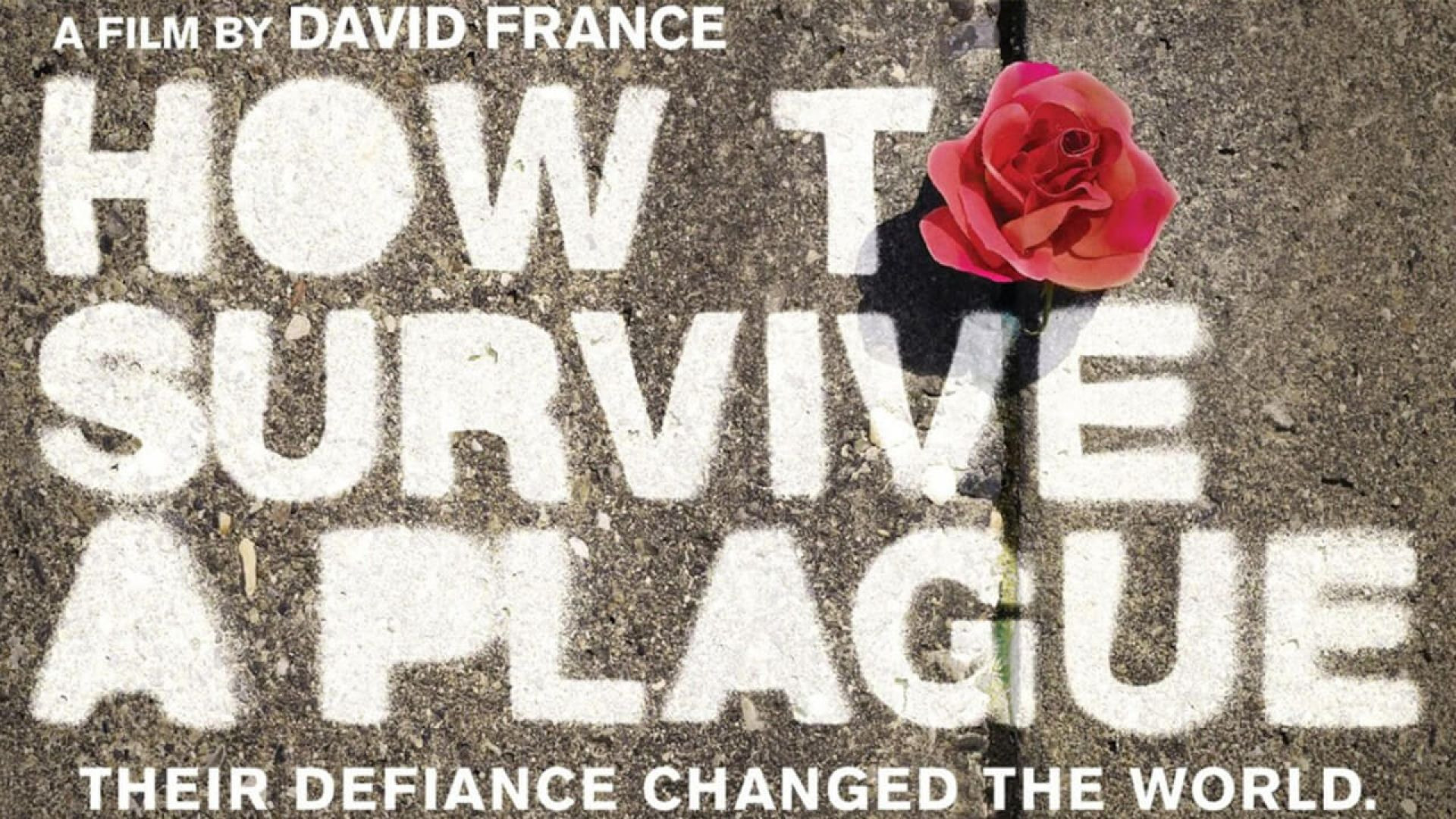
The story of activist group Act Up and its struggle with authority in the early years of Aids makes for a compelling and often moving documentary
"Plague!" howls screenwriter/playwright Larry Kramer like some Old Testament prophet in one of the many arresting moments from this urgent, heartbreaking, and ultimately empowering account of how Aids activists took control of their own destiny in the late 1980s when the US government and health services failed to do so. Kramer is addressing an increasingly heated Act Up (Aids Coalition to Unleash Power) meeting, silencing those who have fallen into factional bickering with a voice which conjures up rage, anger and defiance.
Kramer's outburst is extraordinary, captured in grainy footage along with 700 hours of archive material (TV interviews, news broadcasts, reportage), through which director David France sifts to put us right there in the middle of the emerging struggle. What's even more remarkable is just how effectively the disparate group Kramer calls to order manage to put aside their differences to become a dynamic and wide-ranging force for change, saving lives even as they look death in the face.
Like David Weissman and Bill Weber's equally powerful We Were Here, which movingly documented the response to the outbreak of Aids in San Francisco, How to Survive a Plague offers an enlightening portrait of community action in the face of appalling government negligence and barely concealed anti-gay prejudice. Footage of George Bush blithely advocating a "change of lifestyle" as the only cure for HIV sits alongside riotous film of Act Up members staging peaceful occupations that rattle the cages of both the government and the pharmaceutical industry.
In one gut-wrenching sequence, the ashes of lost loved ones are scattered on the lawns of the White House as baton-wielding policemen on horses attempt to prevent the protesters from making their stand (we think of Joe Hill's call to arms, "Don't mourn, organise!"). Yet even in the midst of such clashes, the authorities came to realise that, in the words of one federal official, "they know more than we do". Gradually, members of Act Up (who included scientists, chemists, and researchers) were accepted onto the boards of those struggling to oversee the crisis, their literate, informed and practical responses to floundering drug development becoming a key part of the search for a cure.
With its intimate footage of activists, several of whom fall by the wayside before the final credits, How to Survive a Plague is a compellingly watchable portrait of a battle fought under that most memorable rallying cry: "Silence = Death". Bravo.
... as 2023 gathers pace, we have a small favour to ask. A new year means new opportunities, and we're hoping this year gives rise to some much-needed stability and progress. Whatever happens, the Guardian will be there, providing clarity and fearless, independent reporting from around the world, 24/7.
Times are tough, and we know not everyone is in a position to pay for news. But as we’re reader-funded, we rely on the ongoing generosity of those who can afford it. This vital support means millions can continue to read reliable reporting on the events shaping our world. Will you invest in the Guardian this year?
Unlike many others, we have no billionaire owner, meaning we can fearlessly chase the truth and report it with integrity. 2023 will be no different; we will work with trademark determination and passion to bring you journalism that’s always free from commercial or political interference. No one edits our editor or diverts our attention from what’s most important.
With your support, we’ll continue to keep Guardian journalism open and free for everyone to read. When access to information is made equal, greater numbers of people can understand global events and their impact on people and communities. Together, we can demand better from the powerful and fight for democracy.
REVIEW RESOURCE: https://www.theguardian.com/fi....lm/2013/nov/10/how-t
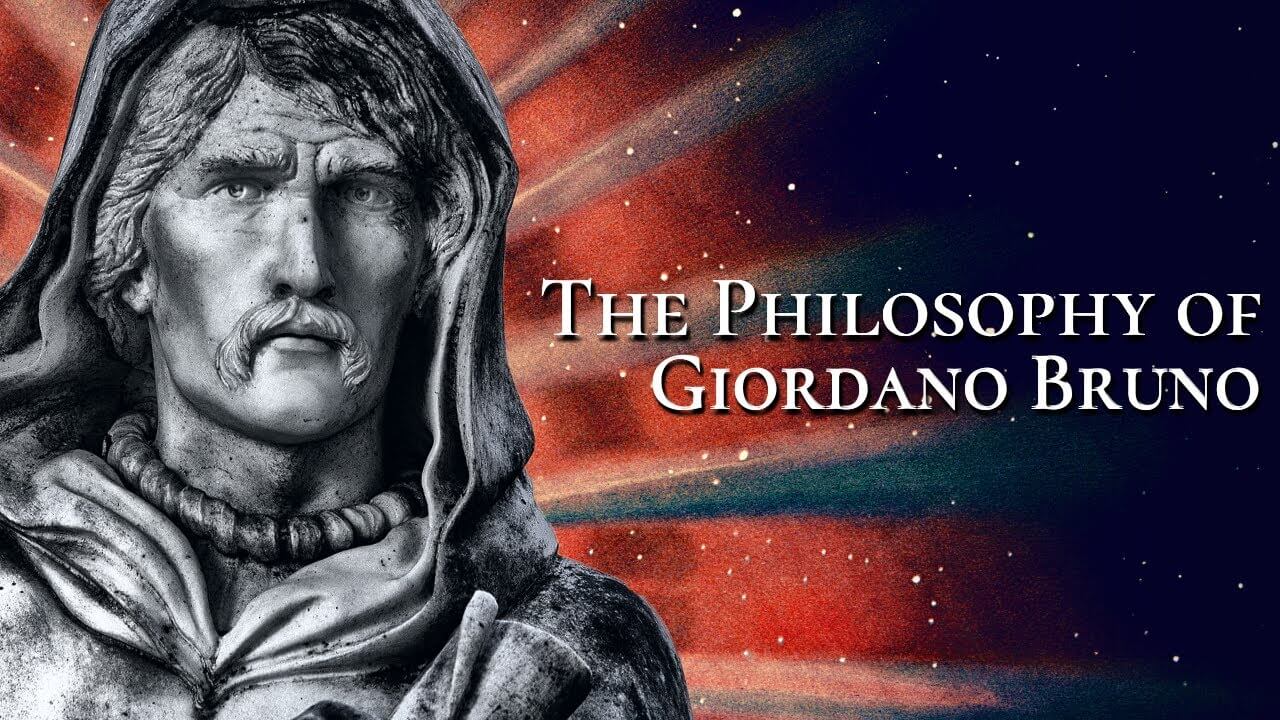
The philosophy of Giordano Bruno was unique for the Neoplatonic and Aristotelian dominated era during which it was conceived. Its uniqueness derives from its ability to combine metaphysics, physics, psychology, and ethics into a philosophy that, while presented in an unsystematic and at times seemingly disjointed way, manages to shine with an inner coherence.
Though this video may seem lengthy to my viewers, the feat of condensing down the vitals of his philosophy was exceedingly challenging as it would have been easy to exceed 45 minutes if the editing was not such a lengthy process. Thank you for taking the time to watch and I hope you can gain some understanding of Bruno’s eclectic philosophy!
Music:
'Cirrus' by Scott Buckley - released under CC-BY 4.0. www.scottbuckley.com.au
Sources: To the generous men and women who published these resources, especially Stanford’s article concerning Bruno, I cannot say thank you enough. Without such articles this video would not be possible without the purchase of countless books.

This man is the real deal on all issues with the COVID-19 treatment.
Dr. Vladimir Zev Zelenko graduated summa cum laude with a B.A. degree with high honors in Chemistry from Hofstra University. After receiving an academic scholarship to attend S.U.N.Y. at Buffalo School of Medicine, he earned his M.D. degree in May 2000. Dr. Zelenko completed his family medicine residency at South Nassau Communities Hospital in Oceanside, N.Y. in May 2004. Since then, Dr. Zelenko has practiced family medicine in New York’s Hudson Valley.
He has been described by his patients as a family member to thousands of families, and is a medical adviser to the volunteer ambulance corps in Kiryas Joel, New York. In March 2020, Dr. Zelenko’s team was one of the first in the country to successfully treat thousands of Covid-19 patients in the prehospital setting. Dr. Zelenko developed his now famous “Zelenko Protocol,” which has saved countless lives worldwide, while he was fighting recurrent and metastatic sarcoma, had open heart surgery, and aggressive chemotherapy.
He has also persevered against unrelenting defamation of character from the media, and threats against his person. Dr. Zelenko is an observant orthodox Jew, married with 8 children, and has authored two books called Metamorphosis and Essence to Essence.
Visit https://vladimirzelenkomd.com/ to get more information about Dr. Zelenko
Covid-19 Treatment Protocol details here:
https://vladimirzelenkomd.com/treatment-protocol/
Covid-19 Treatment Protocol PDF download here:
https://vladimirzelenkomd.com/wp-content/uploads/2021/08/Treatment_Protocol.pdf

Graham Hancock is an English author and journalist, well known for books such as “Fingerprints Of The Gods” & “Magicians of the Gods”. His new book "America Before" comes on out April 23. http://grahamhancock.com/
