Top videos
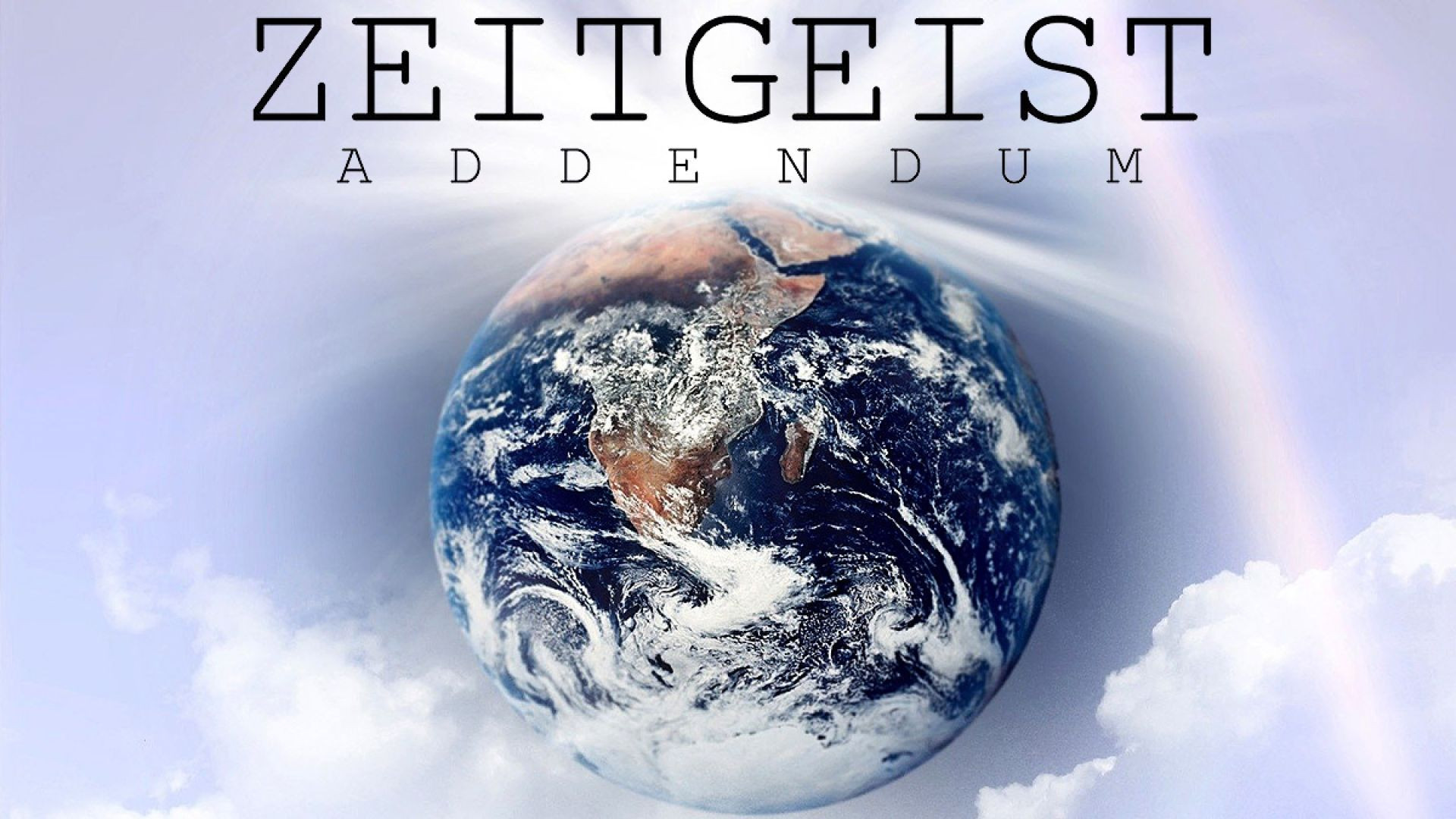
The second documentary film of the series, Zeitgeist: Addendum, attempts to locate the root causes of this pervasive social corruption, while offering a solution.
Building upon the topics of social distortion and corruption, Addendum moves to also present possible solutions. Featured in the work is former “Economic Hit-man” and New York Times bestselling author, John Perkins, along with The Venus Project, an organisation for social redesign created by Social Engineer and Industrial Designer Jacque Fresco.
The original Zeitgeist was actually not a “film”, but a performance piece, which consisted of a vaudevillian style multi-media event using recorded music, live instruments and video. The event was given over a 6-night period in New York City and then, without any interest to professionally release or produce the work, was “tossed” up on the Internet arbitrarily. The work was never designed as a film or even a documentary in a traditional sense - it was designed as a creative, provoking, emotionally driven expression, full of artistic extremity and heavily stylized gestures. However, once online, an unexpected flood of interest began to generate. Within 6 months over 50 Million views were recorded on Google Video counters. Suddenly “Zeitgeist” the event, became “Zeitgeist: The Movie”.
Zeitgeist: The Movie (2007) is a treatment on Mythology and Belief in society today, presenting uncommon perspectives of common cultural issues. Chapter 1, “The Greatest Story Ever Told”, presents historical data relating to the astronomical/astrological origins of the Judeo-Christian theology (which can be extended to Islam as well), along with the understanding that these respective stories, beliefs & traditions are really an adaptation-extension of prior Pagan beliefs.
Chapter 2, “All the World’s a Stage”, presents a controversial view of the events of Sept. 11th 2001. It describes how the event has been transformed into a sacred, near religious act and to challenge the orthodox view, regardless of the quality of the contrary arguments, is considered blasphemy and rejected.
Chapter 3, “Don’t Mind the Men Behind The Curtain “, presents a shotgun tour through the subjects of Central Banking, War Pretexts, Banking Panics, the Military Industrial Complex, Media Culture and ultimately the mental neurosis and deadly addiction known as “Power.” The central theme is how society is often misled when it comes to certain pivotal historical events, what those events serve in function, along with how the overall social conditioning patterns we see today function to create values and perspectives which support and perpetuate the static, established order/power structure, as opposed to fluid social change and productive evolution for the betterment of the society as a whole.
The director, producer, writer, cinematographer, composer, editor and narrator of the work, Peter Joseph, was inadvertently brought into recognition within the documentary film community with his award winning, controversial, 2007 work “Zeitgeist: The Movie” which obtained over 100,000,000 views online during the first year of its publication.
Since that time, he continues to focus on media related expressions, including music composition, performance & film production, each with the focus on affecting society for the better. He has also lectured around the world on the topics of social sustainability and filmmaking and has been featured in the New York Times, Russia Today, TedX, CineFuturo and many other outlets. His film series have earned dozen of awards and have been screened in virtually every country and in over 40 languages. For more about The Zeitgeist Film Series and its history: www.zeitgeistmovie.com

People do not understand how hard a jazz musician works for a living. I’m not putting nobody down, but I’m telling you nobody understands how hard jazz musicians work. Jazz is not big in the US, because the States are too worried about Pac-Man and The Police. — Jaco
When Jaco Pastorius uttered the quote above in a typically entertaining and insightful interview withGuitar World from 1983, he meant no disrespect to the members of The Police. It’s safe to say, in fact, that Pastorius significantly influenced crossover subgenres in punk, New Wave, and No Wave, through compositions like “Punk Jazz” — “a real jazz players stab at a brave new music,” writes Guitar World‘s Peter Mengaziol. In general, Pastorius’ music was “a fusion with energy but without overkill.” He absorbed influences from everywhere, and nothing seemed out of bounds in his playing. “I am not an original musician,” he says in the same interview:
I am a thief…. You see, I rip off everything. I have no originals. Only animals and children can understand my music; I love women, children, music, I love everything that’s going in the right direction, everything that flows… I just love music. I don’t know what I’m doing!
It’s not that Pastorius necessarily thought of jazz as a more elevated form than rock or funk or soul or pop — hardly. He regarded Hendrix with the same worshipful awe as he did Motown bassist Jerry Jemmott, and both equally informed his playing and showmanship. Yet he seemed to feel under-appreciated in his time, and that is probably because he was, even though he was acclaimed as one of the world’s greatest bass players during his brief 35 years, and he radically altered the sound of popular music on albums by Joni Mitchell and other non-jazz-world stars.

Metallica doesn't do anything small. Their songs are relentless assaults of sound, sometimes topping the 8 or 9-minute mark. It's not a surprise then that "Metallica: Through the Never," their 3-D IMAX concert film/apocalyptic Mad Max story, directed by Nimród Antal, is a gigantic spectacle, a virtual-reality experience that is both ridiculous and sublime, sometimes in the same moment.
The band members, lead singer/guitarist James Hetfield, lead guitarist Kirk Hammett, drummer Lars Ulrich, and bassist Robert Trujillo, came up with the concept, giving it a personal stamp which longtime Metallica fans will recognize. The Metallica concert in the film features laser beams, a Tesla coil shooting actual lightning bolts through the air, a gigantic statue of Lady Justice which crumbles to bits around the band members, white crosses emerging from beneath the stage floor, dry ice…the only thing missing from that arena stage is an 18-inch tall Stone Henge. Meanwhile, there's a fictional storyline that runs alongside the concert: a young roadie named Trip (Dane DeHaan) is sent on an important mission to retrieve a bag needed by the band. "Metallica: Through the Never" moves back and forth, from concert to Trip and back.
The concert was filmed at Rexall Place, an arena in Edmonton, Alberta. The stage is huge and cross-shaped, with Lars Ulrich's drum set placed in the transept. The three other guys wander around freely, sometimes meeting up, but mostly facing out, communicating with the masses of gyrating fans. Twenty-four cameras were used, and cinematographer Gyula Pados brings us in close enough that we can almost feel the sweat flying off of Trujillo's long hair as he spins his head, and also pulls us back, way back, to give a sense of the sheer scope of the production and the audience. The fans are packed in tight, pushing against the barriers near the stage, pulsing their arms in the air. The effect of all of this is so visceral and immediate that it really is the next best thing to being there.
Cutting away from the concert to follow Trip's attempt to retrieve the missing bag is a risky device and doesn't work initially, because the concert is so engrossing you resent being made to leave it. But it grew on me as the film progressed, and ended up having a startlingly emotional resonance by the closing shots of the film. Here's what happens. Trip takes off in a battered van to go get this missing bag. Civilization appears to have broken down. Cars are on fire. Riot police and mobs face off. People are strung up from lampposts and dangle in the wind. (There's a reason "Metallica: Through the Never" is rated R.) Trip finds himself singled out by the mob. A literal horseman of the Apocalypse, wielding a gigantic mallet and wearing a gas mask, gallops after him. Trip is beaten up, set on fire, dragged behind a horse, chased through dark alleys. What is in the bag that Metallica needs? Well, if you've seen your Hitchcock, then you know that doesn't matter.
All of these scenes are tied thematically to Metallica's concert song list, which span the 30 years of Metallica's career, from early songs like "Creeping Death," to later songs like "Cyanide." All the major hits are covered: "Master of Puppets," "One," "The Memory Remains," "Enter Sandman," "And Justice For All," "Battery," "Nothing Else Matters." Metallica's music is not light. They are not carefree guys. Even their ballads are gloomy. Trip's struggle to survive in a violent dystopian world is reflective not only of Metallica's most common themes, but also echoes what the music actually sounds like. Metallica's music is fast, aggressive, and demanding. As macho as Metallica's collective stage presence is, what they tap into is a very dark place where they are alone, helpless, and isolated. Music critic Steve Huey once observed that "in one way or another, nearly every song on 'Master of Puppets' deals with the fear of powerlessness." That's where the rage comes from.
Trip, as played by Dane DeHaan, is a skinny kid in black jeans and a hoodie. He is overwhelmed by forces larger than him. He is not physically strong. He is an outcast. James Hetfield may be a tattooed rock god, wearing all black and a bullet belt, stalking around on a stage the size of St. John the Divine like he owns the joint, but he still identifies with guys like Trip. He identifies with the outcasts, the scared kids of the world ("Enter Sandman." their most famous song, features a child's voice praying), and Trip is the stand-in for all kids who feel like they don't fit in, who are scared and feel powerless, who find strength in music like Metallica's. That's when the device stopped feeling like a device and felt like an expression of the band's identification with its own fan base, with the guys they used to be.
It was 1983 when Metallica's first album came out, a year where The Police and Michael Jackson dominated the pop charts. Heavy metal fans were part of a vibrant underground scene, where bootleg cassette tapes were passed around. Metallica are Rock and Roll Hall of Famers now. Their actions (and albums) have not always pleased their hard-core fan base. Remember when they sued Napster? Remember "Load," their sixth album, seen by many fans as a betrayal of what the band was all about? Some of the oldest fans think Metallica sold out with what is known as "the black album." These things are still being argued about on heavy metal websites and fan forums. And then of course, they all went into therapy in order to heal the rifts in their relationships, a process documented in the fascinating 2004 documentary "Some Kind of Monster." The album that resulted from that therapy process, "St. Anger," received mixed reviews but still sold millions of copies. You can see that up-and-down journey in the concert itself, as technical snafus threaten to derail the whole thing, forcing the band to go back to basics.
Some of the best moments in the film involve footage of the concert audience. There is one audience member I keep remembering, and he appears for only a second. He was pushed up against the barrier. He had his shirt off, like a lot of the guys did, and his arms were in the air, eyes closed, lost to everything else but that immediate moment. There are millions more of him around the world. And there were thousands more in that arena. The sound of the audience singing along is so powerful it sounds like a political rally about to turn violent. Even James Hetfield at one point seems a bit taken aback at the collective sound of thousands of people singing his lyrics. At the end of the film, during the credits, the words "To the Metallica Family of Fans" scroll by on the screen. "Metallica: Through the Never" is a vehicle that could reach a new generation of fans, who wouldn't even know what the term "bootleg cassette tape" meant, but know great music when they hear it.
With all of the dazzling special effects "Metallica Through the Never" offers, and with all of the violent encounters poor fictional Trip experiences, it's that shirtless fan, arms raised, that encapsulates what the film is all about, encapsulates what Metallica is all about. To paraphrase one of Metallica's most famous lyrics, that's the memory that remains.
REVIEW RESOURCE: https://www.rogerebert.com/rev....iews/metallica-throu

Citizenfour is a 2014 documentary film directed by Laura Poitras, concerning Edward Snowden and the NSA spying scandal. The film had its US premiere on October 10, 2014, at the New York Film Festival and its UK premiere on October 17, 2014, at the BFI London Film Festival.
The film features Snowden and Glenn Greenwald, and was co-produced by Poitras, Mathilde Bonnefoy, and Dirk Wilutzky, with Steven Soderbergh and others serving as executive producers. Citizenfour received critical acclaim upon release, and was the recipient of numerous accolades, including Best Documentary Feature at the 87th Academy Awards. This film is the third part to a 9/11 trilogy following My Country, My Country (2006) and The Oath (2010).
In January 2013, Laura Poitras, an American documentary film director/producer who had been working for several years on a film about monitoring programs in the United States that were the result of the September 11 attacks, receives an encrypted e-mail from a stranger who calls himself "Citizenfour." In it, he offers her inside information about illegal wiretapping practices of the US National Security Agency (NSA) and other intelligence agencies.
In June 2013, accompanied by investigative journalist Glenn Greenwald and The Guardian intelligence reporter Ewen MacAskill,[6] she travels to Hong Kong with her camera for the first meeting with "Citizenfour" in a hotel, who reveals himself as Edward Snowden. Scenes of their meeting take place in Snowden's hotel room, where he maintains his privacy. Shots of Snowden in his bed, in front of his mirror and of the hotel from a distance form the character of Snowden as a trapped political agent.
After four days of interviews, on June 9, Snowden's identity is made public at his request. As media outlets begin to discover his location at the Mira Hotel, Snowden moves into Poitras' room in an attempt to elude phone calls made to his room. Facing potential extradition and prosecution in the United States, Snowden schedules a meeting with the United Nations High Commissioner for Refugees and applies for refugee status. After Poitras believes she is being followed, she leaves Hong Kong for Berlin, Germany.
On June 21, the US government requests the Hong Kong government extradite Snowden. Snowden manages to depart from Hong Kong, but his US passport is cancelled before he can connect to Havana, stranding him in the Sheremetyevo International Airport in Moscow for 40 days. On August 1, 2013, the Russian government grants Snowden temporary asylum for a period of one year.[8] Meanwhile, Greenwald returns to his home in Rio de Janeiro and speaks publicly about United States' utilization of NSA programs for foreign surveillance. Greenwald and Poitras maintain a correspondence wherein they both express reluctance to return to the United States.
Throughout, the film offers smaller vignettes that precede and follow Snowden's Hong Kong interviews, including William Binney speaking about NSA programs, and eventually testifying before the German Parliament regarding NSA spying in Germany.
The film closes with Greenwald, Snowden and Poitras meeting once again, this time in Russia. Greenwald and Snowden discuss new emerging details on US intelligence programs, careful to only write down and not speak critical pieces of information. Greenwald tears these documents creating a pile of scraps, before slowly removing them from the table.

Utah County Sheriff Mike Smith announced an investigation into what he described as “a child sex abuse ring that operated in Utah, Juab, and Sanpete counties between 1990 and 2010,” under which Utah County Attorney David Leavitt and his wife Chelom Leavitt had been previously accused. Leavitt denied the allegations, saying they were politically motivated, and said the accusations had been debunked over 10 years ago.
Meanwhile, an official study on the NIH National Library of Medicine website says that a condition is causing more deaths in people with COVID-19 vaccines than without. Its autopsy study found there was a “significantly increased rate of generalized viral dissemination within organ systems in vaccinated cases versus nonvaccinated cases.”
RESOURCE: https://www.theepochtimes.com/....utah-sheriff-investi

The official version of human history is a construct of lies. We are in a state of collective amnesia. Let's free ourselves from the artificial matrix that has been imposed on us. This part covers the World's Fairs and the time in which they took place.
Written by: dreamtime & Mosaic, https://stolenhistory.net
Narrated by: Sovereine & David Glenney
Post-production: Bart van der Zwaan https://youtube.com/bartingman
WATCH FULL SIERIES:
Part 1: Nothing is as it seems => https://vajratube.com/v/MBtVx6
Part 2: The Destruction of the Old World => https://vajratube.com/v/4Kya4M
Part 3: The Mystery of the World's Fairs => https://vajratube.com/v/lmqIAN

UNVAXED is a documentary presents the world seen by the unvaccinated individuals.
This film combines several clips from across the Internet in efforts to form the narrative.
Based on actual events.

HAARP, in full High-frequency Active Auroral Research Program, scientific facility for studying the ionosphere, located near Gakona, Alaska. The main instrument is the Ionospheric Research Instrument (IRI), an array of 180 radio antennas spread over an area of 0.13 square kilometer (33 acres).
The ionosphere is the outermost layer of Earth’s atmosphere. It begins at about 50 kilometers (30 miles) above Earth’s surface and contains atoms and molecules that are ionized (that is, they lose an electron and become positively charged) by the Sun’s ultraviolet light. The ionosphere is of particular importance for radio because low radio frequencies are reflected off the ionosphere, allowing for long-distance communications. At higher frequencies, radio communications with satellites pass through the ionosphere. The ionosphere is also where the auroras occur when solar wind particles collide with oxygen and nitrogen atoms.
The IRI transmits at frequencies between 2.7 and 10 MHz with a power of 3.6 megawatts. It transmits radio waves upward into the ionosphere, where they cause electrons to move in waves. HAARP is an ionospheric heater, so called because the excitation of electrons increases their temperature, and it is the most powerful ionospheric heater in the world. By altering the density of electrons in a specific region, scientists using HAARP can study how the ionosphere reacts to changing conditions.
Because of the ionosphere’s significance for radio communications, in the early 1990s the U.S. Air Force and U.S. Navy proposed the HAARP project, and the Air Force began construction in 1993. The site near Gakona was chosen because it was an area of flat ground that was in the North Polar region where auroras occur. The HAARP site was near a major highway but isolated enough that there were no nearby sources of electrical or radio interference. Responsibility for HAARP was transferred to the University of Alaska Fairbanks in 2015.
HAARP became a popular subject of conspiracy theories. Venezuelan Pres. Hugo Chávez blamed it for the 2010 Haiti earthquake, but most such theories about HAARP concern its use for weather modification or mind control. In response, HAARP scientists noted that the ionosphere is far above the troposphere and stratosphere where Earth’s weather actually happens, and, as for any other effects, HAARP scientists stated that the amount of energy the IRI deposits in the ionosphere is far below that supplied naturally by the Sun and that any effects from the IRI quickly dissipate.
(https://www.britannica.com/topic/HAARP)

Well, folks, as we wrap up our deep dive into The Ritual of Satanic Sacrifice, I hope you've gained some insight into this controversial topic.
While there are certainly extreme and dangerous individuals out there who practice satanic rituals, it's important to remember that stereotypes and misinformation can be just as harmful.
Let's continue to educate and inform ourselves about the diverse beliefs and practices in our world, and always approach them with an open mind and a critical eye.
Stay curious, stay safe, and thanks for reading!

The Microsoft co-founder and billionaire philanthropist is asked what his worst fear is. It’s not family tragedy or personal pain. “I don’t want my brain to stop working,” he responds.
That formidable gray matter is fittingly the subject of “Inside Bill’s Brain: Decoding Bill Gates,” a new three-part documentary on Netflix from Academy Award-winning director Davis Guggenheim. It starts Friday.
A portrait emerges of a visionary who gnaws on his eyeglasses’ arms, downs Cokes and is relentlessly optimistic that technology can solve social ills. He also is someone who reads manically — he will scrutinize the Minnesota state budget for fun — and who is a wicked opponent at cards.

The original Zeitgeist was actually not a “film”, but a performance piece, which consisted of a vaudevillian style multi-media event using recorded music, live instruments and video. The event was given over a 6-night period in New York City and then, without any interest to professionally release or produce the work, was “tossed” up on the Internet arbitrarily. The work was never designed as a film or even a documentary in a traditional sense - it was designed as a creative, provoking, emotionally driven expression, full of artistic extremity and heavily stylized gestures. However, once online, an unexpected flood of interest began to generate. Within 6 months over 50 Million views were recorded on Google Video counters. Suddenly “Zeitgeist” the event, became “Zeitgeist: The Movie”.
Zeitgeist: The Movie (2007) is a treatment on Mythology and Belief in society today, presenting uncommon perspectives of common cultural issues.
Chapter 1, “The Greatest Story Ever Told”, presents historical data relating to the astronomical/astrological origins of the Judeo-Christian theology (which can be extended to Islam as well), along with the understanding that these respective stories, beliefs & traditions are really an adaptation-extension of prior Pagan beliefs.
Chapter 2, “All the World’s a Stage”, presents a controversial view of the events of Sept. 11th 2001. It describes how the event has been transformed into a sacred, near religious act and to challenge the orthodox view, regardless of the quality of the contrary arguments, is considered blasphemy and rejected.
Chapter 3, “Don’t Mind the Men Behind The Curtain “, presents a shotgun tour through the subjects of Central Banking, War Pretexts, Banking Panics, the Military Industrial Complex, Media Culture and ultimately the mental neurosis and deadly addiction known as “Power.” The central theme is how society is often misled when it comes to certain pivotal historical events, what those events serve in function, along with how the overall social conditioning patterns we see today function to create values and perspectives which support and perpetuate the static, established order/power structure, as opposed to fluid social change and productive evolution for the betterment of the society as a whole.

Ciemna strona buddyzmu tybetańskiego, czyli nadużycia władzy, despotyzm, seksualne wykorzystywanie uczniów, pedofilia, chciwość i gromadzenie dóbr materialnych. Autorka dokumentu podąża tropem skandali związanych z działalnością popularnego w Europie, Azji i Stanach Zjednoczonych odłamu zwanego Szambalą. Diamentowa Droga potrafi być kręta, pełna pułapek i niebezpieczeństw.
Reżyseria : Elodie Emery

This documentary looks inside the life of a high-powered music publicist who became a techno-age philosopher.
For the past 20 years, in his second career as a best-selling author, Howard Bloom has been grappling with the big questions, all of which can be boiled down to, as he puts it here, “What does the universe want from you and me?” Bloom has, in the pre-Covid-19 world chronicled in this documentary about him, a strict routine that helps him in this discipline.
It includes morning exercise and consulting a list of reminders of what to take with him when he ventures out of his Brooklyn brownstone. It also involves a staggering number of medications, which he needs to combat his chronic fatigue syndrome, which struck him in 1988 and left him unable to step out of his bed, let alone his apartment, for many years.
Directed by Charlie Hoxie, “The Grand Unified Theory” is a moderately engaging documentary that credibly portrays Bloom’s indefatigability. He speaks of his aspiration to be a “24 hour-a-day information processing device” and defends his auto-didacticism by saying “Grad school looked like Auschwitz for the mind.” That eyebrow-raising simile is emblematic of Bloom’s bluff offhandedness, which likely served him well in his first career as a high-profile music publicist. (Recalling his tenure representing Run-DMC, he says, “We made rap.” Kurtis Blow and others might like a word.)
The movie spends more time on Bloom’s personality than it does on the ideas promulgated in such volumes as “The Lucifer Principle,” for which the actor Jeff Bridges contributes an onscreen blurb. And when Bloom confides his plan to let a Dubai-based fitness instructor and gym entrepreneur handle his archives, we get into what looks like some P.T. Barnum territory.
REVIEW RESOURCE: https://www.nytimes.com/2020/0....7/21/movies/the-gran

Filmworker charts the multiple decades that Leon Vitali spent as the jack-of-all-trades assistant to famously demanding film director Stanley Kubrick. It’s a glimpse into the ways Kubrick worked that is both fascinating and heartbreaking, especially in the ways the director, and then his estate after his death, treated someone who was unwaveringly loyal. The lone bonus feature is a Q&A with Vitali and director Tony Ziera.
Behind every Hollywood legend there’s usually at least one assistant who helps keep that person’s world turning in countless unsung ways. In the case of famous film director Stanley Kubrick, there was Leon Vitali, who was different from other assistants in film lore because he cut short a promising acting career to take on a thankless role.
He was also different because he did so much more than keep the trains running on time, so to speak. When needed, Vitali served as casting director, editor, film archivist and restorationist, and more. He even stepped in to play a masked role in Kubrick’s final film, Eyes Wide Shut, which, of course, didn’t allow him to shirk his other duties even as he was filming his lines over and over again, as the director famously liked to do.
Director Tony Zierra’s documentary about Vitali, Filmworker, takes its name from the occupation Vitali put on various forms. It was something he came up with, he says, because he saw himself simply as someone who works in film. He acted in many British TV shows and movies before being cast as Lord Bullingdon in the 1975 Kubrick film Barry Lyndon. While on the Lyndon set, he was fascinated by how the director was involved in every aspect of the production and how every crew member around him had a key role to play.
That fascination led him to essentially creating a job for himself with Kubrick, who, as Vitali tells it, was masterful at coming across as benign and gentle at first before later revealing his controlling and demanding side. In that context, Vitali notes that Kubrick loved to play chess, but I don’t know if that’s a masterful relationship move as much as someone who wants to hide their distorted personality until the other person is in too deep. Kubrick was brilliant, but he was also abusive – I’ve long felt that his infamous obsession with shooting even the most mundane moments over and over wasn’t so much about perfectionism as it was about a sadistic tendency to see how far he could push people.
In Vitali’s case, I don’t think there was ever a notion that he was in too deep. He seemed to revel in his relationship with Kubrick, enjoying the fact that he worked long hours seven days a week to serve all of the director’s whims and needs. The only times cracks seem to appear in that happy façade are when he relates moments where he’s perhaps considering that Kubrick went too far – such as when he horribly mistreated Vitali on Christmas Eve, gave him a present and sent him home, and then started calling him on Christmas Day to hound him about many tasks that needed to be done.
When Kubrick died, Vitali seemed to be cast aside by people closest to the director who took over his estate. It’s telling, for example, that this documentary doesn’t feature interviews with Kubrick’s widow Christiane and her brother Jan Harlan, who executive produced several of the director’s movies and was known as his right-hand man. Vitali was constantly at Kubrick’s home when he wasn’t on movie sets or doing prep work for movies such as location scouting and casting, so obviously the two of them would have been around him quite a bit.
REVIEW RESOURCE: https://www.flickeringmyth.com..../2021/03/blu-ray-rev

First case of polio in the US in years was detected this week in New York — here's what to know about polio vaccinesUS records first polio case in nearly a decade
Fox News' Lauren Green on the investigation into how a 20-year-old unvaccinated man contracted polio.
An unvaccinated Rockland County, N.Y., resident exposed to an individual who received an oral poliovirus vaccine contracted the neurological disease and is now paralyzed, according to Rockland County and New York State Health Officials on Thursday, as Fox News Digital reported earlier.
The case raises the issue of polio vaccinations — and what Americans should know to protect their health.
"Based on what we know about this case and polio in general, the Department of Health strongly recommends that unvaccinated individuals get vaccinated or boosted with the FDA-approved IPV [inactivated] polio vaccine as soon as possible," State Health Commissioner Dr. Mary T. Bassett said in a release from the N.Y. State Department of Health that was provided to Fox News Digital.
NEW YORK COUNTY OFFICIAL URGES RESIDENTS TO GET VACCINATED AFTER FIRST CASE OF POLIO IN YEARS
Health officials said on Thursday that the oral vaccine — which contains live strands of the poliovirus — is no longer used in the U.S.
However, it is still used in many countries, including those in Eastern Europe.
Officials could not confirm where the individual who received the oral polio vaccine was from or where the person who is ill encountered this person.
The patient began experiencing symptoms about a month ago; state and county health officials began investigating and contact tracing.
"The fact is, the urgency of safe and effective vaccines has always been here, and we need New Yorkers to protect themselves against completely preventable viruses like polio."
Pop-up polio vaccination clinics have been established this past week and for next week as well.
RESOURCE: https://www.foxnews.com/health..../polio-oral-vaccine-

Here's a fair analysis that clearly explains the complete uselessness of Pfizer's Covid-19 vaccines - even more - it is clear from this analysis that Pfizer's suspect substances harm far more than the real viral threat.
Pfizer's own 6 month report data on its COVID-19 inoculation shows that greater illness and death in the inoculation arm than the placebo arm. Plus, poor trial design, missing data, underpowered studies, passive surveillance and more.
For the PDF of this presentation visit:
https://www.canadiancovidcarea....lliance.org/media-re
The official document below contain a list nearly 2,200 medical conditions and clinical ailments caused by Pfizer substances.
Attachment - PDF icon Pfizer Adverse Events Report <=
RESOURCE: https://www.datascienceassn.or....g/content/pfizer-adv
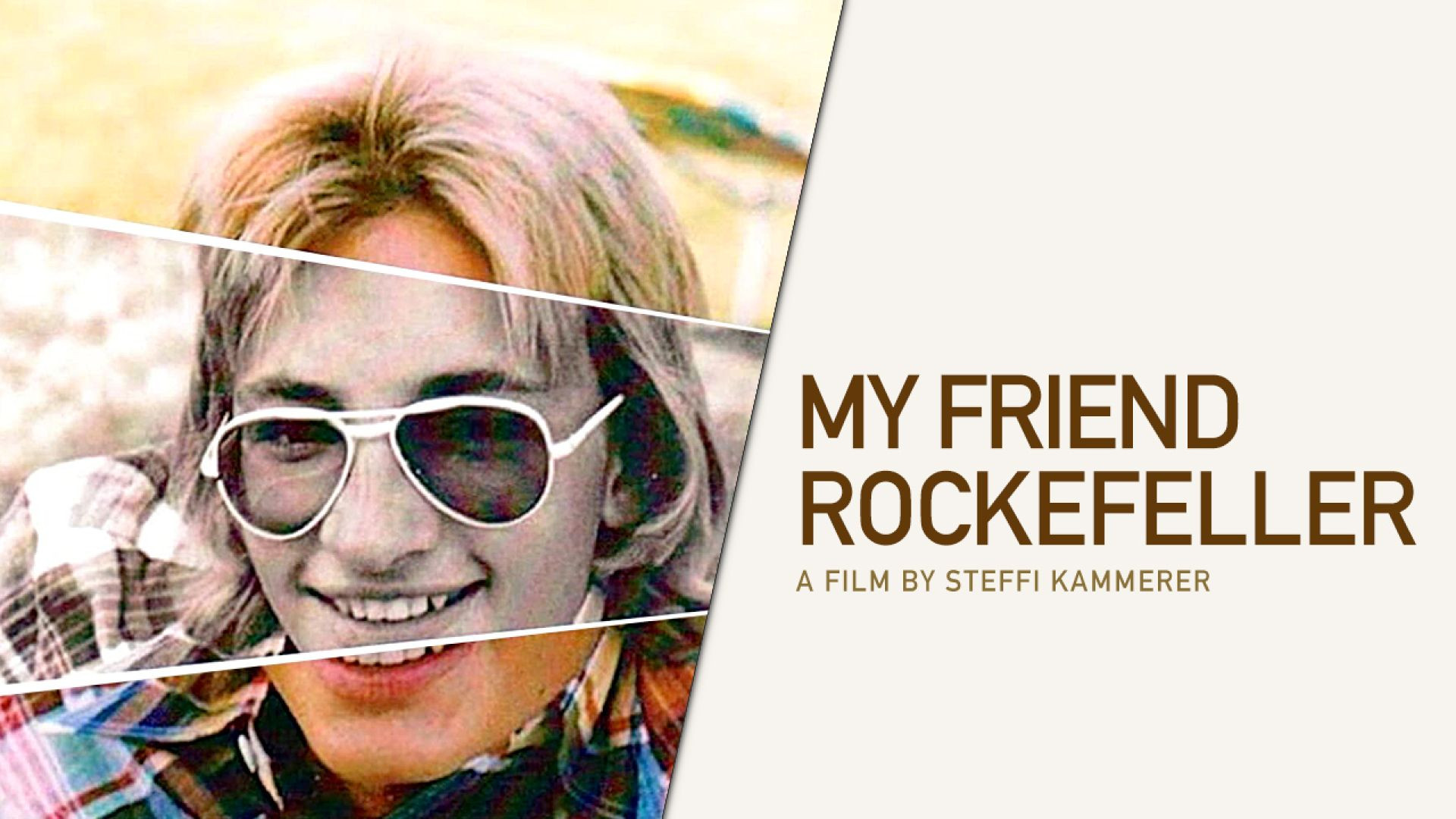
My Friend Rockefeller’Tells The Story Of The Infamous Imposter, Christian Karl Gerhartsreiter.
There's no shortage of shocking stories about feigned identities - from Anna Delvey to John Meehan, con men and women are ubiquitous. But few stories involve a move from Germany, five identities, and the Rockefeller family name. The fascinating story of Christian Gerhartsreiter manages to include all three. Gerhartsreiter made his way across the US, ingratiating himself into wealthy communities until he settled in New York City. There, Gerhartsreiter married a Harvard grad and pretended to work in prestigious philanthropic positions, all the while hobnobbing with some of the richest and most prominent members of American high society.
Gerhartsreiter's life imploded when his wife decided to seek a divorce. Gerhartsreiter took their daughter, of whom he had lost custody, and prepared to sail abroad under a different identity. Police discovered the plan before he could escape and soon detained him. Authorities uncovered Gerhartsreiter's trail of lies, one of which implicated him in the slaying of a man and a missing woman.
The documentary My Friend Rockefeller tells Christian Karl Gerhartsreiter's real story. My Friend Rockefeller reviews suggest the film successfully analyzes why Christian Karl Gerhartsreiter used the name Clark Rockefeller, and describes what has happened since he was apprehended in 2008. As of 2019, he's serving time, possibly for the rest of his life. His story has inspired a movie called Who Is Clark Rockefeller?, as well as several books and podcast episodes. Gerhartsreiter will live in infamy, though likely not for the reasons he hoped.
Gerhartsreiter Used Five Different Identities Over 30 Years
After Gerhartsreiter took his daughter, police discovered that his friends knew him as a number of different identities. Some knew him as Chris Gerhart, a film student at the University of Wisconsin. He had also gone by Christopher C. Crowe when he worked as a TV producer in the late '80s. Others knew him as an alleged British royal, Christopher Chichester, who suddenly left Los Angeles in the 1980s following a couple's disappearance.
By the time Gerhartsreiter fled Boston with his daughter, his friends and his wife Sandra Boss knew him as Clark Rockefeller. The alleged Rockefeller worked and lived among some of the country's most wealthy.
Gerhartsreiter Successfully Convinced An Entire Community That He Inherited A Part Of The Rockefeller Fortune
The alleged Rockefeller convinced not one, but two communities of lawyers, doctors, artists, and writers that he was a descendant of the Rockefeller family. In New York, he took his prestigious friends to country clubs and showed off his "art collection," which authorities later determined was fake.
In Boston, Gerhartsreiter ingratiated himself with a community of wealthy people who often met at a Starbucks near his daughter's school. Gerhartsreiter became the director of the Algonquin Club and invited his elite friends, even if he did charge them for their visits. John Greene, who was adjacent to Gerhartsreiter's circle, said he easily convinced them he was a Rockefeller, claiming, "At a club like that - very Yankee, old-boys, blue blood - people get [excited] over the name."
REVIEW RESOURCE: https://www.ranker.com/list/my....-friend-rockefeller-

"He's an outsider. He's a maverick." Vision Films is about to release this documentary, called Banksy & The Rise of Outlaw Art, this week - available on VOD. We missed this trailer when it first debuted a few months ago, but happy to catch up with it now. Elio Espana's doc Banksy & The Rise of Outlaw Art is a look at the modern street art / graffiti culture that Banksy elevated. "Banksy, the world's most infamous street artist, whose political art, criminal stunts, and daring invasions outraged the establishment and created a revolutionary new movement while his identity remained shrouded in mystery.
[This film] finally reveals Banksy's story, from his roots in a criminal subculture to his rise as the leader of an art revolution." Don't expect Banksy's identity to actually be revealed. Not only was there Banksy's own doc Exit Through the Gift Shop (from 2010), but we also had the Banksy Does New York doc a few years ago, too.
As the world’s most infamous street artist, Banksy’s political art, criminal stunts and daring invasions have outraged the establishment for over two decades, but despite being one of the most important figures of our times, Banksy has remained an enigma, with little known about the circumstances of his life and work.
His rise coincided with the emergence of Street Art, a form of illegal, public art that evolved from the graffiti scene to change the face of cities across the world. Banksy became the leading figure in this revolutionary new movement, assembling a multi-million dollar empire and changing the way that we think about art. Through it all, however, his identity has remained shrouded in mystery… Banksy & The Rise of Outlaw Art is directed by documentary producer / filmmaker Elio Espana, director of the films Dawn of the Dead: The Grateful Dead & the Rise of the San Francisco Underground, CSNY: Fifty by Four, Feats First: The Life & Music of Lowell George, and Hamilton: One Shot to Broadway previously.
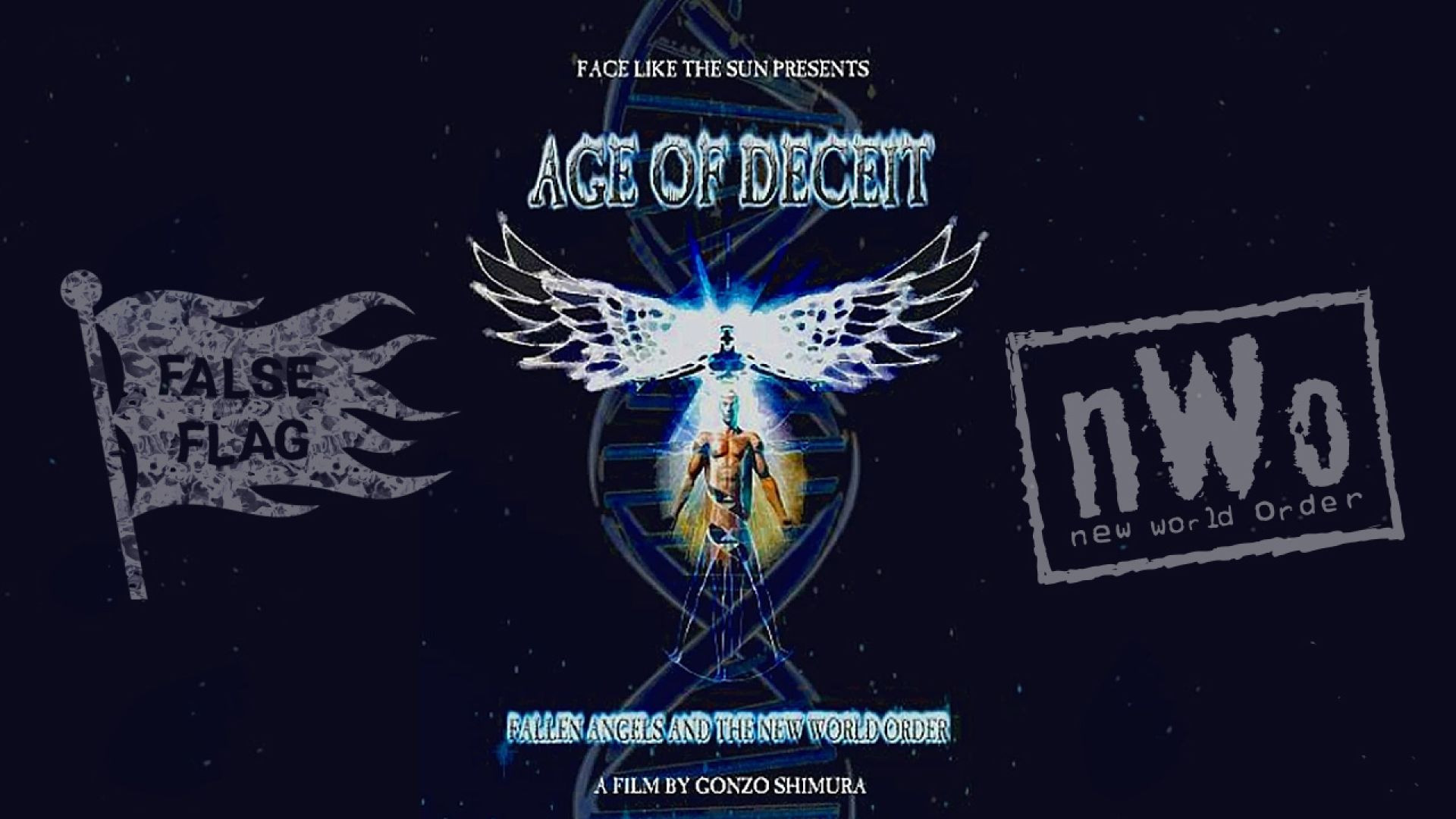
Is there a connection between UFOs, alien abductions, channeling spirits, demonic possessions, the new age movement, secret societies, and satanism?
In Age of Deceit: Fallen Angels and the New World Order, we investigate why the New World Order and the Global Elite are tirelessly working to form a One World Government and who they are getting this instruction from.
A biblical look at the history of fallen angels and it's relationship to the New World Order and the new age movement.
Topics covered are the fall of mankind, the pre-flood world as Atlantis, the new age through theosophy, the fallen angels and their origin of planting the seeds to society, UFOs, ETs and abduction cases, demonic possession, channeling, and more.

This is a message from Dr. Anne McCloskey from Londonderry. She speaks about the traumatised people that she comes across. Most double jabbed with an experimental genetic therapy.
These people might have been bribed, bullied, coerced, because of the removal of their basic human rights.
The hospitals are full of double jabbed people and increasingly younger people - and next they are coming for the children.
Let me know your thoughts in the comments?
Check out my other channels as well:
RESOURCE: https://plandemic.co/2021/08/2....2/a-message-from-ann
