Top videos

Clear, blue skies greeted air travelers on the morning of September 11, 2001. But those skies were more heavily trafficked than we were originally led to believe, according to the documentary 9/11 War Games. Produced by the conspiracy-minded Corbett Report, the film assumes a unique perspective for those who question the official account of that tragic date.
Before the attacks began to unfurl, there were an unprecedented number of aviation tests, military drills and emergency simulations taking place. Some were eerily similar to the terrorist attacks that would grip the country later that morning. In spite of the incessant denials that followed in the months and years following 9/11, the film argues that military forces were well aware of the potential of such an attack, and were active in preparing for such a nightmare scenario.
The evidence presented in the film expose how the government was well aware of the specific threats in the lead up to 9/11. Documents and taped recordings show multiple military drills mounted by the North American Defense Command (NORAD), including those involving hijacked airplanes, coordinated attacks from multiple planes, and even a scenario that used an aircraft as a weapon in the heart of the Pentagon.
The theory? The real plot of terror was piggybacked off some of these simulated war games. While much of the blame fell on the FAA, the prevention of these attacks was actually hindered by an inability to decipher between the manufactured exercises and the real world tragedy. The terrorist cell was likely aware of such exercises, and used them to their advantage.
Taken to the extreme, the film theorizes that members of NORAD, the US military and the National Command Authority were themselves complicit in these attacks, and the confusion between simulation and reality was an intentional and strategic stage from which they could operate most effectively.
Viewers who have an intolerance for conspiracy-themed material, especially as it pertains to the events of September 11, might find some of the film’s thesis offensive. But for others, 9/11 War Games may serve as a provocative, well assembled argument for greater transparency.
REVIEW RESOURCE: https://topdocumentaryfilms.com/9-11-war-games/

We are being given a second chance to say no to the psychopathic criminals in our government
Our Christmas In August sale is NOW LIVE! Get DOUBLE Patriot Points and up to 60% OFF our hottest items while you can!
It’s BACK! Get $10 off Silver Bullet Colloidal Silver that’s returned to the Infowars Store by popular demand!
Our fan-favorite drink mix Vitamin Mineral Fusion is back at 40% off! This advanced multivitamin formula is more delicious than ever before!
Brain Force Ultra is now HALF OFF! Experience the next level in high-powered energy nootropics that’s loaded with proprietary super ingredients while you still can!
Ultimate Bone Broth Plus is now 40% off! Get it today to taste & experience the upgraded version of our famous formula to rediscover primal nutrition that’s missing from our modern diet!
HUGE!! Every single one of our powerful health & wellness products from Infowars M.D. is now 30% OFF! This revolutionary series of lifestyle-altering products will redefine your peak physical and mental state!
Conquer life with an optimal immune system and order our Immune Support that is now 50% OFF! Boost your system naturally with ultra-high quality ingredients selected for their nature-based benefits!
Save 50% on Brain Force Plus to supercharge your state of mind and experience our powerful nootropic that delivers the mental edge you’ve been looking for!
Our hottest new item, Prebiotic Fiber is now HALF OFF! See for yourself why this jam-packed nutrient dense formula is flying off our shelves!
Infowars Platinum is thriving! Save 25% on our latest line of products that promote a healthy lifestyle globalists DO NOT want you to have!
RESOURCE: https://reesereport.com/

Hunter Biden’s business dealings in China served the “strategic interests” of the country’s communist government and military — and may have imperiled American national security, claims a new documentary exclusively previewed by The Post.
“Riding the Dragon: The Bidens’ Chinese Secrets” highlights several deals that Hunter Biden was involved in as a board member of the Beijing-based BHR Partners investment firm.
The film also alleges that Hunter was only able to get meetings with Chinese officials — and secure $1 billion in funding — “because of who his father was: vice president of the United States” and then-President Barack Obama’s “point person on US policy towards China.”
The 41-minute documentary is narrated by best-selling writer Peter Schweizer, who authored 2015’s “Clinton Cash: The Untold Story of How and Why Foreign Governments and Businesses Helped Make Bill and Hillary Rich” and has previously written about Hunter’s business dealings in China.
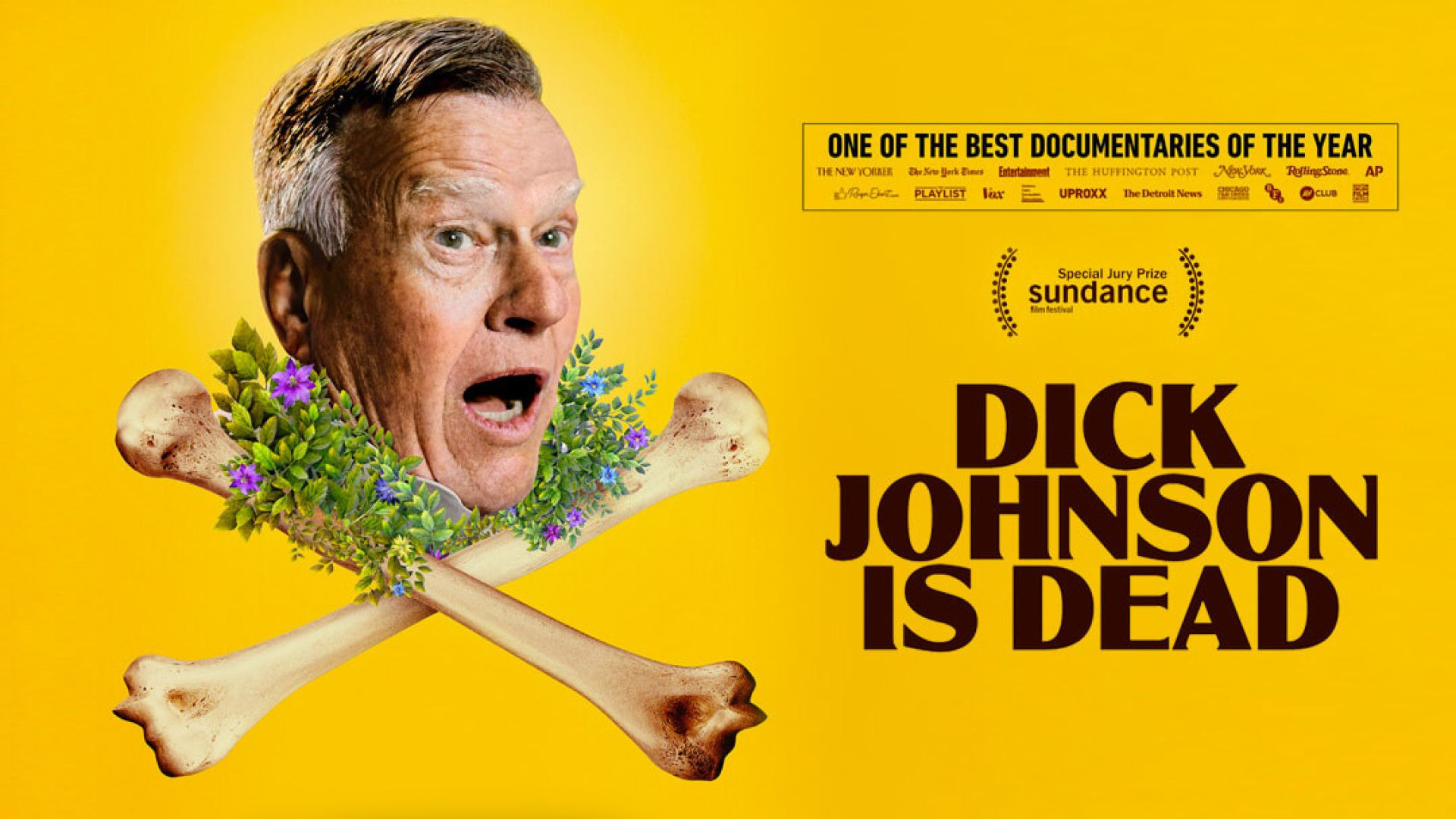
Dick Johnson Is Dead is a 2020 American documentary film directed by Kirsten Johnson and co-written by Johnson and Nels Bangerter.
A lifetime of making documentaries has convinced award-winning filmmaker Kirsten Johnson of the power of the real. But now she’s ready to use every escapist movie-making trick in the book — staging inventive and fantastical ways for her 86-year-old psychiatrist father to die while hoping that cinema might help her bend time, laugh at pain and keep her father alive forever.
The darkly funny and wildly imaginative DICK JOHNSON IS DEAD is a love letter from a daughter to a father, creatively blending fact and fiction to create a celebratory exploration of how movies give us the tools to grapple with life’s profundity. DICK JOHNSON IS DEAD was filmed, produced and directed by Kirsten Johnson (Cameraperson), produced by Katy Chevigny and Marilyn Ness, co-produced by Maureen A. Ryan and executive produced by Megan Ellison.
Cast:
Kirsten Johnson
Charles Richard "Dick" Johnson
Development:
Director Kirsten Johnson at the Miami Film Festival
Kirsten Johnson was inspired to make the film after having a dream in which "there was a man in a casket and he sat up and said, 'I'm Dick Johnson and I'm not dead yet'". When she pitched the idea to her father, she asked him, "Dad, what if we make a movie where we kill you over and over again until you really die? And he laughed".
The film incorporates Johnson family photographs and home movies, including that of Richard Johnson's wife who died from Alzheimer's disease in 2007.
Release:
The film premiered on January 25, 2020 at the 2020 Sundance Film Festival. It was released on October 2, 2020 via Netflix.
RESOURCE: www.dickjohnsonisdead.com

Raoul Peck’s outstanding, Oscar-nominated documentary is about the African American activist and author James Baldwin, author of Go Tell It on the Mountain and The Fire Next Time. Peck dramatises Baldwin’s unfinished manuscript Remember This House, his personal memoir of Malcolm X, Martin Luther King Jr and civil rights activist Medgar Evers, murdered by a segregationist in 1963. Baldwin re-emerges as a devastatingly eloquent speaker and public intellectual; a figure who deserves his place alongside Edward Said, Frantz Fanon or Gore Vidal.
Peck puts Samuel L Jackson’s steely narration of Baldwin’s words up against a punchy montage of footage from the Jim Crow to the Ferguson eras, and a fierce soundtrack. (It’s incidentally a great use of Buddy Guy’s Damn Right I’ve Got the Blues, which never sounded so angry or political.) There is a marvellous clip of Baldwin speaking at the Cambridge Union Society, and another on the Dick Cavett Show – the host looking sick with nerves, perhaps because he was about to bring on a conservative intellectual for balance, whom Baldwin would politely trounce.
Baldwin has a compelling analysis of a traumatised “mirror stage” of culture that black people went through in 20th-century America. As kids, they would cheer and identify with the white heroes and heroines of Hollywood culture; then they would see themselves in the mirror and realise they were different from the white stars, and in fact more resembled the baddies and “Indians” they’d been booing.
The film shows Baldwin refusing to be drawn into the violence/non-violence difference of opinion between King and Malcolm X that mainstream commentators leaped on, and steadily maintaining his own critique – although I feel that Peck’s juxtaposition of Doris Day’s mooning and crooning with a lynch victim is a flourish that approximates Baldwin’s anger but not his elegance. There is a compelling section on Baldwin’s discussion of dramatist Lorraine Hansberry, author of A Raisin in the Sun. It is vivid, nutritious film-making.
REVIEW RESOURCE: https://www.theguardian.com/fi....lm/2017/apr/07/i-am-

The Hollywood Vampires take their name from an all-star social club that drank itself to oblivion during the mid 1970s at the Rainbow Bar and Grill on The Sunset Strip. The 2019 documentary The Rainbow chronicles the restaurant’s place in the Los Angeles music scene and is an engaging profile of the family that’s run it for three generations (that is, when it’s not indulging in lazy nostalgia). Directed by Zak Knutson, it is currently streaming on Amazon Prime.
Since opening in 1972, the Rainbow has offered food and drinks to successive generations of rockers. Located in West Hollywood, betwixt a cluster of music venues, it was popular with bands visiting Los Angeles as well as those living and trying to make it in the City of Angels. Besides the Hollywood Vampires – which included Alice Cooper, a couple Beatles and riotous Who drummer Keith Moon, Led Zeppelin picked up groupies there, The Runaways ate there and a teenage Slash snuck in dressed as a woman. Motörhead’s Lemmy loved the place so much he bought an apartment within walking distance and was often found drinking Jack Daniel’s and playing video poker at the bar for hours on end.
Behind it all was the Maglieri family, led by tough talking patriarch Mario, who came to Los Angeles from Chicago in the early 1960s to help run another storied local institution, the Whisky A Go Go. Mario is hard not to like, dropping one-liners like “I had rock n’ roll in my bar in Chicago before you ever heard of rock n’ roll,” calling Jim Morrison “a good kid,” and telling stories about throwing Charles Manson out on his ass, like a real life Cliff Booth. “He says, ‘I’m Jesus.’ I tell him, ‘I’m God motherfucker. Now get up from that chair.’ He got up or I’d have had to beat the shit out of him. Either one.”
Though its capacity was in the hundreds, the Whisky became one of the most important L.A. music clubs of the ‘60s and ‘70s. The Doors and Chicago were the house bands at various times, Van Halen used it to built their audience and scores of trailblazing acts made their area on its stage. As Kiss’ Gene Simmons says, “When you first start out and before you figure out your game, the Whisky’s the place to do it.” In fact, the Maglieri have an interest in both the Whisky and the Rainbow, and the film is as much about the venue as the bar up the street.
As the ’70s turned to the ’80s, hard rock turned to metal, from glam to thrash, and again found a home on the Sunset Strip. W.A.S.P. and L.A. Guns drummer Steve Riley says he went to the Rainbow the first night he moved to L.A. and it became a great place to meet other hungry young rock musicians looking to form bands. Thought it all, Mario Maglieri was there to comp musicians a bowl of soup or offer fatherly advice, telling young rock stars when they were drinking too much or doing too many drugs.
REVIEW RESOURCE: https://decider.com/2020/02/24..../the-rainbow-documen

Director John Dullaghan's biographical documentary about infamous poet Charles Bukowski, Bukowski: Born Into This, is as much a touching portrait of the author as it is an exposé of his sordid lifestyle.
Interspersed between ample vintage footage of Bukowski's poetry readings are interviews with the poet's fans including such legendary figures such as Lawrence Ferlinghetti, Joyce Fante (wife of John), Bono, and Harry Dean Stanton.
Filmed in grainy black and white by Bukowski's friend, Taylor Hackford, due to lack of funding, the old films edited into this movie paint Bukowski's life of boozing and brawling romantically, securing Bukowski's legendary status. Born Into This relies on interviews with Bukowski for biographical information instead of cheesy voiceovers, bringing the viewer even closer to the author.
For example, in one amazing sequence, Bukowski rides the viewer around in the backseat of his car, telling us through his rear-view mirror of his stint as a post office worker which inspired the novel, Post Office.
Scenes splicing interviews with Bukowski's ex-wife, Linda Lee, and R. Crumb's comic strip panels portraying Bukowski as a sex-crazed maniac, set the tone for bawdier parts of the film.
Occasionally the film displays lines of Bukowski's poetry on the screen, as reminders that he was not only a raging alcoholic with a fierce sense of humor but also a talented and beloved writer. With so much hilariously shocking footage of "Hank," Bukowski: Born Into This presents Bukowski as a troubled but classic genius.

They act in the shadows, they are extremely secretive and they practise ancient rituals. Secret societies play a far larger role in our everyday lives than we are aware of. Publications like those of bestselling author Dan Brown have brought them back into the limelight. The three-part documentary, ‘Secret Societies’, accompanies historian Dr Marian Füssel on his search for clues surrounding history’s most famous secret societies and conspiracy theories.
The secret brotherhood of the Illuminati was only active for ten years. They dreamed of having members of their brotherhood occupy crucial positions of power, thereby creating a new, fairer state. Banned as early as 1785, rumours that ‘the enlightened ones’ still exist in secret cannot be dispelled. Terra X investigates the legendary Illuminati brotherhood, also exploring other secret organizations that allegedly have their roots in Antiquity.

Creep - Vintage Postmodern Jukebox Radiohead Cover ft. Haley Reinhart
Download & Stream "Creep" Here: http://pmjlive.com/the-essentials
Experience PMJ Live: http://www.pmjtour.com
Shop PMJ Music/Merch: http://www.shoppmj.com
Follow Us On Spotify: https://www.pmjlive.com/pmjspotify
Sign up to get videos to your inbox: http://www.pmjlive.com/newsletter
One of the highlights of our 2015 European tour was Haley Reinhart's masterful interpretation of our vintage arrangement of Radiohead's "Creep" (originally performed on this channel by the amazing Karen Marie). I enjoyed it so much that I brought Haley into a studio in Zurich on our day off to record it. If you haven't heard Haley sing this before, get ready for a truly remarkable performance. Oh yeah- and this was the very first take.

As long as you accept there’ll be no genuine analysis in “My Generation,” Michael Caine’s joy ride through his youth offers significant pleasures. There’s a tremendous amount of pleasure to be had in David Batty’s “My Generation,” a sloppy wet kiss to Michael Caine and British youth culture of the 1960s. Loaded with great footage from the era and accompanied by superbly cleaned-up music tracks from the Kinks, the Beatles, the Rolling Stones and many others, this love letter-as-documentary offers 85 minutes of good old fun. What it doesn’t do is posit any genuine analysis or even make a head-nod to diversity.
But this is Caine’s narrative about the unapologetic working class taking over popular culture, and the writers as well as music mogul Simon Fuller, acting as top producer, have no interest in countering their star’s gleefully empowering chronicle of his youth. Voiceover interviews with such key players of the era as Paul McCartney, Marianne Faithfull, Twiggy and Mary Quant add to the overall feast, making the film an attractive offering for all platforms. Britain in the 1950s was dull, announces Caine, though doesn’t every generation say that about the era before their own gloriously self-satisfied arrival?
What’s undeniable is the momentous shift toward youth culture beginning in the 1960s, as well as the opening up of opportunities for white working-class creative types who no longer submitted to makeovers designed to smooth out their roughness. In one of the more telling anecdotes, Caine talks about auditioning for “Zulu,” his breakthrough role, and accurately suggests that had the director, Cy Endfield, been British instead of American, Caine’s working class London accent would have eliminated any hope of being cast in the role of an upper-class officer. That’s an undeniable fact.
Far more shaky is the suggestion that the working class in the 1960s was the first generation in Britain to thumb its collective nose at convention. On-the-street interviews from the era with stuffed shirts bemoaning the appearance of long-haired men in flowery blouses expose middle-class attitudes, but the filmmakers choose to ignore the fact that the upper class has always played with transgression in ways designed to shock the bourgeoisie. What made the 1960s different was that the working class was playing the same game, and emulating “our betters” was no longer an acceptable form of behavior.
Nor was emulating our elders: Freedom from convention was the hallmark of a social revolution that impacted everything from art, music and clothing to changing concepts of morality. Of course, every Englishman knows the class system remains the key determinant of opportunity, but in the art and entertainment world, coming from the wrong side of the tracks is actually now more desirable than a boarding school certificate, and that’s definitely due to the upheavals of the 1960s. Batty divides the film into three parts, roughly corresponding to the awakening, the flourishing and the decline of 1960s pop culture.
Alongside nods to expected historic markers like the Beatles performing at Liverpool’s Cavern Club are more unanticipated moments, such as Roger Daltry talking about the profound impact of seeing Elvis perform: “For the first time in my life, I saw someone who was free.” That’s about the only time in the film there’s a mention of transatlantic influences on the British scene. From there, the documentary plunges headlong into the intoxicating psychedelic playpen of Pop Art, Vidal Sassoon haircuts, and Mary Quant micro-miniskirts, reminding audiences (or teaching them for the first time) that in the 1960s, color and pattern were transgressive and hip, unlike today’s tediously conformist black monochromaticity.
Suddenly, thanks to the British Invasion, being young and British meant you were cool, stylish and glam, tuned into the best music, clothes and art movements. Models such as Jean Shrimpton and Twiggy set new standards for beauty, and groups like the Animals, the Kinks, the Stones and of course the Beatles set the tone, guiding a generation from the innocent charm of “Love Me Do” to the raucous hunger of “(I Can’t Get No) Satisfaction.” By the end of the decade, hedonism took a darker turn.
The Vietnam War acted as a political coming of age, and the destructive nature of so much heavy drug use began to take its toll, symbolized by the death of Brian Jones and Faithfull’s near-fatal drug overdose, both in 1969. For Caine, “My Generation” is a chance to look back in nostalgic delight at his salad days, allowing him to gamely reminisce about his time as one of the “it” boys of London. He even gets to swan around in the original Aston Martin DB4 he drove in “The Italian Job.”
None of the others interviewed are seen on screen — whether that’s because the producers wanted to maintain the aura of 1960s youth, or it was the only way to get these people to talk, remains open for speculation. It’s also likely that writers Dick Clement and Ian La Frenais allowed themselves to be guided by Caine’s insistence on working-class culture, ignoring the fact that some of those included, most especially Faithfull, are from posh backgrounds. If you set aside analytical skills however, it’s easy to sit back and enjoy the wealth of archival clips accompanied by fantastic music tracks that seem to have been remastered for the occasion (lord knows how much all the music rights must have cost).
Ben Hilton’s editing successfully crams in a great deal without a sense of whiplash. Reviewed at Venice Film Festival (Out of Competition), Sept. 4, 2017. (Also in London Film Festival – Journey.) Production: (Documentary — U.K.) An XIX Entertainment presentation, in association with IM Global, of a Raymi Films production, in association with Ingenious Media. (International sales: IM Global, Los Angeles.)
Producers: Simon Fuller, Michael Caine, Dick Clement, Ian La Frenais, Fodhla Cronin O’Reilly. Executive producer: James Clayton. Co-producer: Ben Hilton. CREW: Director: David Batty. Writers: Dick Clement, Ian La Frenais. Camera (color): Ben Hodgson. Editor: Ben Hilton. Music supervisor: Tarquin Gotch. Crew: With: Michael Caine Voices of David Bailey, Twiggy, Terry O’Neill, Roger Daltrey, Marianne Faithfull, Paul McCartney, Lulu, Joan Collins, Sandie Shaw, Penelope Tree, Dudley Edwards, Mary Quant, Mim Scala, David Putnam, Barbara Hulanicki.

The Architects of Western Decline - A Study on the Frankfurt School and Cultural Marxism
A Study on the Frankfurt School and Cultural Marxism
The Cloward Piven Strategy was written in 1966 by a pair of radical socialist professors from Columbia University, Richard A. Cloward & Frances F. Piven. Their plan was to overburden government systems by reducing employment and increasing the welfare state to the point of social & economic collapse. At which time America would have to accept socialism & then communism.
This is the long-overdue study of the Frankfurt School and Cultural Marxist philosophy which now controls Western intellectualism, politics, and culture. It was by design; it was created by an internationalist intelligentsia to eradicate Western values, social systems, and European racial groups in a pre-emptive attempt to spark a global, communist (think liberal) revolution.

How did we get here? What happened to us? What’s really going on?
These are a few of the questions I asked myself, which led to the creation of my latest movie, The Great Awakening.
Those who believe they are in charge have hijacked our human nature on both ends: Our survival-based fear response AND our compassion for our fellow man.
Who are the puppet masters? Plenty of people ask me this, and the honest answer is – we may never know. What I do know is that most of the people forwarding the new anti-human ideologies and policies, as Mattias Desmet shares in this clip, are hypnotized themselves.
“Mass formation” is a condition akin to mass hypnosis. Much of the human population is literally under a spell. Breaking that spell is the first step to an awakening. What is your best method for waking up friends and family?
Mikki Willis
Father / Filmmaker
See the Plandemic series and download the Plandemic book for FREE at: www.PlandemicSeries.com

In 2013 David Kennedy produced Fluoridegate: An American Tragedy, a classic documentary that is exquisite in capturing the battle that raged over the downgrading of cancers in the fluoride study overseen by the National Toxicology Program and published in 1990. Below we reprint the comments made by William Marcus, the senior toxicologist at the Environmental Protection Agency’s Office of Drinking Water, on these downgrades. Also, we add the comments from Stephen Kohn of the National Whistleblowers Association who explained how the EPA went after Marcus with “a vengeance… like he was an enemy of the state.”
In 1977 the US Congress mandated the National Toxicology Program to conduct animal studies to determine if fluoride causes cancer. Battelle Columbus Laboratories were contracted to perform the studies that began in 1985 and ran for 2 years. In 1988 Battelle submitted their final report that included the finding of a dose-dependent increase of a rare liver cancer (hepatocholangiocarcinoma) in male & female mice and a small but statistically significant dose-related increase in osteosarcomas in male rats but not in the female rats.
For the rare liver cancer, the first scientist to describe this cancer said that Battelle made a correct diagnosis. However, this rare liver cancer was reclassified by a government review panel as a non-cancer and one of the osteosarcomas was downgraded leading to the classification of “equivocal evidence of cancer”. There were also increases in oral and thyroid cancers, but they were not considered statistically significant.
RESOURCE: https://fluoridealert.org/cont....ent/bulletin_12-26-1

A senior Pfizer executive has admitted that the drug company did not know whether its Covid vaccine prevented transmission of the virus when it began rolling out the shots globally.
Janine Small, Pfizer’s president of international developed markets, was testifying before the European Union Parliament on Monday when she was asked the question by Dutch MEP Rob Roos.
“Was the Pfizer Covid vaccine tested on stopping the transmission of the virus before it entered the market?” Mr Roos asked.
“If not, please say it clearly. If yes, are you willing to share the data with this committee? And I really want a straight answer, yes or no, and I’m looking forward to it.”
Ms Small — appearing in the place of Pfizer chief executive Albert Bourla, who had been called to testify but pulled out of the hearing earlier this month — replied that the company had to “move at the speed of science”.
“Regarding the question around, um, did we know about stopping the immunisation [sic] before it entered the market? No, heh,” she said.
“Uh, these, um, you know, we had to really move at the speed of science to really understand what is taking place in the market, and from that point of view we had to do everything at risk. I think Dr Bourla, even though he’s not here, would turn around and say to you himself, ‘If not us then who?’”
Ms Small said Dr Bourla “actually felt the importance of what was going on in the world, and therefore as a result of that, we actually, um, spent $US2 billion, at risk, of self-funded money from Pfizer, to be able to research, develop and manufacture at risk, to be able to make sure that we were in a position to be able to help with the pandemic”.
Mr Roos shared a brief clip of Ms Small’s response on Twitter, describing the answer as “scandalous”.
“Millions of people worldwide felt forced to get vaccinated because of the myth that ‘you do it for others’,” he said in the video, which has been viewed more than five million times.
“Now this turned out to be a cheap lie. This should be exposed.”
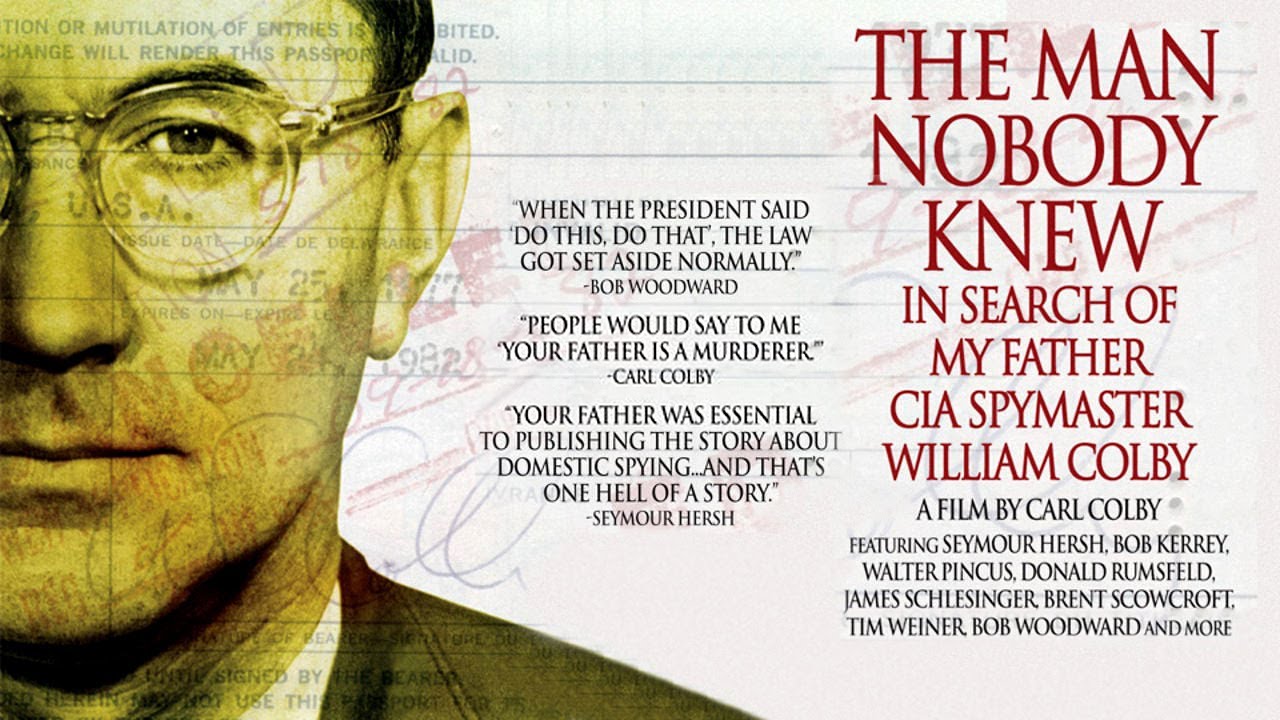
Carl Colby’s smart, fact-packed film “The Man Nobody Knew” operates on many levels, all riveting. Primarily an account of the career of his father, William Colby, director of the Central Intelligence Agency from 1973 to 1976, it traces a history ending in 1996, when his body washed ashore eight days after he embarked on a late-afternoon solo canoe outing in Maryland.
While reviewing the turbulent period spanning Vietnam and President Richard M. Nixon’s resignation, we also witness the arc of a marriage, the death of a daughter and the seeming disillusionment of a selfless, if steely-eyed and implacable, civil servant.William Colby was molded by the Office of Strategic Services in World War II, when he aided anti-Nazi insurgents in France and Norway. Working closely with the Vatican he fought the postwar Communist ascendance in Italy and helped coordinate the coup against President Ngo Dinh Diem of South Vietnam. As C.I.A. director he embraced covert activities until “the family jewels“ — memos revealing the agency’s domestic wiretapping and foreign assassination attempts, among other sordid pursuits — were leaked.
After disclosing details on such programs (several preceding his tenure) in Congressional hearings, he was replaced by George H. W. Bush.The Beltway insiders interviewed include the former national security adviser Brent Scowcroft, the journalist Seymour Hersh and, at his most smugly cynical, former Defense Secretary Donald H. Rumsfeld. Carl Colby’s mother, Barbara, meanwhile, is the embodiment of diplomatic poise and eloquence. Conspiracy theorists can have a field day with William Colby’s death, but “The Man Nobody Knew” suggests that the culprit may have been no more than a cold warrior’s crumbling facade.Directed by Carl Colby; edited by Jay Freund; music by Michael Bacon; produced by Mr. Colby, David Johnson and Grace Guggenheim; released by First Run Features. At the Lincoln Plaza, Broadway at 62nd Street. Running time: 1 hour 44 minutes. This film is not rated.
REVIEW RESOURCE: https://www.nytimes.com/2011/0....9/23/movies/man-nobo out the documentary channel: https://rumble.com/DocumentaryArchiveLet me know your thoughts in the comments.

Johan Soderberg and Erik Pauser examine world culture, using multimedia art and flash-cuts of varied speakers and artists, all set to music.
World culture gets the channel-flipping treatment in this oddly named docu, which has more in common with “Baraka” and “Powaqqatsi” than with regular travelogues or music-and-dance pics. Irreverent eclecticism is geared to computer-literate age groups, and it already has some buzz on the club circuit.
Using the name Lucky People Center, co-helmers Erik Pauser and Johan Soderberg work as multimedia artists in Stockholm. In “International,” they apply their mixmaster mentality to cinema, slicing and dicing innumerable clips, shot over several years of intense world touring, into a bouillabaisse of art pieces, rapping rants, straight-on conversations and impressionistic images of urban flux.
The flash-cut result is enough to send some viewers into mild catatonia (remember “Max Headroom”?), but when things slow down enough to let you hear from a good-natured Tibetan lama on the American fear of death or a bunch of tattooed Maori warriors chanting in unison about the evils of ATM cards, it drives home their point that the world has already left many people behind.
Other highlights include Russian troublemaker Alexander Brener, seen reading poetry and throwing a brick through a window; gray-suited Tokyo banker Toshiji Mikawa, who moonlights as a screechy electronic performance artist; gorgeous Indian dancer Pragati Sood, in sacramental form; and New Mexico shaman Franklin Bearchild Eriacho, whose common-sense recipe for religion includes “no blind faith, but intelligent devotion.”
These segs, united by thumping electro music provided by the helmers, seem to have little in common (except exhilaratingly varied, color-rich lensing), but themes of spiritual renewal and embrace of the strange keep coming up. Pic may look formless to over-40s, but it’s well-geared to MTV-saturated youth, especially those hungry for something positive but not Polyanna.
Initial release: March 27, 1998 (Sweden)
Directors: Johan Söderberg, Erik Pauser
Running time: 85 minutes
Producer: Lars Jönsson
Music composed by: Bub Wehi, Dr. Nobody, Johan Söderberg, Erik Pauser,
RESOURCE: http://www.imdb.com/title/tt0148428/
REVIEW RESOURCE: https://variety.com/1998/film/....reviews/lucky-people

Based upon Theosophy (the Secret Doctrine) this documentary focuses on the evolution of consciousness over millions of years while revealing the secret chronology of human history from ancient Lemuria and Atlantis to our current root race, while following the natural cyclic deluges between races.

"SUPERHUMAN: The Invisible Made Visible" documents the jaw-dropping experiences of individuals with extra-sensory powers that seem to defy the laws of physics known to man today. Producer and host Caroline Cory, who has her own extensive experience in the field of Consciousness Studies and Extra Sensory Perception, takes the viewers on an extraordinary journey to achieve tangible and measurable proof of these seemingly miraculous phenomena.
Through a series of groundbreaking on-camera scientific experiments, viewers will find themselves connecting the dots about the true nature of their own consciousness, the relation between mind and matter and discover whether they live in a simulated matrix or if they can have control over their physical reality and create a fulfilling human experience. The film ultimately shows that once the invisible worlds are made visible, this attained higher awareness will transform humans into superhumans.

Martin Miller
Session Band plays Dark Side of the Moon by Pink Floyd. Recorded live at
Weltklang Studio, Plauen on 10th August 2017.
Track List:
1. Speak to Me
2. Breathe
3. On the Run
4. Time
5. The Great Gig in the Sky
6. Money
7. Us and Them
8. Any Color You Like
9. Brain Damage
10. Eclipse
Martin Miller - Guitar & Vocals (http://www.martinmillerguitar.com)
Felix Lehrmann - Drums
Benni Jud - Bass (https://www.bennijud.com/)
Marius Leicht - Keyboards & Vocals
Special Guests:
Jenny Marsala - Vocals (
/ jennymarsala
http://www.instagram.com/jenny_marsala)
Michal Skulski - Saxophone
Studio: Weltklang Studio, Plauen (Germany)
https://www.facebook.com/Weltklangton...
André Gorjatschow - Director & Camera
Dirk Meinel, Christian Roscher - Audio Engineering
Matthias Prokop, Morgan Reid, Susanne Bartels, Josh McMorran - Camera
Ulrich Wichmann - Camera Assistant
Audio mix & video edit - Martin Miller
Additional Guitars - Martin Miller
Additional Keyboards - Marius Leicht
Background Vocals - Matthias Prokop & Martin Miller
Spoken Words - Levi Clay, Cheryl Harford, Fenn Alexander, Mike McLaughlin

Rosa Koire explained The Truth Behind Agenda 21, i.e. the who, how and why of the New World Order in our last video.
Now Todd Callender explains the WHAT in this one! Although this is horrific, you NEED to hear it ALL as it is part of the preparation for the solution.
CLICK LINK TO DOWNLOAD A TRANSCRIPT:
https://docs-vajralab.s3.ap-so....utheast-1.amazonaws.
