Top videos

This statement was released by Austrian independent journalist Jane Burgermeister - June 25, 2012
I would like to present some historical material related to earlier - unsuccessful vaccine projects. It seems that the New World Order has drawn conclusions and improved the depopulation of our planet's citizens.
This material has been meticulously and effectively removed from all online sources so that there is no mosaicism to recognize an analogy between a simulated-planned avian influenza pandemic and a Covid-19 pandemic that was planned and implemented on the same basis.
Experience has shown that no panedia or disease from existing viruses has had as many negative effects as mass vaccination of the population.
Jane Burgermeister is an Austrian science journalist who filed a criminal complaint with the Federal Bureau of Investigation (FBI) against the World Health Organization (WHO), the United Nations (UN), the American government and several other organizations public health authorities such as the FDA , as well as several medical and pharmaceutical laboratories under the accusation of creating false flu pandemics to later administer dangerous vaccines in bulk. [ 1 ] The complaint accuses these organizations and their representatives of committing several serious crimes in relation to bioterrorism , with the attempted genocide,mass murder , coercion of constitutional bodies, high treason, among other charges.
Do you see any connotations to the present times? I leave the conclusions to you.
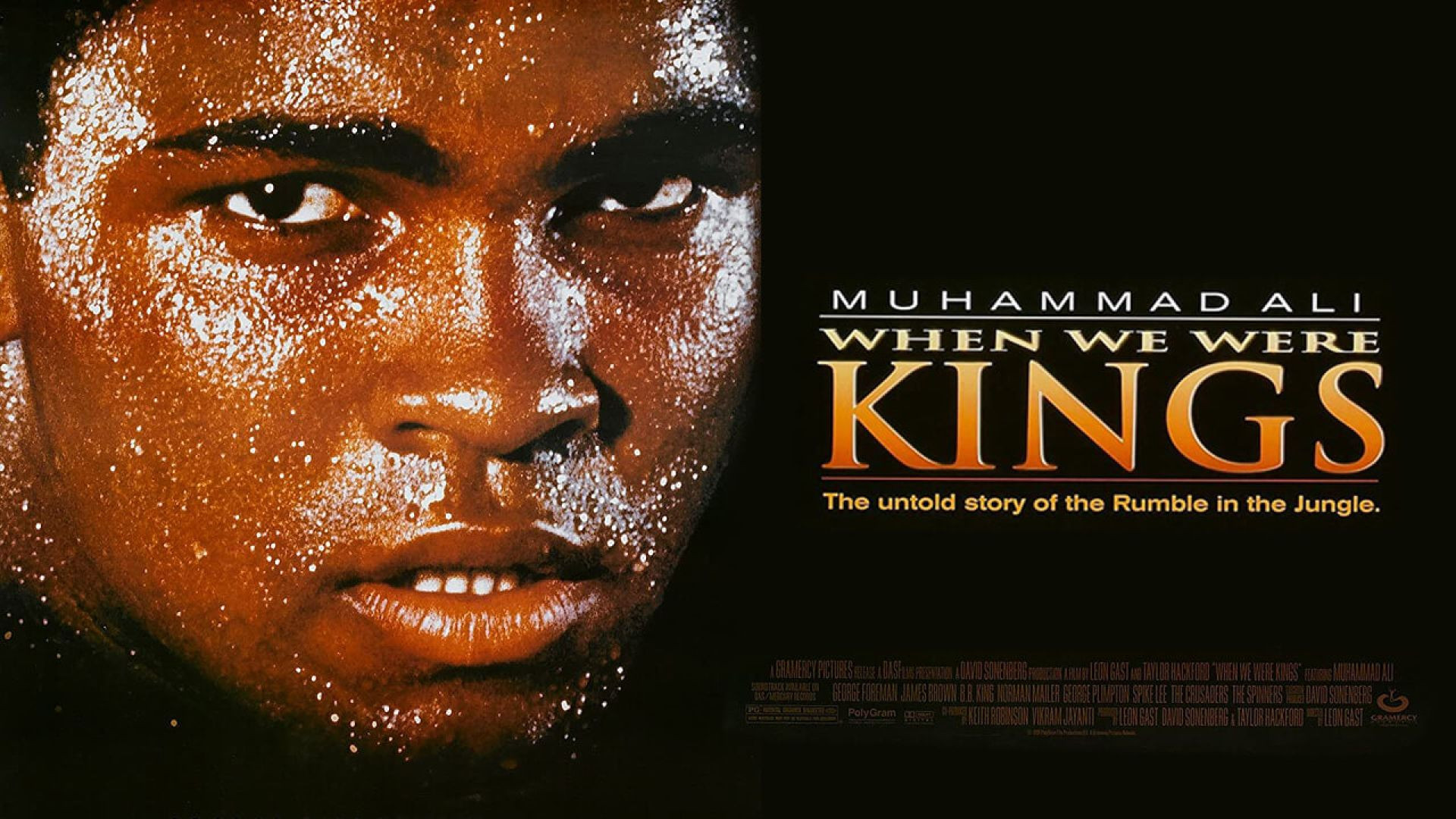
No comedian was ever funnier, no fighter ever faster than Muhammad Ali, who is caught at the top of his game in Leon Gast's valentine, "When We Were Kings."
The movie is built around the 1974 "Rumble in the Jungle" between Ali and George Foreman in Zaire. Though the Oscar-nominated documentary captures the fight and the fighters, it also explores Ali's role in reintroducing black Americans to their African culture.
Best of all, it resurrects Ali as bee, butterfly and maker of bons mots. Mind, mouth, muscles, all in accord, move a mile a minute as the 32-year-old prepares to wrest the heavyweight crown from the formidable, 26-year-old titleholder. Fit and fleet as Ali is, conventional wisdom has it that Ali's a dead man.
Ali, as Gast's film repeatedly and delightfully demonstrates, was hardly a conventional soul. He comes through as a maverick's maverick. And he's up against formidable competition in this film, including Don King. It was the ex-con with "the great uprush of hair" who managed to talk Mobutu Sese Seko, the Zairian dictator, into staging the fight. Persuaded that it would be good publicity for his country, Mobutu forked over $10 million, flew the fighters and their entourages to Kinshasa and began cleaning the blood of anti-government protesters from the floor of the outdoor arena where the fight was scheduled to take place that September.
Idolized by the people of Zaire for refusing to fight in Vietnam, the older boxer is greeted with chants of "Ali, bomaye!" which means "Ali, kill him!" Foreman, to Ali's great pleasure, was irritated with this turn of events, but Foreman was easily angered in those days. Ali later takes advantage of this weakness to defeat him in the ring. Using a combination of right-hand leads and verbal taunts, Ali tricks Foreman into punching himself out in the early rounds and subsequently flattens his opponent.
As Ali predicted:
"You think the world was surprised when Nixon resigned? Just wait'll I kick George Foreman's behind."
The boxing footage is terrific, but Gast has added archival film of other Ali-Foreman fights. Spike Lee, assorted sports columnists and other camp followers add compelling commentary, but Foreman, who was first devastated, then redeemed by the licking, isn't interviewed. And that's too bad, because it's almost as if Ali hammered something of himself into Foreman, who would go on to become every bit as affable as Ali. And then, Foreman, too, would challenge time.
Watching the picture, it's impossible not to think of Ali today, trembling and unsteady as he is. And you wonder as you stare at the dazzling young athlete: Would he do it all again if he knew the price? His biographer, Thomas Hauser, assures us that he would, that he loves every day of being Muhammad Ali.
Certainly, nobody ever looked as if he was having more fun than Ali does in "When We Were Kings." And the same goes for everybody around him -- except Foreman. Even cynical old sportswriters look like kids on Christmas morning when they recall memories of "Rumble in the Jungle" fever and those special moments they spent with Ali.
Though there were other kings on hand at the time -- Don, B.B., James "the King of Soul" Brown, not to mention Mobutu -- Ali was, in the words of producer David Sonenberg, "on a whole other level, he was King of the World."
REVIEW RESOURCE: https://www.washingtonpost.com..../wp-srv/style/longte

Mary Gray was born in Paris in 1886.
She knew many of the outstanding leaders of thought in Europe and America. She was a member of the Theosophical Society.
What the book is about?
This book was written in 1925 and shows why spiritual growth is sometimes gained through the darkest times in our lives.
Sometimes we must just accept the pain of living along with the joys in our lives and know they both come from God and make us stronger.
Life is a journey, a struggle at times but worth every minute and I am thankful for the people that help us through it.

This interview was broadcast on public television CNBC. Interview with Oxford University's Professor Sir John Bell and journalist Jon Snow on Friday, November 27th 2020.
Professor Sir John Bell said openly that "these vaccines are unlikely to completely sterilise a population".
What else do you have to experience to understand what a pandemic project really is?

Raoul Peck’s outstanding, Oscar-nominated documentary is about the African American activist and author James Baldwin, author of Go Tell It on the Mountain and The Fire Next Time. Peck dramatises Baldwin’s unfinished manuscript Remember This House, his personal memoir of Malcolm X, Martin Luther King Jr and civil rights activist Medgar Evers, murdered by a segregationist in 1963. Baldwin re-emerges as a devastatingly eloquent speaker and public intellectual; a figure who deserves his place alongside Edward Said, Frantz Fanon or Gore Vidal.
Peck puts Samuel L Jackson’s steely narration of Baldwin’s words up against a punchy montage of footage from the Jim Crow to the Ferguson eras, and a fierce soundtrack. (It’s incidentally a great use of Buddy Guy’s Damn Right I’ve Got the Blues, which never sounded so angry or political.) There is a marvellous clip of Baldwin speaking at the Cambridge Union Society, and another on the Dick Cavett Show – the host looking sick with nerves, perhaps because he was about to bring on a conservative intellectual for balance, whom Baldwin would politely trounce.
Baldwin has a compelling analysis of a traumatised “mirror stage” of culture that black people went through in 20th-century America. As kids, they would cheer and identify with the white heroes and heroines of Hollywood culture; then they would see themselves in the mirror and realise they were different from the white stars, and in fact more resembled the baddies and “Indians” they’d been booing.
The film shows Baldwin refusing to be drawn into the violence/non-violence difference of opinion between King and Malcolm X that mainstream commentators leaped on, and steadily maintaining his own critique – although I feel that Peck’s juxtaposition of Doris Day’s mooning and crooning with a lynch victim is a flourish that approximates Baldwin’s anger but not his elegance. There is a compelling section on Baldwin’s discussion of dramatist Lorraine Hansberry, author of A Raisin in the Sun. It is vivid, nutritious film-making.
REVIEW RESOURCE: https://www.theguardian.com/fi....lm/2017/apr/07/i-am-

The official version of human history is a construct of lies. We are in a state of collective amnesia. Let's free ourselves from the artificial matrix that has been imposed on us. This part covers the World's Fairs and the time in which they took place.
Written by: dreamtime & Mosaic, https://stolenhistory.net
Narrated by: Sovereine & David Glenney
Post-production: Bart van der Zwaan https://youtube.com/bartingman
WATCH FULL SIERIES:
Part 1: Nothing is as it seems => https://vajratube.com/v/MBtVx6
Part 2: The Destruction of the Old World => https://vajratube.com/v/4Kya4M
Part 3: The Mystery of the World's Fairs => https://vajratube.com/v/lmqIAN

Documentary about Stanisław Szukalski had been discussed in Poland quite some time ago. Talks began as soon as it was announced that Leonardo DiCaprio was going to finance a movie about this extraordinary Polish artist. The news was even more exciting and intriguing since not many people had known that such a gifted sculptor, who was almost like a family member to DiCaprio, ever lived in the United States. Stanisław Szukalski is not among the familiar names even for Polish art experts and devotees. Rarely is he an idol for those who do know him, but he is rather considered a controversial figure with ideas not easily accepted by the artistic community of today. Dedicated fans of the rock band Tool may have heard something about Szukalski because the band members are inspired by the artist’s works to a great extent. However, the group most familiar with his life and works are the promoters of the Old Slavic tradition, especially neo-pagan nationalists. They certainly could say a lot about Stanisław or Stach from the Warta River (Stach z Warty), as the artist used to call himself quite often. If those are the people interested in the life and adventures of the main hero in Struggle: The Life and Lost Art of Szukalski, then we can surely expect that his story is fascinating but involves many ideological struggles and serious controversies at the same time.
Stanisław Szukalski was born in Warta near Łódź in 1893. From an early age he eagerly used his vivid imagination and showed every sign of being talented in fine arts. He went to the US for the first time in 1907 to live with his father who worked there. This is when his frequent travels between Poland and America began, which lasted until the 1940s. He felt fine in both places and his talent was seen and respected by both communities. Despite that, he was struggling to find out where he really belonged. He was quite obsessed with Polish history and culture but, at the same time, he very quickly grew into the American lifestyle of flamboyancy on the verge of arrogance, and overbearing individualism that almost equalled self-creation. This was the trap he got himself into because he was never fully understood in America and his attitude prevented him from being approved and acclaimed in Poland (or Europe), where one needed to respect authority. His aggressive approach and exotic, individual artistic ideas were the reasons he did not manage to graduate from the Academy of Fine Arts in Kraków and made him an outsider unapproved by the Polish fine arts community. His political views were radical as well. Szukalski had an idea of a new form of Polish national art which would be based on Slavic heritage. This idea gained recognition by some elite political groups and was a big part of the Polish community of the 1930s. After World War II, Szukalski settled in Los Angeles for good. He even made several works which were used in Hollywood movies. However, he did not accept being a simple worker and he was deeply affected by the fact that the majority of his works were destroyed in Poland during the war. This was the moment his stardom started to fade away gradually. Even then, he did not abandon his unique ideas on art and eccentric anthropological concepts.
Struggle: The Life and Lost Art of Szukalski mainly focuses on events in the 1970s and 1980s, i.e. the late stage of Szukalski’s life, when he was rediscovered by a group of underground, counterculture veterans. Among them was a publisher and occasional performer George DiCaprio (the father of Leonardo DiCaprio), a collector and enthusiast of comic books Glenn Bray, as well as their family members and friends. They were surprised that such fascinating artist lived in Los Angeles, so they started to visit him on a regular basis. What originated as a fascination with a somehow quirky old man quickly evolved into genuine friendship and later on transformed into a strong relationship which could equal family bonds. The young companions not only took care of Szukalski himself, but also embarked on a mission of getting various institutions interested in his works and achievements. Glenn Bray collaborated with his own wife and together they organised a few exhibitions of Szukalski’s works. It was also thanks to their efforts that several books about Szukalski were published. Improvised lectures which Szukalski delivered to his friends were also documented and recorded. Like a professional actor, he presented the story of his life, his art, an overview of his eccentric views and opinions and his own conception about the origin of humans, called zermatism. Bray has long hours of such recordings at his disposal and they are the main input material for the Netflix documentary.
The director of the film is documentary filmmaker Irek Dobrowolski, who depicted Szukalski as a paradoxical and multi-dimensional figure. The Polish patriot, who was devoted to Polish and Slavic ideas and heritage and was deeply critical about American culture, became a surprising hero for a bunch of mediocre post-hippies. In a way they saved his life. This unusual situation became the starting point for the director, which allowed him to explore internal conflicts and mental struggles that bothered not only Szukalski, but also his admirers. The beginning of the film shows only the American perspective. Szukalski seems a fascinating but strange man whose life was not all roses. We find out that in the past he was a leader of Chicago’s bohemia, and had an unquestionable talent and great imagination. Then Dobrowolski gradually uncovers past events to us. Experts helped him present a different, Polish narrative on the artist’s activities. This is not only a story about an arrogant eccentric, but also a disturbing picture of an avid nationalist and pagan ideologist with para-fascist inclinations, who was even a member of anti-Semitic organisations. Szukalski’s American friends were not familiar with this part of the artist’s biography which, when uncovered, left them deeply shocked. Each of them reacted to what they learned differently – some were critical and detached while others eagerly defended the artist because they believed that as he got older he became a different, better man. Irek Dobrowolski does not officially support any of these attitudes. Nevertheless, in the movie we can see that the “milder” American view of Szukalski’s transformation dominates in the end. Struggle is a fascinating study of duality and ambivalence. It is also a story about a guru and his followers who learn the truth about their prophet after many long years.
This experience is never enjoyable and easy – this we can say for sure.
At the beginning, I mentioned that the Polish artistic community was in opposition to Szukalski. The reason for this dislike and reluctance was the artist’s devotion to certain ideologies, but also controversial aesthetic qualities of his works which were over-expressive and monumental. The establishment did approve of the fantastic elements in Szukalski’s works. Such elements were not in line with modernist trends and, therefore, were considered kitsch. Nevertheless, the artist intrigues many and in recent years he has been mentioned increasingly frequently, however usually with negative connotations. The exhibition Late Polishness (2017) organised at U-Jazdowski Centre for Contemporary Art in Warsaw was an important event which attempted to remind the audience of Szukalski’s works. The event emphasised that these works are a troublesome heritage to us and provided inspiration for a discussion about the role of the nation in contemporary Polish art. Maurycy Gomulicki was responsible for the part of the exhibition which included Szukalski’s works. He is open about the fact that he is deeply fascinated with Szukalski, which started with strong admiration at a young age. As he got older he gained more perspective, but he continues to be interested in this unique figure. This is yet more proof that the artist’s charisma, emphasised in the film Struggle, affects people today.
Perhaps it was not a coincidence that Szukalski’s admirers were enthusiasts of comic and fantasy books. His works remind us of other artists who created their own, fantasy-based mythology and were subsequently rejected by the art establishment. They found their space in popular culture and attracted their own groups of “worshippers”. Painters such as H.R. Giger and Zdzisław Beksiński are a rich source of inspiration for pop culture artists. But Szukalski has the most in common with another artist – the “rejected” writer H.P. Lovecraft, who is the founding father of modern American horror books. Both artists imagined very similar things and their views on life were quite homogenous. They both lure their audiences with similarly incredible marvels. They also both have very radical attitudes, close to racism (anti-Semitism for Szukalski and white suprematism for Lovecraft), which is disconcerting for fans. The problem I just mentioned was presented quite mildly by Irek Dobrowolski in his film.
Szukalski’s change of attitude, which we see in Struggle, most likely never happened. Szukalski’s zermatism was about finding the roots of a strong and noble race, which certainly does not depart from radical, racist inclinations. His interest in ethnography was similar to what Leni Riefenstahl tried to present after the war. We also know that Szukalski was in mail contact with Polish pro-Slavic circles for a long time. In the movie, these incriminating facts were hidden behind personal, often moving stories told by Glenn Bray who defended his Polish friend with teary eyes. He took care of him until his death, but, as it turned out, he did not know everything about his past. I think that these personal touches are the most valuable parts of Struggle: The Life and Lost Art of Szukalski. In general, this is another instance where art, life, official ideologies and intimate scenes from everyday life do not form a coherent picture.
Struggle: The Life and Lost Art of Szukalski, 2018, directed by Irek Dobrowolski, is available on Netflix now
REVIEW RESOURCE: https://contemporarylynx.co.uk..../struggling-with-dou

"Rolling Thunder Revue: A Bob Dylan Story" is one of the most frustrating Martin Scorsese films as well as one of the most out-of-character. Decades in the making, in a way, this is an engaging but disorganized and long-winded (two hours, twenty minutes) account of the time in 1975 that Bob Dylan, nine years on from his motorcycle accident, convened a vagabond caravan of musicians, poets, reporters, photographers, money men, and hangers-on to tour the United States in the lead-up to the country's Bicentennial celebration. The tour was a bust, financially and in terms of cultural impact—or at least that's how Dylan, 78 at the time of this film's streaming premiere, remembers it, while cautioning Scorsese and the viewer that he barely remembers anything at all. Nevertheless, the Rolling Thunder Revue rejuvenated Dylan as a musician, in the manner of Elvis Presley's 1968 "comeback" special. And it generated enormous amounts of tour footage, some of which is reproduced here, within a highly conceptual framework, by Scorsese.
The issue of authorship is nearly as central to this movie as the story of Dylan roaming the United States, driving his own tour bus and performing in small- and medium-sized halls, accompanied by the likes of Joan Baez, Ramblin' Jack Elliot, Roger McGuinn, Scarlet Rivera, Joni Mitchell, Ronnie Hawkins, and (in one of his final filmed appearances) Sam Shepard. Scorsese, who over the course of his long career has essentially stamped certain American rock acts, including Dylan, The Rolling Stones, and The Band with "Property of Martin Scorsese," is the credited director, naturally. And as edited by Damian Rodriguez and David Tedeschi, the film bears many Scorsesean hallmarks, including surprising transitions from one idea to the next, and sequences that have been cross-cut in order to provoke questions and create sensations rather than serve up fixed meanings or answers.
But once you look at what the thing actually is, what it's made of, and how the pieces have been arranged, things get curiouser and curiouser. The film is woven around footage shot during the tour by real-life Chicago cameraman Howard Alk (1930-1982), who was hired by Dylan to make a project that somehow never got turned into an actual feature film. The footage has been re-contextualized by Scorsese and presented as the work of European filmmaker Stefan Van Dorp, a nonexistent person played by Argentinean performance artist Martin von Haselberg (husband of Bette Midler, briefly glimpsed in 1975 footage). In interviews, Van Dorp talks in the cliched "high culture" cadences of a mid-20th century moneyed WASP, and speaks on camera of his subjects and collaborators (excluding Dylan and a few others) in an exasperated, withering manner.
Other fictional or questionably involved characters enter the narrative as well, including Paramount Pictures CEO James Gianopulos as the tour promoter; actor Michael Murphy as nonexistent Congressman Jack Tanner (whom he played in two projects for the late Robert Altman); and Sharon Stone, costar of Scorsese's "Casino," as herself, telling the story of how she attended one of the Rolling Thunder Revue concerts as a 17-year-old in the company of her mother and was invited to join the caravan.
Is Scorsese trying to create his own, epically scaled answer to "This is Spinal Tap" or "Zelig"—a mock documentary integrating the real with the fictional, prompting audiences to question the distinctions between them? Maybe. "The Rolling Thunder Revue" starts with a snippet of a silent-era George Melies film of a magic trick and returns to it later, as if to signal that an aspect of illusion is built into the project. The collision of verified events and never-before-discussed anecdotes (some of which, like Congressman Tanner's friendship with President Jimmy Carter, are obviously fabricated) undermines the veracity of everything in the story, like the anecdote about Rivera supposedly taking Dylan to see KISS and inspiring him to don Kabuki-inspired facepaint.
And to what end? What you're seeing, for the most part, are real events that happened in real places to real people, and which therefore have archival value. Even if one were to thread up unedited footage at random, the images and sounds would still tell us a lot about the culture and emotional temperature of the U.S. circa 1975. The concert footage (much of which concentrates exclusively on Dylan, regardless of assurances that the tour was a democratic endeavor) is riveting, showcasing inventive re-arrangements of many Dylan classics, including "Simple Twist of Fate," "A Hard Rain's Gonna Fall," and "The Lonesome Death of Hattie Carroll."
In comparison to the material that stands on its own, the absurd touches feel glommed-on and pointless, and much of the time, they don't work. When the Van Dorp character prattles about how he wanted to show "the contrast between the excesses of the people on the tour and the dissolution of society [in] the land of pet rocks and Slurpees from 7-Eleven," it's like being forced to listen to a reading of a satirical short story by a fiction writer who understands the dictionary definition of satire but never figured out what, exactly, he intended to make fun of. The culture itself? The popular art form that tries to respond to the culture? The mentality of the artist mocking other artists trying to respond to the culture?
This is a documentary, and at the same time, it's also a prank or a joke. But it's not particularly funny when it's plainly trying to be. Why? Maybe because it's lumpy and unfocused, meandering from absurdism to poker-faced sincerity (as in self-contained sections about the plight of Native Americans and the fate of one of Dylan's real-life subjects, wrongly imprisoned boxer Rubin "Hurricane" Carter). Or maybe it's because when you think of Scorsese, one of the great living American filmmakers, a lot of different words and phrases spring to mind, but "goofy" and "wry" and "light touch" aren't among them.
The unsung hero in all this is Alk, whose footage gives the movie its artistic and historical nucleus. He was friends with Dylan from 1963 on, and worked with him on several movies, including "Eat the Document," "Hard Rain" (also about the Rolling Thunder tour) and Dylan's semi-improvised, self-directed "Renaldo and Clara" (where a lot of the footage comes from). Aficionados of analog-era, fly-on-the-wall nonfiction camerawork will admire the intelligence that Alk brings to every composition and camera move—assuming it's Alk's work that we're mostly seeing here, and it's impossible to know for sure, since Scorsese never identifies the footage that way, and lets us believe that "Van Dorp" shot all of it, because that's the joke. There are instances where he even seems to have dubbed Dylan and other real-life personages addressing Alk as "Van Dorp."
Meanwhile, Alk's unobtrusive artistry shines through anyway—as in a lovely moment where Dylan and Ginsberg visit the cemetery where Jack Kerouac is buried, and the camera briefly sneaks away from the two men swapping Kerouac quotes to wander over to the writer's grave site, perfectly framing the rectangular headstone to create a frame-within-a-frame.
At one point, Van Dorp gripes about an obsequious Rolling Stone reporter, real-life journalist and gadfly Larry "Ratso" Sloman, stating that "he didn't want anyone else with vision around." This feels like a self-deprecating joke on Scorsese's own status as an auteur who puts his name on nonfiction projects partly comprised of archival footage created by others. But erasing credit for another artist's work—even an obscure one, even inadvertently, and even in the service of satire and conceptual art—is a dicey business. It backfires here, contributing to the current national malaise wherein facts are provisional and nothing can be trusted anymore, and making the project feel insensitive to the hard-won achievements of real people without whom it would not exist. Buried beneath layers of metafictional tomfoolery is a moving film about an anonymous artist whose achievements remain unrecognized, even by people ideally positioned to throw a spotlight on them.
REVIEW RESOURCE: https://www.rogerebert.com/rev....iews/rolling-thunder

This brilliant documentary reveals how a small group of superrich criminals have been buying virtually everything on earth, until they own it all. From media, health care, technology, travel, food industry, governments... That allows them to control the whole world. Because of this they are now trying to impose the New World Order.

25 years after the mysterious death of princess Diana of Wales.
Twenty five years ago Princess Diana’s car crashed inside the Pont de L’Alma tunnel in Paris France. Her lover, Dodi Fayad, died upon impact along with the driver. And even though Diana survived, it took about 40 minutes to get her from the car to the ambulance. The Official story was that they were trying to free her from the car, but several witnesses say that Diana was conscious and unobstructed. Photographs show that the backseat of the car was undamaged. And witnesses were pleading with the police to open the door and help her. Once in the ambulance, it took about 40 minutes for them to choose a Hospital. And when they finally set off, the ambulance drove at a snails pace and made several stops. Taking about 40 minutes to drive less than 4 miles.
Doctors were turned away. Witnesses were strip searched. Cameras were confiscated. No evidence was gathered. No blood samples were taken. And by 3am the entire scene was sprayed down with high pressure water hoses. Mercedes wanted to study the wreckage to see why it failed so badly. But they were denied. Diana‘s body was taken by the Royal family. Who had her reproductive organs removed before burying her remains. All 17 cameras along the route of the crash were mysteriously turned off. And all radio police frequencies went down. Witnesses were assaulted and threatened. And there was no investigation. Until the inquest ten years later. Which is when most people learned that Diana had penned a note in 1996 saying that someone was going to kill her in a car accident. This note was concealed for 6 years.

Watch the full, unedited and uncensored edition here: https://www.spiritmysteries.com/spiri...
While we said we weren't going to publish the full movie on Youtube anymore, several audience members suggested we upload a 90-minute version that was definitely not going to be banned.
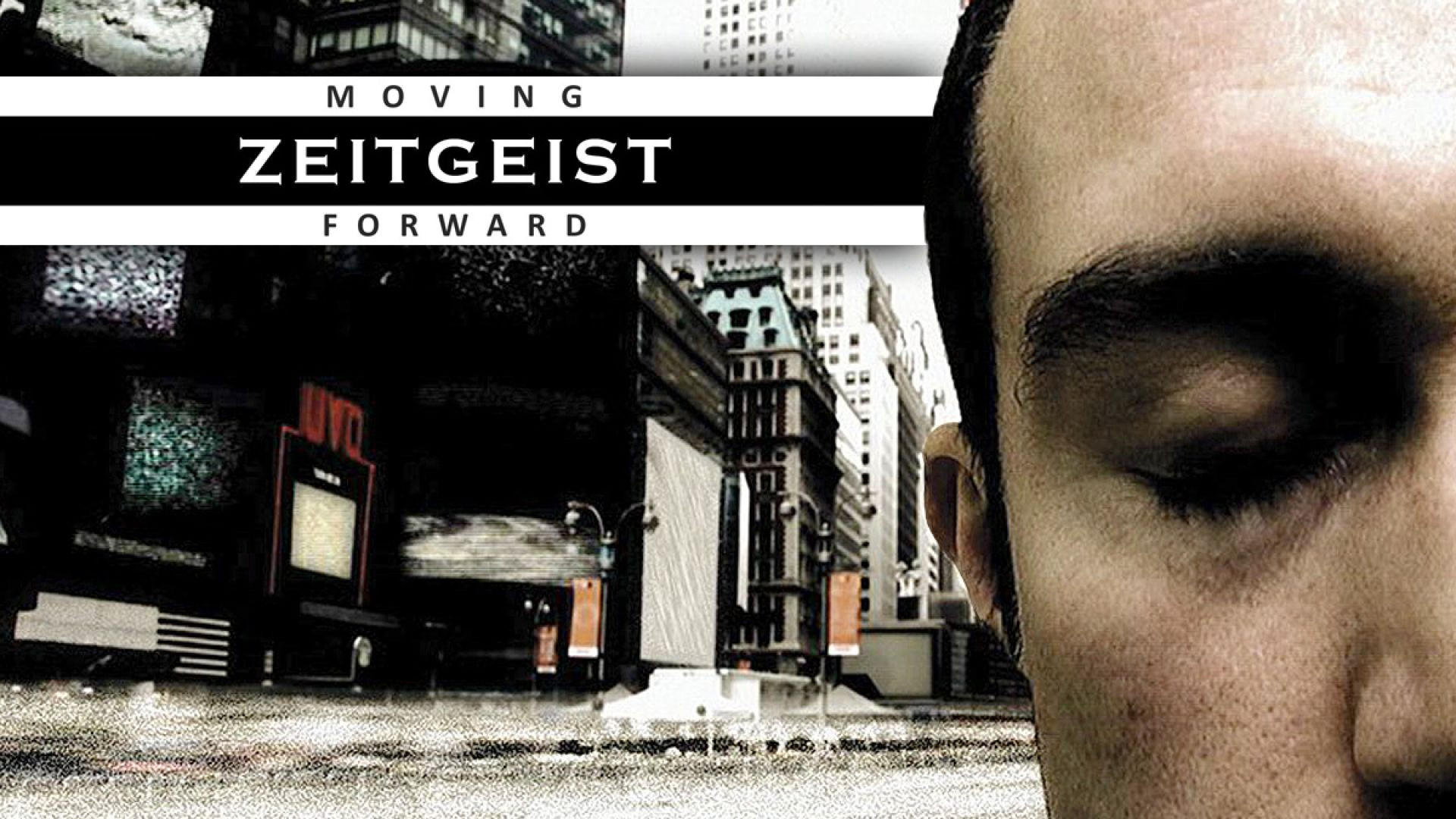
Zeitgeist: Moving Forward, by director Peter Joseph, is a feature length documentary work which will present a case for a needed transition out of the current socioeconomic monetary paradigm which governs the entire world society.
This subject matter will transcend the issues of cultural relativism and traditional ideology and move to relate the core, empirical “life ground” attributes of human and social survival, extrapolating those immutable natural laws into a new sustainable social paradigm called a “Resource-Based Economy”. This film will feature experts in the fields of public health, anthropology, neurobiology, economics, energy, technology, social science and other relevant subjects which relate to social operation and culture.
The three central themes of the work are Human Behavior, Monetary Economics, and Applied Science. Put together the work creates a model of understanding the current social paradigm; why it is critical to move out of it - coupled with a new, radical, yet practical social approach based on advanced understandings which would resolve the current social woes facing the world today.
One of the unique attributes of this work, which separates it in style from most documentaries, is that it has a parallel dramatic/cinematic theme, with notable actors, which abstractly play out various gestures related to the overall message of the film. The work also vigorously employs numerous 2d and 3d visual abstracts/animations, while returning to the standard, traditional documentary orientation as the foundation.

VIBRATION IS JUST ANOTHER WORD FOR ENERGY."
"Music is vibration. If we expose water to music, it's crystal structure will change."
"Watch what happens when we play Mozart." Beethoven.
Dvorak, "From the New World."
"THE HEXAGONAL CRYSTAL REPRESENT THE LIFE FORCE OF MOTHER NATURE."
=========================
THE WATER CRYSTAL FROM THE WATER, EXPOSED TO THE WORD "LOVE AND GRATITUDE" - Welcome to the Masaru Emoto’s Hado World - https://hado.com/ihm/
About 30 [now 37] years ago, Masaru Emoto discovered a world of Hado and he published more than 10 titles about Hado in Japan. He treated more than 10,000 clients with a Hado measuring device and water and he helped to heal a lot of people who had different kind of problems mentally and physically. He knew that water can memorize information then he came up with the water crystal photography to prove his theory and he succeeded. Water crystal photography tells that water reacts to any information (vibration) given by showing the different design. He has gained worldwide acclaim through his groundbreaking research and discovery which were published in his books, “Messages from Water” and “The Hidden Messages in Water” and a lot of people resonated with his claim which is “water is deeply connected to our individual and collective consciousness.” Since then, he went out to the world to tell people the importance of human consciousness, truth of water, and principal of Hado.
At some time, his mission was turned out to be “world peace” specially after his grand
children were born. He believed that we will be able to achieve the world peace by understanding the truth of water because water is telling a lot of meaningful things.
Unfortunately, he past away on October 17th, 2014 but his work and message will never die.
This is the website to introduce his work and also new findings by his successors.
“Hado reates words:
Words are the vibrations of nature
Therefore beautiful words create beautiful nature
Ugly words create ugly nature
This is the root of the universe.” by Masaru Emoto
Hado: The intrinsic vibrational pattern at the atomic level in all matter
What U really know is Possible already in your hearts frequency
en.wikipedia.org/wiki/Masaru_Emoto
Quantum physics
Science Experiment (try this experiment )
When we bless our water before drinking and say it or think it!
Thank you for coming into my life!
Bless the water you drink with love and it will help to raise your vibration and energy!
Bless the water you drink and it will light up the cells of your body.
Sometimes it will take 7 days before you will notice something.
Science of quantum physics!
Blessings and love!
Music
Beethoven – Moonlight Sonata
https://vimeo.com/179075852
=============
MASARU EMOTO (1943-2014)
“Dr.
Masaru Emoto, the Japanese scientist who revolutionized the idea that our thoughts and intentions impact the physical realm, is one of the most important water researchers the world has known. For over 20 years
until he passed away in 2014, he studied the scientific evidence of how the molecular structure in water transforms when it is exposed to human words, thoughts, sounds and intentions.”
“He undertook extensive research of water around the planet, not so much as a scientific
researcher, but more from the perspective of an original thinker. At length, he realized that it was in the frozen crystal form, that water showed us its true nature.
He has gained worldwide acclaim through his ground-breaking research and discovery, that water is deeply
connected to our individual and collective consciousness
He is the author of the best-selling books Messages from Water, The Hidden
Messages in Water, The True Power of Water and Love Thyself. He has now
also authored two children’s books, The Secret of Water for the children
of the world, and The Message from Water children’s version.”
Website: https://www.masaru-emoto.net/en/ (check “Masaru Emoto” & “gallery”)
Download FREE children’s book: http://www.emotopeaceproject.n....et/picture-books/458
-----
His research is also shown in the movie: What the “Bleep” Do We Know!? (2004)
https://rumble.com/v26z8cc-wha....t-the-do-we-know-200
Masaru Emoto's Experiment in Gratitude
https://www.youtube.com/watch?v=SDNhH8deZPg
-----
There are many videos on YouTube about him and his experiments, also people trying the “Rice experiment”.
THE IMPOSSIBLE RICE EXPERIMENT
https://www.youtube.com/watch?v=zvShgttIq7I
-----
DISCLAIMER:
All
the videos, songs, images, and graphics used in the video belong to their respective owners and I or this channel does not claim any right over them.
Copyright Disclaimer under section 107 of the Copyright Act of 1976, allowance is made for “fair use” for purposes such as criticism, comment, news reporting, teaching, scholarship, education and research. Fair use is a use permitted by copyright statute that might
otherwise be infringing.
=================

It is now beyond doubt that strange, anomalous objects filling our skies and caught on camera are the real deal. Even the Pentagon admits it’s true. These seemingly intelligently controlled craft are operating above the clouds, in our oceans and in our orbit – travelling at hypersonic speeds far beyond any known human technology and completing manoeuvres unknown to science.
The subject of conspiracy and derision for years, UFOs are now the hottest topic in Washington and the world.
Five-time Walkley Award-winning investigative journalist Ross Coulthart – who has been investigating the phenomena for the past two years – led the 7NEWS Spotlight team across the US, amassing never-before-seen compelling evidence and speaking to the key players behind an event that will change the course of history.
Featuring interviews with the highest echelons of military defence and intelligence officials, leading researchers, scientists and witnesses in America and Australia, this mind-blowing documentary years in the making seeks to answer the most fundamental question there is: are we alone?
The US director of national intelligence is expected to hand down an unclassified report next month that will change our understanding of life itself. On Spotlight, we reveal what is in that report.
7NEWS Spotlight: The UFO Phenomenon unearths startling new evidence of Australian Government cover-ups and extraordinary vision of unidentified aerial phenomena in Western Australia, Victoria and Queensland – all credible and important additions to the worldwide data being accumulated by the US.
For Coulthart, the project has become the most fascinating and challenging of his career, becoming the focus of his new book 'In Plain Sight', available now in Australia and soon in other territories:
Australia: https://7news.link/3AuawFz

This video was made in collaboration with Academy of Ideas. They create videos explaining the ideas of history's great thinkers in order to help supply the world with more knowledge, to empower the individual, and to promote freedom. Please check out their youtube channel for more brilliant content.
https://www.youtube.com/c/academyofideas or visit their website to learn more https://academyofideas.com/
In this video we are going to explore the most dangerous of all psychic epidemics, the mass psychosis. A mass psychosis is an epidemic of madness and it occurs when a large portion of a society loses touch with reality and descends into delusions. Such a phenomenon is not a thing of fiction. Two examples of mass psychoses are the American and European witch hunts 16th and 17th centuries and the rise of totalitarianism in the 20th century.
This video will aim to answer questions surrounding mass psychosis: What is it? How does is start? Has it happened before? Are we experiencing one right now? And if so, how can the stages of a mass psychosis be reversed?

One of the most important videos I’ve done to date… watch until the end and comment your thoughts below 👇
Elizabeth April is a Universal Source Channeller, she was given the message at 16 not to do any external research*. Everything you listen to in her videos is channeled through conscious meditation.
Clairvoyant, truth seeker, intuitive psychic, and best-selling author ELIZABETH APRIL (also known as EA), is here on a mission to help humanity awaken.
EA has been featured on Vice, Bustle, Discovery, and Gaia TV to name a few, and has spoken at world-renown conferences across North America.
Most recently, EA was a featured expert on Unidentified with Demi Lovato (NBC’s Peacock TV). Elizabeth April is on a mission to help shift the world, the only question remaining is, are you ready to join her on this journey?
RESOURCE: https://www.youtube.com/c/ElizabethApril

NOVA investigates the story of cannabis from the criminalization that has disproportionately harmed communities of color to the latest medical understanding of the plant. What risks does cannabis pose to the developing brain? How much do we know about its potential medical benefits? As cannabis becomes socially accepted, scientists are exploring its long-term health consequences.
This program was produced by GBH, which is solely responsible for its content. Some funders of NOVA also fund basic science research. Experts featured in this film may have received support from funders of this program. Funding for NOVA is provided by the David H. Koch Fund for Science, the NOVA Science Trust, the Corporation for Public Broadcasting, and PBS viewers.
RESOURCE: https://www.pbs.org/

The Rain Song - Led Zeppelin cover
Thanks for listening!
Follow me on
Instagram:
https://www.instagram.com/cara_vel/
Facebook:
https://www.facebook.com/Cara-Vel-333...
Spotify: https://open.spotify.com/artist/5IUPQ...
If you like my work, you can support my channel here:
https://www.paypal.com/paypalme/Chiar...

Himalaya of the hypocrisy!!!
I am aware that most of the materials on this channel are very pessimistic and always worse news from the world. I because of that I decided to put this movie not on DocumentaryArchive but here to make my followers laugh until their stomach aches.
I come from the communist block, I grew up in the 70s in Poland and this film clearly reminds me of classic Soviet Propaganda. The level of sweetness and exaggerated concern for the public good can make you vomit in this story.
However, there is so much hypocrisy, naive deception, and caricature pride here that all you can do is laugh out loud.
Have fun watching this movie.
Official description :-))))))))))
With his signature blend of scientific acumen, candor and integrity, Dr. Anthony Fauci became America’s most unlikely cultural icon during COVID-19. A world-renowned infectious disease specialist and the longest-serving public health leader in Washington, D.C., he has valiantly overseen the U.S. response to 50 years’ worth of epidemics, including HIV/AIDS, SARS and Ebola. FAUCI is an unprecedented portrait of one of our most vital public servants, whose work saved millions while he faced threats from anonymous adversaries.
Directed by Emmy winners John Hoffman (The Weight of the Nation, Sleepless in America) and Janet Tobias (Unseen Enemy), the film is executive produced by Academy Award winner Dan Cogan (Icarus) and two-time Academy Award nominee Liz Garbus (What Happened, Miss Simone?, The Farm: Angola, USA). The documentary features insights from President George W. Bush, Bill Gates, Bono, former U.S. Department of Health and Human Services secretary Sylvia Burwell, former national security advisor Susan Rice, National Institutes of Health director Dr. Francis Collins, former Centers for Disease Control and Prevention director Dr. Tom Frieden and key AIDS activists, plus Dr. Fauci’s family, friends and former patients.
RESOURCE: https://films.nationalgeographic.com/fauci?

I reviewed materials from Pfizer and Moderna in regard to the preclinical assessments of reproductive toxicities from recently obtained documents from FOIA lawsuits.
The results indicate shocking disregard to safety and potential for reproductive harm that will span generations. Pfizer's published data is here:
https://www.sciencedirect.com/....science/article/pii/
Note the study is authored by Pfizer employees with extremely biased interpretation of their results, so you should read the methods and results sections yourself.
