Top videos

n the tradition of his first Internet blockbuster, Loose Change, which has had over 100 million visits, Jason Bermas has created yet another outstanding documentary film, Invisible Empire: A New World Order Defined.
This film documents very clearly that some of America's most powerful elected officials, including all recent presidents, have been part of an international cabal to establish a socialist New World Order that would eradicate national sovereignty and many of the God-given freedoms vouchsafed in the Constitution of the United States, making all citizens mere slaves of the state.
It has an amazing collection of video footage of these leaders stating their unabashed ambitions to establishing this New World Order. It also shows just who is behind this international cabal and their nefarious intentions and true sinister nature. It is deeply troubling and very important.
Again, its relevance to Free Energy technology is two-fold. First, these same forces are behind many of the instances of suppression of breakthrough free energy, which would empower the individual, contrary to the NWO agenda to enslave. Second, the emergence of breakthrough free energy technologies will help unseat these criminals. It is a powerful antidote to the poison being administered.
Another point of relevance is that the film touches on the fact that Al Gore is one of the New World Order insiders helping to accomplish their objectives by politicizing climate change and using it as a reason to impose global carbon taxes; all while personally becoming super wealthy from his various involvements that include serious conflicts of interest. He should not be seen as a hero figure in the free energy movement.

Pharmaceutical giant Pfizer is seeking approval from the FDA to administer its experimental mRNA injections to infants despite the existence of extensive documentation showing a multitude of deadly side effects.

Director Mark Levinson's documentary focuses on the most elaborate and costly science experiment ever conducted.
A particularly timely work given the Nobel Prizes for Physics just announced for two of its central figures, Particle Fever succeeds on every level, but none more important than in making the normally intimidating and arcane world of genius-level physics at least conceptually comprehensible and even friendly to the lay viewer. This unexpected look at the long run-up to and successful completion of the most elaborate and costly science experiment ever conducted — the use of the Large Hadron Collider to attempt to find the Higgs boson — is not only fascinating, but also humanizes the field in a way that will inspire practitioners and provoke the curiosity of non-specialists. Set for theatrical release next March, this top-notch account of a major moment in the advance of human knowledge will have a long, full life in all documentary-friendly arenas worldwide.
It’s crucial for starters that the subject is second nature to the filmmakers: director Mark Levinson earned a doctoral degree in particle physics from Berkeley before veering into film, and producer David Kaplan, a professor of theoretical particle physics at Johns Hopkins, has also been active on History Channel and National Geographic science programs. They’re able to simplify and synthesize without dumbing down the material and put non-science-oriented viewers at ease by drawing a smart parallel between science and art: Both endeavors ultimately represent attempts to explain our existence and our place in the universe.
It also doesn’t hurt that both the metaphysical and the (literally) physical backdrop for the film is enormous. The Large Hadron Collider (LHC) is the biggest machine ever built. Buried underground in Switzerland, it resembles but dwarfs any set ever built for a James Bond film, measuring seven stories tall and consisting of a 17-mile ring through which protons, powered by seven-ton super-conducting magnetos, will be sent to collide with each other at a speed aimed to reproduce conditions such as those just after the Big Bang.
The Atlas Experiment, which was initiated in the 1980s, involves 10,000 people from 100 countries and the use of 100,000 computers to deal with all the data. An even bigger such machine was started in the United States but was canceled by Congress after a few years because there were no specific military or commercial applications for the experiment. Trying to convey the magnitude of the project, participants compare it to the building of the pyramids or the moon landings, only bigger.
And what is its raison d’être? This is described in many ways: To try to understand the basic laws of nature, to discover the key particle that holds everything together (which is what the Higgs boson describes), to identify particles scientists know are out there but haven’t been seen and, in the simplest terms, to learn which group of theorists is correct — those who believe in the “super-symmetry” of one universe or the adherents of an ever-expanding “multi-verse” based on randomness and chaos.
The LHC will be the vehicle to take physicists to and, they hope, beyond the outer edge of the scientific frontier as currently acknowledged; everyone in the field is keyed up by the certainty that a new threshold is about to be breached. “It’s going to change everything,” Kaplan predicts.
With foresight, Kaplan and Levinson began production in 2008 and, while the center of action remains the European Center for Nuclear Research (CERN) in Switzerland, the net is cast wide to encompass the perspectives of scientists as they gather there, as well as those following events with computer links elsewhere. The project leader is an Italian woman, Fabiola Gianotti; an American woman, Monica Dunford, provides an emotionally excitable take; a veteran Greek physicist, Savas Dimopoulos, is concerned that he’s too old to be able to take part in what he’s sure will be the exciting next phase of research; while Nima Arkani-Hamed, whose family escaped from revolutionary Iran after 1979, has a great deal riding on the experiment, about which he says, “The hype is approximately accurate.”
Official Website: http://particlefever.com
REVIEW RESOURCE: https://www.hollywoodreporter.....com/movies/movie-rev

Maost Banned Documentary in entire Internet History !!!
Haven’t you ever at least been curious as to what “the other side of the World War II story” was?
Since the mid-20th century, the world has only ever heard one side of the most horrific war in human history. During the 75 years that have now passed, only a single narrative of the great conflict has been heard. This over simplistic narrative totally ignores the previous decades of critical history leading up to World War II, ignores vital information from the actual war years, and outright fabricates lie after lie after lie.
We are today living in the world of the victors of that war and without an objective, rational and balanced view of our history, we are doomed to repeat the mistakes. After World War Two, the victors of the war not only went on to write our history books, infiltrate our media and public education but even going so far as to criminalize the mere questioning of the official story’s orthodoxy. The truth is, that our world today can only be understood through a correct understanding of World War II, the architects of it and the conflicts between Globalism and Nationalism. Between the old-and-new world order. The Traditional and the “Progressive”.
Day in and day out, has the post-war propaganda been pounded into the minds of three subsequent generations. Every medium of mass indoctrination has been harnessed to the task of training the obedient masses as to what the proper and “acceptable” view of this event should be. Academia, news media, public education, book publishing, TV documentaries, Hollywood films and politicians of every stripe all sing the same song.
For very good reasons, most people don’t trust the mainstream media anymore. You have already heard the official history millions of times.
This documentary gives an overview of how Europe has been shaped in modern history. In it, you will find the secret history, where you will find the real causes of the events. Watch this series and uncover the real root causes of World War II. It will take you on an epic timeline that will transport you back in time and lead you on the journey through the Bolshevik Revolution, the communist attempts to take over Germany; hyperinflation during the Weimar Republic, widespread unemployment and misery, Adolf Hitler’s rise to power, World War I & II – all the way to the modern world. It presents the true historical events that lead to this world catastrophe known as the second world war, as well as the aftermath.

Jimi Hendrix, Monterey Pop 1967: a live performance never bettered
The festival belonged to Hendrix. Dazzling technique, feedback and fuzz transformed him from a relative unknown into the personification of rock.
When, in June 1967, Brian Jones sauntered onstage at the Monterey Pop Festival to introduce Jimi Hendrix as “the most exciting guitar player I’ve ever heard”, the Rolling Stone got a bigger reception than the act he was announcing. Although a fair few of those in attendance that final evening – some estimates have put the figure as high as 90,000 – would have heard Hendrix’s British hits on America’s new-fangled FM radio, this was effectively the guitarist’s homeland debut. Indeed, the Jimi Hendrix Experience only made it on to the bill after strong lobbying from Paul McCartney, a member of the festival’s organising committee (alongside Mick Jagger, Brian Wilson and Smokey Robinson). That Derek Taylor, formerly the Beatles’ press officer, was one of Monterey’s three founders (the others were Mamas and Papas’ John Phillips and record producer Lou Adler) and knew all about the trio, secured them a prestigious Sunday evening slot.
Coming on after 40 minutes of genial musicality from the Grateful Dead, the Jimi Hendrix Experience had maximum impact as they blasted into their high-octane take on Howlin’ Wolf’s Killing Floor followed by Foxy Lady, the latter introduced with a self-assured: “Dig this.” Their first big American gig might have been a touch belated, but as a band they were more than ready after honing their stuff on the European psychedelic scene. Mitch Mitchell’s jazz-rooted drumming was not fazed by the guitarist’s flights of fancy and able to take a few excursions of its own while holding the groove. Noel Redding’s liquid playing approached the bass as another lead instrument, contributing ideas of its own rather than simply supporting. The threesome meshed superbly on what is acknowledged as one of the best festival sound systems ever – play their Live at Monterey album and you’ll have to remind yourself there are only three people on stage.
Wild thing … Hendrix at Monterey
Central to this, of course, is Hendrix himself: his dazzling technique combines with a use of feedback and fuzz to almost casually create music of stunning strength and inventiveness. His vocals are warm, wistful or lascivious on cue, and never less than engaging; what passes for banter between numbers is winningly self-effacing. This is peak Hendrixosity, a live performance that has probably never been bettered or was never recorded if it was.
The finale of a properly wild version of Wild Thing was the big talking point – unconventional guitar-playing, humping PA equipment, rolling around on the floor and the sacrificial-type guitar burning. But some 50 years later, this looks contrived – merely tricks that obstruct the real magic. The true high point comes midway through, with the run of Hey Joe, Can You See Me and The Wind Cries Mary. Away from the gimmicks, these 12 minutes establish Hendrix as the embodiment of the counter-culture’s musical revolution.
The blues was squarely at the centre of so much new rock music. Here was a player who, unusually in that world, saw the blues as a living entity, not a museum piece to be reproduced. With this performance Hendrix let it be known he understood the blues as a spirit rather than a defined expression and presented its power retooled in a way that musically made sense to hippies’ forward-facing ideologies. Importantly, for the generation that was vociferously protesting the war in Vietnam, the Jimi Hendrix Experience reeked of danger, while the debauched dandy apparel and afros from both the black and the white guys was about as far from wholesome as possible. All of this made a big contribution to funk as it was beginning to take shape, as Hendrix reclaiming the blues became one of the crucial bridges between the Black Arts Movement of the early 1960s and funk as a renaissance emerging at the end of the decade.

'It felt like a wonderful dream' – DA Pennebaker on making Monterey Pop
Monterey Pop wasn’t the first or the most famous rock festival but it was the most significant, marking the moment the previously regional hippy scenes came together and, culturally, could build. Jann Wenner, an attendee who a few months later would launch Rolling Stone magazine, summed it up: “Monterey was the nexus – it sprang from what the Beatles began, and from it sprang what followed.” The festival’s success and exposure turned the US music business upside down by bringing the underground overground with more than a glint of gold about it: “rock”, as opposed to pop or rock’n’roll, became recognised as the new cash cow and executives started conspicuously growing sideburns.
Ultimately, the Monterey Pop Festival belonged to Hendrix. He arrived as a relative unknown to become the personification of organiser John Phillips’ intentions for three days of inclusivity and adventure during the Summer of Love. It is a bitter irony that Phillips had scheduled his group, the Mamas and the Papas, to close the weekend – ie to go on right after Hendrix. Their gentle psychedelic pop looked decidedly anachronistic: there could be no doubt that rock’s baton had been passed forward.
This article was amended on 4 August 2020 to correct a homophone: Mitch Mitchell’s drumming was “not fazed” by the guitarist’s flights of fancy, rather than “not phased”. It was further amended on 5 August 2020 to clarify the attendance figure of 90,000 given for Monterey’s final night is an estimate.
… we have a small favour to ask. Tens of millions have placed their trust in the Guardian’s fearless journalism since we started publishing 200 years ago, turning to us in moments of crisis, uncertainty, solidarity and hope. More than 1.5 million supporters, from 180 countries, now power us financially – keeping us open to all, and fiercely independent.
Unlike many others, the Guardian has no shareholders and no billionaire owner. Just the determination and passion to deliver high-impact global reporting, always free from commercial or political influence. Reporting like this is vital for democracy, for fairness and to demand better from the powerful.
And we provide all this for free, for everyone to read. We do this because we believe in information equality. Greater numbers of people can keep track of the events shaping our world, understand their impact on people and communities, and become inspired to take meaningful action. Millions can benefit from open access to quality, truthful news, regardless of their ability to pay for it.
Every contribution, however big or small, powers our journalism and sustains our future.
https://www.theguardian.com/mu....sic/2020/aug/03/jimi
REVIEW RESOURCE: https://www.productreview.com.....au/reviews/9946e14a-

Resonance: Beings of Frequency is the first full documentary to investigate the actual mechanisms by which mobile phone technology can cause harm to someone’s well-being.cancer. Filmmakers take a deep dive into how humanity is coping with the emergence of mobile devices.
Billions of years ago, life first appeared on planet earth and bathed in a natural electromagnetic frequency. As life slowly evolved from simple to complex organisms, it was surrounded by this natural frequency, forming a harmonic relationship. This harmony is something science is beginning to understand, and special interest groups are trying to hide.
The balance built over time could be in jeopardy. Over the last two or three decades, this harmony has been disturbed, and dramatically so by technology. Mankind has saturated itself in an ocean of artificial frequencies, overwhelming the earth’s natural resonance. To the naked eye, our world appears the same. But at the cellular level, the health of living organisms is being affected. Yet, we are only starting to scratch the surface.
REVIEW RESOURCE: https://www.gaia.com/video/res....onance-beings-freque

David Icke, is an English writer and public speaker, known since the 1990s as a professional conspiracy theorist, calling himself a “full-time investigator into WHO and WHAT is really controlling the world.”
David is the author of over 21 books and 10 DVDs and has lectured in over 25 countries, speaking live for up to 10 HOURS to huge audiences, filling stadiums like Wembley Arena.
In April 2020, Icke gave a two-and-a-half-hour interview to the British online channel London Real. The video is dubbed in English, Spanish and French, and subtitled in multiple other languages.
At the time, it was shared by several million internet users but for some reason the organisations controlling the mass media and all social media blocked this interview completely, and by all possible means, disinformation campaigns were launched to ridicule Icke's theories.

Kevin Macdonald's three fictional movies have taken him to Idi Amin's Uganda, Washington DC and the northern reaches of Roman Britain. They're all thrillers of various kinds, as are Touching the Void and One Day in September, the tightly focused, feature-length documentaries that preceded them. Touching the Void centres on a dangerous expedition by two British climbers in the Peruvian Andes in 1985 and uses interviews with the real participants and simulated scenes played by actors. One Day in September is about the massacre of Israeli athletes by Arab terrorists at the 1972 Olympics and, in addition to interviews and archive footage, employs computer graphics to explain the course of events.
His new film, a cinebiography of Bob Marley is a bigger, baggier and simpler thing. It's the story of a man who lived an extraordinarily full yet oddly mysterious life and died a world figure 30 years ago, shortly after reaching the age of 36. It is, however, told without any reconstructions or impersonations and neither Sidney Poitier nor Morgan Freeman was called in to deliver a rousing commentary explaining the man's contradictions, achievements and significance.
The picture begins in West Africa at an old fortress on the Gold Coast (now Ghana). Through its "Door of No Return" leading to the sea passed many of the millions of shackled slaves who were shipped across the Atlantic. This was the journey made by his ancestors that shaped Marley's life, identity and music and the belief system that drew them together.
He was born in the remote Jamaican village of Nine Mile in 1945 and Macdonald takes us there in a lyrical aerial shot across the steep, wooded hill country. His mother, Cedella, was black and 16. His father, Norval Marley, a white man aged 65, was employed by the forestry commission to prevent the theft of timber. He rode around the countryside like a seigneurial Cossack and styled himself Captain, though there's no evidence he'd held any commissioned rank or served in any war. In the only known photo of Norval, he's on horseback attempting to look authoritative and his family refused to recognise Bob when he once called on them for help.
Macdonald sees Bob as a man who felt rejected by both the black and the white communities, an outsider who was to find a symbolic home in Africa through embracing Rastafarianism, a style of personal independence and social defiance, and a mission to bring people together in a grand international, inter-racial brotherhood.
Marley grew up in extreme poverty, first in the countryside, then in the slums of Kingston's Trenchtown, where the first photograph of him was taken at the age of 12. The documentation of the early life is thin, but Macdonald is able throughout to draw on the colourful testimony of his formidable mother, his friends, fellow musicians, a variety of female companions (Marley had nine or 10 children by six or seven different women) and later some businessmen, politicians and gangsters.
There are splendid anecdotes about survival, about Bob and his band, the Wailers, developing a new kind of music that fused local and international forms into a distinctive form of reggae, and the zig-zagging of a career that took Marley to the United States, where his mother had relocated, to Europe and to Africa. Much of what we hear from Jamaican witnesses is spoken in a beguiling, if sometimes obscure, patois and there are the kind of contradictions in the individual assessments of his character and the accounts of the fraught progress of the Wailers that one would expect. This is Rashomon territory.
But there are compromises and concessions of a different kind that have come about through the need to secure interviews, musical rights and other necessary forms of co-operation. These are reflected in the names of several family members and various close business associates listed in the credits as producers. Some of these people provide the finest testimony.
Among them are Bob's Cuban-born wife Rita, who worked in his backing group and recalls seeing stigmata on Haile Selassie's hand during his triumphant visit to Jamaica; Bob's three children by her (Cedella, Ziggy and Stephen); the beautiful, spirited Cindy Breakspeare, his trophy companion and former Miss World who bore him a child but refused to embrace Rastafarianism; and the laidback British impresario Chris Blackwell of Island Records.
If Marley ultimately remains something of a mystery (he gave few interviews and in none was particularly forthcoming), we nevertheless get a vivid impression of a career that included a brief stint on a Chrysler production line in Delaware, a long period of apprenticeship as a composer (initially working with homemade instruments) and a rise to local and international stardom. Gradually, the dreadlocks, the music and the cloud of ganja smoke come together to form as recognisable an image as that of the equally short-lived Che Guevara.
He was, however, altogether less militant than Che, virtually apolitical, which did not prevent competing forces seeking his allegiance or seeing him as a valuable symbol for their causes. In 1976, an assassination attempt in Jamaica drove him into exile. It wasn't, however, a bullet that did for him but the stud of a boot during a game of his beloved football in a London park, triggering the melanoma in his foot that eventually consumed his body.
We hear of a beautiful moment in a wintry Bavarian clinic where Bob's mother read the Book of Job to the emaciated singer, his dreadlocks lost to chemotherapy, shortly before he flew across the Atlantic to die in Miami in May 1981.
Perhaps this impressive, thoughtful portrait should have ended there. Instead, it concludes with a succession of Marley's hits being sung in a various languages by cheerful young people on every continent. That's all a little too "I'd Like to Teach the World to Sing" Coca-Cola-ish for my tastes.
REVIEW RESOURCE: https://www.theguardian.com/fi....lm/2012/apr/22/bob-m

ALFRED Bielek died in October 2011 but he will forever be associated with mysterious experiments allegedly conducted by the United States government known as the Montauk Project.
Not much is known about the highly secretive military experiments which supposedly took place during the Cold War era, but the conspiracy theories that surround them make the idea that the Moon landing was faked sound like child’s play.
The Montauk Project is an alleged series of secret experiments conducted at Camp Hero or Montauk Air Force Station in Long Island, New York.
With the help of scientists like John von Neumann and the work of Nikola Tesla, military officials sought to conduct experiments for the purpose of developing psychological warfare techniques and carry out exotic research into time travel, or so the story goes.
According to the tin foil-hat wearing true believers, during the tests a man named Alfred Bielek travelled through time and reached a confidential test site in 1983.
It’s a story he himself spent many years trumpeting from the late 1980s after Mr Bielek claimed he uncovered memories of his involvement in the experiments that had been suppressed to assure confidentiality.
The radar dish at the mysterious Camp Hero US Army base near, Montauk, New York.
It goes without saying that such conspiracy theories need to be taken with more salt than you should probably ingest in your lifetime but despite the crazy ramblings of a mad man, there are many questions about the alleged Montauk Project that remain unanswered today.
Camp Hero, the US army base built in World War II to defend the coast, sits in 400 acres of woodland near Montauk. During the Cold War, the top secret base was the centre of a series of radars trained on the Atlantic to detect any incoming Russian attacks.
But after closing in 1981, it became shrouded in mystery as rumours of secret government experiments in mind control and telekinetic powers emerged as people claimed to have been abducted as children and subjected to violent beatings and forced drug-taking to test the limits of the human mind.

In this ground-breaking original series, experts explore the history and use of psychedelic plants including political ambitions, the perceived shadow side and the proper environment to experience these substances.
From the origins of Shamanism to the spiritual expression of modern awakenings, discover the role of sacred medicine as a gateway to expanded consciousness, and its continued influence on humanity.
“Psychedelics are illegal not because a loving government is concerned that you may jump out of a third story window. Psychedelics are illegal because they dissolve opinion structures and culturally laid down models of behaviour and information processing. They open you up to the possibility that everything you know is wrong.” ― Terence McKenna
RESOURCE: https://www.gaia.com/seeking-t....ruth/original-progra

SUPPRESSED SECRET TECHNOLOGIES Med Beds, Replicators, Free Energy, Stargates & Antigravity
Top secret Advanced Technologies involving; Advanced Healing Devices, Replicators and Free Energy. Featuring Emery Smith and Corey Goode.
If you don't like what I like, just remember that it's not my problem and that I never signed a contract with you to take responsibility over your happiness - you do you, boo, and leave the rest of us to our rights to be true to our own realities which you have no rights over.

Filmworker charts the multiple decades that Leon Vitali spent as the jack-of-all-trades assistant to famously demanding film director Stanley Kubrick. It’s a glimpse into the ways Kubrick worked that is both fascinating and heartbreaking, especially in the ways the director, and then his estate after his death, treated someone who was unwaveringly loyal. The lone bonus feature is a Q&A with Vitali and director Tony Ziera.
Behind every Hollywood legend there’s usually at least one assistant who helps keep that person’s world turning in countless unsung ways. In the case of famous film director Stanley Kubrick, there was Leon Vitali, who was different from other assistants in film lore because he cut short a promising acting career to take on a thankless role.
He was also different because he did so much more than keep the trains running on time, so to speak. When needed, Vitali served as casting director, editor, film archivist and restorationist, and more. He even stepped in to play a masked role in Kubrick’s final film, Eyes Wide Shut, which, of course, didn’t allow him to shirk his other duties even as he was filming his lines over and over again, as the director famously liked to do.
Director Tony Zierra’s documentary about Vitali, Filmworker, takes its name from the occupation Vitali put on various forms. It was something he came up with, he says, because he saw himself simply as someone who works in film. He acted in many British TV shows and movies before being cast as Lord Bullingdon in the 1975 Kubrick film Barry Lyndon. While on the Lyndon set, he was fascinated by how the director was involved in every aspect of the production and how every crew member around him had a key role to play.
That fascination led him to essentially creating a job for himself with Kubrick, who, as Vitali tells it, was masterful at coming across as benign and gentle at first before later revealing his controlling and demanding side. In that context, Vitali notes that Kubrick loved to play chess, but I don’t know if that’s a masterful relationship move as much as someone who wants to hide their distorted personality until the other person is in too deep. Kubrick was brilliant, but he was also abusive – I’ve long felt that his infamous obsession with shooting even the most mundane moments over and over wasn’t so much about perfectionism as it was about a sadistic tendency to see how far he could push people.
In Vitali’s case, I don’t think there was ever a notion that he was in too deep. He seemed to revel in his relationship with Kubrick, enjoying the fact that he worked long hours seven days a week to serve all of the director’s whims and needs. The only times cracks seem to appear in that happy façade are when he relates moments where he’s perhaps considering that Kubrick went too far – such as when he horribly mistreated Vitali on Christmas Eve, gave him a present and sent him home, and then started calling him on Christmas Day to hound him about many tasks that needed to be done.
When Kubrick died, Vitali seemed to be cast aside by people closest to the director who took over his estate. It’s telling, for example, that this documentary doesn’t feature interviews with Kubrick’s widow Christiane and her brother Jan Harlan, who executive produced several of the director’s movies and was known as his right-hand man. Vitali was constantly at Kubrick’s home when he wasn’t on movie sets or doing prep work for movies such as location scouting and casting, so obviously the two of them would have been around him quite a bit.
REVIEW RESOURCE: https://www.flickeringmyth.com..../2021/03/blu-ray-rev

Oliver Stone has not left the assassination of John F. Kennedy behind. One of his best films, 1991’s “JFK” became a major event in the analysis of the death of one of the most popular world leaders in history, adding fuel to the fires already burning around The Warren Commission Report that, bluntly, a lot of people don’t believe. Three decades after that narrative feature that's as much about obsession as it is assassination, Stone has returned with a documentary that basically reiterates many of the details of the case with a heavy focus on what’s been learned via declassified reports, books by witnesses, and other analysis in the last 30 years.
Playing in theaters today and on Showtime's streaming app, and airing on Showtime on the anniversary of the assassination on November 22rd, “JFK Revisited: Through the Looking Glass” is an exhaustive and sometimes exhausting documentary, a film that can sometimes feel like it’s so packed with information and detail that Stone has lost the path through this dense forest of conspiracy theories.
At its best, it reminds one how tightly Stone can assemble a film like this one as he makes a convincing case that some things about the assassination of JFK don’t add up. At its worst, it can be like a drunken conversation, moving wildly from point to point in a way that gives you no time to stop and ask some pertinent questions. One thing is true in both cases—it’s never boring. And our true crime-obsessed era seems primed to revisit one of the most famous crimes of all time.
Stone was smart to basically divide “JFK Revisited” into two hour-long chapters—it leads one to wonder if he wasn’t considering making this into a docuseries instead of a film. The first half, narrated by Stone and Whoopi Goldberg, focuses heavily on the evidence of that day in 1963—ballistics, exit wounds, reports from people who saw Kennedy’s body. Was the bullet entry wound in the back, as the Warren Commission asserted, or in the front, as several witnesses claimed after seeing the body?
Why are the memories of the state of Kennedy's brain different than the photographs? And how does one possibly explain the retrieved bullet that reportedly went through Kennedy and hit John Connally looking practically pristine when it was recovered? Stone’s approach is to layer inconsistency on inconsistency. Some don’t add up to much—a witness is not going to be able to remember exactly how long it took her to descend the book depository stairs on a good day much less a historic one—but there is an unsettling sense that, at the very least, mistakes were made in the investigation. (Just the chain of custody of some of the evidence was clearly messed up.)
The second half of “JFK Revisited,” narrated by Donald Sutherland (who had a pivotal role in “JFK”), isn’t as strong because it feels more rushed and leans into some of the wilder ideas with less focus. In this half, Stone sets out to provide motives for an assassination and cover-up, basically pointing the finger at the CIA. He flies down the rabbit hole of history, compiling stories about Castro, Vietnam, and the Military-Industrial Complex in a manner that sometimes feels haphazard, and then he ends far too abruptly, suggesting that conspiracy and assassination destroys the fabric of society without really digging into what that means in 2021.
Stone can get a little too confident for his own good—“Conspiracy theories are now conspiracy facts,” he says in one such moment—but when one has devoted as much of his life to the death of Kennedy as the Oscar-winning director has then hesitancy isn’t an option. I was concerned going into the film that Stone’s obsession would lead to a documentary that only he could understand—conspiracy theorists have a habit of foregoing accessibility to those who haven’t read dozens of books on the subject—but I was reminded how expertly Stone can orchestrate a film like this one, even as the second half was spinning theory after theory. Most of all, I was left thinking that this isn’t so much Stone's final word on the subject as it is a hope to restart the conversation.
RESOURCE: https://www.rogerebert.com/rev....iews/jfk-revisited-t

The film narrative is focused on the life of singer-songwriter Amy Winehouse, who was found dead on 23 July 2011 from alcohol poisoning, at the age of 27 at her home in Camden, North London.
The film starts with a 1998 home movie depicting a 14-year-old Winehouse singing along with her long-time friend, Juliette Ashby, at the birthday party of their mutual friend, Lauren Gilbert, at a home in Southgate, London.
The rest of the documentary shows the songwriter's life, in a chronological order from her early childhood, to her music career, which attained commercial success through her debut album, Frank (2003), and second, final album Back to Black (2006), to her troubled relationships, self-harm, bulimia, the controversial media attention, and her downfall with her drug and alcohol addiction, all until her death in 2011. Winehouse is featured throughout the film talking about her early influences and how she felt about fame, love, depression, family and her music career.
The subject of the film, Amy Winehouse performing the Virgin Festival, Pimlico, Baltimore in 2007.
Kapadia conducted more than 100 interviews with Winehouse's friends and family that combine to provide a narrative around the star's life and is billed as "the singer in her own words." The film shows extensive unseen footage and unheard tracks Winehouse had recorded in the years before she died. Unheard tracks featured in the film are either rare live sessions, such as "Stronger Than Me", "In My Bed", "What Is It About Men?" and Donny Hathaway's "We're Still Friends", a cover of Johnny Mercer's "Moon River" from when Winehouse attended the National Youth Jazz Orchestra at the age of 16 in 2000 or never-before heard songs the star wrote, such as "Detachment" and "You Always Hurt The Ones You Love".
There are various pieces of extensive, unseen archive footage of Winehouse, such as when she is video-recorded in a cab with friend Tyler James in January 2001 and driving to tours and on her long-term friend, Lauren Gilbert's holiday tape in Majorca, Spain in August 2005.
The film also shows various interviews, such as with Jonathan Ross, Tim Kash, and a funny video of when Winehouse is interviewed and talked to about singer Dido in 2004, when she promoted her debut album. The documentary also includes when Winehouse performed live from London on the Grammy Awards in 2008, and won the award for "Record of the Year".
The film also features footage from when she was filmed with her ex-husband Blake Fielder-Civil, various performances, and when she auditioned at Island Records in February 2003, singing "I Heard Love Is Blind". Also included is footage from when she was recording her second album in March 2006 and a duet single, "Body and Soul", with Tony Bennett in March 2011 as her last recording before her death.
Some outtakes are also featured of her last shambolic performance in Belgrade, Serbia, a month before she died. The film concludes with long-term friend Juliette Ashby talking about her last phone call with Winehouse, footage of Winehouse's body being taken out of her home after her death, and Bennett stating: "Life teaches you really how to live it, if you live long enough." It then shows scenes from three days later of footage from Winehouse's funeral at Edgwarebury Cemetery and Golders Green Crematorium in North London. Closing clips end the film with videos of Winehouse from her early years until her death, with Antonio Pinto's composition, "Amy Forever".

A superconductor or a high-temperature superconducting ceramics is an alloy of oxides of yttrium, barium and copper in proportions (which you see on the screen) YBa2Cu3O7-x and abbreviated as YBCO. In order to demonstrate the properties of this object let’s conduct an experiment.
First, let’s take a small piece of ceramic and then put a piece of styrofoam and a powerful neodymium magnet on top of it. Next, the superconductor is cooled with liquid nitrogen down to -196 degrees Celsius. After the ceramic is cooled, take a piece of styrofoam out from underneath of the magnet. The effect of levitation is caused by the ceramics cooling down to the critical temperature, it then becomes a superconductor, as well as a perfect diamagnetic.
This means that it can repel any magnetic field, as well as create its own when being near a strong magnetic field. The phenomenon is called the Meissner effect.
If the magnet is lifted the conductor next to it begins to lift with it as well. The magnet and the superconductor are almost like "frozen" together in space.
RESOURCE: https://commons.wikimedia.org/....w/index.php?title=Fi

A hidden network of female journalists and activists, dedicated to UFO disclosure, uncovers shocking truths about the government's knowledge of extraterrestrial phenomena.

There is an urgent need for global stakeholders to cooperate in simultaneously managing the direct consequences of the COVID-19 crisis. To improve the state of the world, the World Economic Forum is starting The Great Reset.
The World Economic Forum is the International Organization for Public-Private Cooperation. The Forum engages the foremost political, business, cultural and other leaders of society to shape global, regional and industry agendas. We believe that progress happens by bringing together people from all walks of life who have the drive and the influence to make positive change.

Watch Part ONE (1) here => https://vajratube.com/watch/ge....orge-harrison-living
George Harrison first became known to the world as 'The Quiet Beatle', but there was far more to his life than simply being a part of The Beatles. This film explores the life and career of this seminal musician, philanthropist, film producer and amateur race car driver who grew to make his own mark on the world.
Through his music, archival footage and the memories of friends and family, Harrison's deep spirituality and humanity are explored in his singular life as he took on artistic challenges and important causes as only he could.
Using unseen photos and footage, Academy Award®-winning director Martin Scorsese traces the life of George Harrison in a personal film, weaving together performance footage, home movies, rare archival materials and interviews with his family and friends including Eric Clapton, Terry Gilliam, Eric Idle, George Martin, Paul McCartney, Yoko Ono, Tom Petty, Phil Spector, Ringo Starr and Jackie Stewart.
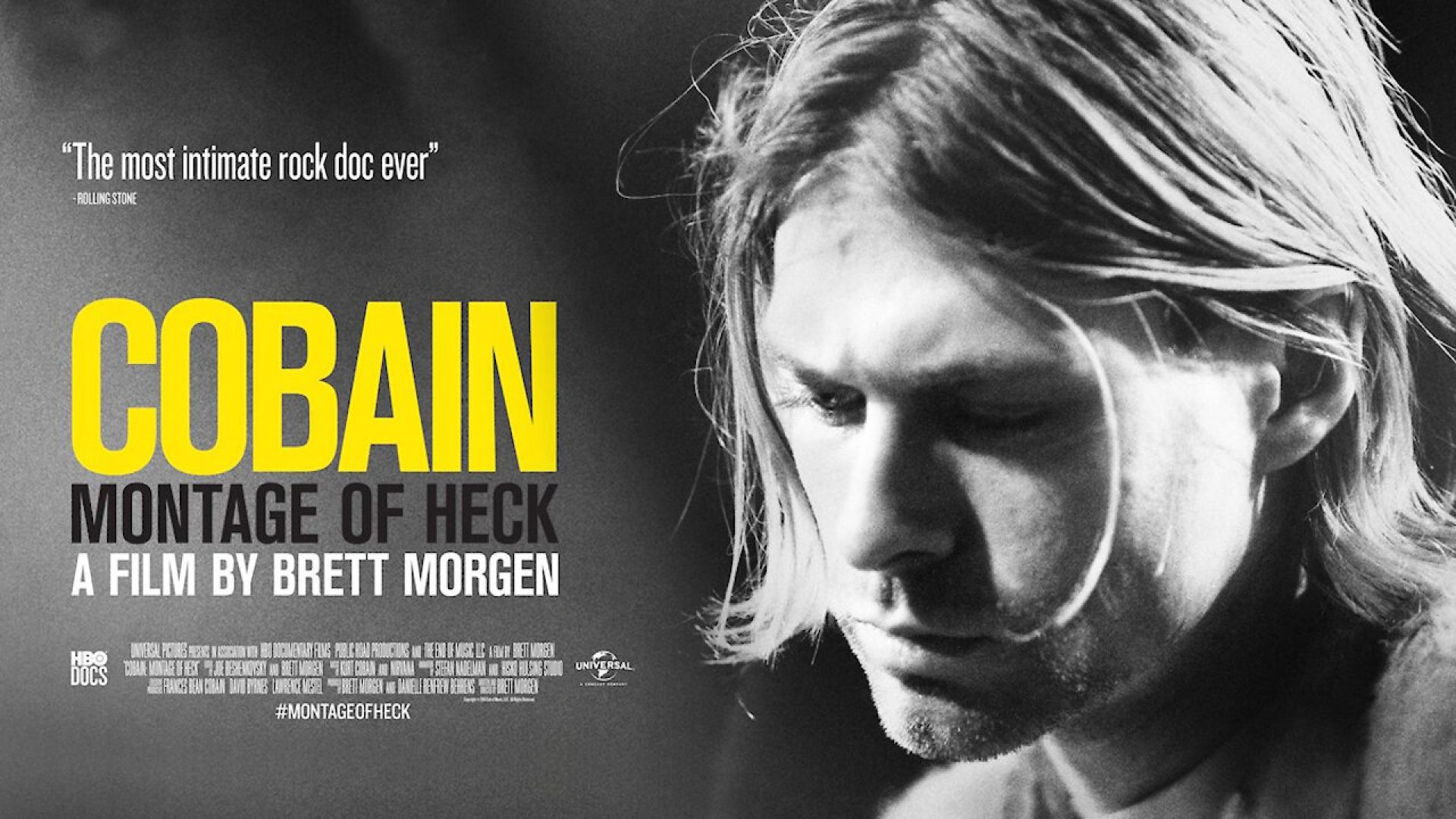
Kurt Cobain: Montage of Heck is a 2015 American documentary film about Nirvana lead singer Kurt Cobain. The film was directed by Brett Morgen and premiered at the 2015 Sundance Film Festival.
It received a limited theatrical release worldwide and premiered on television in the United States on HBO on May 4, 2015. The documentary chronicles the life of Kurt Cobain from his birth in Aberdeen, Washington in 1967, through his troubled early family life and teenage years and rise to fame as front man of Nirvana, up to his suicide in April 1994 in Seattle at the age of 27.
The film includes artwork by Cobain as well as music and sound collages composed by him. Much of music and sound collages were released on the film's soundtrack, Montage of Heck: The Home Recordings. A companion book was also released containing animation stills from the film as well as transcripts of interviews, photographs, and Cobain's artwork that were not featured in the film.

Dr Rashid Buttar, brytyjsko-amerykański lekarz, który był odpowiedzialny za uświadomienie milionom ludzi prawdy o Big Pharmie i globalistycznej agendzie, został znaleziony martwy 18.05.2023.
Miał 57 lat i cieszył się wyjątkowo dobrym zdrowiem. Szykujcie się na turbulencje roku 2025!
Sławik Kraszennikow 1983-1993
Później wrócą wszystkie choroby, o których ludzie już zapomnieli. Jedna choroba pojawi się bez nazwy, od której będzie mnóstwo trupów na ulicach i nikt nie będzie ich chował. Będą po nich pełzać robaki i wokół będzie panował smród. Sławoczka powiedział: „Mamusiu, ludzie będą iść i umierać w ruchu, ponieważ zupełnie nie będą mieć energii. W naszym mieście będzie tak samo”.
https://www.askdrbuttar.com/
