Top videos

Anti Gravity technology found in nature I Viktor Grebennikov LEVITATING technology
In summer 1988, an
entomologist from Novosibirsk city, Viktor Stepanovich Grebennikov, examined a microstructure of the lower surface of beetles’ wing case by a microscope and became interested in “an unusually rhythmic, extremely
ordered, incomparable honeycomb, solid multidimensional composition, which looked as if it was pressed by some complicated automatic machine”.
Studying this amazing micropattern allowed Grebennikov to design a platform of a new kind called “Gravity plane”. Let’s talk about it. Hey guys and welcome back to the channel. For this video, we will talk about the Anti Gravity Technology discovered from Nature II Viktor Grebennikov LEVITATING technology”.

Are UFOs real? Unidentified flying objects have been a state secret for a long time. In less than 100 years, mankind has experienced a wide range of U.F.O./U.A.P. phenomena the world over. From these experiences, fascinating data has been gathered by military, government, and private organizations in key geopolitical countries, leading people within these organizations to believe that a unified human effort should be undertaken to study extraterrestrial phenomena.
Watch this UFO documentary and let us know what you think in the comments.
"Covers the most up to date, most credible ufo incidents in recent memory including the Pentagon UFO videos. While nothing new for ufo enthusiasts, for anyone not in deep in the ufo field, it's a short, succinct, straight to the point ufo documentary on the latest happenings."
In less than 100 years, mankind has experienced a wide range of U.F.O./U.A.P. phenomena the world over. From these experiences, fascinating data has been gathered by military, government, and private organizations in key geopolitical countries, leading people within these organizations to believe that a unified human effort should be undertaken to study extraterrestrial phenomena.

This is a non profit project, the aim is to have all anti-propaganda information in one place connected to one map, helping people understand the big picture.
The map is based on that created by The World Economic Forum, our platform will be populated by the general public as well as experts in the field, with a self regulating model.
It's time we stick to facts, and have a scientific and methodical approach in creating real change in the world.
Disclaimer: We DO NOT receive any revenue from YouTube, and we give away all copyrights, so you are free to use the content and share it.
REOURCE: The Mirror Project
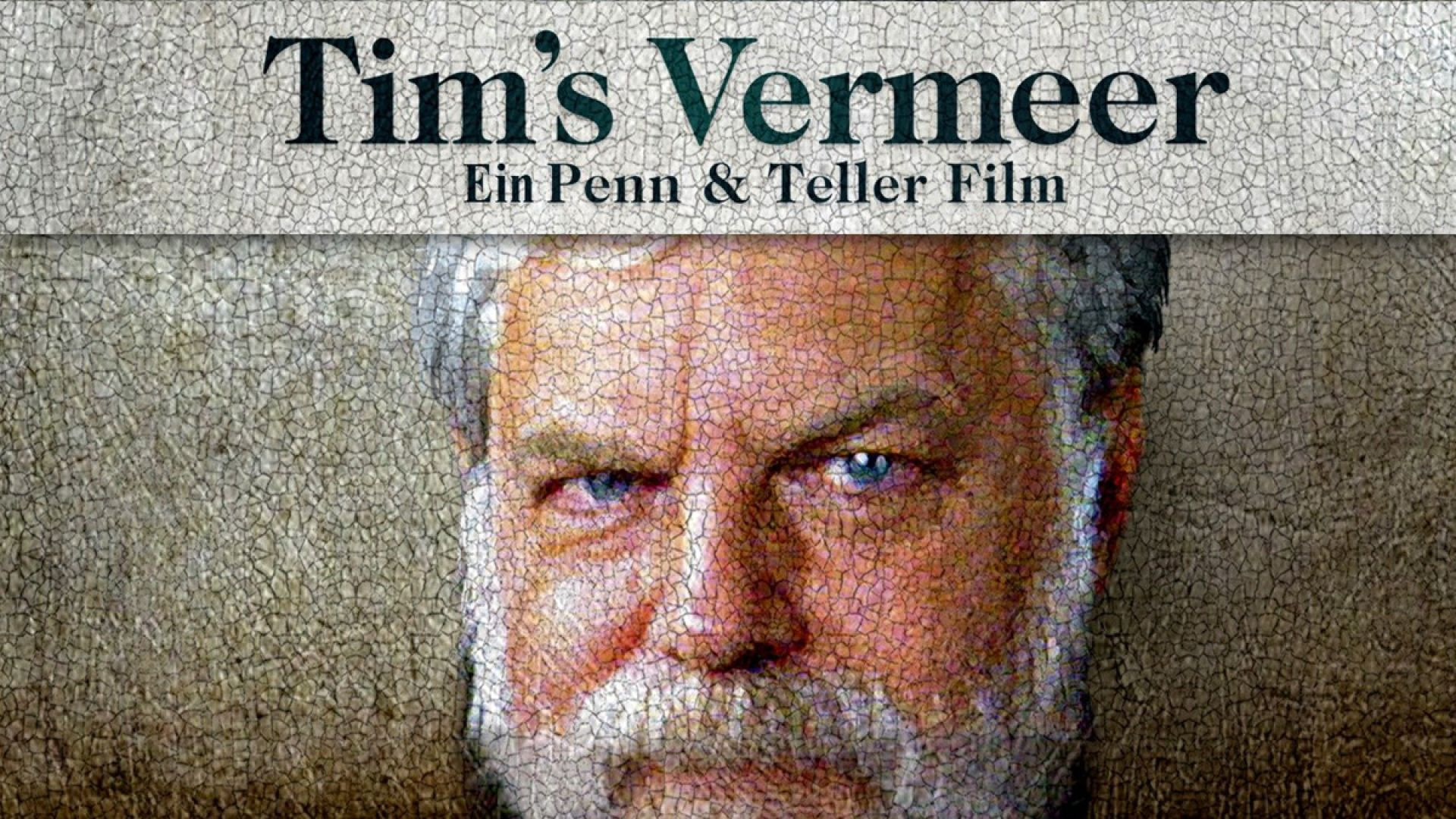
Tim's Vermeer is a 2013 documentary film, directed by Teller, produced by his stage partner Penn Jillette and Farley Ziegler, about inventor Tim Jenison's efforts to duplicate the painting techniques of Johannes Vermeer, in order to test his theory that Vermeer painted with the help of optical devices.
The film premiered at the 2013 Toronto International Film Festival and was released in limited theatrical release in the United States by Sony Pictures Classics on January 31, 2014 Tim Jenison is an inventor and successful founder of NewTek, a company working in various fields of computer graphics, most notably the 3D modeling software "LightWave 3D." Jenison, himself both an engineer and art enthusiast, becomes fascinated with the paintings of Johannes Vermeer, a 17th-century Dutch painter whose paintings have often been said to exhibit a photographic quality. Jenison, spurred by the 2001 book Secret Knowledge by British artist David Hockney and Vermeer's Camera by British architecture professor Philip Steadman, theorizes that Vermeer potentially used a camera obscura to guide his painting technique. His initial idea, that Vermeer used a simple light projection to paint, is quickly discarded after concluding that painting over a projection makes it nearly impossible to match the colors correctly. Jenison then has an epiphany of using a mirror to monitor parts of the picture: by placing a small, fixed mirror above the canvas at a 45-degree angle, he is able to view parts of the original image and the canvas simultaneously, and obtain a precise color match by continuously comparing the reflection of the original image with what he has put on the canvas, moving from area to area by simply moving his own point-of-view slightly. When the edge of the mirror "disappears", he has it right.

Karen Kingston joins Maria Zeee to explain the way humans have now been connected to the demonic realm through the nanotech in COVID-19 injections and the quantum field - but there's more.
The patents show that nanotechnology is embedded into everyday products and every single human has been exposed.
For more info on Karen's Substack visit:
https://karenkingston.substack.....com/p/part-1-disman
Visit https://link.goldco.com/Maria or call 855-913-0814 TODAY to protect your retirement! (US only)
Visit Gold Stackers today to secure your wealth with Australia's leading supplier of gold and silver bullion (Australia only):
https://www.goldstackers.com.au/?utm_source=zeeemedia&utm_medium=banner&utm_campaign=zeeemedia
To prepare you and your family for incoming food shortages, head to Heaven's Harvest on the link below (available only in the United States) and use promo code 'ZEEE' (with 3 e's!) for 5% off your order:
https://heavensharvest.com/
If you're in Australia, head to Survival Supplies Australia to prepare with long-life food, survival supplies and more:
https://www.survivalsuppliesau....stralia.com.au/?b7=z
Detox your system NOW with Dr. Zelenko's Z-DTox and use promo code 'MARIAZEEE' for 5% off your order:
https://zstacklife.com/?ref=MARIAZEEE

Social Engineering, behaviorism, Mind Control, Sudo Democracy, human experimentatio, mechanistic philosophy, schooling, Noam Chomsky, Depopulation, Conspiracy, aggression, Deep State, Dehumanisation
Human Resources: Social Engineering in the 20th Century explores the rise of mechanistic philosophy and the exploitation of human beings under modern hierarchical systems. Topics covered include behaviorism, scientific management, work-place democracy, schooling, frustration-aggression hypothesis and human experimentation
Resources explores the rise of mechanistic philosophy and the exploitation of human beings under modern hierarchical systems.
Topics covered include behaviorism, scientific management, work-place democracy, schooling, frustration-aggression hypothesis and human experimentation.
Scott Noble releases all of his films online for free, but they do cost a fair bit to produce. If you're able and appreciate his work, consider supporting the production of the filmmaker's next film with a monthly donation on Patreon.
“A viscerally overpowering film and at the same time a thoughtful meditation on the human condition.”
- Walter A. Davis, Professor Emeritus, Ohio State University
“Brilliant…Riveting…The amount of material the filmmaker covers and unifies is astounding…Human Resources diagnoses the 20th century.”
- Stephen Soldz, Professor, Boston Graduate School of Psychoanalysis; President, Psychologists for Social Responsibility
"Powerful…Must See…It will leave you Spellbound.”
- Andrew Goliszek, Author, In the Name of Science: A History of Secret Programs, Medical Research, and Human Experimentation
"An important work…terrifiying in its implications….Human Resources is a must see for those of us who still take democracy seriously.”
- Bruce E. Levine, Author Commonsense Rebellion: Taking Back Your Life from Drugs, Shrinks, Corporations, and a World Gone Crazy
“It scared the shit out of me…A powerful and methodical dissection of the dominant culture.” - Derrick Jensen, Author, Endgame

If you understand the consequences of Virtual Reality, your life can improve positively!
Thomas W Campbell, physicist and author of My Big TOE, a theory of everything, delivers this positive message for you for 2018.
2018 is the 20th anniversary of his conclusion that we are living in a Virtual Reality.
Virtual Reality makes profound statements of our purpose and mission here in this reality.
Virtual Reality supports Consciousness as fundamental. In a Virtual Reality, you as Consciousness are immortal. This Virtual Reality exists for your evolution and growth.
Virtual Reality supports spirituality and the existence of a higher aware intelligence.
Virtual reality solves the mysteries of physics. This short video clip is for sharing and raising awareness for Tom's physics experiments.
These experiments will, if the results are as Tom predicts, furnish further evidence that we are living in a Virtual Reality.

One of the most important videos I’ve done to date… watch until the end and comment your thoughts below 👇
Elizabeth April is a Universal Source Channeller, she was given the message at 16 not to do any external research*. Everything you listen to in her videos is channeled through conscious meditation.
Clairvoyant, truth seeker, intuitive psychic, and best-selling author ELIZABETH APRIL (also known as EA), is here on a mission to help humanity awaken.
EA has been featured on Vice, Bustle, Discovery, and Gaia TV to name a few, and has spoken at world-renown conferences across North America.
Most recently, EA was a featured expert on Unidentified with Demi Lovato (NBC’s Peacock TV). Elizabeth April is on a mission to help shift the world, the only question remaining is, are you ready to join her on this journey?
RESOURCE: https://www.youtube.com/c/ElizabethApril

In this episode of ICIC, Dr Reiner Fuellmich and co-host Dr Mike Yeadon have an insightful conversation with four experts on this explosive topic. Using dark-field microscopy, Dr David Nixon examines blood samples from people who have been injected with mRNA-based substances and explains the results with corresponding images. Crystalline, unnatural structures are revealed, which change in further observation and show characteristics of a kind of nano- or micro-technology.
Dr. Ana Maria Mihalcea is intensively involved with the ingredients of the Covid mRNA substances. In particular, also with the so-called "shedding effect" of which it is assumed that harmful excretions can be transferred from "vaccinated" to "unvaccinated". Karen Kingston, whose research interests include toxicology and the analysis of clinical data as well as the ingredients of the covid mRNA substances, complains that all measures regarding a functioning quality assurance management in the administration of a so-called novel "vaccination"…
RESOURCE: https://video.icic-net.com/w/s....dWHeFYZcMM4p4RvSncnD

A Journey with Ayahuasca
Reconnect is London Real’s fifth feature-length documentary film and documents Brian Rose’s journey to Costa Rica where he participates in multiple ceremonies with the plant medicine Ayahausca. The movie stars Graham Hancock, Dr. Jordan Peterson, Dennis McKenna, Sadhguru, Dorian Yates, Dr. Gabor Mate, Dr. Joe Dispenza, Michael Pollan, and Dan Pena.
As the founder and host of London Real, Brian Rose has spoken to over 1,000 of the greatest minds on the planet for the past eight years including Dan Peña, Dan Bilzerian, Robert Kiyosaki, Jocko Willink and more.
With an aim to spread transformational ideas to the world, London Real reaches millions of people each month with its message and yet, when Brian looked outside his studio, he saw a very different reality: a world full of division, tribalism, hatred, anger, and disconnection from our environment.
Against that background, Brian also felt extremely disconnected from his purpose, his mission, and his family.
Under the advice of legendary psychedelic researcher Dennis McKenna (brother of the late Terence McKenna), Brian decided to travel to Costa Rica to participate in three ceremonies with the ancient plant medicine Ayahuasca, known for inducing powerful visions, painful experiences, and transformational lessons.
There he reconnects with his vision and purpose but also uncovers childhood trauma that created an existential crisis in his life. After returning to London with clear visions about the future, he soon realised that things are not what he expected, and that real transformation and healing must include painful challenges and uncomfortable situations.
Along the way, Brian is advised and mentored by a number of London Real guests including Jordan Peterson, the best selling author Michael Pollan, Graham Hancock, childhood trauma specialist Dr. Gabor Mate, the Indian mystic Sadhguru, Dr. Robin Carhart-Harris of Imperial College London, former bodybuilder Dorian Yates, Dr. Joe Dispenza, and high-performance coach Dan Peña, the $50 Billion Man.
Despite this incredible guidance, Brian struggles to address his personal demons, and ultimately decides to confront the people who caused his trauma. So he embarks on a trip home to speak separately to his mother and father, in order to heal himself and ultimately create a new future for his children, his company, and his movement.
Watch Reconnect now and share in Brian’s story through his Ayahuasca ceremony and beyond to his integration exclusively here on London Real.
RESOURCE: https://londonreal.tv/reconnect-the-movie/

They Can’t Hide This Any Longer… Some COVID-19 Patients Have Deadly Venom In Them
36 different shellfish toxins and snake venom are showing up in COVID-19 patients…
How did this end up in their blood, feces, or urine?
Some experts believe this so-called “respiratory” disease is actually an envenomation from the vaccine.
They’ve targeted people with toxins for decades…
Why wouldn’t this be the case now?
Did you know that the word “corona” means “crown for the king” and virus in Latin actually means “venom” so coronavirus very closely translates to “king venom”?
If you thought this film was eye-opening, then you won’t want to miss out on what we reveal next. It’s even more shocking… and the good news is, there are solutions!

The true history of the anti-government extremist terrorist group's century of violence. Focusing on the group which has caused nationwide rioting and violence, The film – which undermines the mainstream media’s depiction of the group as “just an idea” – has already been censored by YouTube and Vimeo.
Please share with your friends, stream to your FireTV stick using Silk and host a watch party to discover the truth about this deadly organization.
RESOURCE: https://puresocial.tv/antifa-r....ise-of-the-black-fla

Critically Thinking with Dr. Sherri Tenpenny and Dr. Lawrence B. Palevsky, Dr. Carrie Madej, Dr. Lee Merritt, Dr. Christiane Northrup.
Ever since reports have surfaced in recent days that people who have chosen NOT to receive the experimental COVID-19 shots but have been exposed to those who have received them, and have suffered what appear to be infections coming from these fully "vaccinated" people, affecting mainly women who have reported menstruation difficulties, heavy bleeding, miscarriages, and reduction of breast milk, I have been watching my newsfeed to see if any of the dissenting doctors and scientists we feature regularly here at Health Impact News would address these issues.
Fortunately, a team of 5 doctors in the U.S., all of whom we have featured in the past here at Health Impact News and are highly qualified to address this topic, just held a round-table discussion a couple of days ago to address these issues.
The issues they discuss affect ALL of us in the U.S. (and around the world) right now, and it is imperative that you take 79 minutes of your time to watch this video.
Not only do these highly qualified doctors discuss why they think this is happening, they also give practical advice at the end about what we can be doing right now to protect ourselves and stop this attack on the human race by the Globalists seeking to reduce the world's population.
Every single one of these doctors believe that these shots are NOT vaccines, but bioweapons designed to kill human beings.
Whatever else you are doing when you come across this video, it is highly unlikely that anything else you do the rest of your day will be more important than watching this video so you can be informed of the evil effects of these injections that are being censored in the corporate media and Big Tech social media.
Then share this video with as many people as you can.

This documentary about Sgt Pepper’s Lonely Hearts Club Band picks up where Ron Howard left off – without any of the band’s music or even images
It’s not easy to make a documentary about the greatest album in history when you don’t have access to a single note of the music, but this documentary forges on and cashes in regardless, perhaps assuming its target audience already knows the band’s back catalogue (or won’t realise there’s no Beatles music in it). It cannily picks up the story where last year’s “official” doc – Ron Howard’s Eight Days a Week – left off: the pivotal year of 1967, when the band gave up touring, recorded Sgt Pepper and met the Maharishi.
This history is raked over by greying, second-tier talking heads in granular detail, right down to the design of the “get well soon” card John Lennon drew for George Harrison’s sister-in-law. But without the supporting music, or even images, there’s a dancing-about-architecture feel to the whole exercise. A good 10 minutes is devoted to the album’s iconic sleeve design, for example, without ever showing the sleeve itself.
... as 2023 gathers pace, we have a small favour to ask. A new year means new opportunities, and we're hoping this year gives rise to some much-needed stability and progress. Whatever happens, the Guardian will be there, providing clarity and fearless, independent reporting from around the world, 24/7.
Times are tough, and we know not everyone is in a position to pay for news. But as we’re reader-funded, we rely on the ongoing generosity of those who can afford it. This vital support means millions can continue to read reliable reporting on the events shaping our world. Will you invest in the Guardian this year?
Unlike many others, we have no billionaire owner, meaning we can fearlessly chase the truth and report it with integrity. 2023 will be no different; we will work with trademark determination and passion to bring you journalism that’s always free from commercial or political interference. No one edits our editor or diverts our attention from what’s most important.
With your support, we’ll continue to keep Guardian journalism open and free for everyone to read. When access to information is made equal, greater numbers of people can understand global events and their impact on people and communities. Together, we can demand better from the powerful and fight for democracy.
REVIEW RESOURCE: https://www.theguardian.com/fi....lm/2017/may/26/it-wa
Evidence of a mysterious medieval famine leads researchers on a quest for one of the deadliest volcanoes in human history.
Follow a team of volcano sleuths as they embark on a worldwide hunt for an elusive volcanic mega-eruption that plunged medieval Earth into a deep freeze. The mystery begins when archaeologists find a hastily dug mass grave of 4,000 men, women, and children in London.
At first they assume it’s a plague pit from the Black Death, but when they date the bones, they turn out to be too old by a century. So what killed off these families? The chronicles of that time describe a run of wild weather that devastated crops and spread famine across Europe.
NOVA’s expert team looks for the signature of a volcanic eruption big enough to have blasted a huge cloud of ash and sulfuric acid into the atmosphere, which chilled the entire planet. From Greenland to Antarctica, the team finds telltale “fingerprints” in ice and soil layers until, finally, they narrow down the culprit to a smoldering crater on a remote Indonesian island.
Nearly 750 years ago, this volcano’s colossal explosion shot a million tons of rock and ash every second into the atmosphere. Across the globe, it turned summer into winter. What would happen if another such cataclysm struck again today?
RESOURCE: https://www.pbs.org/wgbh/nova/....video/killer-volcano

Welcome to Futureunity, where we explore the fascinating world of science, technology, and the universe! From the inner workings of the human body to the outer reaches of space, we delve into the latest and most interesting discoveries that are shaping our world. Whether you're a science buff or just looking for some mind-blowing facts, we've got you covered. Join us as we uncover the mysteries of the world around us and discover new frontiers in the fields of science and technology. Get ready for a journey that's both educational and entertaining!
Disclaimer Fair Use:
1. The videos have no negative impact on the original works.
2. The videos we make are used for educational purposes.
3. The videos are transformative in nature.
4. We use only the audio component and tiny pieces of video footage, only if it's necessary.
Copyright Disclaimer under section 107 of the Copyright Act 1976, allowance is made for “fair use” for purposes such as criticism, comment, news reporting, teaching, scholarship, education, and research. Fair use is a use permitted by copyright statutes that might otherwise be infringing.
Disclaimer:
Our channel is based on facts, rumors & fiction. We are not anonymous and we are not associated with anynymous in any way. Purely made for entertainmed purposes.
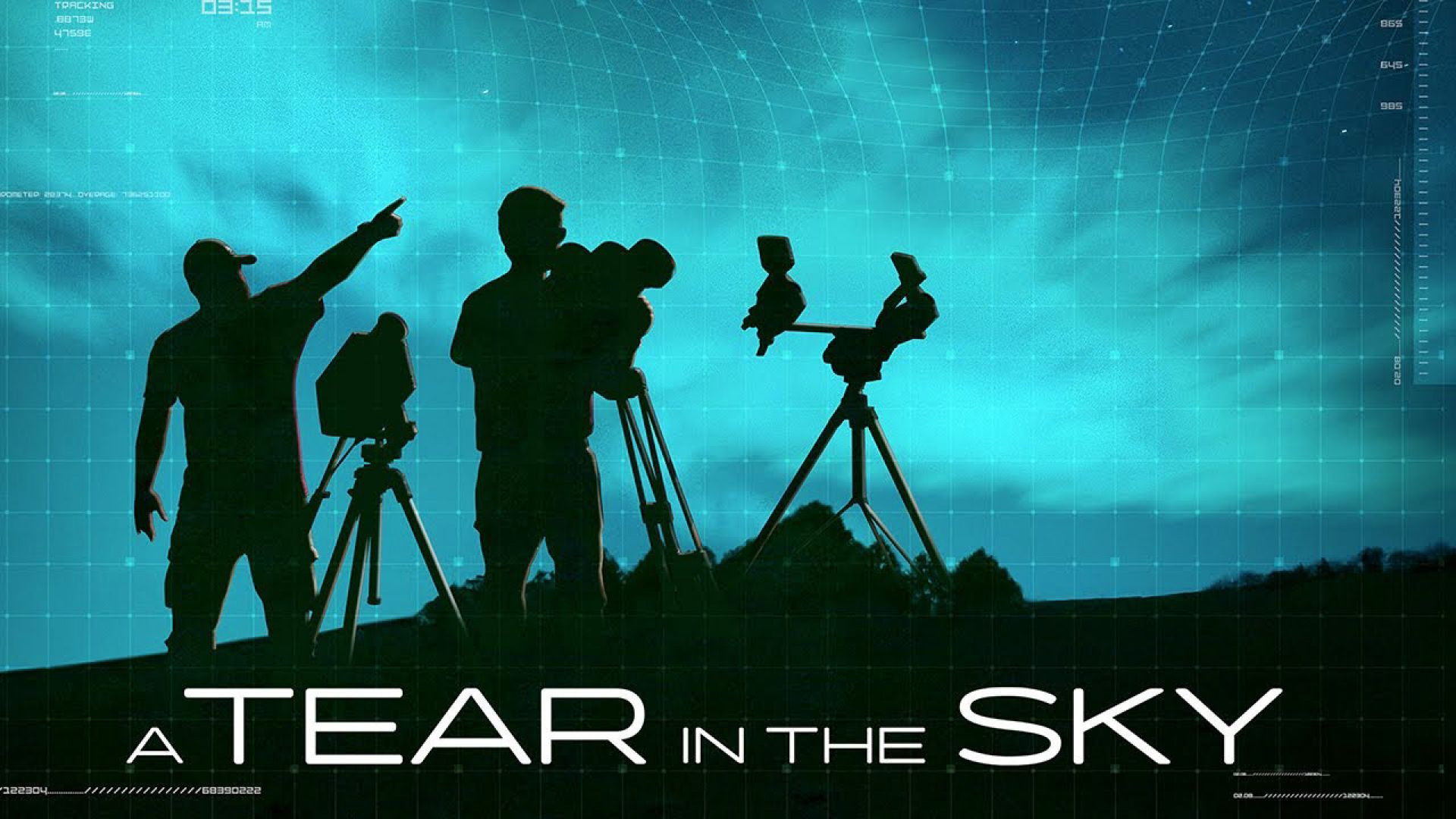
Are you a believer in an alien presence in our skies? Rumours of such phenomena date back over a century and, indeed, strange sightings in the skies go back long before that, though they were previously explained in different ways. Talk to modern UFO enthusiasts and you will tend to be regaled with a lot of loosely connected theories about disparate phenomena. A Tear In The Sky follows a project which is trying to apply a more scientific approach by narrowing its focus and applying close, multi-method observation to one specific phenomenon: the ‘tictacs’ frequently observed off the coast of California.
Leading the effort, and directing and presenting this documentary, is Caroline Cory, who has an MA in Counselling Psychology from the University of Austin and has built a successful career as an author and public speaker focused on extra sensory perception and ‘ufology’. She’s supported by Michio Kaku, who teaches theoretical physics in new York and has produced a number of peer reviewed papers, despite being best known for highly simplified pop science presentations. On the ground are computational physicist Kevin H Knuth and Matthew Szydagis, who graduated in philosophy before going on to teach physics at Albany. In the studio is William Shatner, whose principal qualification seems to be that he’s Cory’s lifelong idol, but who is also a familiar face for international (if not necessarily interplanetary) viewers.
The project is centred on a particular area between the California coast and the island of Catalina, which enables equipment set up at different points to triangulate and determine the position of observed phenomena as well as comparing observations from different standpoints. The team uses standard imaging, infrared and radiation tracking as well as comparing sightings to the position of known aircraft in the unregulated airspace (which latter seems especially important after we see Cory getting excited about a comparatively slow moving, blinking white light which looks very much like a plane). There is, of course, no accounting for unknown flights, and one wonders if local police forces will take an interest in the film when trying to identify drug trafficking routes.
It probably looks very impressive to a lot of viewers, and it certainly represents a serious effort, but aspects of the team’s approach raise concern, such as their inability to understand how an object visible from one position with a regular lens can be invisible from another with a fisheye lens (not a mystery at all to anyone with a decent grounding in optics). The real problem lies not in how data is captured but in how it is analysed, at which point there is so much jumping to conclusions and post-hoc justification that it’s difficult to consider this science at all. Despite the proud boasts at the end of the film, this couldn’t hope to survive peer review – and yet that’s not to say that the data itself isn’t interesting, or that the film has nothing to offer.
Cory does, to her credit, take a little time to explore terrestrial phenomena which could potentially be responsible for sightings like these. There’s an all too brief detour into the world of experimental aircraft, including ‘bat drones’ launched by catapult and others which can fly at an astonishing Mach nine. There’s also a little bit about the history of the sightings, though here no specific allowance is made for the possibility that military technology was advancing more quickly than official releases suggested. Navy veterans report ‘men in khaki’ arriving on their boat after one such incident and confiscating or erasing all possible recordings. This is presented as if it were evidence of a conspiracy to cover up the existence of extra terrestrial life, when a conspiracy to cover up the existence of new types of aircraft seems distinctly more likely.
It’s this tendency to try to fit evidence to pre-existing ideas which undermines the film’s scientific credibility, but it’s intriguing as a study of the mechanics of belief. One military participant says that he doesn’t mind what kind of explanation he gets as long as he can have an answer. There is evidence of the traumatising effect of being ordered not to accept what one has seen with one’s own eyes. Others grasp at every little indicator that they might have been right all along in ascribing what they saw to the presence of aliens. Aliens represent hope, after all, and an escape from the mundane world.
This is an independent film and its production standards are not the greatest. Cory makes some odd choices as director, from camera angles which make her look as if she’s talking to an unseen third party, to the use of dramatic music more befitting of a soap opera than a serious documentary. Towards the end there is a lot of repetition and points are overstated in a way which makes the whole thing feel like an amateur propaganda piece. That said, it will no doubt hold some appeal for UFO enthusiasts, whether they are true believers or not, and, as one participant points out, it establishes that with today’s technology there is a lot that average people can do to explore the world (and perhaps others) for themselves.
REVIEW RESOURCE: https://www.eyeforfilm.co.uk/r....eview/a-tear-in-the-

The Rothschild family (/ˈrɒθ(s)tʃaɪld/ ROTH(S)-chylde, German: [ˈʁoːt.ʃɪlt]) is a wealthy Ashkenazi Jewish family originally from Frankfurt that rose to prominence with Mayer Amschel Rothschild (1744–1812), a court factor to the German Landgraves of Hesse-Kassel in the Free City of Frankfurt, Holy Roman Empire, who established his banking business in the 1760s. Unlike most previous court factors, Rothschild managed to bequeath his wealth and established an international banking family through his five sons, who established businesses in London, Paris, Frankfurt, Vienna, and Naples. The family was elevated to noble rank in the Holy Roman Empire and the United Kingdom. The family's documented history starts in 16th century Frankfurt; its name is derived from the family house, Rothschild, built by Isaak Elchanan Bacharach in Frankfurt in 1567.
During the 19th century, the Rothschild family possessed the largest private fortune in the world, as well as in modern world history. The family's wealth declined over the 20th century, and was divided among many descendants. Today, their interests cover a diverse range of fields, including financial services, real estate, mining, energy, agriculture, winemaking, and nonprofits. Many examples of the family's rural architecture exist across northwestern Europe. The Rothschild family has frequently been the subject of conspiracy theories, many of which have antisemitic origins.

A Prison on Earth: Beyond The New World Order - In the shadows of other dimensions, there lays a nefarious force waging war upon humans for millennia from the space between spaces - a dark force that governs not just our thoughts and actions but our very souls. The very advent of time began the slave master hierarchy between us and those unseen forces behind our every action and thought.
They built and created "rules" and systems of thought, created kingdoms and spawned religions used to rule the masses from afar by controlling the ebb and flow of space and time on an epic level. Under the guise of "free will" and "individualism" the systems in place around us actually ensure that we have no choice but to comply and obey an underlying agenda that at its core is evil, and have been put in place by beings that feed and are nurtured by the control they maintain over planet Earth.
2016: Stars: William Kraft, Robert Mathison, Simon Oliver

Demons are real, demon possessed people walk among us. For those that may not know what Nihilism is, it is a philosophy, or family of views within philosophy, that rejects generally accepted or fundamental aspects of human existence, such as knowledge, morality, or meaning.
