Top videos

(2002 LEAKED DOC) Secret Covenant of the Illuminati - Satanic Globalist Evil SECRET PLAN
The document was anonymously sent to the email of bankindex.com in June of 2002.

"2000 Mules," a documentary film created by Dinesh D'Souza, exposes widespread, coordinated voter fraud in the 2020 election, sufficient to change the overall outcome. Drawing on research provided by the election integrity group True the Vote, "2000 Mules" offers two types of evidence: geotracking and video.
“2000 Mules” is not as much the hard-hitting expose of the 2020 election that viewers might expect from its marketing. The movie is actually a great overview of election fraud that has been taking place for the past decade. And the research it features leaves a big question wide open.
Still, “2000 Mules” is a major, real bombshell.
The documentary comes from political pundit Dinesh D’Souza and familiar collaborators, including director Bruce Schooley, and D’Souza’s wife, Debbie, who has also produced his other movies, most recently “Trump Card” in 2018. It features research conducted by election integrity watchdog True the Vote.
Much criticism has been leveled at the use of cellphone data in “2000 Mules” to track “mules,” or ballot traffickers, and estimate the number of fraudulent votes in the 2020 election that gave Joe Biden the win over Donald Trump. This writer finds the cellphone data to be credible. The data is what makes “2000 Mules” a bombshell, the kind that comes along once in a century. It is the research methodology that is flawed. (More on this later.)
First, the findings that D’Souza presents to viewers are shocking. He asks incisive questions of True the Vote’s founder Catherine Engelbrecht and top researcher Glenn Phillips, leading the viewer through the complex data. Here is what they tell us:
Atlanta: 242 mules that went to an average of 24 ballot dropboxes and eight organizations in a two-week period.
Phoenix, 200+ mules
Milwaukee, 100 mules
Michigan, 500 mules
Philadelphia, 1,100 mules going to 50 dropboxes each. People driving to New Jersey possibly to pick up ballots.
The movie estimates that calculating for the ballot trafficking, Trump would have won with 305 electoral votes.
The movement of the mules shows that the fraud was deliberate.
“To get to some of these dropboxes, it had to be intentional. You had to get off the highway, go on some street, you had to turn in somewhere in order to get to those dropboxes,” Phillips said.
And Engelbrecht remarks on the gaslighting by the media in the aftermath.
“Now the narrative needs to be that this is the most secure election, this is the most fabulous election we have ever had. Pay no mind to the millions of Americans that are saying something is not right,” Engelbrecht said.
The movie also takes the audience through other kinds of ballot harvesting and ballot trafficking, including the exploitation of the disabled and the elderly, and the bullying of vulnerable populations, immigrants and the homeless.
It also mentions the well-known case in North Carolina of the Mark Harris campaign in 2018 as a prime example of ballot trafficking.
All of this information makes “2000 Mules” a great overview on election fraud. But the methodology of the research into the 2020 presidential election has one glaring flaw.
True the Vote seems to make assumptions on the nonprofits, or the “stash houses” where the fraudulent ballots are kept, as one of the starting point of its research along with the ballot dropboxes, for pinpointing the movements of the mules. Additionally, D’Souza never explains or even gives a hint of who these nonprofits are. So the viewer is left in the dark. This begs the question: Did True the Vote have a preset list of nonprofits they knew were stash houses from previous research, instead of determining who the stash houses are from the mules? Is the research completely nonpartisan?
D’Souza has answered a similar question from a viewer here, but has not addressed this concern. In journalism, you can provide hints for who the nonprofits are. For example, are they big nonprofits with obvious political leanings or small nonprofits doing unrelated work, like animal rescue? D’Souza and his producers not giving any hints at all leaves a big piece of the puzzle off the table.

NOVA investigates the story of cannabis from the criminalization that has disproportionately harmed communities of color to the latest medical understanding of the plant. What risks does cannabis pose to the developing brain? How much do we know about its potential medical benefits? As cannabis becomes socially accepted, scientists are exploring its long-term health consequences.
This program was produced by GBH, which is solely responsible for its content. Some funders of NOVA also fund basic science research. Experts featured in this film may have received support from funders of this program. Funding for NOVA is provided by the David H. Koch Fund for Science, the NOVA Science Trust, the Corporation for Public Broadcasting, and PBS viewers.
RESOURCE: https://www.pbs.org/
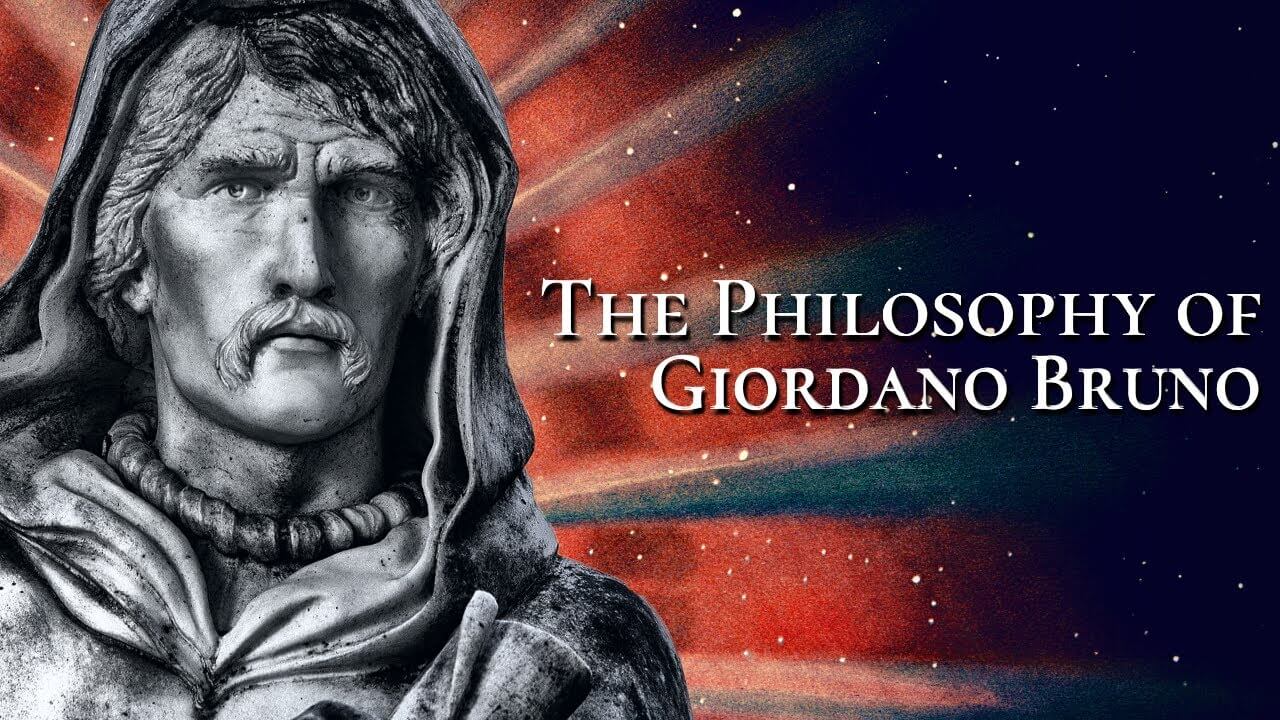
The philosophy of Giordano Bruno was unique for the Neoplatonic and Aristotelian dominated era during which it was conceived. Its uniqueness derives from its ability to combine metaphysics, physics, psychology, and ethics into a philosophy that, while presented in an unsystematic and at times seemingly disjointed way, manages to shine with an inner coherence.
Though this video may seem lengthy to my viewers, the feat of condensing down the vitals of his philosophy was exceedingly challenging as it would have been easy to exceed 45 minutes if the editing was not such a lengthy process. Thank you for taking the time to watch and I hope you can gain some understanding of Bruno’s eclectic philosophy!
Music:
'Cirrus' by Scott Buckley - released under CC-BY 4.0. www.scottbuckley.com.au
Sources: To the generous men and women who published these resources, especially Stanford’s article concerning Bruno, I cannot say thank you enough. Without such articles this video would not be possible without the purchase of countless books.

In 2013 David Kennedy produced Fluoridegate: An American Tragedy, a classic documentary that is exquisite in capturing the battle that raged over the downgrading of cancers in the fluoride study overseen by the National Toxicology Program and published in 1990. Below we reprint the comments made by William Marcus, the senior toxicologist at the Environmental Protection Agency’s Office of Drinking Water, on these downgrades. Also, we add the comments from Stephen Kohn of the National Whistleblowers Association who explained how the EPA went after Marcus with “a vengeance… like he was an enemy of the state.”
In 1977 the US Congress mandated the National Toxicology Program to conduct animal studies to determine if fluoride causes cancer. Battelle Columbus Laboratories were contracted to perform the studies that began in 1985 and ran for 2 years. In 1988 Battelle submitted their final report that included the finding of a dose-dependent increase of a rare liver cancer (hepatocholangiocarcinoma) in male & female mice and a small but statistically significant dose-related increase in osteosarcomas in male rats but not in the female rats.
For the rare liver cancer, the first scientist to describe this cancer said that Battelle made a correct diagnosis. However, this rare liver cancer was reclassified by a government review panel as a non-cancer and one of the osteosarcomas was downgraded leading to the classification of “equivocal evidence of cancer”. There were also increases in oral and thyroid cancers, but they were not considered statistically significant.
RESOURCE: https://fluoridealert.org/cont....ent/bulletin_12-26-1

The documentary “Second Opinion: Laetrile at Sloan-Kettering” examines a brief period in the 1970s when a respected doctor’s research into the unconventional, often-banned and quack-labeled therapy laetrile — a modified chemical substance found in apricot pits — appeared to promise a remedy for cancer patients. (Results showed slower tumor growth in mice.)
The movie’s central figure is Ralph W. Moss, who recounts his stint as Memorial Sloan Kettering’s head public relations guy and his bristling at the New York institute’s effort to squelch the findings of Dr. Kanematsu Sugiura, a 60-year veteran of the center and a pioneer in the use of chemotherapy to treat cancer.
Moss took the whistle-blower route, first secretively (starting an underground publication called Second Opinion) and then openly, which cost him his job, and it’s all director Eric Merola can do to give this story the feeling of “The Insider.”
It’s an intriguing tale, for sure, but “Second Opinion” isn’t journalism, because only Moss, his family and a supportive cohort or two are interviewed. We don’t hear from anyone on the other side of the story. The film isn’t history either, since little else about the long campaign to legitimize laetrile is explored. This one’s for the conspiracy-minded only.
Ralph W. Moss PhD, a young and eager science writer, was hired by Sloan-Kettering's public relations department in 1974 to help brief the American public on the center's contribution to the War On Cancer. One of his first assignments was to write a biography about Dr. Kanematsu Sugiura, one of the Center's oldest and leading research scientists as well as the original co-inventor of chemotherapy.
REVIEW RESOURCE: https://www.latimes.com/entert....ainment/movies/la-et

This man is the real deal on all issues with the COVID-19 treatment.
Dr. Vladimir Zev Zelenko graduated summa cum laude with a B.A. degree with high honors in Chemistry from Hofstra University. After receiving an academic scholarship to attend S.U.N.Y. at Buffalo School of Medicine, he earned his M.D. degree in May 2000. Dr. Zelenko completed his family medicine residency at South Nassau Communities Hospital in Oceanside, N.Y. in May 2004. Since then, Dr. Zelenko has practiced family medicine in New York’s Hudson Valley.
He has been described by his patients as a family member to thousands of families, and is a medical adviser to the volunteer ambulance corps in Kiryas Joel, New York. In March 2020, Dr. Zelenko’s team was one of the first in the country to successfully treat thousands of Covid-19 patients in the prehospital setting. Dr. Zelenko developed his now famous “Zelenko Protocol,” which has saved countless lives worldwide, while he was fighting recurrent and metastatic sarcoma, had open heart surgery, and aggressive chemotherapy.
He has also persevered against unrelenting defamation of character from the media, and threats against his person. Dr. Zelenko is an observant orthodox Jew, married with 8 children, and has authored two books called Metamorphosis and Essence to Essence.
Visit https://vladimirzelenkomd.com/ to get more information about Dr. Zelenko
Covid-19 Treatment Protocol details here:
https://vladimirzelenkomd.com/treatment-protocol/
Covid-19 Treatment Protocol PDF download here:
https://vladimirzelenkomd.com/wp-content/uploads/2021/08/Treatment_Protocol.pdf

"Rolling Thunder Revue: A Bob Dylan Story" is one of the most frustrating Martin Scorsese films as well as one of the most out-of-character. Decades in the making, in a way, this is an engaging but disorganized and long-winded (two hours, twenty minutes) account of the time in 1975 that Bob Dylan, nine years on from his motorcycle accident, convened a vagabond caravan of musicians, poets, reporters, photographers, money men, and hangers-on to tour the United States in the lead-up to the country's Bicentennial celebration. The tour was a bust, financially and in terms of cultural impact—or at least that's how Dylan, 78 at the time of this film's streaming premiere, remembers it, while cautioning Scorsese and the viewer that he barely remembers anything at all. Nevertheless, the Rolling Thunder Revue rejuvenated Dylan as a musician, in the manner of Elvis Presley's 1968 "comeback" special. And it generated enormous amounts of tour footage, some of which is reproduced here, within a highly conceptual framework, by Scorsese.
The issue of authorship is nearly as central to this movie as the story of Dylan roaming the United States, driving his own tour bus and performing in small- and medium-sized halls, accompanied by the likes of Joan Baez, Ramblin' Jack Elliot, Roger McGuinn, Scarlet Rivera, Joni Mitchell, Ronnie Hawkins, and (in one of his final filmed appearances) Sam Shepard. Scorsese, who over the course of his long career has essentially stamped certain American rock acts, including Dylan, The Rolling Stones, and The Band with "Property of Martin Scorsese," is the credited director, naturally. And as edited by Damian Rodriguez and David Tedeschi, the film bears many Scorsesean hallmarks, including surprising transitions from one idea to the next, and sequences that have been cross-cut in order to provoke questions and create sensations rather than serve up fixed meanings or answers.
But once you look at what the thing actually is, what it's made of, and how the pieces have been arranged, things get curiouser and curiouser. The film is woven around footage shot during the tour by real-life Chicago cameraman Howard Alk (1930-1982), who was hired by Dylan to make a project that somehow never got turned into an actual feature film. The footage has been re-contextualized by Scorsese and presented as the work of European filmmaker Stefan Van Dorp, a nonexistent person played by Argentinean performance artist Martin von Haselberg (husband of Bette Midler, briefly glimpsed in 1975 footage). In interviews, Van Dorp talks in the cliched "high culture" cadences of a mid-20th century moneyed WASP, and speaks on camera of his subjects and collaborators (excluding Dylan and a few others) in an exasperated, withering manner.
Other fictional or questionably involved characters enter the narrative as well, including Paramount Pictures CEO James Gianopulos as the tour promoter; actor Michael Murphy as nonexistent Congressman Jack Tanner (whom he played in two projects for the late Robert Altman); and Sharon Stone, costar of Scorsese's "Casino," as herself, telling the story of how she attended one of the Rolling Thunder Revue concerts as a 17-year-old in the company of her mother and was invited to join the caravan.
Is Scorsese trying to create his own, epically scaled answer to "This is Spinal Tap" or "Zelig"—a mock documentary integrating the real with the fictional, prompting audiences to question the distinctions between them? Maybe. "The Rolling Thunder Revue" starts with a snippet of a silent-era George Melies film of a magic trick and returns to it later, as if to signal that an aspect of illusion is built into the project. The collision of verified events and never-before-discussed anecdotes (some of which, like Congressman Tanner's friendship with President Jimmy Carter, are obviously fabricated) undermines the veracity of everything in the story, like the anecdote about Rivera supposedly taking Dylan to see KISS and inspiring him to don Kabuki-inspired facepaint.
And to what end? What you're seeing, for the most part, are real events that happened in real places to real people, and which therefore have archival value. Even if one were to thread up unedited footage at random, the images and sounds would still tell us a lot about the culture and emotional temperature of the U.S. circa 1975. The concert footage (much of which concentrates exclusively on Dylan, regardless of assurances that the tour was a democratic endeavor) is riveting, showcasing inventive re-arrangements of many Dylan classics, including "Simple Twist of Fate," "A Hard Rain's Gonna Fall," and "The Lonesome Death of Hattie Carroll."
In comparison to the material that stands on its own, the absurd touches feel glommed-on and pointless, and much of the time, they don't work. When the Van Dorp character prattles about how he wanted to show "the contrast between the excesses of the people on the tour and the dissolution of society [in] the land of pet rocks and Slurpees from 7-Eleven," it's like being forced to listen to a reading of a satirical short story by a fiction writer who understands the dictionary definition of satire but never figured out what, exactly, he intended to make fun of. The culture itself? The popular art form that tries to respond to the culture? The mentality of the artist mocking other artists trying to respond to the culture?
This is a documentary, and at the same time, it's also a prank or a joke. But it's not particularly funny when it's plainly trying to be. Why? Maybe because it's lumpy and unfocused, meandering from absurdism to poker-faced sincerity (as in self-contained sections about the plight of Native Americans and the fate of one of Dylan's real-life subjects, wrongly imprisoned boxer Rubin "Hurricane" Carter). Or maybe it's because when you think of Scorsese, one of the great living American filmmakers, a lot of different words and phrases spring to mind, but "goofy" and "wry" and "light touch" aren't among them.
The unsung hero in all this is Alk, whose footage gives the movie its artistic and historical nucleus. He was friends with Dylan from 1963 on, and worked with him on several movies, including "Eat the Document," "Hard Rain" (also about the Rolling Thunder tour) and Dylan's semi-improvised, self-directed "Renaldo and Clara" (where a lot of the footage comes from). Aficionados of analog-era, fly-on-the-wall nonfiction camerawork will admire the intelligence that Alk brings to every composition and camera move—assuming it's Alk's work that we're mostly seeing here, and it's impossible to know for sure, since Scorsese never identifies the footage that way, and lets us believe that "Van Dorp" shot all of it, because that's the joke. There are instances where he even seems to have dubbed Dylan and other real-life personages addressing Alk as "Van Dorp."
Meanwhile, Alk's unobtrusive artistry shines through anyway—as in a lovely moment where Dylan and Ginsberg visit the cemetery where Jack Kerouac is buried, and the camera briefly sneaks away from the two men swapping Kerouac quotes to wander over to the writer's grave site, perfectly framing the rectangular headstone to create a frame-within-a-frame.
At one point, Van Dorp gripes about an obsequious Rolling Stone reporter, real-life journalist and gadfly Larry "Ratso" Sloman, stating that "he didn't want anyone else with vision around." This feels like a self-deprecating joke on Scorsese's own status as an auteur who puts his name on nonfiction projects partly comprised of archival footage created by others. But erasing credit for another artist's work—even an obscure one, even inadvertently, and even in the service of satire and conceptual art—is a dicey business. It backfires here, contributing to the current national malaise wherein facts are provisional and nothing can be trusted anymore, and making the project feel insensitive to the hard-won achievements of real people without whom it would not exist. Buried beneath layers of metafictional tomfoolery is a moving film about an anonymous artist whose achievements remain unrecognized, even by people ideally positioned to throw a spotlight on them.
REVIEW RESOURCE: https://www.rogerebert.com/rev....iews/rolling-thunder

This documentary looks inside the life of a high-powered music publicist who became a techno-age philosopher.
For the past 20 years, in his second career as a best-selling author, Howard Bloom has been grappling with the big questions, all of which can be boiled down to, as he puts it here, “What does the universe want from you and me?” Bloom has, in the pre-Covid-19 world chronicled in this documentary about him, a strict routine that helps him in this discipline.
It includes morning exercise and consulting a list of reminders of what to take with him when he ventures out of his Brooklyn brownstone. It also involves a staggering number of medications, which he needs to combat his chronic fatigue syndrome, which struck him in 1988 and left him unable to step out of his bed, let alone his apartment, for many years.
Directed by Charlie Hoxie, “The Grand Unified Theory” is a moderately engaging documentary that credibly portrays Bloom’s indefatigability. He speaks of his aspiration to be a “24 hour-a-day information processing device” and defends his auto-didacticism by saying “Grad school looked like Auschwitz for the mind.” That eyebrow-raising simile is emblematic of Bloom’s bluff offhandedness, which likely served him well in his first career as a high-profile music publicist. (Recalling his tenure representing Run-DMC, he says, “We made rap.” Kurtis Blow and others might like a word.)
The movie spends more time on Bloom’s personality than it does on the ideas promulgated in such volumes as “The Lucifer Principle,” for which the actor Jeff Bridges contributes an onscreen blurb. And when Bloom confides his plan to let a Dubai-based fitness instructor and gym entrepreneur handle his archives, we get into what looks like some P.T. Barnum territory.
REVIEW RESOURCE: https://www.nytimes.com/2020/0....7/21/movies/the-gran

"If you want to find the secrets of the universe, think in terms of energy, frequency and vibration."
- Nikola Tesla
In this video we explore everything from the ancient knowledge of the magnetoelectric universe and how everything takes shape as torus fields, to how sound and magnetism is connected and how religions have common teachings of creation and sound.
A massive thank you to the speaker, Michael Tellinger for dedicating himself to this revolutionary and inspiring work!
Please check out and support his work over at his youtube: @michaeltellinger
Also check out his website: https://www.michaeltellinger.com

Niniejszy film jest wykładem dr n. med. Jerzego Jaśkowskiego dotyczącym szczepień.
W filmie poruszane są tematy toksyczności szczepień, składników dodatkowych w szczepionkach, epidemii, pandemii, świńskiej i ptasiej grypy, badań i statystyk dotyczących zachorowalności, skutków ubocznych szczepień, nowej ustawy dotyczącej szczepień, powiązaniach pomiędzy rządem a korporacjami i instytutami, korupcji urzędników i wiele innych...
RESOURCE: https://www.prisonplanet.pl/mu....ltimedia/toksyczne_s

Why do we never believe them? For centuries, the global elite have broadcast their intentions to depopulate the world - even to the point of carving them into stone. And yet… we never seem to believe them.
The Stew Peters Network is proud to present DIED SUDDENLY, from the award winning filmmakers, Matthew Skow and Nicholas Stumphauzer.
They are the minds behind WATCH THE WATER and THESE LITTLE ONES, and now have a damning presentation on the truth about the greatest ongoing mass genocide in human history.
Want to know more? Visit https://diedsuddenly.info/
This documentary was made possible by Goldco. Protect your wealth by investing in precious metals, and use THIS link to receive up to $10,000 in free silver for qualified accounts: https://link.goldco.com/DiedSuddenly
The Stew Peters Network would not be possible without the loyal and endearing support of all our sponsors. There is something for EVERYONE!

A true twentieth-century trailblazer, Harvey Milk was an outspoken human rights activist and one of the first openly gay U.S. politicians elected to public office; even after his assassination in 1978, he continues to inspire disenfranchised people around the world. The Oscar-winning The Times of Harvey Milk, directed by Robert Epstein and produced by Richard Schmiechen, was as groundbreaking as its subject.
One of the first feature documentaries to address gay life in America, it’s a work of advocacy itself, bringing Milk’s message of hope and equality to a wider audience. This exhilarating trove of original documentary material and archival footage is as much a vivid portrait of a time and place (San Francisco’s historic Castro District in the seventies) as a testament to the legacy of a political visionary.
This documentary examines the political life of the self-proclaimed "Mayor Of Castro Street," N.Y. stockbroker turned San Francisco activist Harvey Milk, the first openly gay politician elected to public office in California. Milk was elected to a City Supervisor position in the '70s, when a successful gay politician was an anomaly, but Milk made the most of his brief time in power. When Dan White killed Milk and Mayor George Moscone, the loss experienced by Milk's supporters was profound.
White robbed the gay-rights movement of a charismatic leader and eloquent voice, but he accidentally gave it something a smart political operative like Milk would surely have appreciated the power and value of: a bona fide martyr.

This documentary follows Aubrey Marcus and company through a powerful Ayahuasca ceremony at Spiritquest Sanctuary in Peru. Under the guidance of Don Howard and his team of ayahuasca shamans, Aubrey and his tribe experience deeply vulnerable transformational experiences. This beautifully cinematic journey is directed by Mitch Schultz, the director of DMT the Spirit Molecule, with an original soundtrack by Poranguí.
Aubrey first began speaking about Ayahuasca on the Joe Rogan Experience podcast in 2011. Since then he has appeared in dozens of other documentaries and media outlets commenting on Ayahuasca. The documentary seeks to help the viewer answer the following questions for themselves:
What is Ayahuasca?
What is it like to take Ayahuasca?
What visions do you have while on Ayahuasca?
What emotional breakthroughs occur during an Ayahuasca ceremony?
Should I take ayahuasca?
Let me know your thoughts in the comments?

Based on the book by environmentalist lawyer Robert F. Kennedy Jr., The Real Anthony Fauci is a two-part documentary directed by Kala Mandrake.
When the coronavirus outbreak happened, one face became known to the American public as the one standing for “the science.” That man was NIH Director Anthony Fauci and he continues to haunt the media. However, who is this man? Where did he come from? How has he worked at the NIH for so long? Kennedy explores Fauci’s hidden past, revealing corruption, conflicts of interest, and even a disregard for ethics.
One of the most illuminating parts of the documentary was how Fauci peddled ADZ as a treatment for the AIDs epidemic. Any dissenting voices to his official press release were mocked and disregarded. There is a similar pattern in regard to coronavirus. Fauci did not meet a camera he did not want to yell at and that could be his downfall.
Unlike the glowing propaganda film that Disney put out, this documentary was fearless in its pursuit of the truth behind what is going on behind the scenes with government regulators who are supposed to be protecting Americans when it comes to healthcare.
The tail end of it does sort of veer into a commercial for Ted Kennedy Jr.s organization, but it is his documentary, so I’ll let it slide. There were a few topics I do not agree with Kennedy on, but this issue of Fauci’s fraud overrides those issues.
With this in mind, I went into this skeptical but I came out wondering how the federal health “experts” get away with so much. Fauci has gotten it wrong so many times and somehow he is the highest-paid government official. It is one of the most bizarre things to happen, but it seems in politics, you can fail upwards.
The documentary is an impressive look at the evidence not to mention a feature from which Americans can learn a great deal.
REVIEW RESOURCE: https://studiojakemedia.com/20....22/10/26/the-real-an

25 years after the mysterious death of princess Diana of Wales.
Twenty five years ago Princess Diana’s car crashed inside the Pont de L’Alma tunnel in Paris France. Her lover, Dodi Fayad, died upon impact along with the driver. And even though Diana survived, it took about 40 minutes to get her from the car to the ambulance. The Official story was that they were trying to free her from the car, but several witnesses say that Diana was conscious and unobstructed. Photographs show that the backseat of the car was undamaged. And witnesses were pleading with the police to open the door and help her. Once in the ambulance, it took about 40 minutes for them to choose a Hospital. And when they finally set off, the ambulance drove at a snails pace and made several stops. Taking about 40 minutes to drive less than 4 miles.
Doctors were turned away. Witnesses were strip searched. Cameras were confiscated. No evidence was gathered. No blood samples were taken. And by 3am the entire scene was sprayed down with high pressure water hoses. Mercedes wanted to study the wreckage to see why it failed so badly. But they were denied. Diana‘s body was taken by the Royal family. Who had her reproductive organs removed before burying her remains. All 17 cameras along the route of the crash were mysteriously turned off. And all radio police frequencies went down. Witnesses were assaulted and threatened. And there was no investigation. Until the inquest ten years later. Which is when most people learned that Diana had penned a note in 1996 saying that someone was going to kill her in a car accident. This note was concealed for 6 years.
Space travellers or demonic deceivers? This is the first, and only, documentary that answers the question of who the pilots of UFOs really are, where they come from, and what their intentions are.
Unidentified Flying Objects have been recorded in various forms since the creation of man: Crudely drawn on Stone Age murals...chiseled in Egyptian stone...noted in the journals of ancients like Alexander the Great...even described in the ship's log of Christopher Columbus.
More than a stunning catalog of UFO photography, video, and eyewitness recordings, hear startling scriptural evidence from noted scholars like Dave Hunt (The Archon Conspiracy) and I.D.E. Thomas (The Omega Conspiracy) which reveals the hidden truth about UFOs and the beings who operate them.
Director: Brian Barkley
Writer: Brian Barkley
Starring: Joe Leahy, Kenneth Arnold, Jimmy Carter, Ellie Crystal, Paul Deutsch, Frank Edwards

An intimate documentary that intends to unveil the mystery of a spectacular close encounter case witnessed by a lonely gaucho.
Juan lives a solitary existence on a remote farm ever since he witnessed a UFO event. Filmmaker Alan Stivelman - together with the help of famous astrophysicist Jacques Vallée – begin an epic journey to help Juan in understanding the deep meaning of his close encounter.
This true story shows the long-term consequences of close encounters, proving that no one is exempt from a potential contact.
“Witness of another world” is unique in showing the long term meaning of such encounters on people and those around them. That has never been done before, and especially in a real, non-fiction setting where the people who laugh or cry on the screen are not actors”- Dr. Jacques Vallée
“I am deeply touched by this film and your wise and graceful style and sensitivity. Thank you for sharing it with me, and thank you for the very personal effort it must have taken to make it. Bravo! Again, thank you for this unique and memorable film. I think its the closest depiction I have seen of Jacques’ philosophy about the UFO Phenomenon”- Douglas Trumbull. VFX of Close Encounter of the Third Kind, Blade Runner, 2001.
Director: Alan Stivelman
Starring: Juan Perez, Dr. Néstor Berlanda, Dr. Jacques Vallée
Date: 15 July 2018
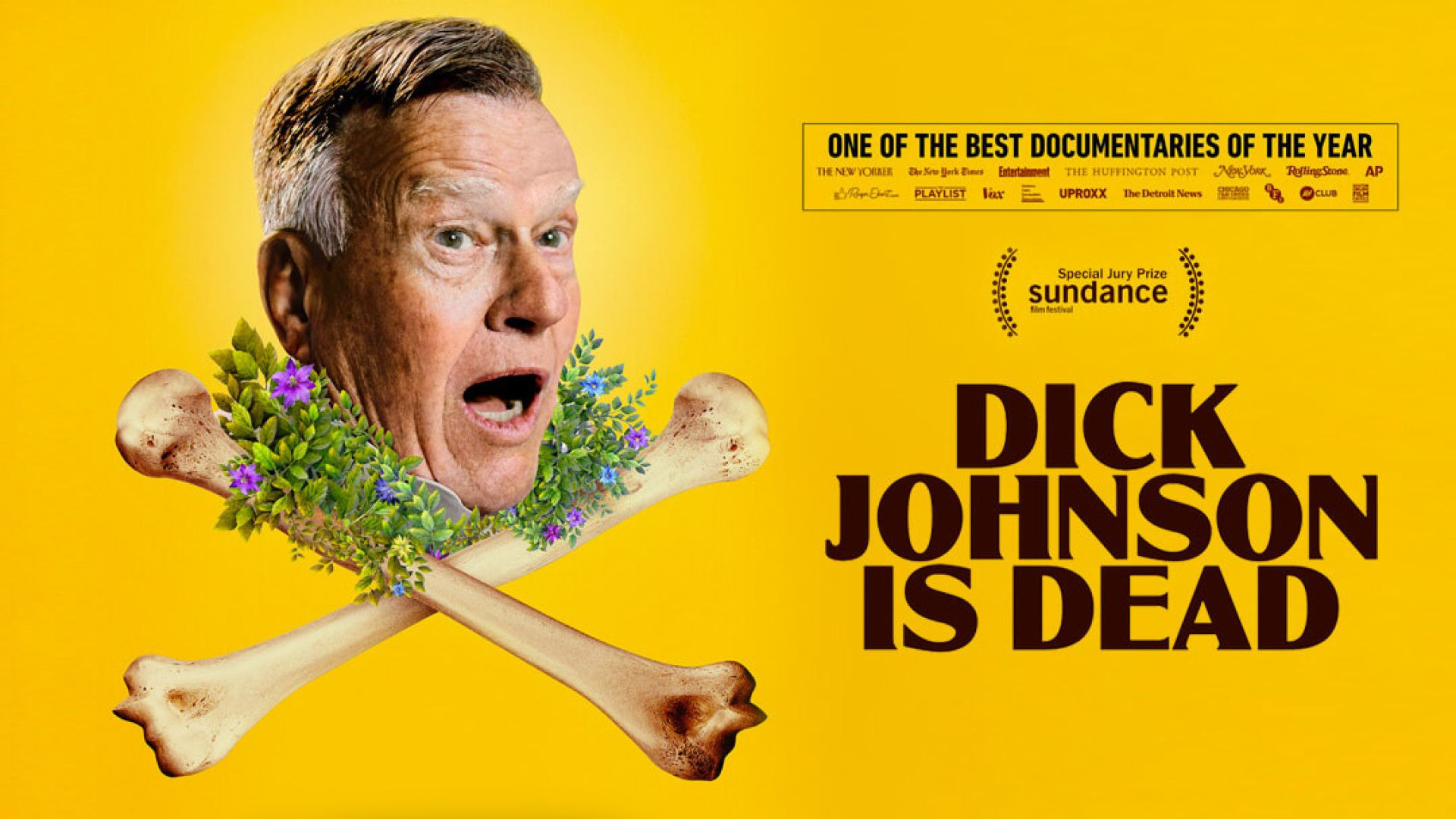
Dick Johnson Is Dead is a 2020 American documentary film directed by Kirsten Johnson and co-written by Johnson and Nels Bangerter.
A lifetime of making documentaries has convinced award-winning filmmaker Kirsten Johnson of the power of the real. But now she’s ready to use every escapist movie-making trick in the book — staging inventive and fantastical ways for her 86-year-old psychiatrist father to die while hoping that cinema might help her bend time, laugh at pain and keep her father alive forever.
The darkly funny and wildly imaginative DICK JOHNSON IS DEAD is a love letter from a daughter to a father, creatively blending fact and fiction to create a celebratory exploration of how movies give us the tools to grapple with life’s profundity. DICK JOHNSON IS DEAD was filmed, produced and directed by Kirsten Johnson (Cameraperson), produced by Katy Chevigny and Marilyn Ness, co-produced by Maureen A. Ryan and executive produced by Megan Ellison.
Cast:
Kirsten Johnson
Charles Richard "Dick" Johnson
Development:
Director Kirsten Johnson at the Miami Film Festival
Kirsten Johnson was inspired to make the film after having a dream in which "there was a man in a casket and he sat up and said, 'I'm Dick Johnson and I'm not dead yet'". When she pitched the idea to her father, she asked him, "Dad, what if we make a movie where we kill you over and over again until you really die? And he laughed".
The film incorporates Johnson family photographs and home movies, including that of Richard Johnson's wife who died from Alzheimer's disease in 2007.
Release:
The film premiered on January 25, 2020 at the 2020 Sundance Film Festival. It was released on October 2, 2020 via Netflix.
RESOURCE: www.dickjohnsonisdead.com

The story of Martin Armstrong
Can a computer model predict the world economy?
The year is 2014: Europe is stumbling from one emergency summit to the next. America has gone crashing through the 15-billion-dollar debt ceiling. People are taking to the streets across the world because they have realised that something has been thrown off kilter; that the market economy is tearing a vast rift between the super rich and the masses; that the banks have spiralled out of control; that governments have lost their grip on public debt.
And after eleven years off the radar, a man resurfaces in Philadelphia, a man who used a computer model and the number pi in the nineties to predict economic turning points with astounding precision: Martin Armstrong predicted the exact date of the October crash in 1987, the demise of the Japanese bull market in 1990, the turning point for the US and European markets in July 1998 and the Nikkei crash in 1989. He was one of the wealthiest Wall Street market analysts and was named economist of the decade and fund manager of the year in 1998. But he refused to play along with the bankers’ game and warned his customers that “the club” was manipulating currency and silver markets. He quickly made powerful enemies: New York investment bankers, hedge funds managers, Salomon Brothers, Goldman Sachs. The FBI and SEC, US Securities and the Exchange Commission, started to show interest in his computer model. In 1999 he was arrested on charges of fraud which he still disputes to this day. He was incarcerated for seven years for contempt of court. After time in solitary confinement and threats against his mother, he signed a partial confession and was sentenced to a further four years.
This documentary film portrays a man returning to his life after eleven years in prison. It follows him as he meets his old partners for the first time and depicts his first public speech to people who are still prepared to travel from across the globe and pay handsome sums to hear him speak. The film shows him attempting to prove his innocence and expose the power of the New York banks.
Martin Armstrong’s career thus began with a complete error of judgement. Even at this young age, he tried to understand the system, to grasp the logic according to which each boom was followed by a bust. Was Niccolo Machiavelli right in his belief that history repeated itself because man’s passions remain the same? He analysed the financial markets, studied the history of business cycles, stock market crashes and global monetary systems. He visited libraries and collected historical data: gold prices, exchange rates. He played around with figures and dates, he divided the time span between the Rye House Plot in 1683 and the year of the bankers’ panic in 1907 (224 years) by the number of market crashes during this period (26) and ended up with an average of 8.6
Eight point six – the global economy appeared to be based on this 8.6-year cycle. He multiplied the cycle by six which gave him 51.6 years and once again it all fitted perfectly: Black Friday in 1869, the commodity panic in 1920, and the Second and Third Punic Wars. He divided, subtracted and multiplied and established that 8.6 years equalled three thousand one hundred and forty-one days: 3,141, the magic number pi times a thousand. Did pi perhaps also govern the markets or the actions and moods that manifested themselves in these markets?
Armstrong was sure of one thing: there is a geometry of time. He may not be able to explain why, but there is some order to the chaos that exists around us.
Martin Armstrong had just published the secrets of pi when FBI men stormed his office. Soon his accounts and those of his partners in London, Australia and Japan had been frozen. They were not to meet for twelve years. “Is financier Armstrong a Con man, a crank or a genius” asked the New Yorker headline in an eight-page article written as Armstrong was in a maximum security wing in New York. What are the judicial facts, the legal peculiarities and the juristic doubts involved here? And who could have profited from Martin Armstrong’s lengthy sentence behind US bars? And: what does all this say about a system on which we are all dependent in one way or another?
12 years after the demise of Princeton Economics Martin Armstrong is released from prison after he signed a coerced guilty plead. His new life commences with a “World Economic Conference” in Philadelphia. Only three months after his release, he’s back again. As if nothing had happened. As if there’d been no twelve years where he was deprived of the world. Martin Armstrong lectures to 350 people, who travelled especially to Philadelphia to see him. He speaks of his initial approach towards solving the global financial crisis, which he compares to the fall of the Roman Empire. And twelve years later, some of his former partners are back to perhaps resume operations where they’d left off. Will Martin Armstrong and his former partners join forces and re-establish Princeton Economics to make their distinctive mark on the desolate landscape of the financial sector?
WITH
(IN ORDER OF APPEARANCE)
OFER COHEN
VICKY ARMSTRONG
DANIELLE WHITE
LARRY EDELSON
IDA ARMSTRONG
SAM COLAVITA
ANTHONY GODIN
MICHAEL CAMPBELL
BARCLAY LEIB
NIGEL KIRWAN
JUSTIN PFEIFFER
NEILL MACPHERSON
JANA ASPRAY
DAVID GLOVIN
TOMAS V. SJOBLOM
LESSLIE MACPHERSON
GEORG SPERBER
OLIVER BROWN
