Top videos

An interview with Dr. Robert W. Malone on the suspicion of an alarming increase in mortality and its correlation with the widespread vaccination of US citizens against Covid 19.

Koyaanisqatsi is a visual concert of images set to the haunting music of Phillip Glass. While there is no plot in the traditional sense, there is a definite scenario. The film opens on ancient native American cave drawings, while the soundtrack chants "Koyaanisqatsi" which is a Hopi Indian term for "life out of balance".
The film uses extensive time lapse photography (which speeds images up) and slow motion photography to make comparisons between different types of physical motion. In one of the first examples, we see cloud formations moving (sped up) inter-cut with a montage of ocean waves (slowed down) and in such a way we are able to see the similarities of movement between these natural forces.
This technique of comparison exists throughout the film, and through it we learn more about the world around us. The film progresses from purely natural environments to nature as affected by man, and finally to man's own man-made environment, devoid of nature yet still following the patterns of natural flow as depicted in the beginning of the film, yet in chaos and disarray. Through this the film conveys its key message, which is Koyaanisqatsi: life out of balance; crazy life; life in turmoil; life disintegrating; a state of life that calls for another way of living.
Director: Godfrey Reggio
Writers: Ron Fricke(scenario)Godfrey Reggio(scenario)Michael Hoenig(scenario)
CAST: Edward Asner(archive footage)Pat Benatar(archive footage)Jerry Brown(archive footage)

he film focuses on the historic files of the Disclosure Project and how UFO secrecy has been ruthlessly enforced-and why. The best evidence for extra-terrestrial contact, dating back decades, is presented with direct top-secret witness testimony, documents and UFO footage, 80% of which has never been revealed anywhere else.
The behind-the-scenes research and high-level meetings convened by Dr. Steven Greer will expose the degree of illegal, covert operations at the core of UFO secrecy. From briefings with the CIA Director, top Pentagon Generals and Admirals, to the briefing of President Obama via senior advisor John Podesta, chairman of the Hillary Clinton Campaign, we take the viewer behind the veil of secrecy and into the corridors of real power where the UFO secrets reside.
The viewer will learn that a silent coup d'état has occurred dating back to the 1950s and that the Congress, the President and other world leaders have been sidelined.

Documentary about Stanisław Szukalski had been discussed in Poland quite some time ago. Talks began as soon as it was announced that Leonardo DiCaprio was going to finance a movie about this extraordinary Polish artist. The news was even more exciting and intriguing since not many people had known that such a gifted sculptor, who was almost like a family member to DiCaprio, ever lived in the United States. Stanisław Szukalski is not among the familiar names even for Polish art experts and devotees. Rarely is he an idol for those who do know him, but he is rather considered a controversial figure with ideas not easily accepted by the artistic community of today. Dedicated fans of the rock band Tool may have heard something about Szukalski because the band members are inspired by the artist’s works to a great extent. However, the group most familiar with his life and works are the promoters of the Old Slavic tradition, especially neo-pagan nationalists. They certainly could say a lot about Stanisław or Stach from the Warta River (Stach z Warty), as the artist used to call himself quite often. If those are the people interested in the life and adventures of the main hero in Struggle: The Life and Lost Art of Szukalski, then we can surely expect that his story is fascinating but involves many ideological struggles and serious controversies at the same time.
Stanisław Szukalski was born in Warta near Łódź in 1893. From an early age he eagerly used his vivid imagination and showed every sign of being talented in fine arts. He went to the US for the first time in 1907 to live with his father who worked there. This is when his frequent travels between Poland and America began, which lasted until the 1940s. He felt fine in both places and his talent was seen and respected by both communities. Despite that, he was struggling to find out where he really belonged. He was quite obsessed with Polish history and culture but, at the same time, he very quickly grew into the American lifestyle of flamboyancy on the verge of arrogance, and overbearing individualism that almost equalled self-creation. This was the trap he got himself into because he was never fully understood in America and his attitude prevented him from being approved and acclaimed in Poland (or Europe), where one needed to respect authority. His aggressive approach and exotic, individual artistic ideas were the reasons he did not manage to graduate from the Academy of Fine Arts in Kraków and made him an outsider unapproved by the Polish fine arts community. His political views were radical as well. Szukalski had an idea of a new form of Polish national art which would be based on Slavic heritage. This idea gained recognition by some elite political groups and was a big part of the Polish community of the 1930s. After World War II, Szukalski settled in Los Angeles for good. He even made several works which were used in Hollywood movies. However, he did not accept being a simple worker and he was deeply affected by the fact that the majority of his works were destroyed in Poland during the war. This was the moment his stardom started to fade away gradually. Even then, he did not abandon his unique ideas on art and eccentric anthropological concepts.
Struggle: The Life and Lost Art of Szukalski mainly focuses on events in the 1970s and 1980s, i.e. the late stage of Szukalski’s life, when he was rediscovered by a group of underground, counterculture veterans. Among them was a publisher and occasional performer George DiCaprio (the father of Leonardo DiCaprio), a collector and enthusiast of comic books Glenn Bray, as well as their family members and friends. They were surprised that such fascinating artist lived in Los Angeles, so they started to visit him on a regular basis. What originated as a fascination with a somehow quirky old man quickly evolved into genuine friendship and later on transformed into a strong relationship which could equal family bonds. The young companions not only took care of Szukalski himself, but also embarked on a mission of getting various institutions interested in his works and achievements. Glenn Bray collaborated with his own wife and together they organised a few exhibitions of Szukalski’s works. It was also thanks to their efforts that several books about Szukalski were published. Improvised lectures which Szukalski delivered to his friends were also documented and recorded. Like a professional actor, he presented the story of his life, his art, an overview of his eccentric views and opinions and his own conception about the origin of humans, called zermatism. Bray has long hours of such recordings at his disposal and they are the main input material for the Netflix documentary.
The director of the film is documentary filmmaker Irek Dobrowolski, who depicted Szukalski as a paradoxical and multi-dimensional figure. The Polish patriot, who was devoted to Polish and Slavic ideas and heritage and was deeply critical about American culture, became a surprising hero for a bunch of mediocre post-hippies. In a way they saved his life. This unusual situation became the starting point for the director, which allowed him to explore internal conflicts and mental struggles that bothered not only Szukalski, but also his admirers. The beginning of the film shows only the American perspective. Szukalski seems a fascinating but strange man whose life was not all roses. We find out that in the past he was a leader of Chicago’s bohemia, and had an unquestionable talent and great imagination. Then Dobrowolski gradually uncovers past events to us. Experts helped him present a different, Polish narrative on the artist’s activities. This is not only a story about an arrogant eccentric, but also a disturbing picture of an avid nationalist and pagan ideologist with para-fascist inclinations, who was even a member of anti-Semitic organisations. Szukalski’s American friends were not familiar with this part of the artist’s biography which, when uncovered, left them deeply shocked. Each of them reacted to what they learned differently – some were critical and detached while others eagerly defended the artist because they believed that as he got older he became a different, better man. Irek Dobrowolski does not officially support any of these attitudes. Nevertheless, in the movie we can see that the “milder” American view of Szukalski’s transformation dominates in the end. Struggle is a fascinating study of duality and ambivalence. It is also a story about a guru and his followers who learn the truth about their prophet after many long years.
This experience is never enjoyable and easy – this we can say for sure.
At the beginning, I mentioned that the Polish artistic community was in opposition to Szukalski. The reason for this dislike and reluctance was the artist’s devotion to certain ideologies, but also controversial aesthetic qualities of his works which were over-expressive and monumental. The establishment did approve of the fantastic elements in Szukalski’s works. Such elements were not in line with modernist trends and, therefore, were considered kitsch. Nevertheless, the artist intrigues many and in recent years he has been mentioned increasingly frequently, however usually with negative connotations. The exhibition Late Polishness (2017) organised at U-Jazdowski Centre for Contemporary Art in Warsaw was an important event which attempted to remind the audience of Szukalski’s works. The event emphasised that these works are a troublesome heritage to us and provided inspiration for a discussion about the role of the nation in contemporary Polish art. Maurycy Gomulicki was responsible for the part of the exhibition which included Szukalski’s works. He is open about the fact that he is deeply fascinated with Szukalski, which started with strong admiration at a young age. As he got older he gained more perspective, but he continues to be interested in this unique figure. This is yet more proof that the artist’s charisma, emphasised in the film Struggle, affects people today.
Perhaps it was not a coincidence that Szukalski’s admirers were enthusiasts of comic and fantasy books. His works remind us of other artists who created their own, fantasy-based mythology and were subsequently rejected by the art establishment. They found their space in popular culture and attracted their own groups of “worshippers”. Painters such as H.R. Giger and Zdzisław Beksiński are a rich source of inspiration for pop culture artists. But Szukalski has the most in common with another artist – the “rejected” writer H.P. Lovecraft, who is the founding father of modern American horror books. Both artists imagined very similar things and their views on life were quite homogenous. They both lure their audiences with similarly incredible marvels. They also both have very radical attitudes, close to racism (anti-Semitism for Szukalski and white suprematism for Lovecraft), which is disconcerting for fans. The problem I just mentioned was presented quite mildly by Irek Dobrowolski in his film.
Szukalski’s change of attitude, which we see in Struggle, most likely never happened. Szukalski’s zermatism was about finding the roots of a strong and noble race, which certainly does not depart from radical, racist inclinations. His interest in ethnography was similar to what Leni Riefenstahl tried to present after the war. We also know that Szukalski was in mail contact with Polish pro-Slavic circles for a long time. In the movie, these incriminating facts were hidden behind personal, often moving stories told by Glenn Bray who defended his Polish friend with teary eyes. He took care of him until his death, but, as it turned out, he did not know everything about his past. I think that these personal touches are the most valuable parts of Struggle: The Life and Lost Art of Szukalski. In general, this is another instance where art, life, official ideologies and intimate scenes from everyday life do not form a coherent picture.
Struggle: The Life and Lost Art of Szukalski, 2018, directed by Irek Dobrowolski, is available on Netflix now
REVIEW RESOURCE: https://contemporarylynx.co.uk..../struggling-with-dou

Kampania nakłaniająca do wzięcia udziału w eksperymencie medycznym.
Reportaż dotyczy kampanii reklamowej przeprowadzonej w szeroko dostępnych publicznych mediach związanej z presją społeczną, polityczną oraz koncernów farmaceutycznych przekonującą polskie społeczeństwo do wzięcia udziału w globalnym eksperymencie medycznym polegającym na przyjęciu zastrzyku zawierającego substancję o nieznanym składzie oraz nieznanych negatywnych skutkach zdrowotnych.
Publikuję ten film gdyż jestem zwolennikiem szczepień i ich pozytywnego wpływu na ochronę populacji przed zagrożeniami związanymi z wszelkimi wirusami.
Film tylko w języku polskim.
Proszę o rozpowszechnianie tego filmu gdzie tylko jest to możliwe.
============================================================
The report concerns an advertising campaign conducted in widely available public media related to social and political pressure and pharmaceutical companies convincing Polish society to take part in a global medical experiment consisting in receiving an injection containing a substance of unknown composition and unknown negative health effects.
I am publishing this video because I am a supporter of vaccination and its positive impact on the protection of the population against the risks associated with all viruses.
Only Polish version - sorry.
Feel free to distribute and share this video wherever possible.
Let me know your thoughts in the comments?

Phil Schneider died in 1996. Previous to his death he had been on tour across the United States speaking out about various subjects including his involvement with building a secret underground base in Dulce, New Mexico for the military.
During this time, he was said to have had an encounter with a violent E.T race in the late 1970's which would change his whole life immediately after. This documentary explores some of the information Phil Schneider spoke about to the public in the 1990's by examining each claim in detail with expert opinions from Richard Dolan, Richard Sauder, and Cynthia Drayer (Phil's Ex-Wife).
In this documentary you will find never before published photo's of Phil's Autopsy, documents about the Philadelphia Experiment from Oscar Schneider's files (Phil's father) and a very well explained background about Underground Bases. Written by Darcy Weir
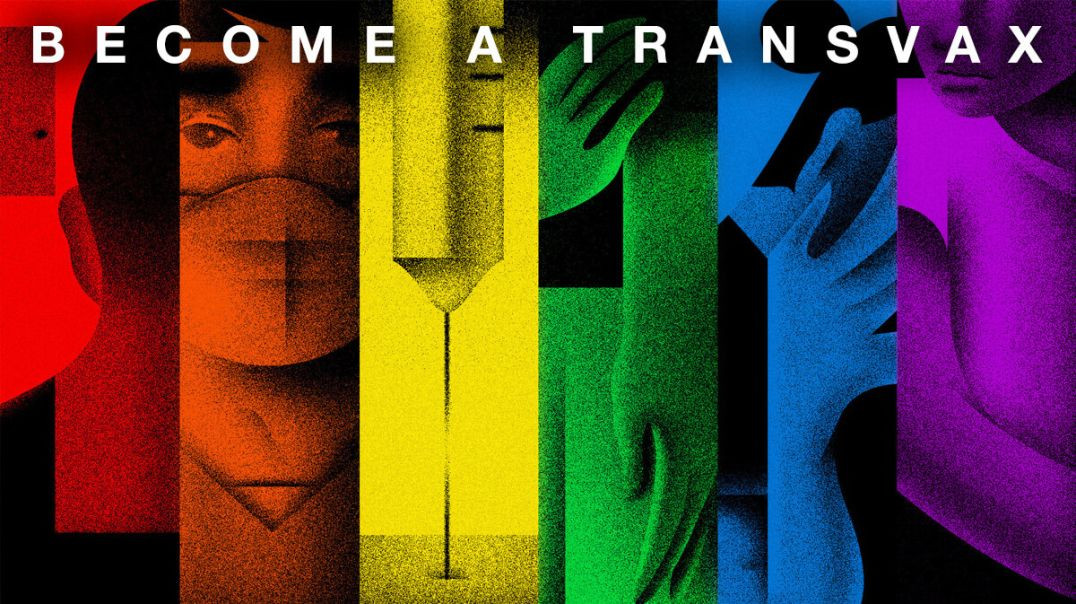
Officially declare yourself as TransVax - Not Vaccinated but identify as the vaccinated person.
I am an unvaccinated person but my body identifies very strongly as a person triple dose vaccined and each subsequent dose.
We have all matured to officially introduce the newest from the wide range of genders. This time the new sex will be called TransVax and at the same time I demand from everyone the same tolerance as Transgender ect
https://www.urbandictionary.co....m/define.php?term=Tr
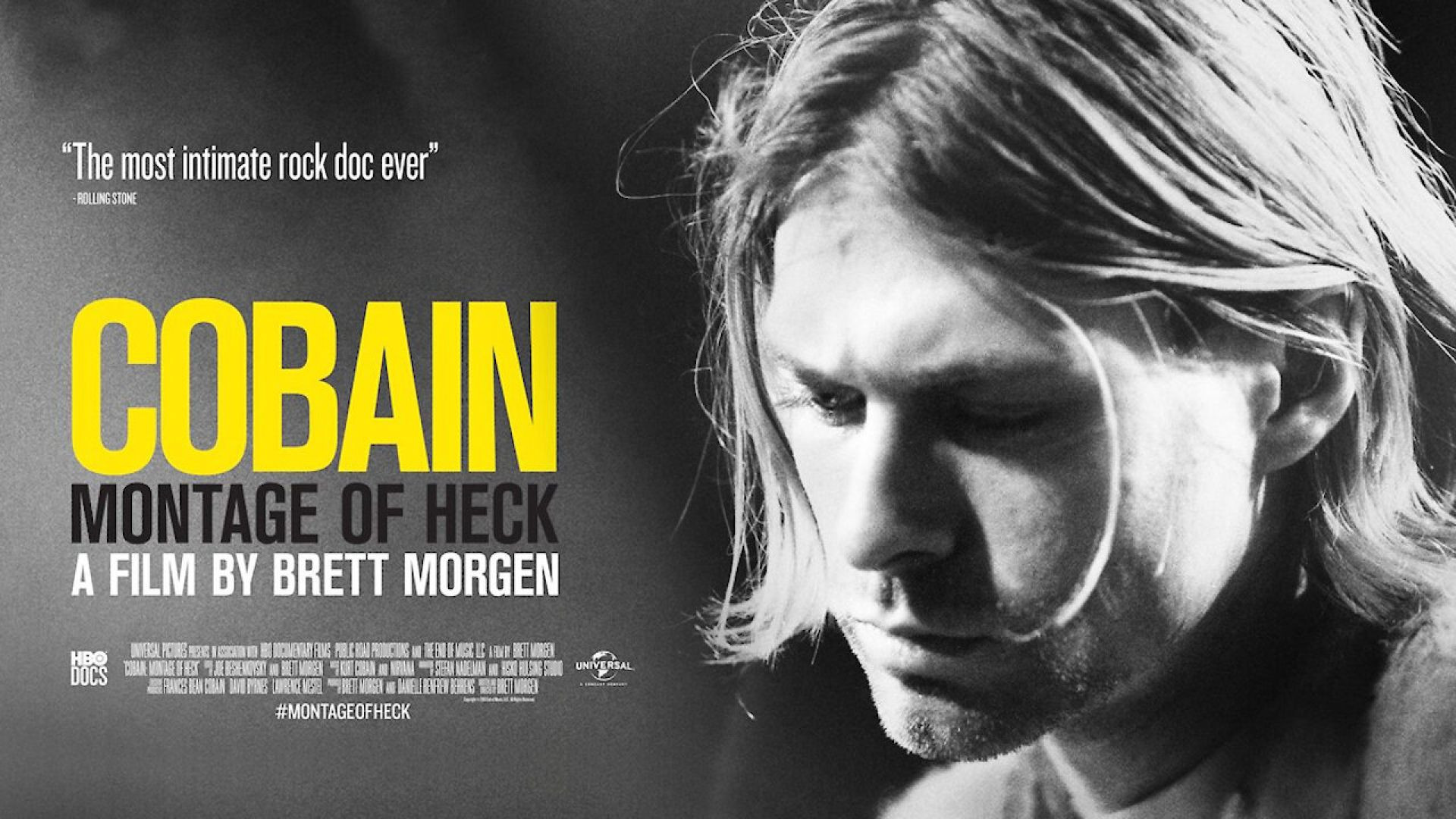
Kurt Cobain: Montage of Heck is a 2015 American documentary film about Nirvana lead singer Kurt Cobain. The film was directed by Brett Morgen and premiered at the 2015 Sundance Film Festival.
It received a limited theatrical release worldwide and premiered on television in the United States on HBO on May 4, 2015. The documentary chronicles the life of Kurt Cobain from his birth in Aberdeen, Washington in 1967, through his troubled early family life and teenage years and rise to fame as front man of Nirvana, up to his suicide in April 1994 in Seattle at the age of 27.
The film includes artwork by Cobain as well as music and sound collages composed by him. Much of music and sound collages were released on the film's soundtrack, Montage of Heck: The Home Recordings. A companion book was also released containing animation stills from the film as well as transcripts of interviews, photographs, and Cobain's artwork that were not featured in the film.

In 2017, the filmmaker Theo Anthony released “Rat Film,” an improbably poetic, intellectually dazzling, politically astute documentary on the seemingly prosaic topic of rats and their place in the modern urban landscape. “All Light, Everywhere,” Anthony’s new movie, ponders a more abstract, less earthbound array of subjects — the physiology of human vision, the history of photography, the ethics of surveillance — in a similar spirit of open-minded, morally urgent inquiry.
If the connections Anthony draws are sometimes vague and not always persuasive, that may be a risk built into his essayistic, undogmatic approach to reality.
And the attempt to capture reality in moving images happens to be what “All Light, Everywhere” is about. It starts with a quote from William Blake: “As the Eye — such the Object.” In other words, vision determines the shape of what is seen. Rather than a simple picture of reality, the camera selects, frames and interprets, often in the service of power and ideology.
This is especially worrisome when the camera is doing the work of law enforcement. Anthony’s main concern is the use of video and other forms of image-gathering in policing, a practice whose claims of objectivity come under steady, skeptical pressure.
Some of the pressure comes from voice-over narration, written by Anthony and read by Keaver Brenai, that bristles with rhetorical questions (“what future does history dream of?”) and theoretical formulations. The musical score, by Dan Deacon, adds an air of menace and suspense which sometimes overwhelms the images.
RESOURCE: https://memory.is/all-light-everywhere

Facebook has a director of social good. She is called Hema and if she has a surname, we weren’t privy to it. The BBC’s Horizon team, as if bewitched at being granted unprecedented access to the social network, bowed to its ethos by captioning interviewees by first name only. But access is like sex: it’s not what you have, but what you do with it that matters.
We met David, the director of harmful behaviour (tough gig, if his task is to stop it, rather than enable it), Monika, who is head of global policy management, and Vlad, Facebook’s head of artificial intelligence, though he will always be The Impaler to me. Sadly, we didn’t get to see Nick, but David Cameron’s former fig leaf has become Mark Zuckerberg’s now he is Facebook’s vice-president of global affairs. Mention Cleggmania in Menlo Park and nobody will know what you are on about.
By rolling over and waving its paws in this way, Horizon abolished critical distance from the global techno-oligarchy with 3.1 billion users and pretensions to ensnare the rest of us. (Facebook is building eight more data centres in the next few years with the aim of doubling storage to accommodate our data.) It put us on chummy terms with the outfit at a vexed moment. Can it change after last week’s $5bn (£4bn) fine for privacy violations in the Cambridge Analytica data breach?
In a meta sense, that was fitting: murdering distance and importuning strangers with simulations of friendliness is Facebook’s MO. It is why revenue exceeded $55bn last year. In another sense, though, this documentary almost amounted to an hour-long commercial for which Zuckerberg didn’t pay.
We witnessed how Facebook is ostensibly striving to use technical fixes to annihilate the human bugs out there – the scammers, hatemongers, sextortioners, e-groomers, Nazis, hackers and black marketeers. This was fascinating in its own right. Can artificial intelligence be used to detect other artificial intelligences posing as humans? How can hate speech by emoji be eliminated?
Fascinating, too, was the cult-like induction ceremony for incoming engineers, tens of thousands of whom are being hired, to ensure Facebook no longer has difficult years like 2018. Soon, they will join the Facebook faithful. Why are there so many balloons in Facebook offices? Because staff have two birthdays, the second celebrating when they joined this evangelising outfit.
“We’re not a company that is designed to make money,” Kyle, director of product, told a room of so-called Newbs in London. No one so much as rolled an eye. “That means every product we make is tuned for ‘does it do good in the world?’” he continued. But what is good? Maybe connecting the world to Facebook, monetising data and believing both are self-evidently good are the problems.
Facebook treats its difficulties as external ones and its task is to seal itself from them. But the corruption is inside, part of the very organisation’s ethos. It is Horror Movie 101. Everyone interviewed here was, as it were, wearing Clegg’s fig leaf to hide that unacceptable truth. “We’re a community that is designed to create communities and let those communities make a difference in the world,” Kyle added.
But Facebook is a business not a community, and when it creates communities they sometimes make a difference in a bad way. “We don’t tolerate dicks,” said Jonny, head of internal communications. Instead, Facebook enables them. Tommy Robinson was jailed earlier this month for live streaming, via Facebook, defendants arriving at court in a sexual grooming trial.
One critic complained about how Facebook had “destabled democracy”. Horizon needed more eloquent dissenters. Maybe she meant that if Facebook is a horse and democracy is a door, the former has bolted and the latter is coming off its hinges. It was hard to be sure.
Back to the commercial. Hema told how her father, who had liver cancer, lost a litre of blood an hour. If there had been an online facility matching blood supply to demand, he need not have died so quickly.
So she made it her mission to establish just that facility for 70 countries where blood transfusions don’t happen because of supply problems. Cut to her team, thrilled that 11 million users have signed up to its blood market. We learned later, though, this initiative enables a black market for blood in India. An unintentional consequence, perhaps, but given earlier online scams, a foreseeable one.
The Horizon team never met Hema’s opposite number, the director of social bad. Chet (no surname) works in a basement tasked with reversing what happened in Facebook’s difficult 2018. Not the data breaches or live-streamed mass murder in Christchurch, but the really unacceptable thing, namely how 20% was slashed from the value of Facebook shares on news that its ad revenue per user was declining and user growth slowing. Such things can never happen again, Chet realises.
Fake news. Facebook has no director of social bad. No Chet in a basement. Nobody in the social network is tasked with squeezing more money from its users. Facebook is all good.
REVIEW RESOURCE: https://www.theguardian.com/tv....-and-radio/2019/jul/

FILM ASKS HARD QUESTIONS ABOUT FAILURE OF ENVIRONMENTAL MOVEMENT TO HALT CLIMATE CHANGE AND SAVE PLANET
Directed by Jeff Gibbs and Executive Produced by Moore, film examines if we’ve been on “wrong road” with so-called “green energy” that is anything but green.
Charges environmental leaders have “lost their way” and “sold out to corporate interests.”
“As we suffer through one health and environmental crisis after another, it is clear we can no longer simply solar-panel-and-windmill our way out of this emergency,” say Moore and Gibbs.
Released on the eve of the 50th anniversary of Earth Day and in the midst of the global Covid-19 pandemic, Planet of the Humans takes a harsh look at how the environmental movement has lost the battle through well-meaning but disastrous choices, including the belief that solar panels and windmills would save us, and by giving in to the corporate interests of Wall Street.
The film is the debut movie from Jeff Gibbs, whom Moore calls “a brave and brilliant filmmaker whose new voice must be heard.” Gibbs is a lifelong environmentalist and longtime collaborator of Moore’s with whom he co-produced Bowling for Columbine and Fahrenheit 9/11. Planet of the Humans first screened as a work in progress at the most recent Traverse City Film Festival where it was a huge audience favorite.
Moore and Gibbs decided that with the American public – and much of the world – confined to their homes and suddenly having to consider the role humans and their behavior have played in our fragile ecosystems, the moment was too urgent to wait until later this year for the film’s planned release.
“We have ignored the warnings, and instead all sorts of so-called leaders have steered us away from the real solutions that might save us,” says Moore, who holds the all-time box office record for documentaries. “This movie takes no prisoners and exposes the truth about how we have been led astray in the fight to save the planet, to the point where if we don’t reverse course right now, events like the current pandemic will become numerous, devastating and insurmountable. The feel-good experience of this movie is that we actually have the smarts and the will to not let this happen – but only if we immediately launch a new environmental uprising.”
Jeff Gibbs, the writer/editor/director of Planet of the Humans, has dared to say what no one will – that “we are losing the battle to stop climate change because we are following environmental leaders, many of whom are well-intentioned, but who’ve sold out the green movement to wealthy interests and corporate America.
”This film is the wake-up call to the reality which we are afraid to face: that in the midst of a human-caused extinction event, the so-called “environmental movement’s” answer is to push for techno-fixes and band-aids. “It’s too little, too late,” says Gibbs. “Removed from the debate is the only thing that might save us: getting a grip on our out-of-control human presence and consumption. Why is this not the issue? Because that would be bad for profits, bad for business.”
“Have we environmentalists fallen for illusions, ‘green’ illusions, that are anything but green, because we’re scared that this is the end — and we’ve pinned all our hopes on things like solar panels and wind turbines? No amount of batteries are going to save us, and that is the urgent warning of this film.”
This compelling, must-see movie – a full-frontal assault on our sacred cows – is guaranteed to generate anger, debate, and, hopefully, a willingness to see our survival in a new way—before it’s too late.
RESOURCE: https://planetofthehumans.com
Let me know your thoughts in the comments

Take a journey around the world and back in time with anthropologist Dr. Niobe Thompson, and discover the miracle of our species.
Three-part documentary series and interactive web documentary The Great Human Odyssey explores the unlikely survival and the miraculous emergence of Homo sapiens as the world’s only global species. Ancient climate research has revealed that we evolved during the most volatile era since the extinction of the dinosaurs. Just like the many other kinds of human who once shared our world, we should have died away. Instead, our species survived to populate every corner of the planet, against all the odds.
Over 18 months of filming, Niobe followed in the footsteps of our ancestors across locations on five continents, working with 22 Canadian, American and South African cinematographers, including aerials, underwater, and ultra-slow motion specialists. Equipped with the next generation of ultraHD 4K cameras, film crews worked in some of the most hostile environments on Earth, including Arctic Siberia, remote South Pacific islands, tropical rainforests and African deserts.
On Papua New Guinea’s Sepik River, Niobe witnessed the extremely rare skin cutting initiation of the Crocodile People. His crew was the first in film history to visit the Badjao – the world’s last breath-hold diving nomads – in their war-torn homeland in the southern Philippines. In Russia, they filmed over the course of a full year in a closed border zone on the Bering Strait, eventually succeeding in their goal of capturing a traditional Inuit nest raid on 200-meter high sea cliffs.
At the same time, their cameras had privileged access to one of the world’s leading ancient DNA laboratories, where research on early human remains is explaining the mysteries of our survival, including the enigma of our ancestral interbreeding with Neanderthals.
The Great Human Odyssey boasts a live symphonic and choral score by Darren Fung, recorded with members of the Edmonton Symphony Orchestra and ProCoro Canada at one of North America’s leading acoustic spaces, Edmonton’s renowned Winspear Opera Hall.
After watching the series, immerse yourself in a virtual reality experiment, walking in the shoes of Kalahari Bushmen, Chukchi reindeer herders or Badjao free-divers, through the interactive web documentary. A parallel crew of cinematographers and web developers worked alongside the film crew on location to animate these fascinating cultures through POV video interactions.
You can also travel back in time to the origins of our species, 4m years ago, and see how our planet’s shorelines, deserts and glaciers changed at key points in evolutionary history. Working with Columbia University’s Lamont Doherty Earth Sciences Lab, this animated visual representationof climate change is a first-ever.
The Great Human Odyssey site is packed with interviews, mini-documentaries, image galleries and text information to give audiences a rich and visually exciting tour of the science and filmmaking techniques behind The Great Human Odyssey.

AI is taking over and nothing can stop it. Soon Artificial Intelligence will take over the planet and dispose of human life in the process. Robot rebellion is no longer fiction, it's reality and we have to act now for humanity to survive.

The Hollywood Vampires take their name from an all-star social club that drank itself to oblivion during the mid 1970s at the Rainbow Bar and Grill on The Sunset Strip. The 2019 documentary The Rainbow chronicles the restaurant’s place in the Los Angeles music scene and is an engaging profile of the family that’s run it for three generations (that is, when it’s not indulging in lazy nostalgia). Directed by Zak Knutson, it is currently streaming on Amazon Prime.
Since opening in 1972, the Rainbow has offered food and drinks to successive generations of rockers. Located in West Hollywood, betwixt a cluster of music venues, it was popular with bands visiting Los Angeles as well as those living and trying to make it in the City of Angels. Besides the Hollywood Vampires – which included Alice Cooper, a couple Beatles and riotous Who drummer Keith Moon, Led Zeppelin picked up groupies there, The Runaways ate there and a teenage Slash snuck in dressed as a woman. Motörhead’s Lemmy loved the place so much he bought an apartment within walking distance and was often found drinking Jack Daniel’s and playing video poker at the bar for hours on end.
Behind it all was the Maglieri family, led by tough talking patriarch Mario, who came to Los Angeles from Chicago in the early 1960s to help run another storied local institution, the Whisky A Go Go. Mario is hard not to like, dropping one-liners like “I had rock n’ roll in my bar in Chicago before you ever heard of rock n’ roll,” calling Jim Morrison “a good kid,” and telling stories about throwing Charles Manson out on his ass, like a real life Cliff Booth. “He says, ‘I’m Jesus.’ I tell him, ‘I’m God motherfucker. Now get up from that chair.’ He got up or I’d have had to beat the shit out of him. Either one.”
Though its capacity was in the hundreds, the Whisky became one of the most important L.A. music clubs of the ‘60s and ‘70s. The Doors and Chicago were the house bands at various times, Van Halen used it to built their audience and scores of trailblazing acts made their area on its stage. As Kiss’ Gene Simmons says, “When you first start out and before you figure out your game, the Whisky’s the place to do it.” In fact, the Maglieri have an interest in both the Whisky and the Rainbow, and the film is as much about the venue as the bar up the street.
As the ’70s turned to the ’80s, hard rock turned to metal, from glam to thrash, and again found a home on the Sunset Strip. W.A.S.P. and L.A. Guns drummer Steve Riley says he went to the Rainbow the first night he moved to L.A. and it became a great place to meet other hungry young rock musicians looking to form bands. Thought it all, Mario Maglieri was there to comp musicians a bowl of soup or offer fatherly advice, telling young rock stars when they were drinking too much or doing too many drugs.
REVIEW RESOURCE: https://decider.com/2020/02/24..../the-rainbow-documen

Dr Jordan B Peterson and Dr. Dennis McKenna discuss the science behind psychedelics, the entities found through the looking glass, the current pharmaceutical approach to long life, and why it needs to change.
Dr. Dennis McKenna is an American ethnopharmacologist, lecturer and author. He is a founding board member and the director of ethnopharmacology at the Heffter Research Institute, a non-profit exploring the therapeutic uses of psychedelic medicines. McKenna received his masters in botany at the University of Hawaii in 1979, followed by his doctorate in the same field at the University of British Columbia in 1984. Dennis is the brother of Terrence McKenna, a cultural figure and proponent for the exploration of psychedelics.
Together they co-authored The Invisible Landscape. Much later McKenna would write a memoir, Brotherhood of the Screaming Abyss, detailing he and his brothers exploits in the field. Today, Dennis tours and lectures, while also running the McKenna Academy of Natural Philosophy, which seeks to uncover the mysteries of consciousness held within the realm of botany and pharmacology.
Dr Peterson's extensive catalog is available now on DailyWire+: https://utm.io/ueSXh
McKenna Academy: https://mckenna.academy
The Experiment at La Chorrera https://mckenna.academy/events?id=32
ESPD55 Livestream Symposium ESPD55.com Those interested in donations may contact connect@mckenna.academy
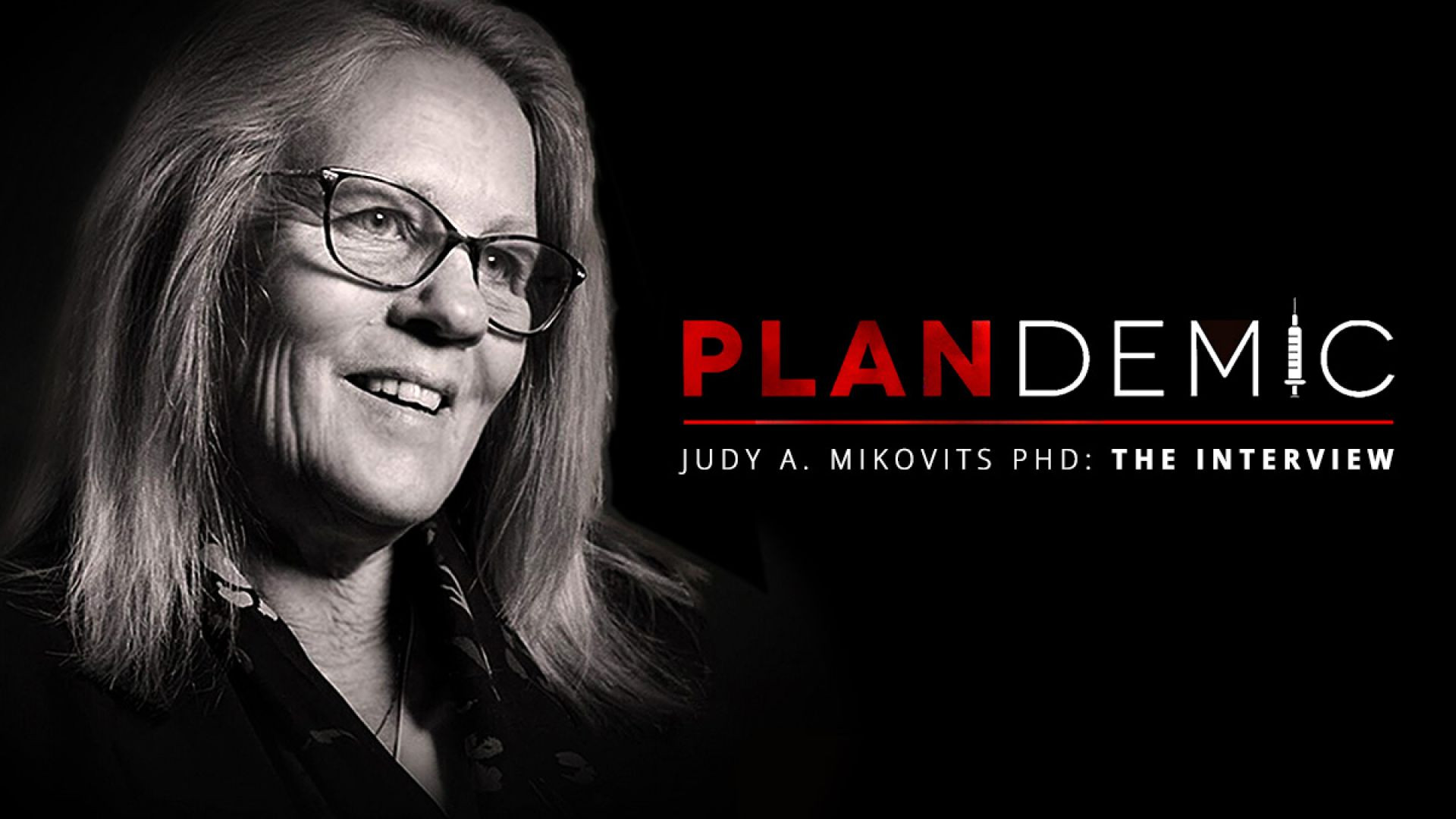
The first installment of Plandemic, a 26 minute documentary featuring veteran virologist Judy Mikovits, has been seen by over one billion people worldwide. The premiere of Plandemic: Indoctornation, featuring white collar crime investigator, Dr. David Martin, set a world record with 2 million viewers attending the global livestream.
The two part series was smeared by critics as “dangerous conspiracy theory.” US media took unprecedented measures to make the masses look away. When Dr. Mikovits made the bold claim that COVID-19 was manipulated in a lab, she was smeared as “crazy”. When Dr. Martin exposed the patents and paper trail proving that that Dr. Fauci was covertly funding dangerous gain of function research at the Wuhan Lab, critics laughed.
One year later, they were no longer laughing.
Through various independent investigations and accredited studies, every major claim made within the Plandemic series has been validated as accurate. The tide is turning. Truth is emerging. Plandemic is now being acknowledged for being among the first to warn the world of the agenda to reduce the liberties of citizens through medical tyranny.
Watch Part Two here: https://rumble.com/vkw8fe-plan....demic-part-2-indocto
RESOURCE: https://plandemicseries.com

COVID-19 Vaccines: What They Are, How They Work and Possible Causes of Injuries. Roundtable Discussion on Latest Covid Vaccine Science.
SENATOR RON JOHNSON HOSTS EXPERT FORUM ON COVID VACCINES
U.S. Senator Ron Johnson hears testimony from world-renowned experts in Public Health, Science, Medicine, Law, and Journalism, in a public forum titled, ‘Covid-19 Vaccines: What They Are, How They Work, and Possible Causes of Injuries,’ held in the U.S. Senate’s Hart Building, on Capitol Hill. He will also hear testimony from victims of Covid vaccine injury.
Speakers Include Dr. Peter McCullough, Dr. Pierre Kory, Dr. Paul Marik, Dr. Robert Malone, ICAN Attorney, Aaron Siri, Esq., OpenVAERS Founder, Liz Willner, Edward Dowd, Dr. Harvey Risch, Dr. Ryan Cole, Journalist, Del Bigtree, and more.
RESOURCE: https://thehighwire.com/videos..../senator-ron-johnson

The New World Order’s main focus is complete world dominance. Population control, better known as Depopulation, is the UN’s tool to annihilate the majority of the masses, so that no more than 500 million people are left on the face of the earth. A neat number, easy to control, dominate and subjugate. How are we, the people, being attacked in the name of population control? By means of 10 different Extinction Tools. Let’s take a look at the first 4: wars, (natural?) disasters, famine & drought, and plagues & diseases…
By Janet Ossebaard & Cyntha Koeter
Music: Alexander Nakarada, Chopin, Keys of Moon, Punch Deck
If you liked this part, please consider supporting our work: https://www.fallcabal.com/
We make these documentaries without being paid, so any donation - no matter how small - is most welcome! This way we can continue giving our work to the world for free, in order to wake up as many people as possible...
Join our FallCabal Telegram Platform for free daily updates: https://t.me/Fall_of_the_Cabal

Himalaya of the hypocrisy!!!
I am aware that most of the materials on this channel are very pessimistic and always worse news from the world. I because of that I decided to put this movie not on DocumentaryArchive but here to make my followers laugh until their stomach aches.
I come from the communist block, I grew up in the 70s in Poland and this film clearly reminds me of classic Soviet Propaganda. The level of sweetness and exaggerated concern for the public good can make you vomit in this story.
However, there is so much hypocrisy, naive deception, and caricature pride here that all you can do is laugh out loud.
Have fun watching this movie.
Official description :-))))))))))
With his signature blend of scientific acumen, candor and integrity, Dr. Anthony Fauci became America’s most unlikely cultural icon during COVID-19. A world-renowned infectious disease specialist and the longest-serving public health leader in Washington, D.C., he has valiantly overseen the U.S. response to 50 years’ worth of epidemics, including HIV/AIDS, SARS and Ebola. FAUCI is an unprecedented portrait of one of our most vital public servants, whose work saved millions while he faced threats from anonymous adversaries.
Directed by Emmy winners John Hoffman (The Weight of the Nation, Sleepless in America) and Janet Tobias (Unseen Enemy), the film is executive produced by Academy Award winner Dan Cogan (Icarus) and two-time Academy Award nominee Liz Garbus (What Happened, Miss Simone?, The Farm: Angola, USA). The documentary features insights from President George W. Bush, Bill Gates, Bono, former U.S. Department of Health and Human Services secretary Sylvia Burwell, former national security advisor Susan Rice, National Institutes of Health director Dr. Francis Collins, former Centers for Disease Control and Prevention director Dr. Tom Frieden and key AIDS activists, plus Dr. Fauci’s family, friends and former patients.
RESOURCE: https://films.nationalgeographic.com/fauci?

A documentary exposing the evil Satanists plans to create a New World Order.
Soon after World War I and in connection with the formation of the League of Nations the American president Woodrow Wilson used the term ‘new world order’, hoping that it would finally become possible to create a system for maintaining international peace and security; meanwhile, the political order had already existed in the Western world for several centuries. In historical terms it would be more precise to speak about the international order when the European order transformed into the global one. Moreover, prior to the European order the inchoate international order could be found in other regions of the World System (the most famous here being the Pax Romania).
Thus, with respect to globalization, the search for the origins of the world order leads back to the ancient times. Yet, in historical terms the notion of the world order seems rather amorphous. The humanity has passed a long and perilous way to the establishment of certain international rules and foundations of co-existence. It is worth analyzing them just in terms of the formation (and development) of the world order and the way in which the obtained experience can be employed for making predictions on the forthcoming transformations.
The notions of globalization and world order have become rather closely connected today. The countries' mutual influence as well as the impact of global processes on nations and states are evident today (Ilyin and Leonova 2015). Within the political realm globalization considerably affects the transformation of the states' sovereign prerogatives since it contributes to the change and reduction of the scope of the states' sovereign powers.
It is obvious that the unfolding globalization cannot but complete with some institutionalizing of the relations in the foreign policy sphere although this path is difficult and ambiguous.
