Top videos

AI is taking over and nothing can stop it. Soon Artificial Intelligence will take over the planet and dispose of human life in the process. Robot rebellion is no longer fiction, it's reality and we have to act now for humanity to survive.

The official version of human history is a construct of lies. We are in a state of collective amnesia. Let's free ourselves from the artificial matrix that has been imposed on us. This part covers the World's Fairs and the time in which they took place.
Written by: dreamtime & Mosaic, https://stolenhistory.net
Narrated by: Sovereine & David Glenney
Post-production: Bart van der Zwaan https://youtube.com/bartingman
WATCH FULL SIERIES:
Part 1: Nothing is as it seems => https://vajratube.com/v/MBtVx6
Part 2: The Destruction of the Old World => https://vajratube.com/v/4Kya4M
Part 3: The Mystery of the World's Fairs => https://vajratube.com/v/lmqIAN
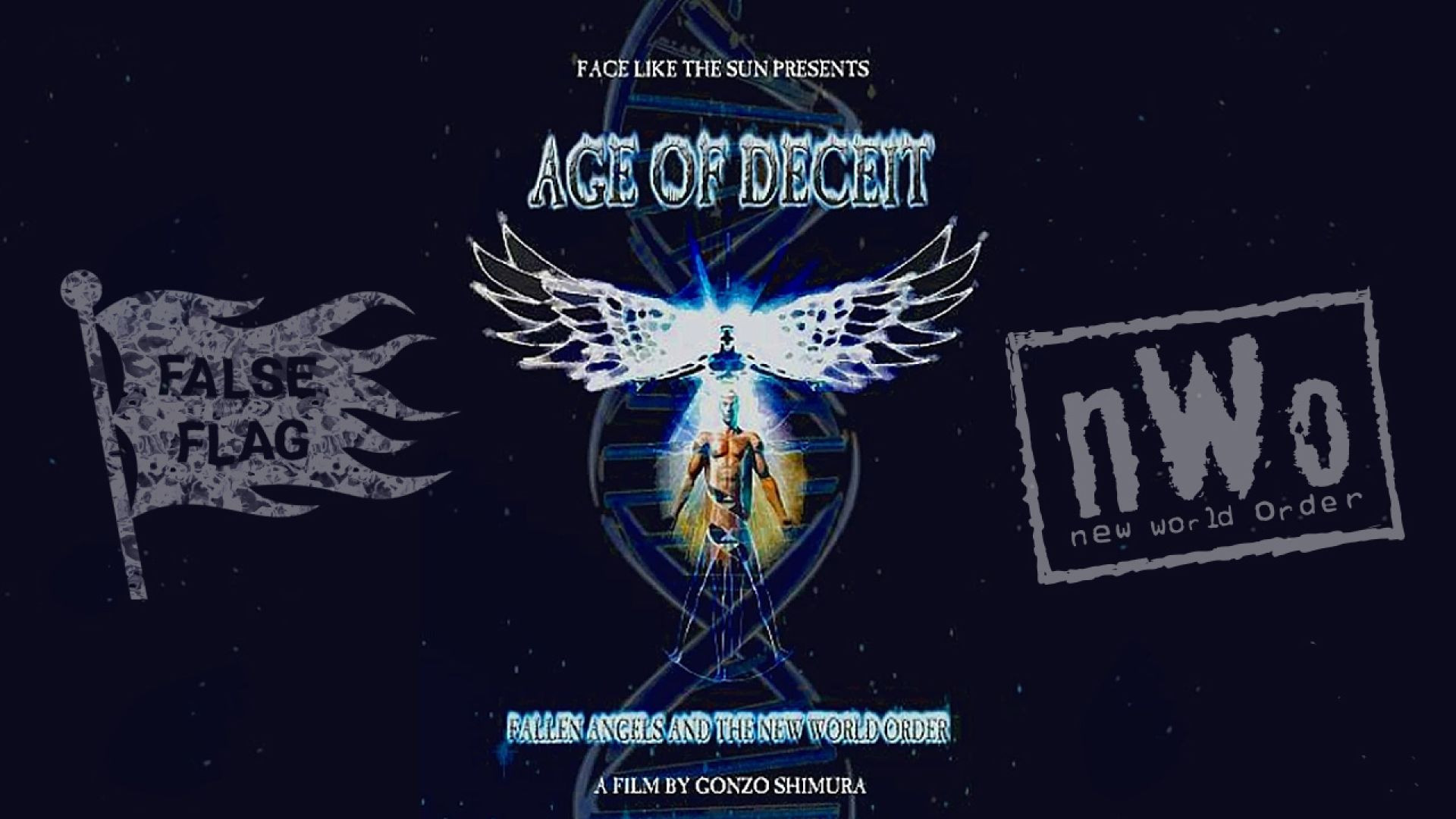
Is there a connection between UFOs, alien abductions, channeling spirits, demonic possessions, the new age movement, secret societies, and satanism?
In Age of Deceit: Fallen Angels and the New World Order, we investigate why the New World Order and the Global Elite are tirelessly working to form a One World Government and who they are getting this instruction from.
A biblical look at the history of fallen angels and it's relationship to the New World Order and the new age movement.
Topics covered are the fall of mankind, the pre-flood world as Atlantis, the new age through theosophy, the fallen angels and their origin of planting the seeds to society, UFOs, ETs and abduction cases, demonic possession, channeling, and more.

“Project Nim,” a new documentary by James Marsh, is a probing, unsettling study of primate behavior, focusing on the complex dynamics of power, sex and group bonding in a species whose startling capacity for selfishness and aggression is offset by occasional displays of intelligence and compassion.
His name — a human imposition, like everything else in this creature’s remarkable, heartbreaking life — is Nim Chimpsky. In the 1970s he enjoyed (or endured) a season of fame as a research subject. Shortly after his birth at an primate behavior, Nim was taken from his mother’s side and delivered to New York, where he became part of an experiment, led by a Columbia professor, Herbert Terrace, to determine whether an ape could be taught human language.
It is a bit curious that Mr. Marsh’s film has nothing to say about the roots of Nim’s name, a jab at the influential linguist Noam Chomsky, whose theories about the innateness and uniqueness of language to humans were the implicit target of Dr. Terrace’s work. His project was an effort to discern if a chimpanzee could learn sign language and if that learning could proceed beyond the mimicry of specific gestures into the creation of grammatical sentences. If Nim could be raised more or less as a human child, and could master human communication, that would challenge the Chomskyan idea of language as a special, hard-wired trait fundamentally separating us from other animals. (Koko the gorilla, another celebrated signing ape born around the same time as Nim, also tested this hypothesis.)
“Project Nim” glances briefly at the scientific controversy that shaped Nim’s fate, but Mr. Marsh is less interested in comparatively dry matters of linguistics or neurobiology than in a humid, messy domain of identity and emotion that has, in the past, been the terrain of psychoanalysis. And of literature: Nim, thrown from one home to another, vulnerable to cruelty and neglect and dependent on the kindness of strangers, resembles the titular hero of a Dickens novel, an orphan buffeted by circumstances whose biography is also a fable of individual virtue and social injustice.
A helpless innocent compared with his protectors and tormentors, Nim bounces like a long-armed David Copperfield from one unnatural home to another — a Manhattan brownstone, an estate in the Bronx, a medical testing center upstate — living through periods of pastoral bliss and gothic horror. His tale is Dickensian, but also Kafkaesque, since he is at the mercy of powerful forces beyond his ken or control.
Red Peter, the learned ape in Kafka’s devastating “Report to an Academy,” dreams, above all else, of a “way out,” and to watch footage of the young Nim at play and in confinement is to infer that he must have known a similar longing. Unlike the Kafka character, however, this educated primate never acquired enough words to tell us his story, and so “Project Nim” relies on human interlocutors, some of whom cared about Nim a great deal, almost all of whom wind up telling us more about themselves.
They are a remarkable collection, often at odds and sometimes in bed with one another, with Nim as their pawn, rival or surrogate child as well as the blank slate on which they inscribe their fantasies and intellectual conceits. Dr. Terrace, speaking with precision and detachment in present-day interviews, is either resigned to being the film’s designated villain or oblivious to being set up for that role. His former colleagues, some of them also former lovers, don’t have much good to say, and the ’70s footage, showing an academic dandy with a comb-over, a BMW and a Burt Reynolds mustache, is hardly flattering.
For the first few years of Nim’s life, Dr. Terrace was the master of his fate, though not always a significant presence in the chimp’s day-to-day routine. After leaving Oklahoma, Nim was installed in the home of Stephanie LaFarge, where he became part of a household that included seven children, at least one dog and Ms. LaFarge’s husband, a poet and “rich hippie” who appears to have been Nim’s romantic rival.
Ms. LaFarge, an open and genial interview subject, drops a few casual bombshells testifying to what the psychobabble of our own time might call boundary issues. “It was the ’70s,” her now grown-up daughter Jenny Lee says, but even then, and even on the Upper West Side, it might have been a bit unusual for a woman to breastfeed a baby chimpanzee.
After a while, Nim was transferred to an estate in Riverdale, cared for and tutored by young people — most of them women — who come before Mr. Marsh’s camera in middle age to recall the pleasures and dangers of working with their spirited simian charge. It is hard not to be charmed by the affection that passes between these humans and the chimp, or to appreciate what seems to be a reciprocated effort at communication. But at the same time it is difficult to avoid a certain queasiness at the sight of a wild creature forcibly and irrevocably alienated from his nature — dressed in clothes, tethered and caged, smoking a joint out in the woods with his pals. You laugh, sometimes, to force the lump out of your throat.
There is no doubt that Nim was exploited, and also no doubt that he was loved. Mr. Marsh, by allowing those closest to Nim plenty of room to explain themselves, examines the moral complexity of this story without didacticism. He allows the viewer, alternately appalled, touched and fascinated, to be snagged on some of its ethical thorns. He also engages in a bit of manipulation, using sleight-of-hand re-enactments and Dickon Hinchliffe’s nerve-rackingly melodramatic score to sensationalize a drama that hardly requires it.
Mr. Marsh, whose last documentary was the lovely, Oscar-winning “Man on Wire,” is a patient listener and an able storyteller, but the subject of “Project Nim” is so rich and strange that it might have benefited from the hand of a wilder, bolder filmmaker. An obsessive like Errol Morris or Werner Herzog might have pushed beyond pathos and curiosity, deeper into the literal no man’s land that lies between us and our estranged animal relations. But it is also possible that our language and our science do not equip us to understand the truth about Nim — or the truth about us that he may have discovered through years of rigorous, involuntary research.
“Project Nim” is rated PG-13 (Parents strongly cautioned). Strong language, drug use, sexual references and depictions of animal suffering.
REVIEW RESOURCE: https://www.nytimes.com/2011/0....7/08/movies/project-
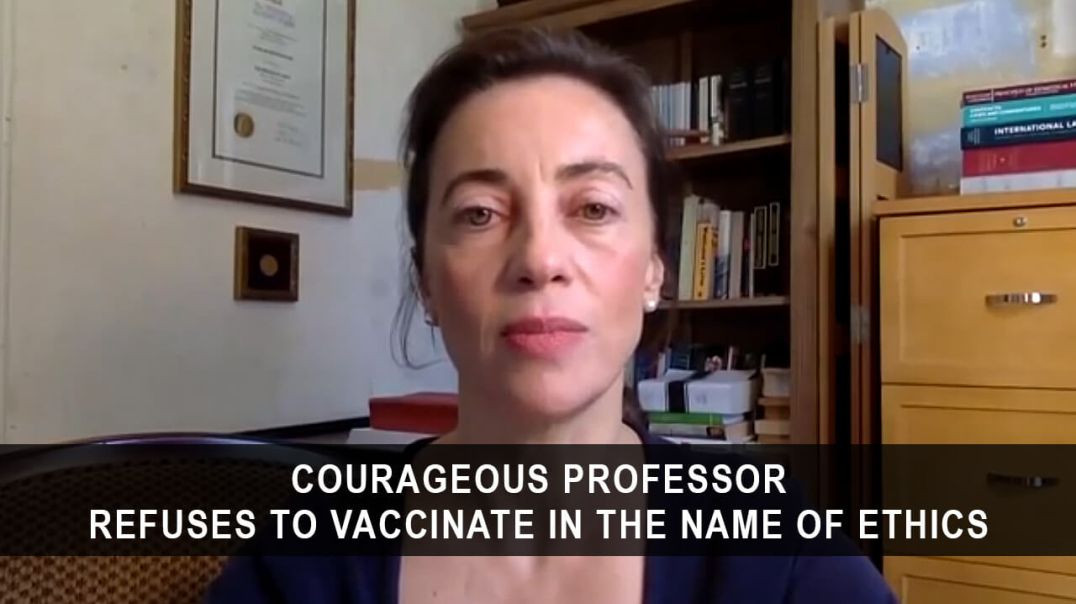
Huron University College professor refuses to abide by school’s vaccine mandate in the name of ethics.
Huron University College professor is speaking out against the institution’s vaccine mandate, questioning the ethics of “coercing people into medical procedures” for those refusing to get the COVID-19 vaccine. The professor states in the video, which has since been removed from YouTube, that she fears for her employment.
Julie Ponesse, an ethics professor at Huron University College which is affiliated with Western University, describes it as “ethically wrong” to require staff and students to be fully vaccinated, despite the policy also being encouraged by Ontario health officials.
“I am facing imminent dismissal after 20 years on the job. Because I will not submit to having an experimental vaccine injected into my body,” said Ponesse in the video.
“I don’t work in a high-risk environment. I’m not a doctor in an emergency room. I’m a teacher. I’m a university professor,” she adds.
This video comes amid a statement released Tuesday by Western University President and Vice-Chancellor Alan Shepard, after a “disturbing trend” involving several large gatherings near the campus in London, Ont., during frosh week.
“This activity is a blatant disregard for the campus community, public health, and the law,” Shepard wrote. “We want to be clear: if this activity continues, the academic year we have so carefully planned will not happen. In-person learning with fellow students, interaction with professors, extra-curricular activities, athletics and all the things that make your student experience great will be lost.

The official version of human history is a construct of lies. We are in a state of collective amnesia. Let's free ourselves from the artificial matrix that has been imposed on us. This part covers the World's Fairs and the time in which they took place.
Written by: dreamtime & Mosaic, https://stolenhistory.net
Narrated by: Sovereine & David Glenney
Post-production: Bart van der Zwaan https://youtube.com/bartingman
WATCH FULL SIERIES:
Part 1: Nothing is as it seems => https://vajratube.com/v/MBtVx6
Part 2: The Destruction of the Old World => https://vajratube.com/v/4Kya4M
Part 3: The Mystery of the World's Fairs => https://vajratube.com/v/lmqIAN

Homeschooling is the wise choice. The "training" a child receives in the Satanic public school system is not of the God of the King James Bible. Training and teaching children is a parental responsibility. We should not expose our children to the Satanic government education systems, demonic video games, demonic movies, whisperers, demonic music, yoga, tarot cards, horoscopes, (divination) etc as exposure to these things creates demonic strongholds in their minds that are contrary to The Word of God (King James Bible).
What does the school do with the children? Gatto states the following assertions in "Dumbing Us Down":
It makes the children confused. It presents an incoherent ensemble of information that the child needs to memorizsto stay in school. Apart from the tests and trials that programming is similar to the television, it fills almost all the "free" time of children. One sees and hears something, only to forget it again.
It teaches them to accept their class affiliation.
It makes them indifferent.
It makes them emotionally dependent.
It makes them intellectually dependent.
It teaches them a kind of self-confidence that requires constant confirmation by experts (provisional self-esteem).
It makes it clear to them that they cannot hide, because they are always supervised
Nowhere in the Bible does it say to enrol your children in the Satanic, public, government owned and operated education system's "indoctrination camps" known as "schools."
Education of children is a parental responsibility.
The Education systems have been used and are being used as a tool by Satanic governments (around the world) to indoctrinate and conduct experiments on children.
A corrupt tree (government owned and operated public education system) cannot bring forth good fruit (a child raised according to Biblical values and principles).
Matthew 7:18: 18 A good tree cannot bring forth evil fruit, neither can a corrupt tree bring forth good fruit.
As it is written: Proverbs 22:6: Train up a child in the way he should go: and when he is old, he will not depart from it.
Proverbs 22:6 is one of the most famous verses in the Bible, but also one of the least followed.
The "training" a child receives in the Satanic public school system is not of the God of the King James Bible. Training and teaching children is a parental responsibility. We should not expose our children to the Satanic government education systems, demonic video games, demonic movies, etc as exposure to these things creates demonic strongholds in their minds. Homeschooling is the wise choice.
We live in a world increasingly opposed to the laws of its Creator. Christians are looking more and more ‘peculiar’ (1 Peter 2:9). We must teach our children the Word of God (King James Bible), teach them how to put Jesus Christ first in all aspects of their lives, teach them how to pray, pray for them to be filled with the Holy Spirit, teach them to recognize the answer to prayer, teach them how to depend on God, teach them how to serve and live for Him as we lead them by example and pray for them without ceasing.
Training a child includes teaching them to see the Hand of God at Work while being aware of the wiles of the evil one.
We must help our children examine everything in the light of God’s standards (the King James Bible), and encourage them to be salt and light, to stand apart when necessary, to stand for righteousness, to be wise as serpents and harmless as doves. (Matthew 10:16)
We must help our children to see the evil and demonic in music, books, games (including video games), movies, videos and certain friendships. We owe it to them to teach them the spiritual realities (rigged realities) of the world in which we live and protect them from corruption.

Well, folks, as we wrap up our deep dive into The Ritual of Satanic Sacrifice, I hope you've gained some insight into this controversial topic.
While there are certainly extreme and dangerous individuals out there who practice satanic rituals, it's important to remember that stereotypes and misinformation can be just as harmful.
Let's continue to educate and inform ourselves about the diverse beliefs and practices in our world, and always approach them with an open mind and a critical eye.
Stay curious, stay safe, and thanks for reading!

Dr. Vladimir Zelenko before a Rabbinical Court (6th August 2021)
An extensive excerpts from the hearing of Dr. Władimir Zelenko on August 6, 2021 before the Israeli rabbinical court (Ma'aleh Adumim Bet Din) regarding COVID vaccines.
Dr. Zelenko developed the famous "Zelenka Protocol" for early outpatient COVID treatment, with which he successfully cured 6,000 patients. hydroxychloroquine and zinc.
Dr. Zelenko ruthlessly explains why vaccination against COVID is perhaps the most dangerous scientific heresy in human history, and warns of potential genocide on the planet.

HAARP, in full High-frequency Active Auroral Research Program, scientific facility for studying the ionosphere, located near Gakona, Alaska. The main instrument is the Ionospheric Research Instrument (IRI), an array of 180 radio antennas spread over an area of 0.13 square kilometer (33 acres).
The ionosphere is the outermost layer of Earth’s atmosphere. It begins at about 50 kilometers (30 miles) above Earth’s surface and contains atoms and molecules that are ionized (that is, they lose an electron and become positively charged) by the Sun’s ultraviolet light. The ionosphere is of particular importance for radio because low radio frequencies are reflected off the ionosphere, allowing for long-distance communications. At higher frequencies, radio communications with satellites pass through the ionosphere. The ionosphere is also where the auroras occur when solar wind particles collide with oxygen and nitrogen atoms.
The IRI transmits at frequencies between 2.7 and 10 MHz with a power of 3.6 megawatts. It transmits radio waves upward into the ionosphere, where they cause electrons to move in waves. HAARP is an ionospheric heater, so called because the excitation of electrons increases their temperature, and it is the most powerful ionospheric heater in the world. By altering the density of electrons in a specific region, scientists using HAARP can study how the ionosphere reacts to changing conditions.
Because of the ionosphere’s significance for radio communications, in the early 1990s the U.S. Air Force and U.S. Navy proposed the HAARP project, and the Air Force began construction in 1993. The site near Gakona was chosen because it was an area of flat ground that was in the North Polar region where auroras occur. The HAARP site was near a major highway but isolated enough that there were no nearby sources of electrical or radio interference. Responsibility for HAARP was transferred to the University of Alaska Fairbanks in 2015.
HAARP became a popular subject of conspiracy theories. Venezuelan Pres. Hugo Chávez blamed it for the 2010 Haiti earthquake, but most such theories about HAARP concern its use for weather modification or mind control. In response, HAARP scientists noted that the ionosphere is far above the troposphere and stratosphere where Earth’s weather actually happens, and, as for any other effects, HAARP scientists stated that the amount of energy the IRI deposits in the ionosphere is far below that supplied naturally by the Sun and that any effects from the IRI quickly dissipate.
(https://www.britannica.com/topic/HAARP)

Some good news and some troubling news, from Professor Sucharit Bhakdi, M.D. Oracle Films recently produced an interview with Professor Sucharit Bhakdi in collaboration with Oval Media in Germany, for an upcoming documentary.
As an aside to the interview, Dr. Bhakdi emphasised the urgent need to share the following information that has emerged from new scientific literature.
PLEASE take the time to process this presentation. Dr. Bhakdi explains clearly, based on new scientific evidence, why he believes:
Your immune system is your best defence against SARS-CoV-2, and indeed all coronaviruses.
If you have been infected, even if you experienced no symptoms at all, you are immune to all variants.
We have already reached herd immunity.
There is no scientific reason to vaccinate against SARS-CoV-2. There is simply no benefit and the rollout must be stopped.
And much more.
Scientific literature references for Dr. Bhakdi's presentation:
https://www.sciencedirect.com/........science/article/
(v important DK)
https://journals.plos.org/plos........one/article?id=1
v. imp. IgG IgA response to mRNA vacc. +++
https://academic.oup.com/cid/a........dvance-article/d
(key spike and IgG after vacc)
https://doi.org/10.1016/j.cell.2021.06.005 (third IgG response to vaccine paper)

I Know What I Saw is a documentary guaranteed to change the way we see the universe. Director James Fox assembled the most credible UFO witnesses from around the world to testify at The National Press Club in Washington D.C. including Air Force generals, astronauts, military and commercial pilots, government and FAA officials from seven countries who tell stories that, as Governor Fife Symington from Arizona stated, "will challenge your reality".
Their accounts reveal a behind-the-scenes U.S. operation whose policy is to confiscate and hoard substantiating evidence from close encounters to the extent that even Presidents have failed to get straight answers. 'I KNOW WHAT I SAW' exposes reasons behind government secrecy from those involved at the highest level. James Fox has won the support of several key media, government and military personnel, and has made numerous television and radio appearances.
Additionally, because of the strength of his ratings and the high level of interest from his audience, Larry King has indicated to James Fox an interest in promoting I Know What I Saw. With the worldwide unrelenting UFO fascination and the phenomenal success of fictional UFO films, it is high time for an up-to-date documentary about UFOs for worldwide release.
REVIEW RESOURCE: https://topdocumentaryfilms.com/i-know-what-i-saw

What’s it like to be cajoled, threatened and blackmailed by a sexual predator who has power, history and society on his side?
Untouchable: The Rise and Fall of Harvey Weinstein (BBC Two), directed by Ursula MacFarlane, is a film of halting testimonies, long pauses, lips pressed tightly together and eyes filling with tears. Of women struggling to articulate what they have left unsaid sometimes for decades, and what has gone unsaid by our sex – en masse – throughout history, until now.
You probably know the basic story – by osmosis if nothing else - so heavily was the media mogul’s eventual fall covered when the weight of evidence finally became too much for a man of even his resources to withstand.
It shows the uniformity of the women’s responses to suddenly finding themselves in terrifying situations
MacFarlane tells the story well. She gives due recognition to the journalists, especially Megan Twohey and Jodi Kantor, who broke the story in the New York Times, and Ronan Farrow’s gathering of 13 witness accounts in the New Yorker after painstaking investigations. But, like Dream Hampton’s Surviving R Kelly, Untouchable prioritises the victims’ stories (regardless of their personal celebrity or lack thereof – here “names” such as Rosanna Arquette simply slip in next to those without public profiles) and fills in the perpetrator’s to explain his relative power or position at the time. As with the R Kelly film – thought to have been instrumental in the R’n’B star’s latest arrest on federal sex trafficking charges – a pattern of predatory behaviour emerges, painted stroke by painful stroke by those who found themselves first charmed and cajoled by one version of Weinstein, then confronted with a very different one behind closed doors.
Whether we should be profoundly glad, deeply sad or simply exhausted to be living in a time where “examination of the lives of serial sexual predators unmasked after years of hiding in plain sight” is on the verge of becoming a recognised TV genre, let alone one taking up the slack left by uninterested police and legislative forces, I leave to you to decide. But we are where we are. Which is, waiting to see who gets their Jeffrey Epstein production off the blocks first.
Beyond a specific modus operandi – Weinstein’s involved hotel suites, towelling robes, forcible massages, volcanic rage and threats such as: “Do you really want to make an enemy of me for five minutes of your time?” – as an insight into one man’s apparent prelude to rape or assault (Weinstein denies all claims), such documentaries render a more valuable service in demonstrating, relentlessly and unavoidably, two things.
The first is how perfectly our world is built for predators to function. Of Weinstein’s staff who admit they knew something – something – was happening, a common refrain is that they assumed “some sort of agreement” had been reached between the would-be actors and the mogul. If you live in a society that already believes in the casting couch, because the concept of young women as more-or-less sexual resources to be exploited is so embedded in the psyche, half your work – to normalise your predilections, to secure complicity – is done. With the likes of the gossip columnist AJ Benza out there – “You put a light on the porch,” he says of Weinstein’s power, “you’re gonna get a lot of moths” – the world is yours to do with as you will.
The second, perhaps even more valuable, service it renders is to show the uniformity of the women’s responses to suddenly finding themselves in terrifying situations, and how far they deviate from “common sense” or “natural” expectations (words defined almost entirely by men, who have least need of them). They don’t fight. They compute their chances against a much taller, heavier opponent (“He’s huge, you know,” says Hope d’Amore, who worked for him in the early days and says she was assaulted in 1978) and they go still. “The freeze thing kicks in,” says the actor Caitlin Delaney. “You just want it to be over.” They maximise their chances of survival (“I felt leaving would be worse,” says actor Erika Rosenbaum, when she saw a smashed and bloody toilet seat in his bathroom) and try and leave in other ways instead. Actor Paz de la Huerta remembers “hovering over my body” as, she says, Weinstein raped her. “I definitely went somewhere else,” says Delaney. Rosenbaum remembers hoping that if she kept still enough she would somehow disappear.
Almost every woman watching will understand. Some men will, too. If these films add to their number, maybe we can begin to change the world.
REVIEW RESOURCE: https://www.theguardian.com/tv....-and-radio/2019/sep/

Watch Part TWO (2) here => https://vajratube.com/watch/ge....orge-harrison-living
George Harrison first became known to the world as 'The Quiet Beatle', but there was far more to his life than simply being a part of The Beatles. This film explores the life and career of this seminal musician, philanthropist, film producer and amateur race car driver who grew to make his own mark on the world.
Through his music, archival footage and the memories of friends and family, Harrison's deep spirituality and humanity are explored in his singular life as he took on artistic challenges and important causes as only he could.
Using unseen photos and footage, Academy Award®-winning director Martin Scorsese traces the life of George Harrison in a personal film, weaving together performance footage, home movies, rare archival materials and interviews with his family and friends including Eric Clapton, Terry Gilliam, Eric Idle, George Martin, Paul McCartney, Yoko Ono, Tom Petty, Phil Spector, Ringo Starr and Jackie Stewart.
Watch Part Two( 2) here => https://vajratube.com/v/zHSaEe

Why do we never believe them? For centuries, the global elite have broadcast their intentions to depopulate the world - even to the point of carving them into stone. And yet… we never seem to believe them.
The Stew Peters Network is proud to present DIED SUDDENLY, from the award winning filmmakers, Matthew Skow and Nicholas Stumphauzer.
They are the minds behind WATCH THE WATER and THESE LITTLE ONES, and now have a damning presentation on the truth about the greatest ongoing mass genocide in human history.
Want to know more? Visit https://diedsuddenly.info/
This documentary was made possible by Goldco. Protect your wealth by investing in precious metals, and use THIS link to receive up to $10,000 in free silver for qualified accounts: https://link.goldco.com/DiedSuddenly
The Stew Peters Network would not be possible without the loyal and endearing support of all our sponsors. There is something for EVERYONE!

They Can’t Hide This Any Longer… Some COVID-19 Patients Have Deadly Venom In Them
36 different shellfish toxins and snake venom are showing up in COVID-19 patients…
How did this end up in their blood, feces, or urine?
Some experts believe this so-called “respiratory” disease is actually an envenomation from the vaccine.
They’ve targeted people with toxins for decades…
Why wouldn’t this be the case now?
Did you know that the word “corona” means “crown for the king” and virus in Latin actually means “venom” so coronavirus very closely translates to “king venom”?
If you thought this film was eye-opening, then you won’t want to miss out on what we reveal next. It’s even more shocking… and the good news is, there are solutions!

A documentary alleging that the CDC, the government agency charged with protecting the health of American citizens, destroyed data on their 2004 study that allegedly showed a link between the MMR vaccine and autism.
In 2013, biologist Dr. Brian Hooker received a call from a Senior Scientist at the U.S. Centers for Disease Control and Prevention (CDC) who led the agency's 2004 study on the Measles-Mumps-Rubella (MMR) vaccine and its link to autism.
The scientist, Dr. William Thompson, confessed that the CDC had omitted crucial data in their final report that revealed a causal relationship between the MMR vaccine and autism. Over several months, Dr. Hooker records the phone calls made to him by Dr. Thompson who provides the confidential data destroyed by his colleagues at the CDC. Dr. Hooker enlists the help of Andrew Wakefield, the British gastroenterologist falsely accused of starting the anti-vax movement when he first reported in 1998 that the MMR vaccine may cause autism.
In his ongoing effort to advocate for children's health, Wakefield directs this documentary examining the evidence behind an appalling cover-up committed by the government agency charged with protecting the health of American citizens. Interviews with pharmaceutical insiders, doctors, politicians, and parents of vaccine-injured children reveal an alarming deception that has contributed to the skyrocketing increase of autism and potentially the most catastrophic epidemic of our lifetime.
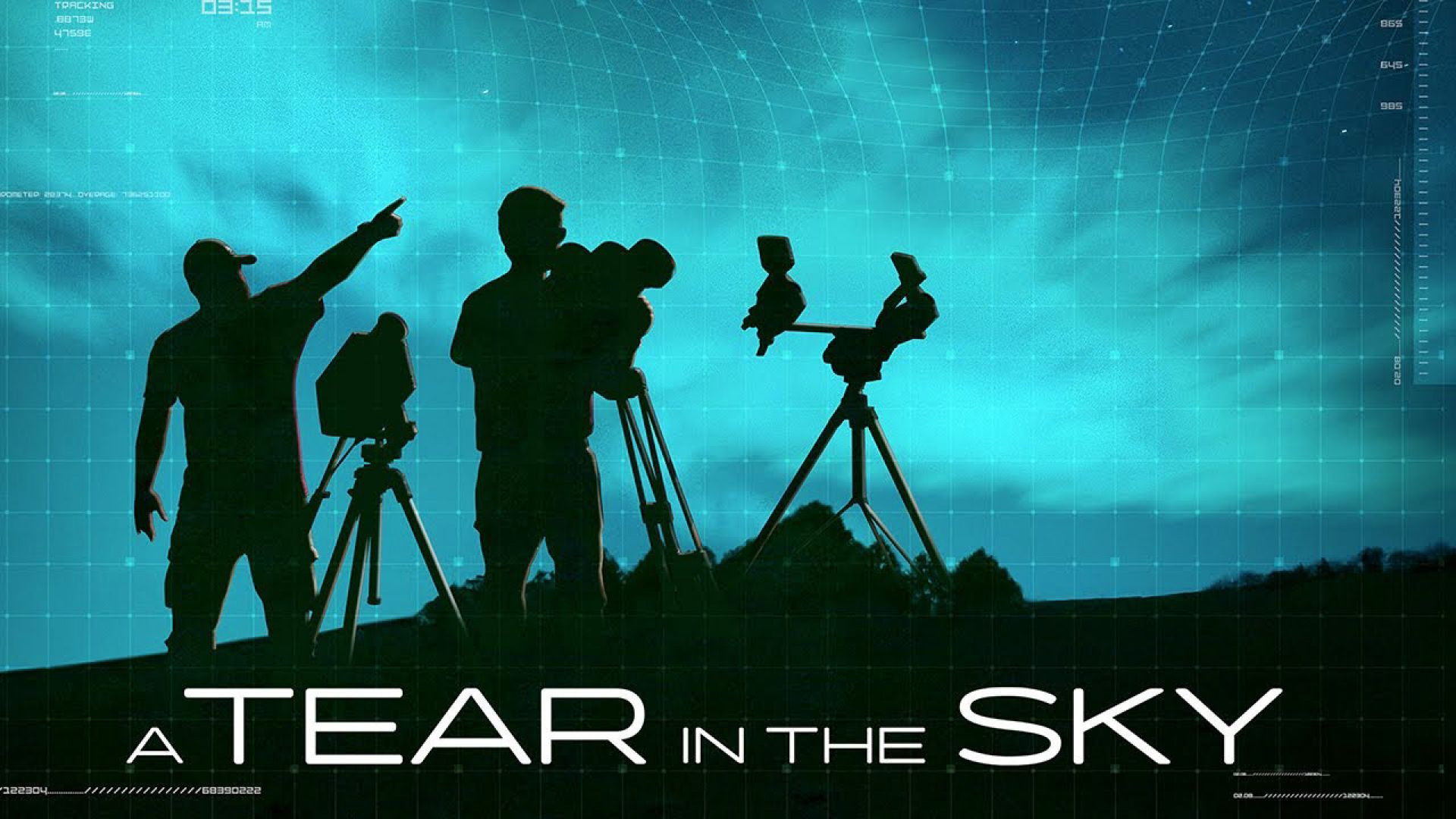
Are you a believer in an alien presence in our skies? Rumours of such phenomena date back over a century and, indeed, strange sightings in the skies go back long before that, though they were previously explained in different ways. Talk to modern UFO enthusiasts and you will tend to be regaled with a lot of loosely connected theories about disparate phenomena. A Tear In The Sky follows a project which is trying to apply a more scientific approach by narrowing its focus and applying close, multi-method observation to one specific phenomenon: the ‘tictacs’ frequently observed off the coast of California.
Leading the effort, and directing and presenting this documentary, is Caroline Cory, who has an MA in Counselling Psychology from the University of Austin and has built a successful career as an author and public speaker focused on extra sensory perception and ‘ufology’. She’s supported by Michio Kaku, who teaches theoretical physics in new York and has produced a number of peer reviewed papers, despite being best known for highly simplified pop science presentations. On the ground are computational physicist Kevin H Knuth and Matthew Szydagis, who graduated in philosophy before going on to teach physics at Albany. In the studio is William Shatner, whose principal qualification seems to be that he’s Cory’s lifelong idol, but who is also a familiar face for international (if not necessarily interplanetary) viewers.
The project is centred on a particular area between the California coast and the island of Catalina, which enables equipment set up at different points to triangulate and determine the position of observed phenomena as well as comparing observations from different standpoints. The team uses standard imaging, infrared and radiation tracking as well as comparing sightings to the position of known aircraft in the unregulated airspace (which latter seems especially important after we see Cory getting excited about a comparatively slow moving, blinking white light which looks very much like a plane). There is, of course, no accounting for unknown flights, and one wonders if local police forces will take an interest in the film when trying to identify drug trafficking routes.
It probably looks very impressive to a lot of viewers, and it certainly represents a serious effort, but aspects of the team’s approach raise concern, such as their inability to understand how an object visible from one position with a regular lens can be invisible from another with a fisheye lens (not a mystery at all to anyone with a decent grounding in optics). The real problem lies not in how data is captured but in how it is analysed, at which point there is so much jumping to conclusions and post-hoc justification that it’s difficult to consider this science at all. Despite the proud boasts at the end of the film, this couldn’t hope to survive peer review – and yet that’s not to say that the data itself isn’t interesting, or that the film has nothing to offer.
Cory does, to her credit, take a little time to explore terrestrial phenomena which could potentially be responsible for sightings like these. There’s an all too brief detour into the world of experimental aircraft, including ‘bat drones’ launched by catapult and others which can fly at an astonishing Mach nine. There’s also a little bit about the history of the sightings, though here no specific allowance is made for the possibility that military technology was advancing more quickly than official releases suggested. Navy veterans report ‘men in khaki’ arriving on their boat after one such incident and confiscating or erasing all possible recordings. This is presented as if it were evidence of a conspiracy to cover up the existence of extra terrestrial life, when a conspiracy to cover up the existence of new types of aircraft seems distinctly more likely.
It’s this tendency to try to fit evidence to pre-existing ideas which undermines the film’s scientific credibility, but it’s intriguing as a study of the mechanics of belief. One military participant says that he doesn’t mind what kind of explanation he gets as long as he can have an answer. There is evidence of the traumatising effect of being ordered not to accept what one has seen with one’s own eyes. Others grasp at every little indicator that they might have been right all along in ascribing what they saw to the presence of aliens. Aliens represent hope, after all, and an escape from the mundane world.
This is an independent film and its production standards are not the greatest. Cory makes some odd choices as director, from camera angles which make her look as if she’s talking to an unseen third party, to the use of dramatic music more befitting of a soap opera than a serious documentary. Towards the end there is a lot of repetition and points are overstated in a way which makes the whole thing feel like an amateur propaganda piece. That said, it will no doubt hold some appeal for UFO enthusiasts, whether they are true believers or not, and, as one participant points out, it establishes that with today’s technology there is a lot that average people can do to explore the world (and perhaps others) for themselves.
REVIEW RESOURCE: https://www.eyeforfilm.co.uk/r....eview/a-tear-in-the-

The History of the Devil is wickedly good, informative and concise. A no-frills Welsh film produced in association with SBS Australia and distributed by Siren Visual, it’s roughly 52 minutes in length and packs a fair dinkum amount of history into its slender running time.
The documentary itself is made up entirely of mostly still images alternating sporadically with talking heads; religious scholars, theologians and reverends.
Directed by Greg Moodie and written and produced by Dave Flitton, it was researched by Eibhleann Ni Ghriofa, Deirdre Learmont and Craig McGregor.
It’s an impressive and very open-minded account and offers some fantastic insight into the evolution; the hows and whys the specter of the Devil has existed and morphed through the ages from the dawn of civilization through to the new millennium.
So despite its relatively low-fi approach, the richness and diversity of its imagery; the historical plaques, plates, engravings, illustrations, paintings, drawings, and the occasional staged re-enactment (some dude dressed up in rather bemusing demonic attire), keeps the documentary at a high level of beguilement.

The Revelation of the Pyramids, narrated by Brian Box, takes an extensive look into the Great Pyramid of Giza, which is widely believed to have been built as a tomb for the country’s pharaohs during ancient times. Based on the works of Jacques Grimault who has studied pyramids for over 40 years, it presents an alternative theory on its origins. It questions the traditional viewpoints of Egyptology, asserting that they rely on unverified assumptions such as the lack of machines, its twenty-year construction period, and its ‘coincidental’ equinox-orientation.
The Revelation of the Pyramids then goes into comparisons between Giza’s pyramids and those of other regions like China, Easter Island and the various native cultures of the Americas. The film posits that Giza’s construction implies that Egyptians would have to have been incredibly advanced mathematicians, using equations centuries before they were discovered by the rest of the world. It therefore draws the conclusion that the pyramids were not built by Egyptians, but by a significantly older civilisation that has long-since faded away into the mists of time.
