Top videos

Dr Rashid Buttar, brytyjsko-amerykański lekarz, który był odpowiedzialny za uświadomienie milionom ludzi prawdy o Big Pharmie i globalistycznej agendzie, został znaleziony martwy 18.05.2023.
Miał 57 lat i cieszył się wyjątkowo dobrym zdrowiem. Szykujcie się na turbulencje roku 2025!
Sławik Kraszennikow 1983-1993
Później wrócą wszystkie choroby, o których ludzie już zapomnieli. Jedna choroba pojawi się bez nazwy, od której będzie mnóstwo trupów na ulicach i nikt nie będzie ich chował. Będą po nich pełzać robaki i wokół będzie panował smród. Sławoczka powiedział: „Mamusiu, ludzie będą iść i umierać w ruchu, ponieważ zupełnie nie będą mieć energii. W naszym mieście będzie tak samo”.
https://www.askdrbuttar.com/

Social Engineering, behaviorism, Mind Control, Sudo Democracy, human experimentatio, mechanistic philosophy, schooling, Noam Chomsky, Depopulation, Conspiracy, aggression, Deep State, Dehumanisation
Human Resources: Social Engineering in the 20th Century explores the rise of mechanistic philosophy and the exploitation of human beings under modern hierarchical systems. Topics covered include behaviorism, scientific management, work-place democracy, schooling, frustration-aggression hypothesis and human experimentation
Resources explores the rise of mechanistic philosophy and the exploitation of human beings under modern hierarchical systems.
Topics covered include behaviorism, scientific management, work-place democracy, schooling, frustration-aggression hypothesis and human experimentation.
Scott Noble releases all of his films online for free, but they do cost a fair bit to produce. If you're able and appreciate his work, consider supporting the production of the filmmaker's next film with a monthly donation on Patreon.
“A viscerally overpowering film and at the same time a thoughtful meditation on the human condition.”
- Walter A. Davis, Professor Emeritus, Ohio State University
“Brilliant…Riveting…The amount of material the filmmaker covers and unifies is astounding…Human Resources diagnoses the 20th century.”
- Stephen Soldz, Professor, Boston Graduate School of Psychoanalysis; President, Psychologists for Social Responsibility
"Powerful…Must See…It will leave you Spellbound.”
- Andrew Goliszek, Author, In the Name of Science: A History of Secret Programs, Medical Research, and Human Experimentation
"An important work…terrifiying in its implications….Human Resources is a must see for those of us who still take democracy seriously.”
- Bruce E. Levine, Author Commonsense Rebellion: Taking Back Your Life from Drugs, Shrinks, Corporations, and a World Gone Crazy
“It scared the shit out of me…A powerful and methodical dissection of the dominant culture.” - Derrick Jensen, Author, Endgame
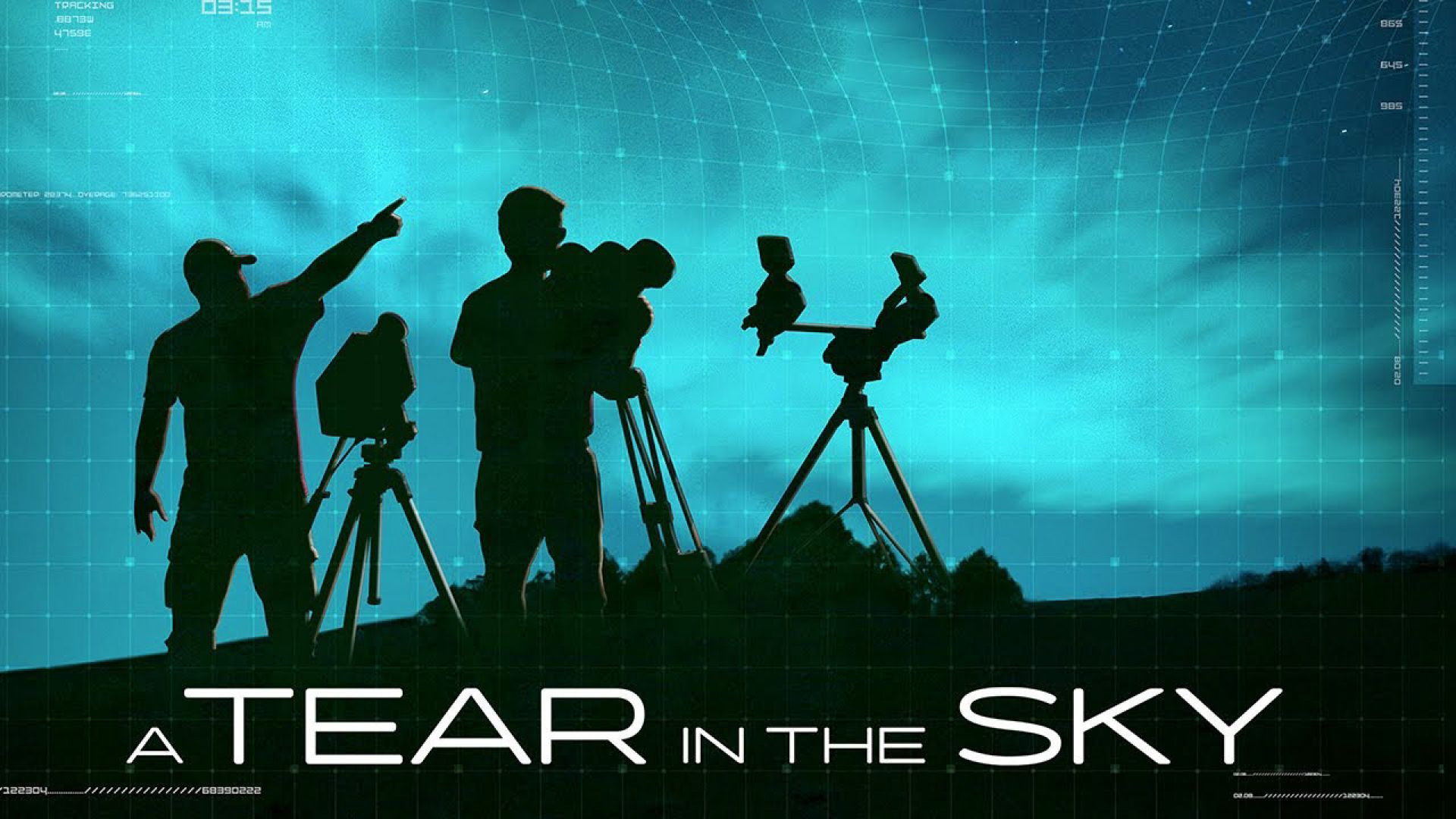
Are you a believer in an alien presence in our skies? Rumours of such phenomena date back over a century and, indeed, strange sightings in the skies go back long before that, though they were previously explained in different ways. Talk to modern UFO enthusiasts and you will tend to be regaled with a lot of loosely connected theories about disparate phenomena. A Tear In The Sky follows a project which is trying to apply a more scientific approach by narrowing its focus and applying close, multi-method observation to one specific phenomenon: the ‘tictacs’ frequently observed off the coast of California.
Leading the effort, and directing and presenting this documentary, is Caroline Cory, who has an MA in Counselling Psychology from the University of Austin and has built a successful career as an author and public speaker focused on extra sensory perception and ‘ufology’. She’s supported by Michio Kaku, who teaches theoretical physics in new York and has produced a number of peer reviewed papers, despite being best known for highly simplified pop science presentations. On the ground are computational physicist Kevin H Knuth and Matthew Szydagis, who graduated in philosophy before going on to teach physics at Albany. In the studio is William Shatner, whose principal qualification seems to be that he’s Cory’s lifelong idol, but who is also a familiar face for international (if not necessarily interplanetary) viewers.
The project is centred on a particular area between the California coast and the island of Catalina, which enables equipment set up at different points to triangulate and determine the position of observed phenomena as well as comparing observations from different standpoints. The team uses standard imaging, infrared and radiation tracking as well as comparing sightings to the position of known aircraft in the unregulated airspace (which latter seems especially important after we see Cory getting excited about a comparatively slow moving, blinking white light which looks very much like a plane). There is, of course, no accounting for unknown flights, and one wonders if local police forces will take an interest in the film when trying to identify drug trafficking routes.
It probably looks very impressive to a lot of viewers, and it certainly represents a serious effort, but aspects of the team’s approach raise concern, such as their inability to understand how an object visible from one position with a regular lens can be invisible from another with a fisheye lens (not a mystery at all to anyone with a decent grounding in optics). The real problem lies not in how data is captured but in how it is analysed, at which point there is so much jumping to conclusions and post-hoc justification that it’s difficult to consider this science at all. Despite the proud boasts at the end of the film, this couldn’t hope to survive peer review – and yet that’s not to say that the data itself isn’t interesting, or that the film has nothing to offer.
Cory does, to her credit, take a little time to explore terrestrial phenomena which could potentially be responsible for sightings like these. There’s an all too brief detour into the world of experimental aircraft, including ‘bat drones’ launched by catapult and others which can fly at an astonishing Mach nine. There’s also a little bit about the history of the sightings, though here no specific allowance is made for the possibility that military technology was advancing more quickly than official releases suggested. Navy veterans report ‘men in khaki’ arriving on their boat after one such incident and confiscating or erasing all possible recordings. This is presented as if it were evidence of a conspiracy to cover up the existence of extra terrestrial life, when a conspiracy to cover up the existence of new types of aircraft seems distinctly more likely.
It’s this tendency to try to fit evidence to pre-existing ideas which undermines the film’s scientific credibility, but it’s intriguing as a study of the mechanics of belief. One military participant says that he doesn’t mind what kind of explanation he gets as long as he can have an answer. There is evidence of the traumatising effect of being ordered not to accept what one has seen with one’s own eyes. Others grasp at every little indicator that they might have been right all along in ascribing what they saw to the presence of aliens. Aliens represent hope, after all, and an escape from the mundane world.
This is an independent film and its production standards are not the greatest. Cory makes some odd choices as director, from camera angles which make her look as if she’s talking to an unseen third party, to the use of dramatic music more befitting of a soap opera than a serious documentary. Towards the end there is a lot of repetition and points are overstated in a way which makes the whole thing feel like an amateur propaganda piece. That said, it will no doubt hold some appeal for UFO enthusiasts, whether they are true believers or not, and, as one participant points out, it establishes that with today’s technology there is a lot that average people can do to explore the world (and perhaps others) for themselves.
REVIEW RESOURCE: https://www.eyeforfilm.co.uk/r....eview/a-tear-in-the-

Seaspiracy is absolutely shocking. It’s a damning and illuminating documentary that lifts the shiny veil clinging to our oceans to expose a rotten and corrupt core. Behind the sustainable promises from big corporations and plastic straw campaigns worldwide, the real truth is left hidden. Under this plastic layer of deception though is an industry that’s literally killing our oceans.
This 90 minute documentary is an unflinching look at the damage done to our blue planet. Well-researched and hard-hitting, what begins as an examination into whaling soon spirals into so much worse. Pest control, deceptively coloured salmon and sea piracy are but a few topics discussed here, and the longer the film goes on the more horrifying the truths are.
A lot of the time buzz words like “must-see” and “shocking” are thrown around the entertainment industry and lose their credibility. Honestly though, this film deserves both those labels. Every part of this industry is mired in corruption and greed, right the way through to the non-profit organizations that serve as wolves in sheep’s clothing.
What’s particularly interesting here though is just how much the buck is passed around. No one seems able to answer simple questions and as the film progresses, this becomes more and more apparent.
This globe-trotting documentary examines all forms of ocean corruption, from salmon farms in Scotland across to Shark Fin markets in China. A lot of these scenes are shot with either shaky handheld or spy cameras, backing up the threat these filmmakers face in doing this. In fact, one scene shows the camera crew forced to scramble out a building mid-interview thanks to a police tip off.
Alongside this fly-on-the-wall approach are a lot of facts that use great comparisons to show the devastation of the damage done to our oceans. Understanding the sheer scale of this through diagrams or expository text laid over establishing shots works really well to hammer home the message.
Sure, some people will go into this and write it off as sensationalist or conspiratorial but to be honest, the fact Ali Tabrizi and his team had so many issues interviewing higher-ups to explain themselves is pretty telling.
The final 15 minutes of this documentary changes tone slightly, with a poignant, sombre reminder of what’s happening to our oceans. With the water bleached a sickly shade of red, these scenes depict a form of whaling called Grind. The sound design here in particular is harrowing, and coupled with the images themselves, make for an incredibly difficult watch.
REVIEW RESOURCE: https://www.thereviewgeek.com/....seaspiracy-movierevi
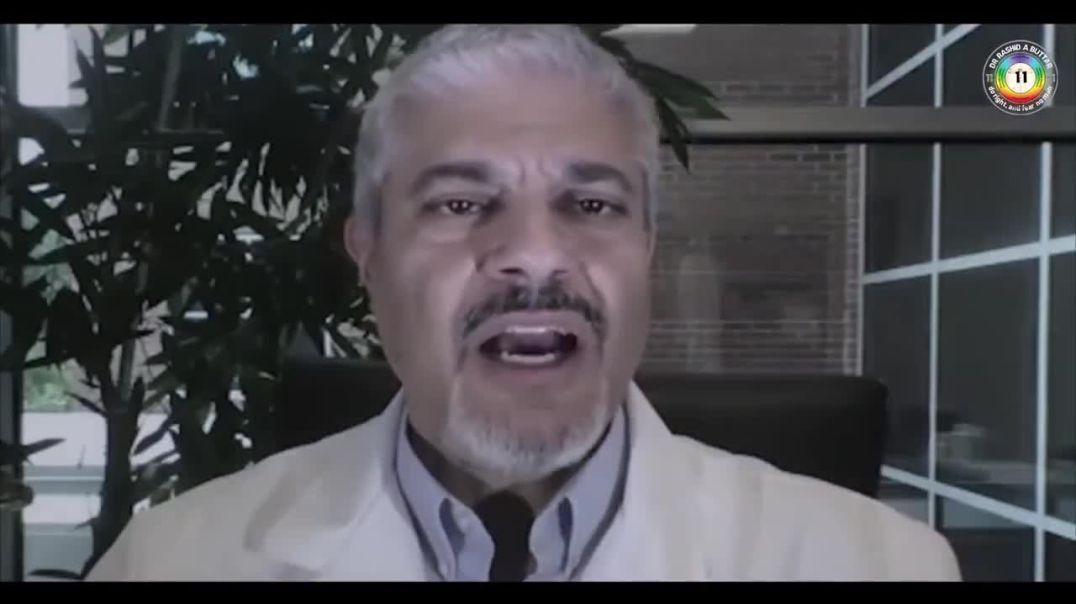
The truth about vaccines perfectily explained by Dr Rashid A Buttar in less than 10 minutes.
He wasn't anti-vax; he was anti-stupidity.
With knowledge, you cannot be mislead.
Originally uploaded to YouTube in May 2020.

Some good news and some troubling news, from Professor Sucharit Bhakdi, M.D. Oracle Films recently produced an interview with Professor Sucharit Bhakdi in collaboration with Oval Media in Germany, for an upcoming documentary.
As an aside to the interview, Dr. Bhakdi emphasised the urgent need to share the following information that has emerged from new scientific literature.
PLEASE take the time to process this presentation. Dr. Bhakdi explains clearly, based on new scientific evidence, why he believes:
Your immune system is your best defence against SARS-CoV-2, and indeed all coronaviruses.
If you have been infected, even if you experienced no symptoms at all, you are immune to all variants.
We have already reached herd immunity.
There is no scientific reason to vaccinate against SARS-CoV-2. There is simply no benefit and the rollout must be stopped.
And much more.
Scientific literature references for Dr. Bhakdi's presentation:
https://www.sciencedirect.com/........science/article/
(v important DK)
https://journals.plos.org/plos........one/article?id=1
v. imp. IgG IgA response to mRNA vacc. +++
https://academic.oup.com/cid/a........dvance-article/d
(key spike and IgG after vacc)
https://doi.org/10.1016/j.cell.2021.06.005 (third IgG response to vaccine paper)

Award-winning journalist John Pilger investigates the discrepancies between American and British claims for the 'war on terror' and the facts on the ground as he finds them in Afghanistan and Washington, DC.
In 2001, as the bombs began to drop, George W. Bush promised Afghanistan "the generosity of America and its allies". Now, the familiar old warlords are regaining power, religious fundamentalism is renewing its grip and military skirmishes continue routinely. In "liberated" Afghanistan, America has its military base and pipeline access, while the people have the warlords who are, says one woman, "in many ways worse than the Taliban".
In Washington, Pilger conducts a series of remarkable interviews with William Kristol, editor of The Weekly Standard, and leading Administration officials such as Douglas Feith, Under Secretary of Defense for Policy, and John Bolton, Under Secretary of State for Arms Control and International Security.
These people, and the other architects of the Project for the New American Century, were dismissed as 'the crazies' by the first Bush Administration in the early 90s when they first presented their ideas for pre-emptive strikes and world domination.
Pilger also interviews presidential candidate General Wesley Clark, and former intelligence officers, all the while raising searching questions about the real motives for the 'war on terror'.
While President Bush refers to the US attacks on Afghanistan and Iraq as two 'great victories', Pilger asks the question - victories over whom, and for what purpose? Pilger describes Afghanistan as a country "more devastated than anything I have seen since Pol Pot's Cambodia". He finds that Al-Qaida has not been defeated and that the Taliban is re-emerging. And of the "victory" in Iraq, he asks: "Is this Bush's Vietnam?"
REVIEW RESOURCE: http://www.bullfrogfilms.com/catalog/break.html

This film exposes the climate alarm as an invented scare without any basis in science. It shows that mainstream studies and official data do not support the claim that we are witnessing an increase in extreme weather events – hurricanes, droughts, heatwaves, wildfires, and all the rest. It emphatically counters the claim that current temperatures and levels of atmospheric CO2 are unusually and worryingly high. On the contrary, compared to the last half billion years of earth’s history, both current temperatures and CO2 levels are extremely and unusually low. We are currently in an ice age. It also shows that there is no evidence that changing levels of CO2 (it has changed many times) have ever ‘driven’ climate change in the past.
Why then, are we told, again and again, that ‘catastrophic man-made climate change’ is an irrefutable fact? Why are we told that there is no evidence that contradicts it? Why are we told that anyone who questions ‘climate chaos’ is a ‘flat-earther’ and a ‘science-denier’?
The film explores the nature of the consensus behind climate change. It describes the origins of the climate funding bandwagon and the rise of the trillion-dollar climate industry. It describes the hundreds of thousands of jobs that depend on the climate crisis. It explains the enormous pressure on scientists and others not to question the climate alarm: the withdrawal of funds, rejection by science journals, and social ostracism.
But the climate alarm is much more than a funding and jobs bandwagon. The film explores the politics of climate. From the beginning, the climate scare was political. The culprit was free-market industrial capitalism. The solution was higher taxes and more regulation. From the start, the climate alarm appealed to and has been adopted and promoted by, those groups who favour bigger government.
This is the unspoken political divide behind the climate alarm. The climate scare appeals especially to all those in the sprawling publicly-funded establishment. This includes the largely publicly-funded Western intelligentsia, for whom climate has become a moral cause. In these circles, to criticize or question the climate alarm has become a breach of social etiquette.
The film includes interviews with many very prominent scientists, including Professor Steven Koonin (author of ‘Unsettled’, a former provost and vice-president of Caltech), Professor Dick Lindzen (formerly professor of meteorology at Harvard and MIT), Professor Will Happer (professor of physics at Princeton), Dr. John Clauser (winner of the Nobel prize in Physics in 2022), Professor Nir Shaviv (Racah Institute of Physics), professor Ross McKitrick (University of Guelph), Willie Soon and several others.
The film was written and directed by the British filmmaker Martin Durkin and is the sequel to his excellent 2007 documentary The Great Global Warming Swindle. Tom Nelson, a podcaster who has been deeply examining climate debate issues for the better part of two decades, was the producer of the film.

Jimi Hendrix, Monterey Pop 1967: a live performance never bettered
The festival belonged to Hendrix. Dazzling technique, feedback and fuzz transformed him from a relative unknown into the personification of rock.
When, in June 1967, Brian Jones sauntered onstage at the Monterey Pop Festival to introduce Jimi Hendrix as “the most exciting guitar player I’ve ever heard”, the Rolling Stone got a bigger reception than the act he was announcing. Although a fair few of those in attendance that final evening – some estimates have put the figure as high as 90,000 – would have heard Hendrix’s British hits on America’s new-fangled FM radio, this was effectively the guitarist’s homeland debut. Indeed, the Jimi Hendrix Experience only made it on to the bill after strong lobbying from Paul McCartney, a member of the festival’s organising committee (alongside Mick Jagger, Brian Wilson and Smokey Robinson). That Derek Taylor, formerly the Beatles’ press officer, was one of Monterey’s three founders (the others were Mamas and Papas’ John Phillips and record producer Lou Adler) and knew all about the trio, secured them a prestigious Sunday evening slot.
Coming on after 40 minutes of genial musicality from the Grateful Dead, the Jimi Hendrix Experience had maximum impact as they blasted into their high-octane take on Howlin’ Wolf’s Killing Floor followed by Foxy Lady, the latter introduced with a self-assured: “Dig this.” Their first big American gig might have been a touch belated, but as a band they were more than ready after honing their stuff on the European psychedelic scene. Mitch Mitchell’s jazz-rooted drumming was not fazed by the guitarist’s flights of fancy and able to take a few excursions of its own while holding the groove. Noel Redding’s liquid playing approached the bass as another lead instrument, contributing ideas of its own rather than simply supporting. The threesome meshed superbly on what is acknowledged as one of the best festival sound systems ever – play their Live at Monterey album and you’ll have to remind yourself there are only three people on stage.
Wild thing … Hendrix at Monterey
Central to this, of course, is Hendrix himself: his dazzling technique combines with a use of feedback and fuzz to almost casually create music of stunning strength and inventiveness. His vocals are warm, wistful or lascivious on cue, and never less than engaging; what passes for banter between numbers is winningly self-effacing. This is peak Hendrixosity, a live performance that has probably never been bettered or was never recorded if it was.
The finale of a properly wild version of Wild Thing was the big talking point – unconventional guitar-playing, humping PA equipment, rolling around on the floor and the sacrificial-type guitar burning. But some 50 years later, this looks contrived – merely tricks that obstruct the real magic. The true high point comes midway through, with the run of Hey Joe, Can You See Me and The Wind Cries Mary. Away from the gimmicks, these 12 minutes establish Hendrix as the embodiment of the counter-culture’s musical revolution.
The blues was squarely at the centre of so much new rock music. Here was a player who, unusually in that world, saw the blues as a living entity, not a museum piece to be reproduced. With this performance Hendrix let it be known he understood the blues as a spirit rather than a defined expression and presented its power retooled in a way that musically made sense to hippies’ forward-facing ideologies. Importantly, for the generation that was vociferously protesting the war in Vietnam, the Jimi Hendrix Experience reeked of danger, while the debauched dandy apparel and afros from both the black and the white guys was about as far from wholesome as possible. All of this made a big contribution to funk as it was beginning to take shape, as Hendrix reclaiming the blues became one of the crucial bridges between the Black Arts Movement of the early 1960s and funk as a renaissance emerging at the end of the decade.

'It felt like a wonderful dream' – DA Pennebaker on making Monterey Pop
Monterey Pop wasn’t the first or the most famous rock festival but it was the most significant, marking the moment the previously regional hippy scenes came together and, culturally, could build. Jann Wenner, an attendee who a few months later would launch Rolling Stone magazine, summed it up: “Monterey was the nexus – it sprang from what the Beatles began, and from it sprang what followed.” The festival’s success and exposure turned the US music business upside down by bringing the underground overground with more than a glint of gold about it: “rock”, as opposed to pop or rock’n’roll, became recognised as the new cash cow and executives started conspicuously growing sideburns.
Ultimately, the Monterey Pop Festival belonged to Hendrix. He arrived as a relative unknown to become the personification of organiser John Phillips’ intentions for three days of inclusivity and adventure during the Summer of Love. It is a bitter irony that Phillips had scheduled his group, the Mamas and the Papas, to close the weekend – ie to go on right after Hendrix. Their gentle psychedelic pop looked decidedly anachronistic: there could be no doubt that rock’s baton had been passed forward.
This article was amended on 4 August 2020 to correct a homophone: Mitch Mitchell’s drumming was “not fazed” by the guitarist’s flights of fancy, rather than “not phased”. It was further amended on 5 August 2020 to clarify the attendance figure of 90,000 given for Monterey’s final night is an estimate.
… we have a small favour to ask. Tens of millions have placed their trust in the Guardian’s fearless journalism since we started publishing 200 years ago, turning to us in moments of crisis, uncertainty, solidarity and hope. More than 1.5 million supporters, from 180 countries, now power us financially – keeping us open to all, and fiercely independent.
Unlike many others, the Guardian has no shareholders and no billionaire owner. Just the determination and passion to deliver high-impact global reporting, always free from commercial or political influence. Reporting like this is vital for democracy, for fairness and to demand better from the powerful.
And we provide all this for free, for everyone to read. We do this because we believe in information equality. Greater numbers of people can keep track of the events shaping our world, understand their impact on people and communities, and become inspired to take meaningful action. Millions can benefit from open access to quality, truthful news, regardless of their ability to pay for it.
Every contribution, however big or small, powers our journalism and sustains our future.
https://www.theguardian.com/mu....sic/2020/aug/03/jimi
REVIEW RESOURCE: https://www.productreview.com.....au/reviews/9946e14a-

GLOBAL FASCISM AHEAD - Totalitarians Create Major Shortages and Crisis, and Then They Step In And Pose As Saviours
https://www.epochoriginal.com/the-shadow-state
“The Shadow State,” a feature documentary by The Epoch Times, takes a deep dive into the environmental, social, and governance (ESG) industry. This emerging multitrillion-dollar power structure unites governments with corporations in the march toward a brave new world of climate and social justice. See how it works, its goals, and who is driving it.
Will this new global alliance bring us a cleaner, more peaceful, more equitable future, or will it bring shortages, poverty, and political instability? Will this partnership of government with banking and tech giants deliver prosperity and freedom, or will it control our lives in ways that 20th-century totalitarians only dreamed of?
RESOURCE:https://new.awakeningchannel.c....om/global-fascism-ah
https://www.youtube.com/watch?v=y4IGAE76gqU&ab_channel=TheEpochTimes

𝟭𝟭 𝘀𝗶𝗲𝗿𝗽𝗻𝗶𝗮 𝟭𝟵𝟯𝟳 roku szef NKWD Nikołaj Jeżow wydał rozkaz nr 00485, na podstawie którego Sowieci wymordowali co najmniej 𝟭𝟭𝟭 𝟬𝟵𝟭 Polaków – obywateli ZSRS.
Film dokumentalny Tomasza Sommera i Mirosława Majerana opowiada o tej, wciąż zbyt mało znanej, zbrodni przeprowadzonej w latach 1937-1938. Pod zarzutem przynależności do fikcyjnej Polskiej Organizacji Wojskowej, prowadzącej rzekomo działalność szpiegowsko-wywrotową na rzecz Polski, aresztowano wtedy nie mniej niż 𝟭𝟯𝟵 𝟴𝟯𝟱 osób.
Polacy ginęli prawie czterdziestokrotnie częściej niż inni obywatele Związku Sowieckiego. Dodatkowo, na podstawie rozkazu nr 00486 z 15 sierpnia 1937 roku, wydanego również przez Jeżowa, represjom poddano żony i dzieci skazanych „zdrajców Ojczyzny”.
Dokładna liczba ofiar tzw. Operacji Polskiej – zaplanowanej i systematycznie przeprowadzonej akcji ludobójstwa na Polakach w ZSRS – wciąż nie jest znana.
Więcej DOWIESZ SIĘ na portalu 👉https://operacja-polska.pl

Watch Part ONE (1) here => https://vajratube.com/watch/ge....orge-harrison-living
George Harrison first became known to the world as 'The Quiet Beatle', but there was far more to his life than simply being a part of The Beatles. This film explores the life and career of this seminal musician, philanthropist, film producer and amateur race car driver who grew to make his own mark on the world.
Through his music, archival footage and the memories of friends and family, Harrison's deep spirituality and humanity are explored in his singular life as he took on artistic challenges and important causes as only he could.
Using unseen photos and footage, Academy Award®-winning director Martin Scorsese traces the life of George Harrison in a personal film, weaving together performance footage, home movies, rare archival materials and interviews with his family and friends including Eric Clapton, Terry Gilliam, Eric Idle, George Martin, Paul McCartney, Yoko Ono, Tom Petty, Phil Spector, Ringo Starr and Jackie Stewart.

Cliff 'Em All is a compilation of video footage, and the first video album by the American heavy metal band Metallica. It was released on November 17, 1987, as a tribute to Metallica's bassist Cliff Burton, who died in a tour bus accident on September 27, 1986, at the age of 24, near Ljungby, Sweden, during the European leg of their Master of Puppets world tour. Its title is derived from Metallica's debut album, Kill 'Em All. The home video also features a performance with former guitarist Dave Mustaine on March 19, 1983, shortly before his ousting from the band.
The video is a retrospective on the three and a half years that Cliff Burton was in Metallica, presented as a collection of bootleg footage shot by fans, some professional filming and TV shots that were never used and some of his best bass solos, personal photos and live concerts. Photos and narrations by the band (Lars Ulrich, James Hetfield and Kirk Hammett drinking beer) are placed between songs, which focus on Burton before fading into a title card of a performance. The video ends with the melodic interlude of "Orion" as pictures of Burton are shown.
With this video, the band tries to show the unique personality and style he had. While ostensibly the film focuses on Burton, it also has given fans a rare glimpse of Metallica's less-documented early career. This contrasts sharply with the 'Metallica business' represented in the feature film Metallica: Some Kind of Monster.
The back of the case reads "Well, we finally went and did what we always talked about not doing. Releasing a vid[eo]! Before you throw up in disgust, let us (except K.) tell you the idea behind this." The "K" is presumably short for Kirk, explaining why he is on the bottom of the cover.
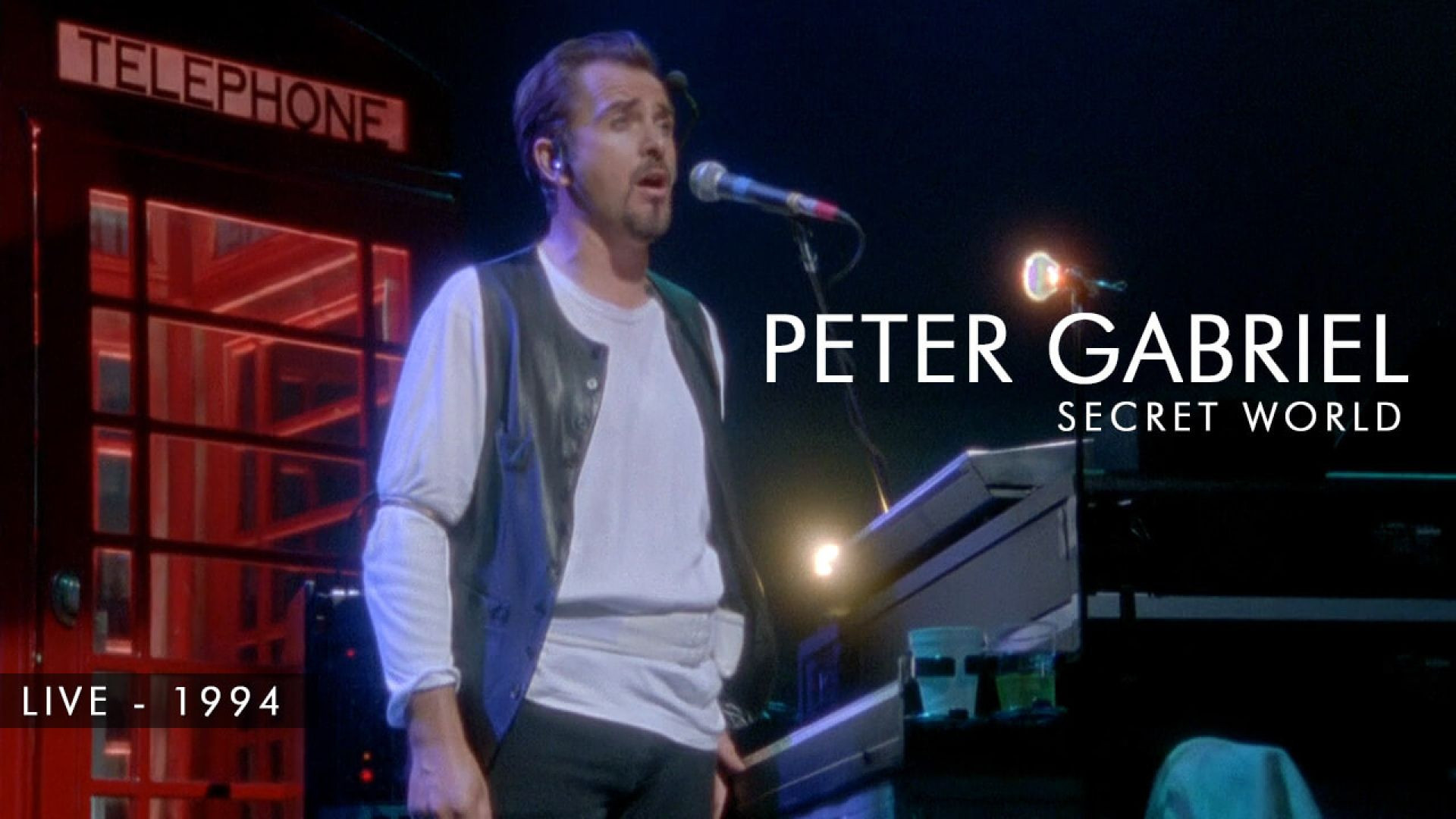
Peter Gabriel Secret World Live Full Concert - 1994 Italia
Songs list:
Come Talk To Me
Quiet Steam / Steam
Across The River
Slow Marimbas
Shaking The Tree
Blood Of Eden
San Jacinto
Kiss That Frog
Washing Of The Water
Solsbury Hill
Digging In The Dirt
Sledgehammer
Secret World
Don't Give Up
In Your Eyes

This documentary from Jeff Orlowski explores how addiction and privacy breaches are features, not bugs, of social media platforms.
That social media can be addictive and creepy isn’t a revelation to anyone who uses Facebook, Twitter, Instagram and the like. But in Jeff Orlowski’s documentary “The Social Dilemma,” conscientious defectors from these companies explain that the perniciousness of social networking platforms is a feature, not a bug.
They claim that the manipulation of human behavior for profit is coded into these companies with Machiavellian precision: Infinite scrolling and push notifications keep users constantly engaged; personalized recommendations use data not just to predict but also to influence our actions, turning users into easy prey for advertisers and propagandists.
As in his documentaries about climate change, “Chasing Ice” and “Chasing Coral,” Orlowski takes a reality that can seem too colossal and abstract for a layperson to grasp, let alone care about, and scales it down to a human level. In “The Social Dilemma,” he recasts one of the oldest tropes of the horror genre — Dr. Frankenstein, the scientist who went too far — for the digital age.
In briskly edited interviews, Orlowski speaks with men and (a few) women who helped build social media and now fear the effects of their creations on users’ mental health and the foundations of democracy. They deliver their cautionary testimonies with the force of a start-up pitch, employing crisp aphorisms and pithy analogies.
“Never before in history have 50 designers made decisions that would have an impact on two billion people,” says Tristan Harris, a former design ethicist at Google. Anna Lembke, an addiction expert at Stanford University, explains that these companies exploit the brain’s evolutionary need for interpersonal connection. And Roger McNamee, an early investor in Facebook, delivers a chilling allegation: Russia didn’t hack Facebook; it simply used the platform.
Much of this is familiar, but “The Social Dilemma” goes the extra explainer-mile by interspersing the interviews with P.S.A.-style fictional scenes of a suburban family suffering the consequences of social-media addiction. There are silent dinners, a pubescent daughter (Sophia Hammons) with self-image issues and a teenage son (Skyler Gisondo) who’s radicalized by YouTube recommendations promoting a vague ideology.
This fictionalized narrative exemplifies the limitations of the documentary’s sometimes hyperbolic emphasis on the medium at the expense of the message. For instance, the movie’s interlocutors pin an increase in mental illness on social media usage yet don’t acknowledge factors like a rise in economic insecurity. Polarization, riots and protests are presented as particular symptoms of the social-media era without historical context.
Despite their vehement criticisms, the interviewees in “The Social Dilemma” are not all doomsayers; many suggest that with the right changes, we can salvage the good of social media without the bad. But the grab bag of personal and political solutions they present in the film confuses two distinct targets of critique: the technology that causes destructive behaviors and the culture of unchecked capitalism that produces it.
Nevertheless, “The Social Dilemma” is remarkably effective in sounding the alarm about the incursion of data mining and manipulative technology into our social lives and beyond. Orlowski’s film is itself not spared by the phenomenon it scrutinizes. The movie is streaming on Netflix, where it’ll become another node in the service’s data-based algorithm.
REVIEW RESOURCE: https://www.nytimes.com/2020/0....9/09/movies/the-soci

The Israeli military’s reported use of an untested and undisclosed artificial intelligence-powered database to identify targets for its bombing campaign in Gaza has alarmed human rights and technology experts who said it could amount to “war crimes”.
The Israeli-Palestinian publication +972 Magazine and Hebrew-language media outlet Local Call reported recently that the Israeli army was isolating and identifying thousands of Palestinians as potential bombing targets using an AI-assisted targeting system called Lavender.

Kevin Macdonald's three fictional movies have taken him to Idi Amin's Uganda, Washington DC and the northern reaches of Roman Britain. They're all thrillers of various kinds, as are Touching the Void and One Day in September, the tightly focused, feature-length documentaries that preceded them. Touching the Void centres on a dangerous expedition by two British climbers in the Peruvian Andes in 1985 and uses interviews with the real participants and simulated scenes played by actors. One Day in September is about the massacre of Israeli athletes by Arab terrorists at the 1972 Olympics and, in addition to interviews and archive footage, employs computer graphics to explain the course of events.
His new film, a cinebiography of Bob Marley is a bigger, baggier and simpler thing. It's the story of a man who lived an extraordinarily full yet oddly mysterious life and died a world figure 30 years ago, shortly after reaching the age of 36. It is, however, told without any reconstructions or impersonations and neither Sidney Poitier nor Morgan Freeman was called in to deliver a rousing commentary explaining the man's contradictions, achievements and significance.
The picture begins in West Africa at an old fortress on the Gold Coast (now Ghana). Through its "Door of No Return" leading to the sea passed many of the millions of shackled slaves who were shipped across the Atlantic. This was the journey made by his ancestors that shaped Marley's life, identity and music and the belief system that drew them together.
He was born in the remote Jamaican village of Nine Mile in 1945 and Macdonald takes us there in a lyrical aerial shot across the steep, wooded hill country. His mother, Cedella, was black and 16. His father, Norval Marley, a white man aged 65, was employed by the forestry commission to prevent the theft of timber. He rode around the countryside like a seigneurial Cossack and styled himself Captain, though there's no evidence he'd held any commissioned rank or served in any war. In the only known photo of Norval, he's on horseback attempting to look authoritative and his family refused to recognise Bob when he once called on them for help.
Macdonald sees Bob as a man who felt rejected by both the black and the white communities, an outsider who was to find a symbolic home in Africa through embracing Rastafarianism, a style of personal independence and social defiance, and a mission to bring people together in a grand international, inter-racial brotherhood.
Marley grew up in extreme poverty, first in the countryside, then in the slums of Kingston's Trenchtown, where the first photograph of him was taken at the age of 12. The documentation of the early life is thin, but Macdonald is able throughout to draw on the colourful testimony of his formidable mother, his friends, fellow musicians, a variety of female companions (Marley had nine or 10 children by six or seven different women) and later some businessmen, politicians and gangsters.
There are splendid anecdotes about survival, about Bob and his band, the Wailers, developing a new kind of music that fused local and international forms into a distinctive form of reggae, and the zig-zagging of a career that took Marley to the United States, where his mother had relocated, to Europe and to Africa. Much of what we hear from Jamaican witnesses is spoken in a beguiling, if sometimes obscure, patois and there are the kind of contradictions in the individual assessments of his character and the accounts of the fraught progress of the Wailers that one would expect. This is Rashomon territory.
But there are compromises and concessions of a different kind that have come about through the need to secure interviews, musical rights and other necessary forms of co-operation. These are reflected in the names of several family members and various close business associates listed in the credits as producers. Some of these people provide the finest testimony.
Among them are Bob's Cuban-born wife Rita, who worked in his backing group and recalls seeing stigmata on Haile Selassie's hand during his triumphant visit to Jamaica; Bob's three children by her (Cedella, Ziggy and Stephen); the beautiful, spirited Cindy Breakspeare, his trophy companion and former Miss World who bore him a child but refused to embrace Rastafarianism; and the laidback British impresario Chris Blackwell of Island Records.
If Marley ultimately remains something of a mystery (he gave few interviews and in none was particularly forthcoming), we nevertheless get a vivid impression of a career that included a brief stint on a Chrysler production line in Delaware, a long period of apprenticeship as a composer (initially working with homemade instruments) and a rise to local and international stardom. Gradually, the dreadlocks, the music and the cloud of ganja smoke come together to form as recognisable an image as that of the equally short-lived Che Guevara.
He was, however, altogether less militant than Che, virtually apolitical, which did not prevent competing forces seeking his allegiance or seeing him as a valuable symbol for their causes. In 1976, an assassination attempt in Jamaica drove him into exile. It wasn't, however, a bullet that did for him but the stud of a boot during a game of his beloved football in a London park, triggering the melanoma in his foot that eventually consumed his body.
We hear of a beautiful moment in a wintry Bavarian clinic where Bob's mother read the Book of Job to the emaciated singer, his dreadlocks lost to chemotherapy, shortly before he flew across the Atlantic to die in Miami in May 1981.
Perhaps this impressive, thoughtful portrait should have ended there. Instead, it concludes with a succession of Marley's hits being sung in a various languages by cheerful young people on every continent. That's all a little too "I'd Like to Teach the World to Sing" Coca-Cola-ish for my tastes.
REVIEW RESOURCE: https://www.theguardian.com/fi....lm/2012/apr/22/bob-m

Himalaya of the hypocrisy!!!
I am aware that most of the materials on this channel are very pessimistic and always worse news from the world. I because of that I decided to put this movie not on DocumentaryArchive but here to make my followers laugh until their stomach aches.
I come from the communist block, I grew up in the 70s in Poland and this film clearly reminds me of classic Soviet Propaganda. The level of sweetness and exaggerated concern for the public good can make you vomit in this story.
However, there is so much hypocrisy, naive deception, and caricature pride here that all you can do is laugh out loud.
Have fun watching this movie.
Official description :-))))))))))
With his signature blend of scientific acumen, candor and integrity, Dr. Anthony Fauci became America’s most unlikely cultural icon during COVID-19. A world-renowned infectious disease specialist and the longest-serving public health leader in Washington, D.C., he has valiantly overseen the U.S. response to 50 years’ worth of epidemics, including HIV/AIDS, SARS and Ebola. FAUCI is an unprecedented portrait of one of our most vital public servants, whose work saved millions while he faced threats from anonymous adversaries.
Directed by Emmy winners John Hoffman (The Weight of the Nation, Sleepless in America) and Janet Tobias (Unseen Enemy), the film is executive produced by Academy Award winner Dan Cogan (Icarus) and two-time Academy Award nominee Liz Garbus (What Happened, Miss Simone?, The Farm: Angola, USA). The documentary features insights from President George W. Bush, Bill Gates, Bono, former U.S. Department of Health and Human Services secretary Sylvia Burwell, former national security advisor Susan Rice, National Institutes of Health director Dr. Francis Collins, former Centers for Disease Control and Prevention director Dr. Tom Frieden and key AIDS activists, plus Dr. Fauci’s family, friends and former patients.
RESOURCE: https://films.nationalgeographic.com/fauci?

Zdefraudowali wsparcie dla Ukrainy za ponad $80MLD USD. Pominięte przez mainstream afery finansowe, w które zamieszana jest Partia Demokratyczna, Joe Biden, tajemniczy inwestorzy i prezydent Ukrainy.

DMT: The Spirit Molecule investigates the world’s most potent psychedelic drug, dimethyltryptamine (DMT), and its effects on human consciousness. DMT is a naturally occurring psychoactive compound found within both plants and animals, including in the human brain. It has been linked to hallucinogenic effects such as near-death experiences, alien abductions, and visions of angels
The film focuses on the work of Dr. Rick Strassman, who was granted permission in 1990 to undertake a five-year study of DMT at the University of Mexico’s School of Medicine. In weighing the spiritual link of DMT and the opposing scientific stance towards hallucinogens, DMT: The Spirit Molecule asks more questions than it answers. It challenges the ideologies of the world, pointing out the rudimentary nature of contemporary science and spirituality.
In addition to Dr. Strassman, many other experts voice their opinions along the way. Each with their own theories, speculations and personal opinions attempt to explain the DHT experience. The documentary’s graphics provide the perfect ambiance for the issue at hand, with the film itself challenging the religious, scientific and philosophical knowledge of consciousness till date.
