Latest videos

Stanley Kubrick: A Life in Pictures is a 2001 documentary about the life and work of Stanley Kubrick, famed film director, made by his long-time assistant and brother-in-law Jan Harlan. Its running time is 142 minutes long, it consists of several 15-minute chapters, each detailing the making of one of his films – and two more showing his childhood and life.
Jan Harlan got many of Kubrick's collaborators for interviews, including Tom Cruise, Nicole Kidman, Keir Dullea, Arthur C. Clarke, Malcolm McDowell, Peter Ustinov, Jack Nicholson, György Ligeti and Matthew Modine. It also has interviews from film directors who were inspired by Kubrick such as Woody Allen, Steven Spielberg, Martin Scorsese and Sydney Pollack.
The film contains some rare footage, including from the Kubrick family home videos and on film sets, and clips from Fear and Desire - Kubrick's first feature-length film.
It was released on DVD on October 23, 2007, and was featured on the tenth disc of Stanley Kubrick: The Essential Collection and Stanley Kubrick: Limited Edition Collection DVD and Blu-ray released May 31, 2011, respectively. The documentary was also bundled in a box set of some of Kubrick's other films released January 22, 2008.
The soundtrack of the film is by composer and musician Jocelyn Pook, who had previously worked with Kubrick on Eyes Wide Shut (1999).
Stanley Kubrick is one of the first names you hear when the word "director" is brought up. His career spanned many decades, and the movies he worked on were given his undivided attention. He was obsessive, reclusive, and demanding.
And if you've ever wanted to learn pretty much everything you could ever want to know about the iconic director, well, there's a movie for that. Originally released back in 2001, Stanley Kubrick: A Life in Pictures is a documentary that spans his life, offering behind the scenes looks at what went into his directing and thought process. As luck would have it, Warner Bros. has made it available to watch for free online, complete with an introduction by ReelBlend podcast hosts Sean O'Connell, Kevin McCarthy, and Jake Hamilton.
There are some real gems in this thing, from Jack Nicholson talking about the ways Kubrick made him feel satisfied as an actor to looking at the newsreels that helped him understand how to make Dr. Strangelove...including Martin Scorsese's reactions to watching Kubrick movies.
What about the music in A Clockwork Orange—what could be behind playing the William Tell Overture five times fast?
Kubrick's work has touched us all, and the step to understanding the themes and ideas he explores are all captured in this doc.

The story of Martin Armstrong
Can a computer model predict the world economy?
The year is 2014: Europe is stumbling from one emergency summit to the next. America has gone crashing through the 15-billion-dollar debt ceiling. People are taking to the streets across the world because they have realised that something has been thrown off kilter; that the market economy is tearing a vast rift between the super rich and the masses; that the banks have spiralled out of control; that governments have lost their grip on public debt.
And after eleven years off the radar, a man resurfaces in Philadelphia, a man who used a computer model and the number pi in the nineties to predict economic turning points with astounding precision: Martin Armstrong predicted the exact date of the October crash in 1987, the demise of the Japanese bull market in 1990, the turning point for the US and European markets in July 1998 and the Nikkei crash in 1989. He was one of the wealthiest Wall Street market analysts and was named economist of the decade and fund manager of the year in 1998. But he refused to play along with the bankers’ game and warned his customers that “the club” was manipulating currency and silver markets. He quickly made powerful enemies: New York investment bankers, hedge funds managers, Salomon Brothers, Goldman Sachs. The FBI and SEC, US Securities and the Exchange Commission, started to show interest in his computer model. In 1999 he was arrested on charges of fraud which he still disputes to this day. He was incarcerated for seven years for contempt of court. After time in solitary confinement and threats against his mother, he signed a partial confession and was sentenced to a further four years.
This documentary film portrays a man returning to his life after eleven years in prison. It follows him as he meets his old partners for the first time and depicts his first public speech to people who are still prepared to travel from across the globe and pay handsome sums to hear him speak. The film shows him attempting to prove his innocence and expose the power of the New York banks.
Martin Armstrong’s career thus began with a complete error of judgement. Even at this young age, he tried to understand the system, to grasp the logic according to which each boom was followed by a bust. Was Niccolo Machiavelli right in his belief that history repeated itself because man’s passions remain the same? He analysed the financial markets, studied the history of business cycles, stock market crashes and global monetary systems. He visited libraries and collected historical data: gold prices, exchange rates. He played around with figures and dates, he divided the time span between the Rye House Plot in 1683 and the year of the bankers’ panic in 1907 (224 years) by the number of market crashes during this period (26) and ended up with an average of 8.6
Eight point six – the global economy appeared to be based on this 8.6-year cycle. He multiplied the cycle by six which gave him 51.6 years and once again it all fitted perfectly: Black Friday in 1869, the commodity panic in 1920, and the Second and Third Punic Wars. He divided, subtracted and multiplied and established that 8.6 years equalled three thousand one hundred and forty-one days: 3,141, the magic number pi times a thousand. Did pi perhaps also govern the markets or the actions and moods that manifested themselves in these markets?
Armstrong was sure of one thing: there is a geometry of time. He may not be able to explain why, but there is some order to the chaos that exists around us.
Martin Armstrong had just published the secrets of pi when FBI men stormed his office. Soon his accounts and those of his partners in London, Australia and Japan had been frozen. They were not to meet for twelve years. “Is financier Armstrong a Con man, a crank or a genius” asked the New Yorker headline in an eight-page article written as Armstrong was in a maximum security wing in New York. What are the judicial facts, the legal peculiarities and the juristic doubts involved here? And who could have profited from Martin Armstrong’s lengthy sentence behind US bars? And: what does all this say about a system on which we are all dependent in one way or another?
12 years after the demise of Princeton Economics Martin Armstrong is released from prison after he signed a coerced guilty plead. His new life commences with a “World Economic Conference” in Philadelphia. Only three months after his release, he’s back again. As if nothing had happened. As if there’d been no twelve years where he was deprived of the world. Martin Armstrong lectures to 350 people, who travelled especially to Philadelphia to see him. He speaks of his initial approach towards solving the global financial crisis, which he compares to the fall of the Roman Empire. And twelve years later, some of his former partners are back to perhaps resume operations where they’d left off. Will Martin Armstrong and his former partners join forces and re-establish Princeton Economics to make their distinctive mark on the desolate landscape of the financial sector?
WITH
(IN ORDER OF APPEARANCE)
OFER COHEN
VICKY ARMSTRONG
DANIELLE WHITE
LARRY EDELSON
IDA ARMSTRONG
SAM COLAVITA
ANTHONY GODIN
MICHAEL CAMPBELL
BARCLAY LEIB
NIGEL KIRWAN
JUSTIN PFEIFFER
NEILL MACPHERSON
JANA ASPRAY
DAVID GLOVIN
TOMAS V. SJOBLOM
LESSLIE MACPHERSON
GEORG SPERBER
OLIVER BROWN

Filmworker charts the multiple decades that Leon Vitali spent as the jack-of-all-trades assistant to famously demanding film director Stanley Kubrick. It’s a glimpse into the ways Kubrick worked that is both fascinating and heartbreaking, especially in the ways the director, and then his estate after his death, treated someone who was unwaveringly loyal. The lone bonus feature is a Q&A with Vitali and director Tony Ziera.
Behind every Hollywood legend there’s usually at least one assistant who helps keep that person’s world turning in countless unsung ways. In the case of famous film director Stanley Kubrick, there was Leon Vitali, who was different from other assistants in film lore because he cut short a promising acting career to take on a thankless role.
He was also different because he did so much more than keep the trains running on time, so to speak. When needed, Vitali served as casting director, editor, film archivist and restorationist, and more. He even stepped in to play a masked role in Kubrick’s final film, Eyes Wide Shut, which, of course, didn’t allow him to shirk his other duties even as he was filming his lines over and over again, as the director famously liked to do.
Director Tony Zierra’s documentary about Vitali, Filmworker, takes its name from the occupation Vitali put on various forms. It was something he came up with, he says, because he saw himself simply as someone who works in film. He acted in many British TV shows and movies before being cast as Lord Bullingdon in the 1975 Kubrick film Barry Lyndon. While on the Lyndon set, he was fascinated by how the director was involved in every aspect of the production and how every crew member around him had a key role to play.
That fascination led him to essentially creating a job for himself with Kubrick, who, as Vitali tells it, was masterful at coming across as benign and gentle at first before later revealing his controlling and demanding side. In that context, Vitali notes that Kubrick loved to play chess, but I don’t know if that’s a masterful relationship move as much as someone who wants to hide their distorted personality until the other person is in too deep. Kubrick was brilliant, but he was also abusive – I’ve long felt that his infamous obsession with shooting even the most mundane moments over and over wasn’t so much about perfectionism as it was about a sadistic tendency to see how far he could push people.
In Vitali’s case, I don’t think there was ever a notion that he was in too deep. He seemed to revel in his relationship with Kubrick, enjoying the fact that he worked long hours seven days a week to serve all of the director’s whims and needs. The only times cracks seem to appear in that happy façade are when he relates moments where he’s perhaps considering that Kubrick went too far – such as when he horribly mistreated Vitali on Christmas Eve, gave him a present and sent him home, and then started calling him on Christmas Day to hound him about many tasks that needed to be done.
When Kubrick died, Vitali seemed to be cast aside by people closest to the director who took over his estate. It’s telling, for example, that this documentary doesn’t feature interviews with Kubrick’s widow Christiane and her brother Jan Harlan, who executive produced several of the director’s movies and was known as his right-hand man. Vitali was constantly at Kubrick’s home when he wasn’t on movie sets or doing prep work for movies such as location scouting and casting, so obviously the two of them would have been around him quite a bit.
REVIEW RESOURCE: https://www.flickeringmyth.com..../2021/03/blu-ray-rev

This documentary looks inside the life of a high-powered music publicist who became a techno-age philosopher.
For the past 20 years, in his second career as a best-selling author, Howard Bloom has been grappling with the big questions, all of which can be boiled down to, as he puts it here, “What does the universe want from you and me?” Bloom has, in the pre-Covid-19 world chronicled in this documentary about him, a strict routine that helps him in this discipline.
It includes morning exercise and consulting a list of reminders of what to take with him when he ventures out of his Brooklyn brownstone. It also involves a staggering number of medications, which he needs to combat his chronic fatigue syndrome, which struck him in 1988 and left him unable to step out of his bed, let alone his apartment, for many years.
Directed by Charlie Hoxie, “The Grand Unified Theory” is a moderately engaging documentary that credibly portrays Bloom’s indefatigability. He speaks of his aspiration to be a “24 hour-a-day information processing device” and defends his auto-didacticism by saying “Grad school looked like Auschwitz for the mind.” That eyebrow-raising simile is emblematic of Bloom’s bluff offhandedness, which likely served him well in his first career as a high-profile music publicist. (Recalling his tenure representing Run-DMC, he says, “We made rap.” Kurtis Blow and others might like a word.)
The movie spends more time on Bloom’s personality than it does on the ideas promulgated in such volumes as “The Lucifer Principle,” for which the actor Jeff Bridges contributes an onscreen blurb. And when Bloom confides his plan to let a Dubai-based fitness instructor and gym entrepreneur handle his archives, we get into what looks like some P.T. Barnum territory.
REVIEW RESOURCE: https://www.nytimes.com/2020/0....7/21/movies/the-gran

"Rolling Thunder Revue: A Bob Dylan Story" is one of the most frustrating Martin Scorsese films as well as one of the most out-of-character. Decades in the making, in a way, this is an engaging but disorganized and long-winded (two hours, twenty minutes) account of the time in 1975 that Bob Dylan, nine years on from his motorcycle accident, convened a vagabond caravan of musicians, poets, reporters, photographers, money men, and hangers-on to tour the United States in the lead-up to the country's Bicentennial celebration. The tour was a bust, financially and in terms of cultural impact—or at least that's how Dylan, 78 at the time of this film's streaming premiere, remembers it, while cautioning Scorsese and the viewer that he barely remembers anything at all. Nevertheless, the Rolling Thunder Revue rejuvenated Dylan as a musician, in the manner of Elvis Presley's 1968 "comeback" special. And it generated enormous amounts of tour footage, some of which is reproduced here, within a highly conceptual framework, by Scorsese.
The issue of authorship is nearly as central to this movie as the story of Dylan roaming the United States, driving his own tour bus and performing in small- and medium-sized halls, accompanied by the likes of Joan Baez, Ramblin' Jack Elliot, Roger McGuinn, Scarlet Rivera, Joni Mitchell, Ronnie Hawkins, and (in one of his final filmed appearances) Sam Shepard. Scorsese, who over the course of his long career has essentially stamped certain American rock acts, including Dylan, The Rolling Stones, and The Band with "Property of Martin Scorsese," is the credited director, naturally. And as edited by Damian Rodriguez and David Tedeschi, the film bears many Scorsesean hallmarks, including surprising transitions from one idea to the next, and sequences that have been cross-cut in order to provoke questions and create sensations rather than serve up fixed meanings or answers.
But once you look at what the thing actually is, what it's made of, and how the pieces have been arranged, things get curiouser and curiouser. The film is woven around footage shot during the tour by real-life Chicago cameraman Howard Alk (1930-1982), who was hired by Dylan to make a project that somehow never got turned into an actual feature film. The footage has been re-contextualized by Scorsese and presented as the work of European filmmaker Stefan Van Dorp, a nonexistent person played by Argentinean performance artist Martin von Haselberg (husband of Bette Midler, briefly glimpsed in 1975 footage). In interviews, Van Dorp talks in the cliched "high culture" cadences of a mid-20th century moneyed WASP, and speaks on camera of his subjects and collaborators (excluding Dylan and a few others) in an exasperated, withering manner.
Other fictional or questionably involved characters enter the narrative as well, including Paramount Pictures CEO James Gianopulos as the tour promoter; actor Michael Murphy as nonexistent Congressman Jack Tanner (whom he played in two projects for the late Robert Altman); and Sharon Stone, costar of Scorsese's "Casino," as herself, telling the story of how she attended one of the Rolling Thunder Revue concerts as a 17-year-old in the company of her mother and was invited to join the caravan.
Is Scorsese trying to create his own, epically scaled answer to "This is Spinal Tap" or "Zelig"—a mock documentary integrating the real with the fictional, prompting audiences to question the distinctions between them? Maybe. "The Rolling Thunder Revue" starts with a snippet of a silent-era George Melies film of a magic trick and returns to it later, as if to signal that an aspect of illusion is built into the project. The collision of verified events and never-before-discussed anecdotes (some of which, like Congressman Tanner's friendship with President Jimmy Carter, are obviously fabricated) undermines the veracity of everything in the story, like the anecdote about Rivera supposedly taking Dylan to see KISS and inspiring him to don Kabuki-inspired facepaint.
And to what end? What you're seeing, for the most part, are real events that happened in real places to real people, and which therefore have archival value. Even if one were to thread up unedited footage at random, the images and sounds would still tell us a lot about the culture and emotional temperature of the U.S. circa 1975. The concert footage (much of which concentrates exclusively on Dylan, regardless of assurances that the tour was a democratic endeavor) is riveting, showcasing inventive re-arrangements of many Dylan classics, including "Simple Twist of Fate," "A Hard Rain's Gonna Fall," and "The Lonesome Death of Hattie Carroll."
In comparison to the material that stands on its own, the absurd touches feel glommed-on and pointless, and much of the time, they don't work. When the Van Dorp character prattles about how he wanted to show "the contrast between the excesses of the people on the tour and the dissolution of society [in] the land of pet rocks and Slurpees from 7-Eleven," it's like being forced to listen to a reading of a satirical short story by a fiction writer who understands the dictionary definition of satire but never figured out what, exactly, he intended to make fun of. The culture itself? The popular art form that tries to respond to the culture? The mentality of the artist mocking other artists trying to respond to the culture?
This is a documentary, and at the same time, it's also a prank or a joke. But it's not particularly funny when it's plainly trying to be. Why? Maybe because it's lumpy and unfocused, meandering from absurdism to poker-faced sincerity (as in self-contained sections about the plight of Native Americans and the fate of one of Dylan's real-life subjects, wrongly imprisoned boxer Rubin "Hurricane" Carter). Or maybe it's because when you think of Scorsese, one of the great living American filmmakers, a lot of different words and phrases spring to mind, but "goofy" and "wry" and "light touch" aren't among them.
The unsung hero in all this is Alk, whose footage gives the movie its artistic and historical nucleus. He was friends with Dylan from 1963 on, and worked with him on several movies, including "Eat the Document," "Hard Rain" (also about the Rolling Thunder tour) and Dylan's semi-improvised, self-directed "Renaldo and Clara" (where a lot of the footage comes from). Aficionados of analog-era, fly-on-the-wall nonfiction camerawork will admire the intelligence that Alk brings to every composition and camera move—assuming it's Alk's work that we're mostly seeing here, and it's impossible to know for sure, since Scorsese never identifies the footage that way, and lets us believe that "Van Dorp" shot all of it, because that's the joke. There are instances where he even seems to have dubbed Dylan and other real-life personages addressing Alk as "Van Dorp."
Meanwhile, Alk's unobtrusive artistry shines through anyway—as in a lovely moment where Dylan and Ginsberg visit the cemetery where Jack Kerouac is buried, and the camera briefly sneaks away from the two men swapping Kerouac quotes to wander over to the writer's grave site, perfectly framing the rectangular headstone to create a frame-within-a-frame.
At one point, Van Dorp gripes about an obsequious Rolling Stone reporter, real-life journalist and gadfly Larry "Ratso" Sloman, stating that "he didn't want anyone else with vision around." This feels like a self-deprecating joke on Scorsese's own status as an auteur who puts his name on nonfiction projects partly comprised of archival footage created by others. But erasing credit for another artist's work—even an obscure one, even inadvertently, and even in the service of satire and conceptual art—is a dicey business. It backfires here, contributing to the current national malaise wherein facts are provisional and nothing can be trusted anymore, and making the project feel insensitive to the hard-won achievements of real people without whom it would not exist. Buried beneath layers of metafictional tomfoolery is a moving film about an anonymous artist whose achievements remain unrecognized, even by people ideally positioned to throw a spotlight on them.
REVIEW RESOURCE: https://www.rogerebert.com/rev....iews/rolling-thunder

Raoul Peck’s outstanding, Oscar-nominated documentary is about the African American activist and author James Baldwin, author of Go Tell It on the Mountain and The Fire Next Time. Peck dramatises Baldwin’s unfinished manuscript Remember This House, his personal memoir of Malcolm X, Martin Luther King Jr and civil rights activist Medgar Evers, murdered by a segregationist in 1963. Baldwin re-emerges as a devastatingly eloquent speaker and public intellectual; a figure who deserves his place alongside Edward Said, Frantz Fanon or Gore Vidal.
Peck puts Samuel L Jackson’s steely narration of Baldwin’s words up against a punchy montage of footage from the Jim Crow to the Ferguson eras, and a fierce soundtrack. (It’s incidentally a great use of Buddy Guy’s Damn Right I’ve Got the Blues, which never sounded so angry or political.) There is a marvellous clip of Baldwin speaking at the Cambridge Union Society, and another on the Dick Cavett Show – the host looking sick with nerves, perhaps because he was about to bring on a conservative intellectual for balance, whom Baldwin would politely trounce.
Baldwin has a compelling analysis of a traumatised “mirror stage” of culture that black people went through in 20th-century America. As kids, they would cheer and identify with the white heroes and heroines of Hollywood culture; then they would see themselves in the mirror and realise they were different from the white stars, and in fact more resembled the baddies and “Indians” they’d been booing.
The film shows Baldwin refusing to be drawn into the violence/non-violence difference of opinion between King and Malcolm X that mainstream commentators leaped on, and steadily maintaining his own critique – although I feel that Peck’s juxtaposition of Doris Day’s mooning and crooning with a lynch victim is a flourish that approximates Baldwin’s anger but not his elegance. There is a compelling section on Baldwin’s discussion of dramatist Lorraine Hansberry, author of A Raisin in the Sun. It is vivid, nutritious film-making.
REVIEW RESOURCE: https://www.theguardian.com/fi....lm/2017/apr/07/i-am-

Dr. Theresa Deisher talks about BIO-Technology, DNA extracted from dead infants and and about other experiments performed on living organisms.
Theresa Deisher, Ph.D. (President, Sound Choice Pharmaceutical Institute , CEO and Managing Member, AVM Biotechnology). Dr. Deisher, an expert in the field of adult stem cell therapies and regenerative medicine, brings 18 years of experience in scientific and corporate leadership positions involving research, discovery, production and commercialization of human therapeutics. Dr. Deisher’s penchant for groundbreaking scientific discovery and her distinguished scientific research has resulted in 23 patents issued in her name. She has published numerous scientific manuscripts and is a frequent invited lecturer and guest speaker in the area of stem cell technology and regenerative medicine. Throughout her career,
Dr. Deisher has been recruited by some of the country’s top biotechnology companies, including
Genentech, Repligen, ZymoGenetics, Immunex and Amgen. She has managed and mentored undergraduate honors students, post-doctoral fellows, scientific executives and over 20 research assistants/scientists at all levels of responsibility.
Dr. Deisher graduated with honors and distinction from Stanford University, and obtained her Ph.D. in Molecular and Cellular Physiology from the Department of Molecular and Cellular Physiology, Stanford University.
Subsequent to obtaining her Ph.D from Stanford, Dr. Deisher was recruited by Repligen Corporation (Cambridge, MA) and accepted a position as Research Scientist where she managed a staff of associates and scientists and directed the development of research and clinical assays in support of Phase I and Phase II clinical trials for various Repligen developmental efforts. Additionally, Dr. Deisher was selected by Sr.
Management to participate in strategic alliance initiatives, including serving on the Repligen / Eily Lilly joint development committee
https://bioethicsarchive.georg....etown.edu/pcbe/trans

Once a sleepy farming region, Silicon Valley is now the hub of a global industry that is transforming the economy, shaping our political discourse, and changing the very nature of our society.
So what happened? How did this remarkable change take place? Why is this area the epicenter of this transformation? Discover the dark secrets behind the real history of Silicon Valley and the Big Tech giants in this important edition of The Corbett Report.
TRANSCRIPT AND SOURCES: https://www.corbettreport.com/siliconvalley/

PLANDEMIC 3 - Watch Full Movie Here => https://vajratube.com/v/JAUKFR
Mattias Desmet is recognised as the world’s leading expert on the theory of mass formation and is the author of Psychology of Totalitarianism. He is also a professor of clinical psychology in the Department of Psychology and Educational Sciences at Ghent University (Belgium) and a practicing psychoanalytic psychotherapist.
In this exclusive Plandemic 3 interview, filmmaker Mikki Willis explores this topic more in-depth to discover alarming parallels in the Covid-19 narrative and the totalitarian playbook, as well as time tested solutions for this moment in history.
RESOURCE: https://plandemicseries.com/massformation

Dr. Zelenko is one of the most inspiring human beings I’ve had the opportunity to meet.
He’s a true American hero fighting two life and death battles: One is for the life and liberty of all people. The other battle he’s fighting is for his own life. Three years ago Dr. Zelenko was diagnosed with one of the rarest and most fatal cancers.
Through his quest to heal himself, he’s discovered a formula of over the counter vitamins and medicines and shared his protocol for free with the world. For the countless lives he's saved, Dr. Zelenko was nominated for the Noble Peace Prize.
Now, to make it more accessible and affordable to reach more people, Dr. Zelenko has packaged his potent protocol into a capsule he calls Z Stack.
–Mikki Willis
RESOURCE: https://plandemicseries.com/zstack/

Kent Heckenlively and Judy Mikovits are the new dynamic duo fighting corruption in science. Ben Garrison, America's #1 political satirist
Dr. Judy Mikovits is a modern-day Rosalind Franklin, a brilliant researcher shaking up the old boys&; club of science with her groundbreaking discoveries. And like many women who have trespassed into the world of men, she uncovered decades-old secrets that many would prefer to stay buried.
From her doctoral thesis, which changed the treatment of HIV-AIDS, saving the lives of millions, including basketball great Magic Johnson, to her spectacular discovery of a new family of human retroviruses, and her latest research which points to a new golden age of health, Dr. Mikovits has always been on the leading edge of science.
With the brilliant wit one might expect if Erin Brockovich had a doctorate in molecular biology, Dr. Mikovits has seen the best and worst of science. When she was part of the research community that turned HIV-AIDS from a fatal disease into a manageable one, she saw science at its best. But when her investigations questioned whether the use of animal tissue in medical research were unleashing devastating plagues of chronic diseases, such as autism and chronic fatigue syndrome, she saw science at its worst. If her suspicions are correct, we are looking at a complete realignment of scientific practices, including how we study and treat human disease.
Recounting her nearly four decades in science, including her collaboration of more than thirty-five years with Dr. Frank Ruscetti, one of the founders of the field of human retrovirology, this is a behind the scenes look at the issues and egos which will determine the future health of humanity.
Watch PART 1 (One) here => https://vajratube.com/v/SXRrCw
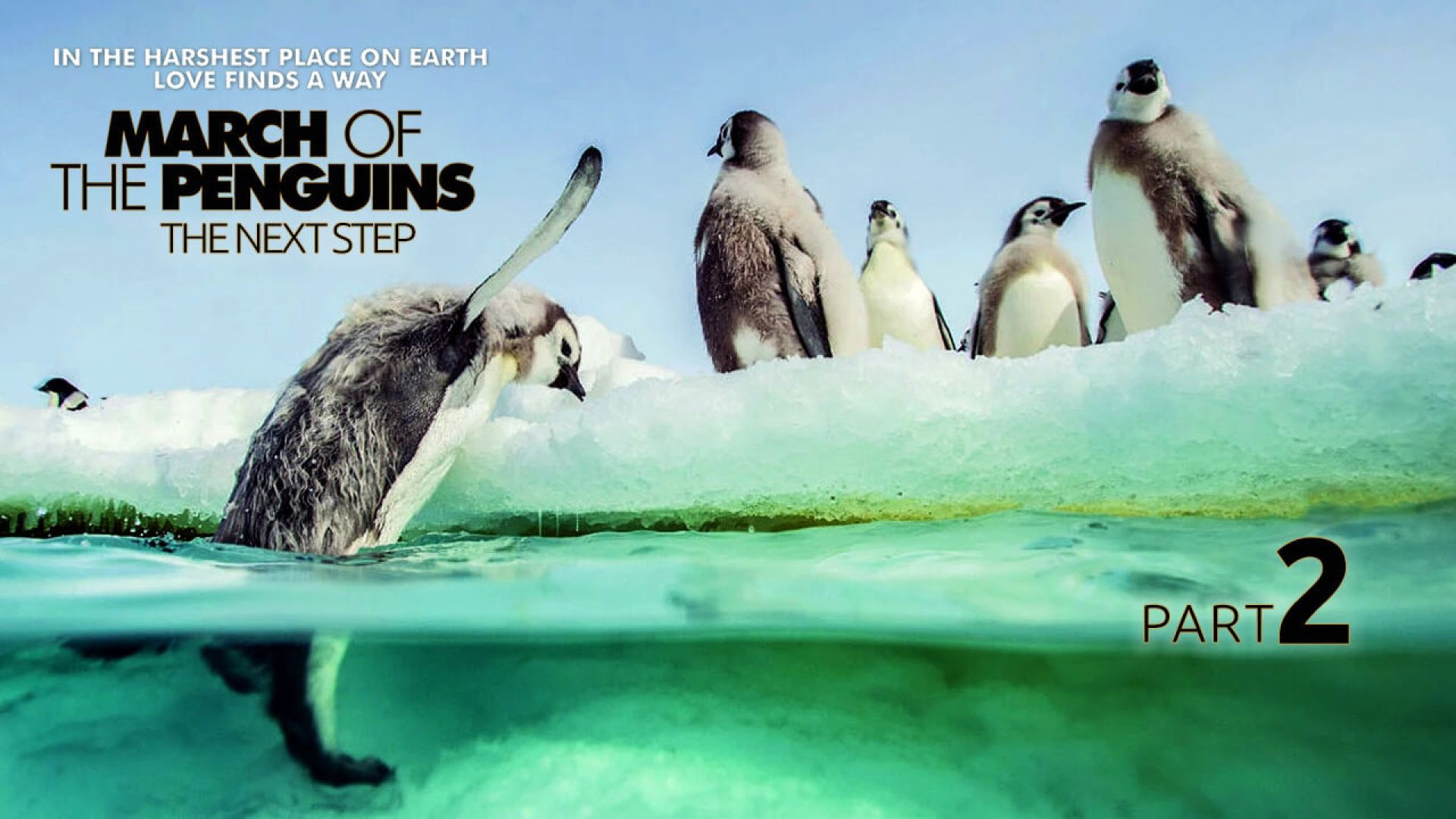
After a long summer of feasting, their bodies stately and plump, the emperor penguins of Antarctica begin to feel, toward autumn, a need to march inland to the breeding grounds "where each and every one of them was born." They are all of a mind about this, and walk in single file, thousands of them, in a column miles long. They all know where they are going, even those making the march for the first time, and when they get there, these countless creatures, who all look more or less the same to us, begin to look more or less desirable to one another. Carefully, they choose their mates.
This is not a casual commitment. After the female delivers one large egg, the male gathers it into a fold of his abdomen, plants his feet to protect the egg from the ice below, and then stands there for two months with no food or water, in howling gales, at temperatures far below zero, in total darkness, huddled together with the other fathers for warmth. The females meanwhile, march all the way back to the sea, now even more distant, to forage for food, which they will bring when the spring comes, if they know it must. When the females return to the mass of countless males, they find their mate without error and recognize the cries of chicks they have never seen.
"March of the Penguins" is simply, and astonishingly, the story of this annual cycle. It was filmed under unimaginable conditions by the French director Luc Jacquet and his team, including the cinematographers Laurent Chalet and Jerome Maison. There is not much to choose from in setting up their shots: On the coldest, driest and (in winter) darkest continent on Earth, there is snow, and there is ice, and there are penguins. There is also an ethereal beauty.
Although the compulsion to reproduce is central to all forms of life, the penguins could be forgiven if they'd said the hell with it and evolved in the direction of being able to swim to Patagonia. The film's narrator, Morgan Freeman, tells us that Antarctica was once a warm land with rich forests that teemed with creatures. But as the climate grew colder over long centuries, one lifeform after another bailed out, until the penguins were left in a land that, as far as they can see, is inhabited pretty much by other penguins, and edged by seas filled with delicious fish. Even their predators, such as the leopard seal, give them a pass during the dark, long, cold winter.
"This is a love story," Freeman's narration assures us, reminding me for some reason of Tina Turner singing "What's Love Got to Do With It?" I think it is more accurately described as the story of an evolutionary success. The penguins instinctively know, because they have been hard-wired by evolutionary trial and error, that it is necessary to march so far inland because in spring, the ice shelf will start to melt toward them, and they need to stand where the ice will remain thick enough to support them.
As a species, they learned this because the penguins who paused too soon on their treks had eggs that fell into the sea. Those who walked farther produced another generation, and eventually every penguin was descended from a long line of ancestors who were willing to walk the extra mile.
Why do penguins behave in this manner? Because it works for them, and their environment gives them little alternative. They are Darwinism embodied. But their life history is so strange that until the last century, it was not even guessed at. The first Antarctic explorers found penguins aplenty, but had little idea where they came from, where they went to, and indeed whether they were birds or mammals.
The answers to those questions were discovered by a man named Apsley Cherry-Garrard, in one of the most remarkable books ever written, The Worst Journey in the World (1922). He was not writing about the journey of the penguins, but about his own trek with two others through the bitter night to their mating grounds. Members of Scott's 1910-1912 expedition to the South Pole, they set out in the autumn to follow the march of the penguins, and walked through hell until he found them, watched them, returned with one of their eggs. Cherry-Garrard retired to England, where he lived until 1959; his friends felt the dreadful march, and the later experience of finding the frozen bodies of Scott and two others, contributed to his depression for the rest of his life.
For Jacquet and his crew, the experience was more bearable. They had transport, warmth, food and communication with the greater world. Still, it could not have been pleasant, sticking it out and making this documentary, when others were filming a month spent eating at McDonald's. The narration is a little fanciful for my taste, and some of the shots seem funny to us but not to the penguins. When they fall over, they do it with a remarkable lack of style. And for all the walking they do, they're ungainly waddlers. Yet they are perfect in their way, with sleek coats, grace in the water and heroic determination. It's poignant to watch the chicks in their youth, fed by their parents, playing with their chums, the sun climbing higher every day, little suspecting what they're in for.
REVIEW RESOURCE: https://www.rogerebert.com/rev....iews/march-of-the-pe

They knew of many of these risks and adverse events… and yet never formally disclosed them to patients,” says mRNA vaccine pioneer Dr. Robert Malone. “I think there are many in the legal profession that are looking at this and raising questions about whether, in fact, this does meet the criteria of fraud in terms of withholding information.”
I sit down with Dr. Malone, co-founder of the International Alliance of Physicians and Medical Scientists, to discuss the Global COVID Summit’s recent declaration to “end the national emergency, restore scientific integrity, and address crimes against humanity.”

Pharmaceutical giant Pfizer is seeking approval from the FDA to administer its experimental mRNA injections to infants despite the existence of extensive documentation showing a multitude of deadly side effects.
Watch PART 2 (TWO) here => https://vajratube.com/v/B4mRnJ
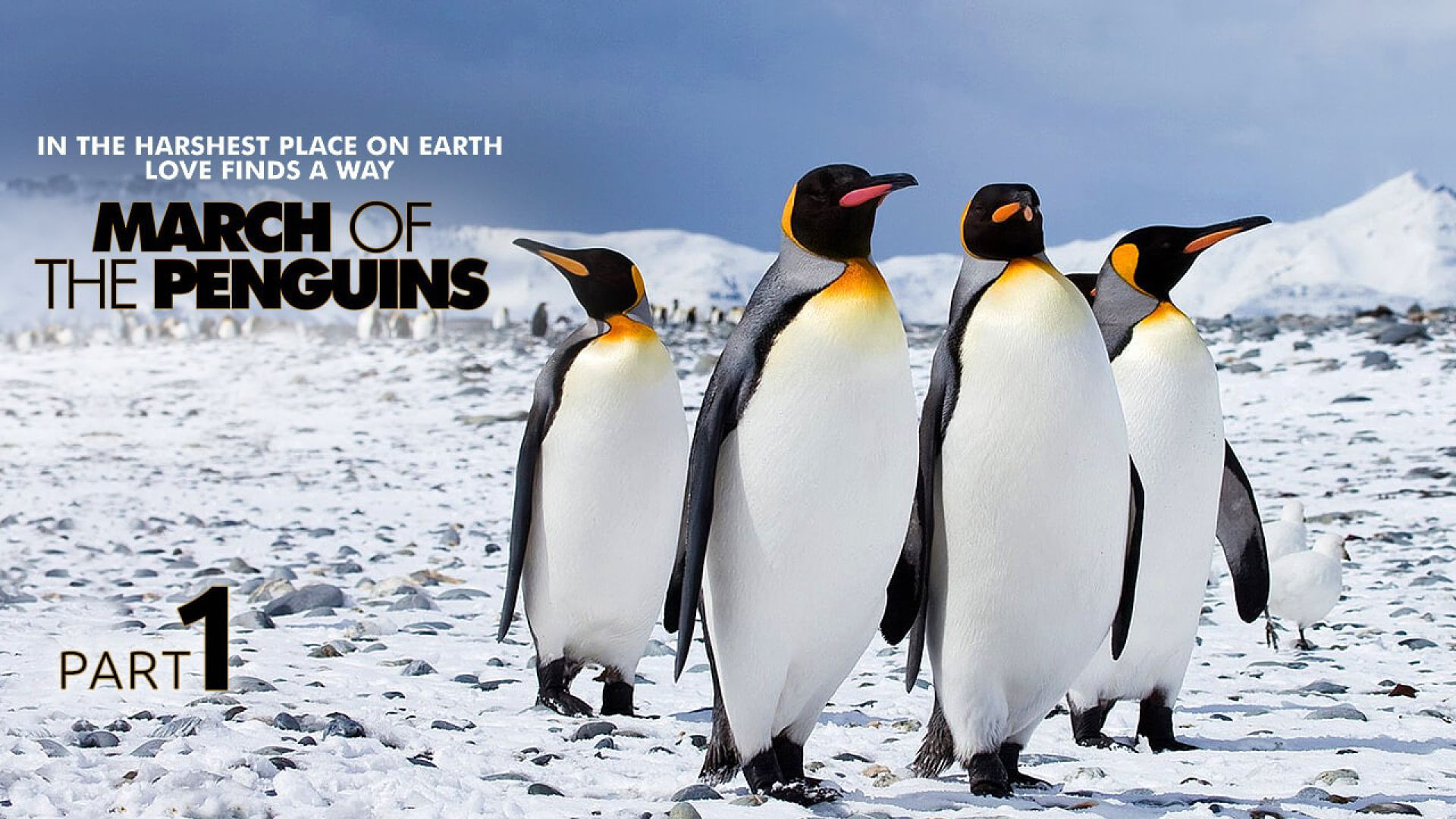
After a long summer of feasting, their bodies stately and plump, the emperor penguins of Antarctica begin to feel, toward autumn, a need to march inland to the breeding grounds "where each and every one of them was born." They are all of a mind about this, and walk in single file, thousands of them, in a column miles long. They all know where they are going, even those making the march for the first time, and when they get there, these countless creatures, who all look more or less the same to us, begin to look more or less desirable to one another. Carefully, they choose their mates.
This is not a casual commitment. After the female delivers one large egg, the male gathers it into a fold of his abdomen, plants his feet to protect the egg from the ice below, and then stands there for two months with no food or water, in howling gales, at temperatures far below zero, in total darkness, huddled together with the other fathers for warmth. The females meanwhile, march all the way back to the sea, now even more distant, to forage for food, which they will bring when the spring comes, if they know it must. When the females return to the mass of countless males, they find their mate without error and recognize the cries of chicks they have never seen.
"March of the Penguins" is simply, and astonishingly, the story of this annual cycle. It was filmed under unimaginable conditions by the French director Luc Jacquet and his team, including the cinematographers Laurent Chalet and Jerome Maison. There is not much to choose from in setting up their shots: On the coldest, driest and (in winter) darkest continent on Earth, there is snow, and there is ice, and there are penguins. There is also an ethereal beauty.
Although the compulsion to reproduce is central to all forms of life, the penguins could be forgiven if they'd said the hell with it and evolved in the direction of being able to swim to Patagonia. The film's narrator, Morgan Freeman, tells us that Antarctica was once a warm land with rich forests that teemed with creatures. But as the climate grew colder over long centuries, one lifeform after another bailed out, until the penguins were left in a land that, as far as they can see, is inhabited pretty much by other penguins, and edged by seas filled with delicious fish. Even their predators, such as the leopard seal, give them a pass during the dark, long, cold winter.
"This is a love story," Freeman's narration assures us, reminding me for some reason of Tina Turner singing "What's Love Got to Do With It?" I think it is more accurately described as the story of an evolutionary success. The penguins instinctively know, because they have been hard-wired by evolutionary trial and error, that it is necessary to march so far inland because in spring, the ice shelf will start to melt toward them, and they need to stand where the ice will remain thick enough to support them.
As a species, they learned this because the penguins who paused too soon on their treks had eggs that fell into the sea. Those who walked farther produced another generation, and eventually every penguin was descended from a long line of ancestors who were willing to walk the extra mile.
Why do penguins behave in this manner? Because it works for them, and their environment gives them little alternative. They are Darwinism embodied. But their life history is so strange that until the last century, it was not even guessed at. The first Antarctic explorers found penguins aplenty, but had little idea where they came from, where they went to, and indeed whether they were birds or mammals.
The answers to those questions were discovered by a man named Apsley Cherry-Garrard, in one of the most remarkable books ever written, The Worst Journey in the World (1922). He was not writing about the journey of the penguins, but about his own trek with two others through the bitter night to their mating grounds. Members of Scott's 1910-1912 expedition to the South Pole, they set out in the autumn to follow the march of the penguins, and walked through hell until he found them, watched them, returned with one of their eggs. Cherry-Garrard retired to England, where he lived until 1959; his friends felt the dreadful march, and the later experience of finding the frozen bodies of Scott and two others, contributed to his depression for the rest of his life.
For Jacquet and his crew, the experience was more bearable. They had transport, warmth, food and communication with the greater world. Still, it could not have been pleasant, sticking it out and making this documentary, when others were filming a month spent eating at McDonald's. The narration is a little fanciful for my taste, and some of the shots seem funny to us but not to the penguins. When they fall over, they do it with a remarkable lack of style. And for all the walking they do, they're ungainly waddlers. Yet they are perfect in their way, with sleek coats, grace in the water and heroic determination. It's poignant to watch the chicks in their youth, fed by their parents, playing with their chums, the sun climbing higher every day, little suspecting what they're in for.
REVIEW RESOURCE: https://www.rogerebert.com/rev....iews/march-of-the-pe

Jeremy Lee. 1991, wow! Way ahead of his time. We were warned but few people seem to notice, even fewer seem to care. Listen now and tell me how much you think has come to pass in the last 30 years. If only every Australian had seen this I don't believe we would be where we are today.
Absolutely brilliant video. Concise, logical and spelt out in layman's terms so that any, every person can understand this. Pinpoints where, how, when and who.
Its actually very sad to think in so many ways we have done this to ourselves. Yes government have orchestrated it and sold us all out BUT it was our apathy as a nation as Australians that allowed it all to happen.
OPEN LETTER TO GOVERNMENTS. PRINT IT OFF & HAND IT TO ALL POLICY ENFORCES (Fake Police)
https://www.knowyourrightsgroup.com.au

NOVA investigates the story of cannabis from the criminalization that has disproportionately harmed communities of color to the latest medical understanding of the plant. What risks does cannabis pose to the developing brain? How much do we know about its potential medical benefits? As cannabis becomes socially accepted, scientists are exploring its long-term health consequences.
This program was produced by GBH, which is solely responsible for its content. Some funders of NOVA also fund basic science research. Experts featured in this film may have received support from funders of this program. Funding for NOVA is provided by the David H. Koch Fund for Science, the NOVA Science Trust, the Corporation for Public Broadcasting, and PBS viewers.
RESOURCE: https://www.pbs.org/

Evidence of a mysterious medieval famine leads researchers on a quest for one of the deadliest volcanoes in human history.
Follow a team of volcano sleuths as they embark on a worldwide hunt for an elusive volcanic mega-eruption that plunged medieval Earth into a deep freeze. The mystery begins when archaeologists find a hastily dug mass grave of 4,000 men, women, and children in London.
At first they assume it’s a plague pit from the Black Death, but when they date the bones, they turn out to be too old by a century. So what killed off these families? The chronicles of that time describe a run of wild weather that devastated crops and spread famine across Europe.
NOVA’s expert team looks for the signature of a volcanic eruption big enough to have blasted a huge cloud of ash and sulfuric acid into the atmosphere, which chilled the entire planet. From Greenland to Antarctica, the team finds telltale “fingerprints” in ice and soil layers until, finally, they narrow down the culprit to a smoldering crater on a remote Indonesian island.
Nearly 750 years ago, this volcano’s colossal explosion shot a million tons of rock and ash every second into the atmosphere. Across the globe, it turned summer into winter. What would happen if another such cataclysm struck again today?
RESOURCE: https://www.pbs.org/wgbh/nova/....video/killer-volcano

This video was made in collaboration with Academy of Ideas. They create videos explaining the ideas of history's great thinkers in order to help supply the world with more knowledge, to empower the individual, and to promote freedom. Please check out their youtube channel for more brilliant content.
https://www.youtube.com/c/academyofideas or visit their website to learn more https://academyofideas.com/
In this video we are going to explore the most dangerous of all psychic epidemics, the mass psychosis. A mass psychosis is an epidemic of madness and it occurs when a large portion of a society loses touch with reality and descends into delusions. Such a phenomenon is not a thing of fiction. Two examples of mass psychoses are the American and European witch hunts 16th and 17th centuries and the rise of totalitarianism in the 20th century.
This video will aim to answer questions surrounding mass psychosis: What is it? How does is start? Has it happened before? Are we experiencing one right now? And if so, how can the stages of a mass psychosis be reversed?

Homeschooling is the wise choice. The "training" a child receives in the Satanic public school system is not of the God of the King James Bible. Training and teaching children is a parental responsibility. We should not expose our children to the Satanic government education systems, demonic video games, demonic movies, whisperers, demonic music, yoga, tarot cards, horoscopes, (divination) etc as exposure to these things creates demonic strongholds in their minds that are contrary to The Word of God (King James Bible).
What does the school do with the children? Gatto states the following assertions in "Dumbing Us Down":
It makes the children confused. It presents an incoherent ensemble of information that the child needs to memorizsto stay in school. Apart from the tests and trials that programming is similar to the television, it fills almost all the "free" time of children. One sees and hears something, only to forget it again.
It teaches them to accept their class affiliation.
It makes them indifferent.
It makes them emotionally dependent.
It makes them intellectually dependent.
It teaches them a kind of self-confidence that requires constant confirmation by experts (provisional self-esteem).
It makes it clear to them that they cannot hide, because they are always supervised
Nowhere in the Bible does it say to enrol your children in the Satanic, public, government owned and operated education system's "indoctrination camps" known as "schools."
Education of children is a parental responsibility.
The Education systems have been used and are being used as a tool by Satanic governments (around the world) to indoctrinate and conduct experiments on children.
A corrupt tree (government owned and operated public education system) cannot bring forth good fruit (a child raised according to Biblical values and principles).
Matthew 7:18: 18 A good tree cannot bring forth evil fruit, neither can a corrupt tree bring forth good fruit.
As it is written: Proverbs 22:6: Train up a child in the way he should go: and when he is old, he will not depart from it.
Proverbs 22:6 is one of the most famous verses in the Bible, but also one of the least followed.
The "training" a child receives in the Satanic public school system is not of the God of the King James Bible. Training and teaching children is a parental responsibility. We should not expose our children to the Satanic government education systems, demonic video games, demonic movies, etc as exposure to these things creates demonic strongholds in their minds. Homeschooling is the wise choice.
We live in a world increasingly opposed to the laws of its Creator. Christians are looking more and more ‘peculiar’ (1 Peter 2:9). We must teach our children the Word of God (King James Bible), teach them how to put Jesus Christ first in all aspects of their lives, teach them how to pray, pray for them to be filled with the Holy Spirit, teach them to recognize the answer to prayer, teach them how to depend on God, teach them how to serve and live for Him as we lead them by example and pray for them without ceasing.
Training a child includes teaching them to see the Hand of God at Work while being aware of the wiles of the evil one.
We must help our children examine everything in the light of God’s standards (the King James Bible), and encourage them to be salt and light, to stand apart when necessary, to stand for righteousness, to be wise as serpents and harmless as doves. (Matthew 10:16)
We must help our children to see the evil and demonic in music, books, games (including video games), movies, videos and certain friendships. We owe it to them to teach them the spiritual realities (rigged realities) of the world in which we live and protect them from corruption.
