Latest videos

Koyaanisqatsi is a visual concert of images set to the haunting music of Phillip Glass. While there is no plot in the traditional sense, there is a definite scenario. The film opens on ancient native American cave drawings, while the soundtrack chants "Koyaanisqatsi" which is a Hopi Indian term for "life out of balance".
The film uses extensive time lapse photography (which speeds images up) and slow motion photography to make comparisons between different types of physical motion. In one of the first examples, we see cloud formations moving (sped up) inter-cut with a montage of ocean waves (slowed down) and in such a way we are able to see the similarities of movement between these natural forces.
This technique of comparison exists throughout the film, and through it we learn more about the world around us. The film progresses from purely natural environments to nature as affected by man, and finally to man's own man-made environment, devoid of nature yet still following the patterns of natural flow as depicted in the beginning of the film, yet in chaos and disarray. Through this the film conveys its key message, which is Koyaanisqatsi: life out of balance; crazy life; life in turmoil; life disintegrating; a state of life that calls for another way of living.
Director: Godfrey Reggio
Writers: Ron Fricke(scenario)Godfrey Reggio(scenario)Michael Hoenig(scenario)
CAST: Edward Asner(archive footage)Pat Benatar(archive footage)Jerry Brown(archive footage)

A documentary featuring Steven Greer, apostle of the alien-visitation disclosure movement, has tantalising "sightings," but reveals that ET obsession is now the mother ship of conspiracy theory.
Supporting actors: Adam Michael Curry, Joe Martino, Jan Harzan, Dr. Russell Targ
Producers: Dr. Steven Greer, Grant Ibrahim, Jim Martin, Philip James
Studio: 1091
Rating: Not Rated
Content advisory: Drug use, foul language, violence
In the old days, you would check in on an alien-visitation shlock-TV documentary (or an episode of “Unsolved Mysteries”) all to catch those grainy home-movie glimpses of alien spaceships. On that score, “Close Encounters of the Fifth Kind” is nothing less than an all-you-can-eat banquet of UFO porn. There are vintage clips of “sightings” shot in 8 and 16mm, but most of them are from the home-video and cell-phone-camera era, all tagged with important-sounding datelines.
CE5 event, March 16, 2017, Newport Beach, Calif. (five shimmering green lights in the sky!). CE5 Event, Sept. 21, 2019, Vancouver, B.C. (purple lights ringed like an X-ray of bottom teeth!). There are shaky-cam videos of glowing discs that hover and vanish into the ether and what look like a pair of suns that appear on an ocean horizon. There are mysterious lights, sometimes three (in a triangle), sometimes five (in a cluster), or 10 in the shape of a V. As always, these you-are-there images cast a spell, though the most spine-tingling element is often the reactions of the people shooting the video, who always say something like “Ho-lee shit” in a way that makes it sound like they’re witnessing the uncanny.
Of course, after you’ve seen 30 or 40 of these clips, they begin to acquire a certain more-is-less quality. Look, it’s one more set of lights hovering in the sky! One more saucer-shaped thingy! Another blip, another blob, another fuzzy pulsating orb, another streak of light too crooked to be a comet trail. Are these really alien ships? Or are they close encounters of the WTF kind?
“Close Encounters of the Fifth Kind” is the third documentary, following “Sirius” (2013) and “Unacknowledged” (2017), to be centered around Dr. Steven Greer, the apostle of the alien-visitation “disclosure” movement. “Unacknowledged” was a kind of extraterrestrial manifesto, and it’s a movie that can suck you in and give you that down-the-rabbit-hole experience, so that as you watch the footage and scan the hidden government documents and hear the testimonials, you may find yourself on the precipice of feeling that you…believe. In “Close Encounters of the Fifth Kind,” we see Steven Tyler on “The Joe Rogan Experience,” repeating to his host, “You’ve got to see ‘Unacknowledged,'” as if watching that movie would change your life. And that, in a way, is the point of all UFO porn: to provide a conversion experience. (I was blind, and now I believe in ETs!)
But “Close Encounters of the Fifth Kind” treats alien visitations as a given. That is, it totally takes for granted that there’s a technologically advanced, mystically benevolent world of extraterrestrial beings, light-years beyond ours in development and consciousness (though they still walk on two legs and have big bulgy heads like the Martians in ’50s sci-fi movies), who for all their cosmic distance from earth still had enough concern to show up in 1947 to save us from the specter of the nuclear age.
Taking this as undeniable fact, “Close Encounters of the Fifth Kind” is a conspiracy documentary built around the thesis that the “national security state” has concealed it from all of us. It has kept these close encounters hidden in the darkness — and just as deceptively, it has advertised, through the mainstream media and Hollywood movies, the notion that if life beyond earth exists, it must surely be hostile. More “War of the Worlds” than “E.T. the Extra-Terrestrial.” The national security state has done all this for its own world-dominating purposes. “Close Encounters of the Fifth Kind” is two hours of fantasy propaganda attacking reality-based propaganda. It can make your eyes widen and your head hurt at the same time.
With his pockmarked face and broad shoulders, Dr. Steven Greer, who was born in 1955 (and claims to have seen a flying saucer when he was nine), is like a ’70s computer nerd played by John Waters with a touch of Guy Pearce. He’s compellingly articulate, with a thousand points of information and a kind of name-dropping “I was at this meeting at the CIA…” cockiness that lends his statements a patina of authority. With his books, films (this one, like “Unacknowledged,” was directed by Michael Mazzola), and his privately curated group sighting tours, he’s become the science-whiz P.T. Barnum of alien visitation, a role he seems to relish all the way to the bank.
Does he believe everything he says? Part of the strange psychology of our time involves people with vast platforms stating things that aren’t true as if they were true, and doing it often enough that they believe it themselves. When Greer chokes up into an “Oprah” moment and weeps on camera at the thought of all the people on his team who’ve either committed suicide or been assassinated (yes, he says this), you’re seeing a man who will go the extra mile to sell his snake oil. Steven Greer seems sincere and intelligent, but he’s also got a prattling-on-at-the-mouth touch of New Age narcissism, and the narrative he spins is so extreme that you either buy it or you don’t. I’ve always watched those clips of sightings feeling as if alien ships could be real (though what I tend to think is: they’re some form of defense craft), yet Greer, in his way, does a version of what Trump does, taking the fake-news accusations that were once leveled against alien believers and projecting them onto the skeptics. If, like me, you’re not a believer, then you’re perpetuating the lie. You’re part of the conspiracy.
And as “Close Encounters of the Fifth Kind” makes clear, the mythology of alien visitation has become the mother ship of all conspiracy theories, mutating with the times, soaking up other conspiracies like a sponge. The new alien theology is a hydra that keeps sprouting new (paranoid) heads.
There was the original incident, and cover-up, at Roswell. (Several raging military figures who claim to have been there testify, in the movie, that they saw the alien bodies.) There’s the idea — and this goes back to the stories of George Adamski, the founding voice, in the early ’50s, of the alien-contact movement, and also to the classic 1953 movie “The Day the Earth Stood Still” — that aliens have arrived, and they’ve come to be friends, but the government can only see them as a hostile force.
To that idea, Greer now adds a layer of deep-state treachery, claiming that it’s all an underground plot that even the U.S. president has no power over. And this is all linked to the environmental movement — or, in fact, to the systematic squelching of it. One key reason for the cover-up, you see, is that the aliens possess technology that could solve the energy crisis with the snap of an ET finger, nixing the need for oil or even solar panels. (It would all happen with advanced alien tech magic, lending new meaning to the phrase “little green men.”) But naturally, the American fossil-fuel complex will have none of this. Believe it or not, even the death of Marilyn Monroe has been glommed onto the conspiracy. According to Greer, the reason Marilyn was “killed” is that, in the midst of her affairs with JFK and RFK, she was about to say something in public about the government’s alien secrets.
What’s more, remember all those stories in the ’80s about alien abduction — all the folks who looked like future Trump voters who claimed to have been taken aboard alien spaceships and probed while under a state of hypnosis? According to the movie, that’s now part of the conspiracy. The abductions, it turns out, were all staged as an act of counterintelligence. Richard Doty, a sleazy-impish retired agent of the Air Force Office of Special Investigations, claims that it was his job to hoax UFO researchers (there’s a whole documentary about Doty, entitled “Mirage Men”), in part to make them look like wackjobs.
In the ’70s, people got off on the sheer wish-fulfillment awesomeness of close encounters, the whole religious “Whoa!” factor of it. But what the science-fiction-is-real circus of “Close Encounters of the Fifth Kind” is selling is the dream that aliens could save us from the darkness of America. They’ve become sci-fi versions of Jesus crossed with Noam Chomsky. (And does this movie, as it implies, really think that the Russians or the Chinese would be any more humane about it? Vladimir Putin would eat an alien for breakfast.) The movie is predicated on a kind of emotional formula in which deep-state secrecy equals cover-up, and if there’s a cover-up then there must have been something to cover up. The film works like a drug, or maybe the cakes Alice eats in “Alice in Wonderland.” It says to its audience: Experience this movie, and it will clear your mind of the disinformation, laying bare the glowing nugget of revelation under the conspiracy.
But as it goes on, this all becomes a marketing hook for an increasingly flaked-out fantasy. In the midst of his anti-government screed, Steven Greer slips in that there have been many, many extraterrestrials captured and killed, and that in the desert of Arizona “there’s an underground facility where there are nine different ET craft that are there with all the autopsy bodies.” His proof? “There’s a man on my team who used to work in that facility.” He goes on to compare the aliens who’ve visited the earth to Gandhi. And that’s before the movie, in its windy second half (ESP, the physics of teleportation, aliens as mystical avatars of a one-universe consciousness), threatens to become a quantum version of “Koyaanisqatsi.”
The ultimate oddity of “Close Encounters of the Fifth Kind” is that it pushes a rabidly pro-environmental, anti-corporate, flower-child agenda, yet it does so with the kind of huckster aggression that has allowed left-wing conspiratorial thinking to mutate into right-wing paranoia. Put another way: The belief in alien visitation, as presented here, is actually congruent with the Trump agenda — the idea that America could be restored in one fell swoop by an acceptance of the otherworldly saviours who are already in our midst. That sounds, in its way, distressingly familiar: a promise to fix the world with fairy tales.
Resource: https://variety.com/2020/film/....reviews/close-encoun

Phil Schneider died in 1996. Previous to his death he had been on tour across the United States speaking out about various subjects including his involvement with building a secret underground base in Dulce, New Mexico for the military.
During this time, he was said to have had an encounter with a violent E.T race in the late 1970's which would change his whole life immediately after. This documentary explores some of the information Phil Schneider spoke about to the public in the 1990's by examining each claim in detail with expert opinions from Richard Dolan, Richard Sauder, and Cynthia Drayer (Phil's Ex-Wife).
In this documentary you will find never before published photo's of Phil's Autopsy, documents about the Philadelphia Experiment from Oscar Schneider's files (Phil's father) and a very well explained background about Underground Bases. Written by Darcy Weir

The people interviewed for "Kedi," Ceyda Torun's documentary about the teeming street cat population in Istanbul, are not experts, or talking heads, or academics. They are citizens, moving through their lives, interacting with the cats in their neighborhoods, and their comments are casually contemplative, off-the-cuff and profound. The human beings take it upon themselves to care for the cats, feed them, and—even more tellingly—just enjoy observing them. They note each cat's personality quirks, likes and dislikes. They freely admit what these cats bring to their own lives. I am a cat owner, I admit, but even I was surprised at the power of "Kedi." Where did all that emotion come from? It's because what Torun really captures in her unexpectedly powerful film is kindness in its purest form.
The cats of Istanbul are everywhere. They curl up on stoops, car hoods, and cafe benches, they sit on piers and in doorways. They sneak beneath tables at flea markets and leap on scraps outside the fish markets. Torun's film profiles seven individual cats, each with its own distinct life, routine and personality. Considering the sneaky crepuscular habits of cats, following these beasts must have been quite a feat. The footage is astonishing. The film opens with a tabby cat stalking with purpose down a crowded city street, looking for food to bring back to her litter of kittens (stashed in a stairwell). Torun's camera is low to the ground, on the cat's level, following the tabby's determined progress. Watching "Kedi" is like lying down on a quickly-moving skateboard. Cats are wily creatures, and when they don't want to be found, they are not found. But Torun finds them!
There's one cat who hangs out at a restaurant by the water, taking care of the mice. (There's a hilarious night-vision section showing the cat creeping through a drain pipe, eyes ablaze.) There's a cat who dominates the area in front of a busy cafe, fighting off interlopers, harassing her "husband" (pushing him out of the way so she can eat first), and chasing off the floozy cats vying for her man's attention. ("She's the neighborhood psychopath," says a neighborhood resident.) One woman spends a day cooking fresh chicken and then wanders her neighborhood, leaving food for the cats, who swarm around her. She says that she has a lot of pain and the cats are helping her heal. There's one cat who sits outside a bakery, and bats on the windows frantically when it gets hungry. There's a freeform style of communication between cats and humans. They share space. Some cats adore being petted. Others can't abide it. A man who owns a textile store demonstrates that the cat who hangs out in his shop likes pats only when they're rough. Gentle pats drive her crazy. "She gets so much pleasure she almost passes out," he says, and then there's footage of her sprawled on the floor, lost in the sensations. One cat shows up at a woman's window every day for a visit. She lets him in, he strolls around, he eats, and then he clambers back down the tree.
The focus is on the cats, but "Kedi" is really a portrait of community. Torun gives a sense of life in Istanbul, its diversity and beauty, its storefronts and waterfronts, its people. Why there are so many cats in Istanbul, and how they all came to be there, is not explained (except for a casual comment from an interview subject). Political upheaval and turmoil is not addressed at all, although there are disturbing signs everywhere, thrumming underneath the everyday routines. One woman says that it is very difficult to be a woman in Turkey, and that the cats in her neighborhood remind her of what is good in being feminine. There is a lot of concern expressed about the brutal knocking down of old neighborhoods to make way for high-rises. Gentrification disrupts entire ways of life, and the residents worry about that but they also worry about the cats. Where will they go? What will become of them? It can be a heartless world. Caring for one another and caring for animals may seem like a small thing, but Torun's affectionate portrait of these cats—and the people who love them—makes it seem like the most important thing in the world. A restaurant owner keeps a tip jar on the counter, and the money goes into a fund for vet visits for the cats who hang around outside. Imagine that. Torun combines her up-close-and-personal footage of the cats with transcendent drone shots of Istanbul in all its moods and weather.

The film narrative is focused on the life of singer-songwriter Amy Winehouse, who was found dead on 23 July 2011 from alcohol poisoning, at the age of 27 at her home in Camden, North London.
The film starts with a 1998 home movie depicting a 14-year-old Winehouse singing along with her long-time friend, Juliette Ashby, at the birthday party of their mutual friend, Lauren Gilbert, at a home in Southgate, London.
The rest of the documentary shows the songwriter's life, in a chronological order from her early childhood, to her music career, which attained commercial success through her debut album, Frank (2003), and second, final album Back to Black (2006), to her troubled relationships, self-harm, bulimia, the controversial media attention, and her downfall with her drug and alcohol addiction, all until her death in 2011. Winehouse is featured throughout the film talking about her early influences and how she felt about fame, love, depression, family and her music career.
The subject of the film, Amy Winehouse performing the Virgin Festival, Pimlico, Baltimore in 2007.
Kapadia conducted more than 100 interviews with Winehouse's friends and family that combine to provide a narrative around the star's life and is billed as "the singer in her own words." The film shows extensive unseen footage and unheard tracks Winehouse had recorded in the years before she died. Unheard tracks featured in the film are either rare live sessions, such as "Stronger Than Me", "In My Bed", "What Is It About Men?" and Donny Hathaway's "We're Still Friends", a cover of Johnny Mercer's "Moon River" from when Winehouse attended the National Youth Jazz Orchestra at the age of 16 in 2000 or never-before heard songs the star wrote, such as "Detachment" and "You Always Hurt The Ones You Love".
There are various pieces of extensive, unseen archive footage of Winehouse, such as when she is video-recorded in a cab with friend Tyler James in January 2001 and driving to tours and on her long-term friend, Lauren Gilbert's holiday tape in Majorca, Spain in August 2005.
The film also shows various interviews, such as with Jonathan Ross, Tim Kash, and a funny video of when Winehouse is interviewed and talked to about singer Dido in 2004, when she promoted her debut album. The documentary also includes when Winehouse performed live from London on the Grammy Awards in 2008, and won the award for "Record of the Year".
The film also features footage from when she was filmed with her ex-husband Blake Fielder-Civil, various performances, and when she auditioned at Island Records in February 2003, singing "I Heard Love Is Blind". Also included is footage from when she was recording her second album in March 2006 and a duet single, "Body and Soul", with Tony Bennett in March 2011 as her last recording before her death.
Some outtakes are also featured of her last shambolic performance in Belgrade, Serbia, a month before she died. The film concludes with long-term friend Juliette Ashby talking about her last phone call with Winehouse, footage of Winehouse's body being taken out of her home after her death, and Bennett stating: "Life teaches you really how to live it, if you live long enough." It then shows scenes from three days later of footage from Winehouse's funeral at Edgwarebury Cemetery and Golders Green Crematorium in North London. Closing clips end the film with videos of Winehouse from her early years until her death, with Antonio Pinto's composition, "Amy Forever".

A personal look at the extraordinary life, career and artistry of Alexander McQueen. Through exclusive interviews with his closest friends and family, recovered archives, exquisite visuals and music, McQueen is an authentic celebration and thrilling portrait of an inspired yet tortured fashion visionary. Directed by Ian Bonhôte and co-directed/written by Peter Ettedgui.
This moving documentary looks at the legacy of Lee A McQueen, the mercurial, anti-establishment fashion designer better known as Alexander McQueen. Co-directed by Ian Bonhôte and Peter Ettedgui, it divides his life into chapters or “tapes” titled after his most iconic collections. It’s a thrill to relive McQueen’s shows, from Jack the Ripper Stalks His Victims to Highland Rape and Plato’s Atlantis. Their theatrics have a tense, cinematic quality, only helped by Michael Nyman’s twisting, needling score.
McQueen grew up daydreaming of dresses in Stratford, east London, before an apprenticeship at Anderson & Sheppard of Savile Row that would eventually lead to a creative director role at Givenchy. Described as “funny and disrespectful”, McQueen had an equal interest in sabotage and tradition (and an obsession with Sinéad O’Connor), and was inspired by fetish culture, Francis Bacon and the grim history of London’s East End. The film does well to capture its subject’s cheekiness.
Bonhôte and Ettedgui stress that he came of age at Central Saint Martins, catching the attention of soon-to-be mentor Isabella Blow, who was struck by the emotional quality of his work. By combining cheaply shot home videos of the designer goofing off in the studio with archive of his shows and talking head interviews with some of his closest colleagues (though not all – fashion heads will surely spot the omissions), the film-makers capture the impact he had on the people around him.
However, this is also a film about McQueen the Londoner, surviving on unemployment benefit while he established himself and coming up in the 90s among controversial celebrity artists like Tracey Emin and Damien Hirst. Much of the film’s context is cocaine and overwork, liposuction and New Labour – a cocktail of unhappiness that drove McQueen to suicide in 2010.
RESOURCE: https://bleeckerstreetmedia.com/mcqueen
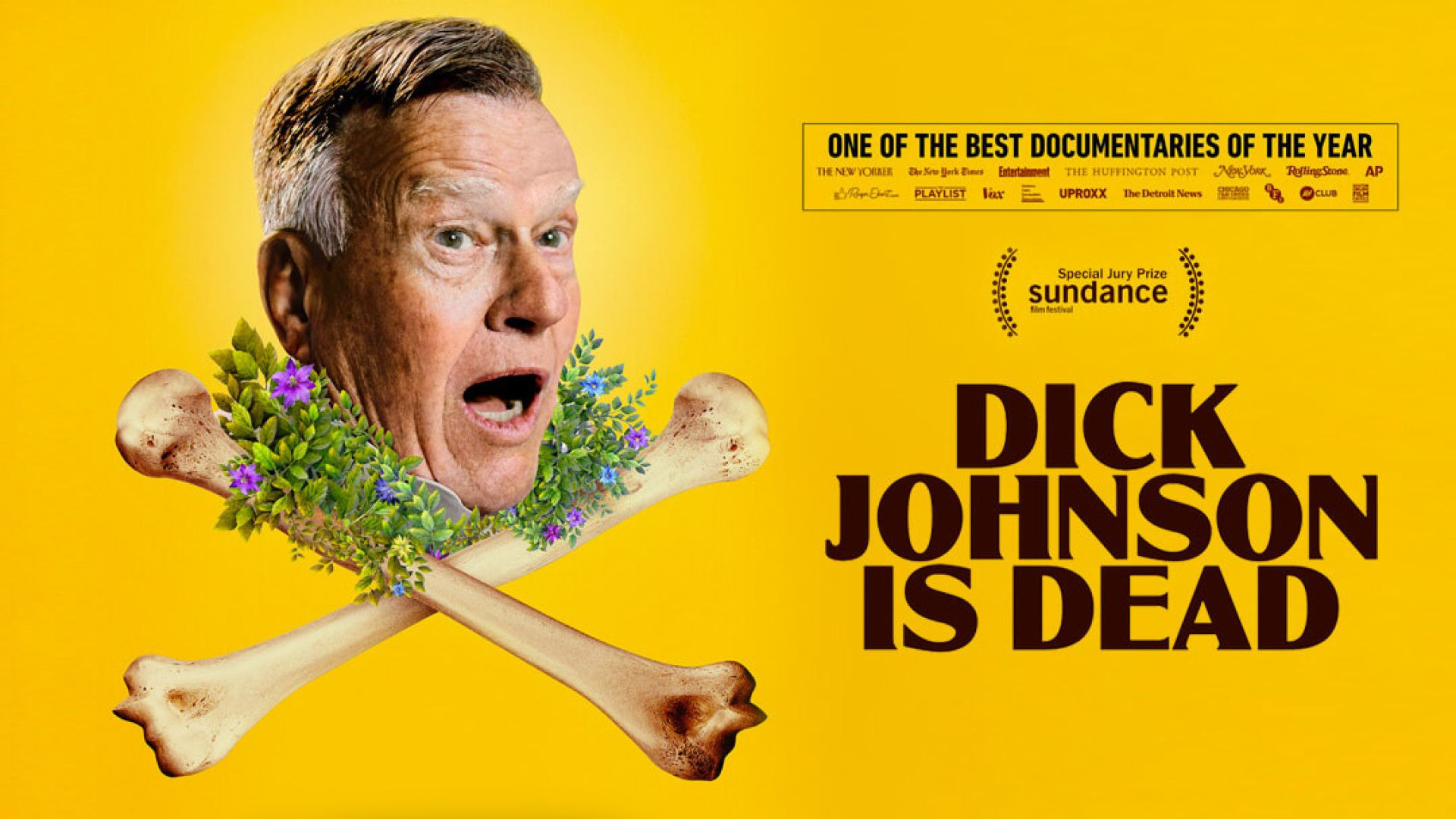
Dick Johnson Is Dead is a 2020 American documentary film directed by Kirsten Johnson and co-written by Johnson and Nels Bangerter.
A lifetime of making documentaries has convinced award-winning filmmaker Kirsten Johnson of the power of the real. But now she’s ready to use every escapist movie-making trick in the book — staging inventive and fantastical ways for her 86-year-old psychiatrist father to die while hoping that cinema might help her bend time, laugh at pain and keep her father alive forever.
The darkly funny and wildly imaginative DICK JOHNSON IS DEAD is a love letter from a daughter to a father, creatively blending fact and fiction to create a celebratory exploration of how movies give us the tools to grapple with life’s profundity. DICK JOHNSON IS DEAD was filmed, produced and directed by Kirsten Johnson (Cameraperson), produced by Katy Chevigny and Marilyn Ness, co-produced by Maureen A. Ryan and executive produced by Megan Ellison.
Cast:
Kirsten Johnson
Charles Richard "Dick" Johnson
Development:
Director Kirsten Johnson at the Miami Film Festival
Kirsten Johnson was inspired to make the film after having a dream in which "there was a man in a casket and he sat up and said, 'I'm Dick Johnson and I'm not dead yet'". When she pitched the idea to her father, she asked him, "Dad, what if we make a movie where we kill you over and over again until you really die? And he laughed".
The film incorporates Johnson family photographs and home movies, including that of Richard Johnson's wife who died from Alzheimer's disease in 2007.
Release:
The film premiered on January 25, 2020 at the 2020 Sundance Film Festival. It was released on October 2, 2020 via Netflix.
RESOURCE: www.dickjohnsonisdead.com

It Might Get Loud explores the musical influence and careers of three of the world’s greatest rock musicians, Jack White, The Edge and Jimmy Page. It reveals how they got into music at a young age and followed their dreams to become household names.
Page started playing the guitar in school and went on to write songs for the Yardbirds and Led Zeppelin. Jack White grew up in Detroit and had so much passion for music that he traded in his bed and mattress so that he could have more space for his drum sets and guitar. His particular taste in music was not popular at the time but that did not stop him from playing roots and blues.
The Edge had a more conservative upbringing and developed his own style of playing the guitar. It Might Get Loud shows all three musicians coming together to discuss their influences and playing each other’s songs for the very first time.
RESOURCE: https://watchdocumentaries.com/it-might-get-loud/

The WEF plan for '15 minute cities' is already rolling out to keep you from driving and leaving a certain radius. Now cities in England and launching these new lockdowns. The fallout from the #twitterfiles continues with new reports of government collusion with executives at Twitter. Dutch farms are set to have their farms taken from them. We talk with academic research Ralph Schoelhammer about this tyranny.
These videos are for entertainment purposes ONLY. IF stocks or companies are mentioned, we MAY have an ownership interest in them -- DO NOT make buying or selling decisions based on these videos. If you need advice, please contact a qualified CPA, attorney, insurance agent, contractor/electrician/engineer/etc., financial advisor, or the appropriate professional for the subject you would like help with. Linked items may create a financial benefit for our company.
Watch DIED SUDDENLY - FULL Documentary watch HERE => https://vajratube.com/v/FFG3pv
RESOURCE: https://rumble.com/c/Redacted

Documentary about Stanisław Szukalski had been discussed in Poland quite some time ago. Talks began as soon as it was announced that Leonardo DiCaprio was going to finance a movie about this extraordinary Polish artist. The news was even more exciting and intriguing since not many people had known that such a gifted sculptor, who was almost like a family member to DiCaprio, ever lived in the United States. Stanisław Szukalski is not among the familiar names even for Polish art experts and devotees. Rarely is he an idol for those who do know him, but he is rather considered a controversial figure with ideas not easily accepted by the artistic community of today. Dedicated fans of the rock band Tool may have heard something about Szukalski because the band members are inspired by the artist’s works to a great extent. However, the group most familiar with his life and works are the promoters of the Old Slavic tradition, especially neo-pagan nationalists. They certainly could say a lot about Stanisław or Stach from the Warta River (Stach z Warty), as the artist used to call himself quite often. If those are the people interested in the life and adventures of the main hero in Struggle: The Life and Lost Art of Szukalski, then we can surely expect that his story is fascinating but involves many ideological struggles and serious controversies at the same time.
Stanisław Szukalski was born in Warta near Łódź in 1893. From an early age he eagerly used his vivid imagination and showed every sign of being talented in fine arts. He went to the US for the first time in 1907 to live with his father who worked there. This is when his frequent travels between Poland and America began, which lasted until the 1940s. He felt fine in both places and his talent was seen and respected by both communities. Despite that, he was struggling to find out where he really belonged. He was quite obsessed with Polish history and culture but, at the same time, he very quickly grew into the American lifestyle of flamboyancy on the verge of arrogance, and overbearing individualism that almost equalled self-creation. This was the trap he got himself into because he was never fully understood in America and his attitude prevented him from being approved and acclaimed in Poland (or Europe), where one needed to respect authority. His aggressive approach and exotic, individual artistic ideas were the reasons he did not manage to graduate from the Academy of Fine Arts in Kraków and made him an outsider unapproved by the Polish fine arts community. His political views were radical as well. Szukalski had an idea of a new form of Polish national art which would be based on Slavic heritage. This idea gained recognition by some elite political groups and was a big part of the Polish community of the 1930s. After World War II, Szukalski settled in Los Angeles for good. He even made several works which were used in Hollywood movies. However, he did not accept being a simple worker and he was deeply affected by the fact that the majority of his works were destroyed in Poland during the war. This was the moment his stardom started to fade away gradually. Even then, he did not abandon his unique ideas on art and eccentric anthropological concepts.
Struggle: The Life and Lost Art of Szukalski mainly focuses on events in the 1970s and 1980s, i.e. the late stage of Szukalski’s life, when he was rediscovered by a group of underground, counterculture veterans. Among them was a publisher and occasional performer George DiCaprio (the father of Leonardo DiCaprio), a collector and enthusiast of comic books Glenn Bray, as well as their family members and friends. They were surprised that such fascinating artist lived in Los Angeles, so they started to visit him on a regular basis. What originated as a fascination with a somehow quirky old man quickly evolved into genuine friendship and later on transformed into a strong relationship which could equal family bonds. The young companions not only took care of Szukalski himself, but also embarked on a mission of getting various institutions interested in his works and achievements. Glenn Bray collaborated with his own wife and together they organised a few exhibitions of Szukalski’s works. It was also thanks to their efforts that several books about Szukalski were published. Improvised lectures which Szukalski delivered to his friends were also documented and recorded. Like a professional actor, he presented the story of his life, his art, an overview of his eccentric views and opinions and his own conception about the origin of humans, called zermatism. Bray has long hours of such recordings at his disposal and they are the main input material for the Netflix documentary.
The director of the film is documentary filmmaker Irek Dobrowolski, who depicted Szukalski as a paradoxical and multi-dimensional figure. The Polish patriot, who was devoted to Polish and Slavic ideas and heritage and was deeply critical about American culture, became a surprising hero for a bunch of mediocre post-hippies. In a way they saved his life. This unusual situation became the starting point for the director, which allowed him to explore internal conflicts and mental struggles that bothered not only Szukalski, but also his admirers. The beginning of the film shows only the American perspective. Szukalski seems a fascinating but strange man whose life was not all roses. We find out that in the past he was a leader of Chicago’s bohemia, and had an unquestionable talent and great imagination. Then Dobrowolski gradually uncovers past events to us. Experts helped him present a different, Polish narrative on the artist’s activities. This is not only a story about an arrogant eccentric, but also a disturbing picture of an avid nationalist and pagan ideologist with para-fascist inclinations, who was even a member of anti-Semitic organisations. Szukalski’s American friends were not familiar with this part of the artist’s biography which, when uncovered, left them deeply shocked. Each of them reacted to what they learned differently – some were critical and detached while others eagerly defended the artist because they believed that as he got older he became a different, better man. Irek Dobrowolski does not officially support any of these attitudes. Nevertheless, in the movie we can see that the “milder” American view of Szukalski’s transformation dominates in the end. Struggle is a fascinating study of duality and ambivalence. It is also a story about a guru and his followers who learn the truth about their prophet after many long years.
This experience is never enjoyable and easy – this we can say for sure.
At the beginning, I mentioned that the Polish artistic community was in opposition to Szukalski. The reason for this dislike and reluctance was the artist’s devotion to certain ideologies, but also controversial aesthetic qualities of his works which were over-expressive and monumental. The establishment did approve of the fantastic elements in Szukalski’s works. Such elements were not in line with modernist trends and, therefore, were considered kitsch. Nevertheless, the artist intrigues many and in recent years he has been mentioned increasingly frequently, however usually with negative connotations. The exhibition Late Polishness (2017) organised at U-Jazdowski Centre for Contemporary Art in Warsaw was an important event which attempted to remind the audience of Szukalski’s works. The event emphasised that these works are a troublesome heritage to us and provided inspiration for a discussion about the role of the nation in contemporary Polish art. Maurycy Gomulicki was responsible for the part of the exhibition which included Szukalski’s works. He is open about the fact that he is deeply fascinated with Szukalski, which started with strong admiration at a young age. As he got older he gained more perspective, but he continues to be interested in this unique figure. This is yet more proof that the artist’s charisma, emphasised in the film Struggle, affects people today.
Perhaps it was not a coincidence that Szukalski’s admirers were enthusiasts of comic and fantasy books. His works remind us of other artists who created their own, fantasy-based mythology and were subsequently rejected by the art establishment. They found their space in popular culture and attracted their own groups of “worshippers”. Painters such as H.R. Giger and Zdzisław Beksiński are a rich source of inspiration for pop culture artists. But Szukalski has the most in common with another artist – the “rejected” writer H.P. Lovecraft, who is the founding father of modern American horror books. Both artists imagined very similar things and their views on life were quite homogenous. They both lure their audiences with similarly incredible marvels. They also both have very radical attitudes, close to racism (anti-Semitism for Szukalski and white suprematism for Lovecraft), which is disconcerting for fans. The problem I just mentioned was presented quite mildly by Irek Dobrowolski in his film.
Szukalski’s change of attitude, which we see in Struggle, most likely never happened. Szukalski’s zermatism was about finding the roots of a strong and noble race, which certainly does not depart from radical, racist inclinations. His interest in ethnography was similar to what Leni Riefenstahl tried to present after the war. We also know that Szukalski was in mail contact with Polish pro-Slavic circles for a long time. In the movie, these incriminating facts were hidden behind personal, often moving stories told by Glenn Bray who defended his Polish friend with teary eyes. He took care of him until his death, but, as it turned out, he did not know everything about his past. I think that these personal touches are the most valuable parts of Struggle: The Life and Lost Art of Szukalski. In general, this is another instance where art, life, official ideologies and intimate scenes from everyday life do not form a coherent picture.
Struggle: The Life and Lost Art of Szukalski, 2018, directed by Irek Dobrowolski, is available on Netflix now
REVIEW RESOURCE: https://contemporarylynx.co.uk..../struggling-with-dou

COVID-19 Vaccines: What They Are, How They Work and Possible Causes of Injuries. Roundtable Discussion on Latest Covid Vaccine Science.
SENATOR RON JOHNSON HOSTS EXPERT FORUM ON COVID VACCINES
U.S. Senator Ron Johnson hears testimony from world-renowned experts in Public Health, Science, Medicine, Law, and Journalism, in a public forum titled, ‘Covid-19 Vaccines: What They Are, How They Work, and Possible Causes of Injuries,’ held in the U.S. Senate’s Hart Building, on Capitol Hill. He will also hear testimony from victims of Covid vaccine injury.
Speakers Include Dr. Peter McCullough, Dr. Pierre Kory, Dr. Paul Marik, Dr. Robert Malone, ICAN Attorney, Aaron Siri, Esq., OpenVAERS Founder, Liz Willner, Edward Dowd, Dr. Harvey Risch, Dr. Ryan Cole, Journalist, Del Bigtree, and more.
RESOURCE: https://thehighwire.com/videos..../senator-ron-johnson

Johan Soderberg and Erik Pauser examine world culture, using multimedia art and flash-cuts of varied speakers and artists, all set to music.
World culture gets the channel-flipping treatment in this oddly named docu, which has more in common with “Baraka” and “Powaqqatsi” than with regular travelogues or music-and-dance pics. Irreverent eclecticism is geared to computer-literate age groups, and it already has some buzz on the club circuit.
Using the name Lucky People Center, co-helmers Erik Pauser and Johan Soderberg work as multimedia artists in Stockholm. In “International,” they apply their mixmaster mentality to cinema, slicing and dicing innumerable clips, shot over several years of intense world touring, into a bouillabaisse of art pieces, rapping rants, straight-on conversations and impressionistic images of urban flux.
The flash-cut result is enough to send some viewers into mild catatonia (remember “Max Headroom”?), but when things slow down enough to let you hear from a good-natured Tibetan lama on the American fear of death or a bunch of tattooed Maori warriors chanting in unison about the evils of ATM cards, it drives home their point that the world has already left many people behind.
Other highlights include Russian troublemaker Alexander Brener, seen reading poetry and throwing a brick through a window; gray-suited Tokyo banker Toshiji Mikawa, who moonlights as a screechy electronic performance artist; gorgeous Indian dancer Pragati Sood, in sacramental form; and New Mexico shaman Franklin Bearchild Eriacho, whose common-sense recipe for religion includes “no blind faith, but intelligent devotion.”
These segs, united by thumping electro music provided by the helmers, seem to have little in common (except exhilaratingly varied, color-rich lensing), but themes of spiritual renewal and embrace of the strange keep coming up. Pic may look formless to over-40s, but it’s well-geared to MTV-saturated youth, especially those hungry for something positive but not Polyanna.
Initial release: March 27, 1998 (Sweden)
Directors: Johan Söderberg, Erik Pauser
Running time: 85 minutes
Producer: Lars Jönsson
Music composed by: Bub Wehi, Dr. Nobody, Johan Söderberg, Erik Pauser,
RESOURCE: http://www.imdb.com/title/tt0148428/
REVIEW RESOURCE: https://variety.com/1998/film/....reviews/lucky-people

You’ve read the lies, now hear THE TRUTH
Roger Waters sat down with Double Down News to set the record straight on him being ‘cancelled’ and addresses that he is not Anti-Semitic.
He explains the themes used during The Wall theatrical bits in his current This Is Not A Drill show and The Wall shows from 1980/81, 1990 and the 2010-2013 tour.
Keys: Roger Waters, MassMedia, Misinformation, Fake News, Racism, Pink Floyd

“Ayahuasca & the Path of the Shaman” is a 94 minute documentary that investigates the healing properties of the Peruvian Plant Medicine, Ayahuasca. Driven by a need to heal from his own depression, Dave, travels from his home outside Vancouver, Canada, to Peru in search of this spiritual plant, where he eventually is taught by a Shipibo Master how to work with it. The film's narrative unfolds through a series of storylines: We follow Shannan, as she begins her journey with Dave and this medicine, uncovering child-hood trauma buried deep inside her sub-conscious.
We hear from Lisa, a recovering heroin and crack addict that worked as a prostitute in the streets of Toronto. We also hear from Gabor Mate, whom through talk therapy, helps participants uncover how their experiences with Ayahuasca relate to their daily lives. And finally we hear from Libby. Who starts her journey with this plant by leaving a suicide message on her phone that thankfully never gets delivered.

Harvard professor Shoshana Zuboff wrote a monumental book about the new economic order that is alarming. "The Age of Surveillance Capitalism," reveals how the biggest tech companies deal with our data. How do we regain control of our data? What is surveillance capitalism?
In this documentary, Zuboff takes the lid off Google and Facebook and reveals a merciless form of capitalism in which no natural resources, but the citizen itself, serves as a raw material. How can citizens regain control of their data?
It is 2000, and the dot.com crisis has caused deep wounds. How will startup Google survive the bursting of the internet bubble? Founders Larry Page and Sergey Brin don't know anymore how to turn the tide. By chance, Google discovers that the "residual data" that people leave behind in their searches on the internet is very precious and tradable.
This residual data can be used to predict the behavior of the internet user. Internet advertisements can, therefore, be used in a very targeted and effective way. A completely new business model is born: "surveillance capitalism."
Original title: De grote dataroof
Director: Roland Duong
Research: Tom Reijner, Halil Ibrahim Özpamuk
Camera: Adri Schrover
Sound: Jochem Salemink
Editing: Roland Duong, Paul Delput, Rinze Schuurman
Production: Marie Schutgens
Production assistant: Britt Bennink
Image Editing: Rob Dorrestijn, Paula Witkamp
Online Coordinator: Arja van den Bergh
Commissioning Editors: Bregtje van der Haak, Doke Romeijn

This documentary follows Aubrey Marcus and company through a powerful Ayahuasca ceremony at Spiritquest Sanctuary in Peru. Under the guidance of Don Howard and his team of ayahuasca shamans, Aubrey and his tribe experience deeply vulnerable transformational experiences. This beautifully cinematic journey is directed by Mitch Schultz, the director of DMT the Spirit Molecule, with an original soundtrack by Poranguí.
Aubrey first began speaking about Ayahuasca on the Joe Rogan Experience podcast in 2011. Since then he has appeared in dozens of other documentaries and media outlets commenting on Ayahuasca. The documentary seeks to help the viewer answer the following questions for themselves:
What is Ayahuasca?
What is it like to take Ayahuasca?
What visions do you have while on Ayahuasca?
What emotional breakthroughs occur during an Ayahuasca ceremony?
Should I take ayahuasca?
Let me know your thoughts in the comments?

A Journey with Ayahuasca
Reconnect is London Real’s fifth feature-length documentary film and documents Brian Rose’s journey to Costa Rica where he participates in multiple ceremonies with the plant medicine Ayahausca. The movie stars Graham Hancock, Dr. Jordan Peterson, Dennis McKenna, Sadhguru, Dorian Yates, Dr. Gabor Mate, Dr. Joe Dispenza, Michael Pollan, and Dan Pena.
As the founder and host of London Real, Brian Rose has spoken to over 1,000 of the greatest minds on the planet for the past eight years including Dan Peña, Dan Bilzerian, Robert Kiyosaki, Jocko Willink and more.
With an aim to spread transformational ideas to the world, London Real reaches millions of people each month with its message and yet, when Brian looked outside his studio, he saw a very different reality: a world full of division, tribalism, hatred, anger, and disconnection from our environment.
Against that background, Brian also felt extremely disconnected from his purpose, his mission, and his family.
Under the advice of legendary psychedelic researcher Dennis McKenna (brother of the late Terence McKenna), Brian decided to travel to Costa Rica to participate in three ceremonies with the ancient plant medicine Ayahuasca, known for inducing powerful visions, painful experiences, and transformational lessons.
There he reconnects with his vision and purpose but also uncovers childhood trauma that created an existential crisis in his life. After returning to London with clear visions about the future, he soon realised that things are not what he expected, and that real transformation and healing must include painful challenges and uncomfortable situations.
Along the way, Brian is advised and mentored by a number of London Real guests including Jordan Peterson, the best selling author Michael Pollan, Graham Hancock, childhood trauma specialist Dr. Gabor Mate, the Indian mystic Sadhguru, Dr. Robin Carhart-Harris of Imperial College London, former bodybuilder Dorian Yates, Dr. Joe Dispenza, and high-performance coach Dan Peña, the $50 Billion Man.
Despite this incredible guidance, Brian struggles to address his personal demons, and ultimately decides to confront the people who caused his trauma. So he embarks on a trip home to speak separately to his mother and father, in order to heal himself and ultimately create a new future for his children, his company, and his movement.
Watch Reconnect now and share in Brian’s story through his Ayahuasca ceremony and beyond to his integration exclusively here on London Real.
RESOURCE: https://londonreal.tv/reconnect-the-movie/

What’s it like to be cajoled, threatened and blackmailed by a sexual predator who has power, history and society on his side?
Untouchable: The Rise and Fall of Harvey Weinstein (BBC Two), directed by Ursula MacFarlane, is a film of halting testimonies, long pauses, lips pressed tightly together and eyes filling with tears. Of women struggling to articulate what they have left unsaid sometimes for decades, and what has gone unsaid by our sex – en masse – throughout history, until now.
You probably know the basic story – by osmosis if nothing else - so heavily was the media mogul’s eventual fall covered when the weight of evidence finally became too much for a man of even his resources to withstand.
It shows the uniformity of the women’s responses to suddenly finding themselves in terrifying situations
MacFarlane tells the story well. She gives due recognition to the journalists, especially Megan Twohey and Jodi Kantor, who broke the story in the New York Times, and Ronan Farrow’s gathering of 13 witness accounts in the New Yorker after painstaking investigations. But, like Dream Hampton’s Surviving R Kelly, Untouchable prioritises the victims’ stories (regardless of their personal celebrity or lack thereof – here “names” such as Rosanna Arquette simply slip in next to those without public profiles) and fills in the perpetrator’s to explain his relative power or position at the time. As with the R Kelly film – thought to have been instrumental in the R’n’B star’s latest arrest on federal sex trafficking charges – a pattern of predatory behaviour emerges, painted stroke by painful stroke by those who found themselves first charmed and cajoled by one version of Weinstein, then confronted with a very different one behind closed doors.
Whether we should be profoundly glad, deeply sad or simply exhausted to be living in a time where “examination of the lives of serial sexual predators unmasked after years of hiding in plain sight” is on the verge of becoming a recognised TV genre, let alone one taking up the slack left by uninterested police and legislative forces, I leave to you to decide. But we are where we are. Which is, waiting to see who gets their Jeffrey Epstein production off the blocks first.
Beyond a specific modus operandi – Weinstein’s involved hotel suites, towelling robes, forcible massages, volcanic rage and threats such as: “Do you really want to make an enemy of me for five minutes of your time?” – as an insight into one man’s apparent prelude to rape or assault (Weinstein denies all claims), such documentaries render a more valuable service in demonstrating, relentlessly and unavoidably, two things.
The first is how perfectly our world is built for predators to function. Of Weinstein’s staff who admit they knew something – something – was happening, a common refrain is that they assumed “some sort of agreement” had been reached between the would-be actors and the mogul. If you live in a society that already believes in the casting couch, because the concept of young women as more-or-less sexual resources to be exploited is so embedded in the psyche, half your work – to normalise your predilections, to secure complicity – is done. With the likes of the gossip columnist AJ Benza out there – “You put a light on the porch,” he says of Weinstein’s power, “you’re gonna get a lot of moths” – the world is yours to do with as you will.
The second, perhaps even more valuable, service it renders is to show the uniformity of the women’s responses to suddenly finding themselves in terrifying situations, and how far they deviate from “common sense” or “natural” expectations (words defined almost entirely by men, who have least need of them). They don’t fight. They compute their chances against a much taller, heavier opponent (“He’s huge, you know,” says Hope d’Amore, who worked for him in the early days and says she was assaulted in 1978) and they go still. “The freeze thing kicks in,” says the actor Caitlin Delaney. “You just want it to be over.” They maximise their chances of survival (“I felt leaving would be worse,” says actor Erika Rosenbaum, when she saw a smashed and bloody toilet seat in his bathroom) and try and leave in other ways instead. Actor Paz de la Huerta remembers “hovering over my body” as, she says, Weinstein raped her. “I definitely went somewhere else,” says Delaney. Rosenbaum remembers hoping that if she kept still enough she would somehow disappear.
Almost every woman watching will understand. Some men will, too. If these films add to their number, maybe we can begin to change the world.
REVIEW RESOURCE: https://www.theguardian.com/tv....-and-radio/2019/sep/

This is a short story about the early life stage of Ram Bahadur Bomjon - called Incarnation of Lord Buddha.
In Nepal, five hours from Katmandou, thousands of people, irrespective of wich caste they belong to goes each day on a pilgrimage, on foot or on cart. There, in the middle of the forest, they come to meditate and pray in front of a 16 year old boy. 24 hours a day, this young man sits in the hollow of a tree, in full meditation.
He does not move, he does not eat, he does not drink. He remains sitted quiet, breathes very little, very gently and does not need anything. For the believers, he is the reincarnation of Buddha! Miracle or not? We followed the traces of this man that all Nepali already call Little Bouddha.
WIKI Note
Ram Bahadur Bomjon (Sanskrit: राम बहादुर बम्जन) born c. 1990, sometimes spelled Bomjan, Banjan, or Bamjan), previously known as Palden Dorje (his monastic name) is a controversial ascetic from Ratanapuri, Bara district, Nepal who gained widespread attention and media popularity because of perceived semblances to Gautama Buddha, leading to claims that he is a reincarnation of Gautama Buddha.
In May, 2005, the 15 year old Bomjon left his home near the Indian border after a dream in which a god appeared to him and told him to do so, and sat amongst the roots of a pipal tree to meditate. Claims suggest that for 10 months he rarely spoke, drank, ate, or even moved. Thousands, if not hundreds of thousands of people visited the site to see the boy motionless for hours, days or as rumoured even months, or came in devotion to the possibility of an important spiritual event occurring. As a result of some of these claims, Bomjon's followers believe he is an incarnation of the historical Buddha, Gautama. Bomjon has rejected any such comparisons, saying "Tell the people not to call me a Buddha. I don't have the Buddha's energy currently. I am at the level of a rinpoche." Mahiswor Raj Bajracharya, the president of the Nepal Buddhist Council, has stated likewise: "We do not believe he is Buddha. He does not have Buddha's qualities".
Then, on 11 March 2006 he went missing. On 19 March 2006 Bed Bahadur Lama of the Om Namo Buddha Tapaswi Sewa Samiti (ONBTSS) told reporters that they had seen him in Bara District and that they had spoken to him for half-an-hour, during which Bomjon reportedly assured that he would return in six years.
He was again seen in August 2007, preaching to crowds in Nepal’s Hallori jungle, around 100 miles south of Kathmandu.
Controversies
Bomjon's followers have claimed that Bomjon meditates for months without eating or sleeping.
In 2010, Bomjon was investigated for attacking a group of 17 villagers. Bomjon claimed that they were intentionally disturbing his meditation. However, the villagers said they were just looking for vegetables. Bomjon claimed to have taken "minor action" against them with just his hands after they had "tried to manhandle" him, and stopped as soon as they apologized. However, the victims claim that for three hours he struck them on their head and back with an axe handle, resulting in serious injury of one of the victims. Bomjon refused to attend any potential trial, stating, "Do you think a meditating sage will go to the court to hear a case? I took action against them as per the divine law".
In 2012 Nepal Police announced that they had rescued a Slovak woman from Bomjon's followers, but other reports claimed that she had been voluntarily released after media coverage of the kidnapping. Newsweek reported she had been taken from a hotel by two of Bomjon's men riding on a motorcycle and kept tied to a tree for three months and accused of practicing witchcraft in order to disturb the Boy’s meditation. However another report claimed she had been kidnapped from a monastery. When she was released she had a broken arm. A week after her release, Bomjon's siblings accused him of holding his brothers captive overnight, and beating his brothers and his sister. Followers of Bomjon also assaulted five journalists and destroyed their cameras after they had recorded one of Bomjon's sermons.
In September 2018, Bomjon was accused of raping an 18 year old nun repeatedly for nearly 2 years. During a press conference organized by women's rights groups, the nun also accused his wife of trying to keep the abuse hidden so as not to "attract attacks" on their religion. Supporters of Bomjon claim that the nun was in fact involved in theft, and had been ejected from the monastery.
An investigation was opened in January of 2019 after complaints from family members that four devotees had gone missing from several of Bomjon's ashrams. In the same month, police raided one of Bomjon's ashrams in Nepal, but he was not found. On February 6th, 2020, the Sarlahi District Court issued an arrest warrant against Bomjon. The following day, police raided another one of his ashrams, but Bomjon again was not found. However, police did arrest one of his disciples, Gyan Bahadur Bomjan.
More info on official website: https://rambahadurbomjon.wordpress.com

Moment of Contact is an exploration of extraterrestrial encounters, this one centered on a series of events in 1996 when citizens of Varginha, Brazil, reported seeing one or more strange creatures and a UFO crash. A number of locals, including a group of girls ranging in age from 14-21, had a close encounter with a being described as about 4 feet tall, with brown oily skin, a large head and huge red eyes.
The town of Varginha was cordoned off by military and emergency response teams and two creatures were captured. Local military policeman Marco Cherese died under mysterious circumstances after allegedly handling one of the creatures.
Fox’s documentary features interviews with key eyewitnesses, experts and officials including nuclear physicist and professional ufologist Stanton Friedman, Brazilian Air Force General Jose Carlos Pereira, and Brazilian ufologist Ademar Jose Gevaerd.
