Documentary
उप श्रेणी

Documentary about Stanisław Szukalski had been discussed in Poland quite some time ago. Talks began as soon as it was announced that Leonardo DiCaprio was going to finance a movie about this extraordinary Polish artist. The news was even more exciting and intriguing since not many people had known that such a gifted sculptor, who was almost like a family member to DiCaprio, ever lived in the United States. Stanisław Szukalski is not among the familiar names even for Polish art experts and devotees. Rarely is he an idol for those who do know him, but he is rather considered a controversial figure with ideas not easily accepted by the artistic community of today. Dedicated fans of the rock band Tool may have heard something about Szukalski because the band members are inspired by the artist’s works to a great extent. However, the group most familiar with his life and works are the promoters of the Old Slavic tradition, especially neo-pagan nationalists. They certainly could say a lot about Stanisław or Stach from the Warta River (Stach z Warty), as the artist used to call himself quite often. If those are the people interested in the life and adventures of the main hero in Struggle: The Life and Lost Art of Szukalski, then we can surely expect that his story is fascinating but involves many ideological struggles and serious controversies at the same time.
Stanisław Szukalski was born in Warta near Łódź in 1893. From an early age he eagerly used his vivid imagination and showed every sign of being talented in fine arts. He went to the US for the first time in 1907 to live with his father who worked there. This is when his frequent travels between Poland and America began, which lasted until the 1940s. He felt fine in both places and his talent was seen and respected by both communities. Despite that, he was struggling to find out where he really belonged. He was quite obsessed with Polish history and culture but, at the same time, he very quickly grew into the American lifestyle of flamboyancy on the verge of arrogance, and overbearing individualism that almost equalled self-creation. This was the trap he got himself into because he was never fully understood in America and his attitude prevented him from being approved and acclaimed in Poland (or Europe), where one needed to respect authority. His aggressive approach and exotic, individual artistic ideas were the reasons he did not manage to graduate from the Academy of Fine Arts in Kraków and made him an outsider unapproved by the Polish fine arts community. His political views were radical as well. Szukalski had an idea of a new form of Polish national art which would be based on Slavic heritage. This idea gained recognition by some elite political groups and was a big part of the Polish community of the 1930s. After World War II, Szukalski settled in Los Angeles for good. He even made several works which were used in Hollywood movies. However, he did not accept being a simple worker and he was deeply affected by the fact that the majority of his works were destroyed in Poland during the war. This was the moment his stardom started to fade away gradually. Even then, he did not abandon his unique ideas on art and eccentric anthropological concepts.
Struggle: The Life and Lost Art of Szukalski mainly focuses on events in the 1970s and 1980s, i.e. the late stage of Szukalski’s life, when he was rediscovered by a group of underground, counterculture veterans. Among them was a publisher and occasional performer George DiCaprio (the father of Leonardo DiCaprio), a collector and enthusiast of comic books Glenn Bray, as well as their family members and friends. They were surprised that such fascinating artist lived in Los Angeles, so they started to visit him on a regular basis. What originated as a fascination with a somehow quirky old man quickly evolved into genuine friendship and later on transformed into a strong relationship which could equal family bonds. The young companions not only took care of Szukalski himself, but also embarked on a mission of getting various institutions interested in his works and achievements. Glenn Bray collaborated with his own wife and together they organised a few exhibitions of Szukalski’s works. It was also thanks to their efforts that several books about Szukalski were published. Improvised lectures which Szukalski delivered to his friends were also documented and recorded. Like a professional actor, he presented the story of his life, his art, an overview of his eccentric views and opinions and his own conception about the origin of humans, called zermatism. Bray has long hours of such recordings at his disposal and they are the main input material for the Netflix documentary.
The director of the film is documentary filmmaker Irek Dobrowolski, who depicted Szukalski as a paradoxical and multi-dimensional figure. The Polish patriot, who was devoted to Polish and Slavic ideas and heritage and was deeply critical about American culture, became a surprising hero for a bunch of mediocre post-hippies. In a way they saved his life. This unusual situation became the starting point for the director, which allowed him to explore internal conflicts and mental struggles that bothered not only Szukalski, but also his admirers. The beginning of the film shows only the American perspective. Szukalski seems a fascinating but strange man whose life was not all roses. We find out that in the past he was a leader of Chicago’s bohemia, and had an unquestionable talent and great imagination. Then Dobrowolski gradually uncovers past events to us. Experts helped him present a different, Polish narrative on the artist’s activities. This is not only a story about an arrogant eccentric, but also a disturbing picture of an avid nationalist and pagan ideologist with para-fascist inclinations, who was even a member of anti-Semitic organisations. Szukalski’s American friends were not familiar with this part of the artist’s biography which, when uncovered, left them deeply shocked. Each of them reacted to what they learned differently – some were critical and detached while others eagerly defended the artist because they believed that as he got older he became a different, better man. Irek Dobrowolski does not officially support any of these attitudes. Nevertheless, in the movie we can see that the “milder” American view of Szukalski’s transformation dominates in the end. Struggle is a fascinating study of duality and ambivalence. It is also a story about a guru and his followers who learn the truth about their prophet after many long years.
This experience is never enjoyable and easy – this we can say for sure.
At the beginning, I mentioned that the Polish artistic community was in opposition to Szukalski. The reason for this dislike and reluctance was the artist’s devotion to certain ideologies, but also controversial aesthetic qualities of his works which were over-expressive and monumental. The establishment did approve of the fantastic elements in Szukalski’s works. Such elements were not in line with modernist trends and, therefore, were considered kitsch. Nevertheless, the artist intrigues many and in recent years he has been mentioned increasingly frequently, however usually with negative connotations. The exhibition Late Polishness (2017) organised at U-Jazdowski Centre for Contemporary Art in Warsaw was an important event which attempted to remind the audience of Szukalski’s works. The event emphasised that these works are a troublesome heritage to us and provided inspiration for a discussion about the role of the nation in contemporary Polish art. Maurycy Gomulicki was responsible for the part of the exhibition which included Szukalski’s works. He is open about the fact that he is deeply fascinated with Szukalski, which started with strong admiration at a young age. As he got older he gained more perspective, but he continues to be interested in this unique figure. This is yet more proof that the artist’s charisma, emphasised in the film Struggle, affects people today.
Perhaps it was not a coincidence that Szukalski’s admirers were enthusiasts of comic and fantasy books. His works remind us of other artists who created their own, fantasy-based mythology and were subsequently rejected by the art establishment. They found their space in popular culture and attracted their own groups of “worshippers”. Painters such as H.R. Giger and Zdzisław Beksiński are a rich source of inspiration for pop culture artists. But Szukalski has the most in common with another artist – the “rejected” writer H.P. Lovecraft, who is the founding father of modern American horror books. Both artists imagined very similar things and their views on life were quite homogenous. They both lure their audiences with similarly incredible marvels. They also both have very radical attitudes, close to racism (anti-Semitism for Szukalski and white suprematism for Lovecraft), which is disconcerting for fans. The problem I just mentioned was presented quite mildly by Irek Dobrowolski in his film.
Szukalski’s change of attitude, which we see in Struggle, most likely never happened. Szukalski’s zermatism was about finding the roots of a strong and noble race, which certainly does not depart from radical, racist inclinations. His interest in ethnography was similar to what Leni Riefenstahl tried to present after the war. We also know that Szukalski was in mail contact with Polish pro-Slavic circles for a long time. In the movie, these incriminating facts were hidden behind personal, often moving stories told by Glenn Bray who defended his Polish friend with teary eyes. He took care of him until his death, but, as it turned out, he did not know everything about his past. I think that these personal touches are the most valuable parts of Struggle: The Life and Lost Art of Szukalski. In general, this is another instance where art, life, official ideologies and intimate scenes from everyday life do not form a coherent picture.
Struggle: The Life and Lost Art of Szukalski, 2018, directed by Irek Dobrowolski, is available on Netflix now
REVIEW RESOURCE: https://contemporarylynx.co.uk..../struggling-with-dou

Johan Soderberg and Erik Pauser examine world culture, using multimedia art and flash-cuts of varied speakers and artists, all set to music.
World culture gets the channel-flipping treatment in this oddly named docu, which has more in common with “Baraka” and “Powaqqatsi” than with regular travelogues or music-and-dance pics. Irreverent eclecticism is geared to computer-literate age groups, and it already has some buzz on the club circuit.
Using the name Lucky People Center, co-helmers Erik Pauser and Johan Soderberg work as multimedia artists in Stockholm. In “International,” they apply their mixmaster mentality to cinema, slicing and dicing innumerable clips, shot over several years of intense world touring, into a bouillabaisse of art pieces, rapping rants, straight-on conversations and impressionistic images of urban flux.
The flash-cut result is enough to send some viewers into mild catatonia (remember “Max Headroom”?), but when things slow down enough to let you hear from a good-natured Tibetan lama on the American fear of death or a bunch of tattooed Maori warriors chanting in unison about the evils of ATM cards, it drives home their point that the world has already left many people behind.
Other highlights include Russian troublemaker Alexander Brener, seen reading poetry and throwing a brick through a window; gray-suited Tokyo banker Toshiji Mikawa, who moonlights as a screechy electronic performance artist; gorgeous Indian dancer Pragati Sood, in sacramental form; and New Mexico shaman Franklin Bearchild Eriacho, whose common-sense recipe for religion includes “no blind faith, but intelligent devotion.”
These segs, united by thumping electro music provided by the helmers, seem to have little in common (except exhilaratingly varied, color-rich lensing), but themes of spiritual renewal and embrace of the strange keep coming up. Pic may look formless to over-40s, but it’s well-geared to MTV-saturated youth, especially those hungry for something positive but not Polyanna.
Initial release: March 27, 1998 (Sweden)
Directors: Johan Söderberg, Erik Pauser
Running time: 85 minutes
Producer: Lars Jönsson
Music composed by: Bub Wehi, Dr. Nobody, Johan Söderberg, Erik Pauser,
RESOURCE: http://www.imdb.com/title/tt0148428/
REVIEW RESOURCE: https://variety.com/1998/film/....reviews/lucky-people

What’s it like to be cajoled, threatened and blackmailed by a sexual predator who has power, history and society on his side?
Untouchable: The Rise and Fall of Harvey Weinstein (BBC Two), directed by Ursula MacFarlane, is a film of halting testimonies, long pauses, lips pressed tightly together and eyes filling with tears. Of women struggling to articulate what they have left unsaid sometimes for decades, and what has gone unsaid by our sex – en masse – throughout history, until now.
You probably know the basic story – by osmosis if nothing else - so heavily was the media mogul’s eventual fall covered when the weight of evidence finally became too much for a man of even his resources to withstand.
It shows the uniformity of the women’s responses to suddenly finding themselves in terrifying situations
MacFarlane tells the story well. She gives due recognition to the journalists, especially Megan Twohey and Jodi Kantor, who broke the story in the New York Times, and Ronan Farrow’s gathering of 13 witness accounts in the New Yorker after painstaking investigations. But, like Dream Hampton’s Surviving R Kelly, Untouchable prioritises the victims’ stories (regardless of their personal celebrity or lack thereof – here “names” such as Rosanna Arquette simply slip in next to those without public profiles) and fills in the perpetrator’s to explain his relative power or position at the time. As with the R Kelly film – thought to have been instrumental in the R’n’B star’s latest arrest on federal sex trafficking charges – a pattern of predatory behaviour emerges, painted stroke by painful stroke by those who found themselves first charmed and cajoled by one version of Weinstein, then confronted with a very different one behind closed doors.
Whether we should be profoundly glad, deeply sad or simply exhausted to be living in a time where “examination of the lives of serial sexual predators unmasked after years of hiding in plain sight” is on the verge of becoming a recognised TV genre, let alone one taking up the slack left by uninterested police and legislative forces, I leave to you to decide. But we are where we are. Which is, waiting to see who gets their Jeffrey Epstein production off the blocks first.
Beyond a specific modus operandi – Weinstein’s involved hotel suites, towelling robes, forcible massages, volcanic rage and threats such as: “Do you really want to make an enemy of me for five minutes of your time?” – as an insight into one man’s apparent prelude to rape or assault (Weinstein denies all claims), such documentaries render a more valuable service in demonstrating, relentlessly and unavoidably, two things.
The first is how perfectly our world is built for predators to function. Of Weinstein’s staff who admit they knew something – something – was happening, a common refrain is that they assumed “some sort of agreement” had been reached between the would-be actors and the mogul. If you live in a society that already believes in the casting couch, because the concept of young women as more-or-less sexual resources to be exploited is so embedded in the psyche, half your work – to normalise your predilections, to secure complicity – is done. With the likes of the gossip columnist AJ Benza out there – “You put a light on the porch,” he says of Weinstein’s power, “you’re gonna get a lot of moths” – the world is yours to do with as you will.
The second, perhaps even more valuable, service it renders is to show the uniformity of the women’s responses to suddenly finding themselves in terrifying situations, and how far they deviate from “common sense” or “natural” expectations (words defined almost entirely by men, who have least need of them). They don’t fight. They compute their chances against a much taller, heavier opponent (“He’s huge, you know,” says Hope d’Amore, who worked for him in the early days and says she was assaulted in 1978) and they go still. “The freeze thing kicks in,” says the actor Caitlin Delaney. “You just want it to be over.” They maximise their chances of survival (“I felt leaving would be worse,” says actor Erika Rosenbaum, when she saw a smashed and bloody toilet seat in his bathroom) and try and leave in other ways instead. Actor Paz de la Huerta remembers “hovering over my body” as, she says, Weinstein raped her. “I definitely went somewhere else,” says Delaney. Rosenbaum remembers hoping that if she kept still enough she would somehow disappear.
Almost every woman watching will understand. Some men will, too. If these films add to their number, maybe we can begin to change the world.
REVIEW RESOURCE: https://www.theguardian.com/tv....-and-radio/2019/sep/

Citizenfour is a 2014 documentary film directed by Laura Poitras, concerning Edward Snowden and the NSA spying scandal. The film had its US premiere on October 10, 2014, at the New York Film Festival and its UK premiere on October 17, 2014, at the BFI London Film Festival.
The film features Snowden and Glenn Greenwald, and was co-produced by Poitras, Mathilde Bonnefoy, and Dirk Wilutzky, with Steven Soderbergh and others serving as executive producers. Citizenfour received critical acclaim upon release, and was the recipient of numerous accolades, including Best Documentary Feature at the 87th Academy Awards. This film is the third part to a 9/11 trilogy following My Country, My Country (2006) and The Oath (2010).
In January 2013, Laura Poitras, an American documentary film director/producer who had been working for several years on a film about monitoring programs in the United States that were the result of the September 11 attacks, receives an encrypted e-mail from a stranger who calls himself "Citizenfour." In it, he offers her inside information about illegal wiretapping practices of the US National Security Agency (NSA) and other intelligence agencies.
In June 2013, accompanied by investigative journalist Glenn Greenwald and The Guardian intelligence reporter Ewen MacAskill,[6] she travels to Hong Kong with her camera for the first meeting with "Citizenfour" in a hotel, who reveals himself as Edward Snowden. Scenes of their meeting take place in Snowden's hotel room, where he maintains his privacy. Shots of Snowden in his bed, in front of his mirror and of the hotel from a distance form the character of Snowden as a trapped political agent.
After four days of interviews, on June 9, Snowden's identity is made public at his request. As media outlets begin to discover his location at the Mira Hotel, Snowden moves into Poitras' room in an attempt to elude phone calls made to his room. Facing potential extradition and prosecution in the United States, Snowden schedules a meeting with the United Nations High Commissioner for Refugees and applies for refugee status. After Poitras believes she is being followed, she leaves Hong Kong for Berlin, Germany.
On June 21, the US government requests the Hong Kong government extradite Snowden. Snowden manages to depart from Hong Kong, but his US passport is cancelled before he can connect to Havana, stranding him in the Sheremetyevo International Airport in Moscow for 40 days. On August 1, 2013, the Russian government grants Snowden temporary asylum for a period of one year.[8] Meanwhile, Greenwald returns to his home in Rio de Janeiro and speaks publicly about United States' utilization of NSA programs for foreign surveillance. Greenwald and Poitras maintain a correspondence wherein they both express reluctance to return to the United States.
Throughout, the film offers smaller vignettes that precede and follow Snowden's Hong Kong interviews, including William Binney speaking about NSA programs, and eventually testifying before the German Parliament regarding NSA spying in Germany.
The film closes with Greenwald, Snowden and Poitras meeting once again, this time in Russia. Greenwald and Snowden discuss new emerging details on US intelligence programs, careful to only write down and not speak critical pieces of information. Greenwald tears these documents creating a pile of scraps, before slowly removing them from the table.

In 2017, the filmmaker Theo Anthony released “Rat Film,” an improbably poetic, intellectually dazzling, politically astute documentary on the seemingly prosaic topic of rats and their place in the modern urban landscape. “All Light, Everywhere,” Anthony’s new movie, ponders a more abstract, less earthbound array of subjects — the physiology of human vision, the history of photography, the ethics of surveillance — in a similar spirit of open-minded, morally urgent inquiry.
If the connections Anthony draws are sometimes vague and not always persuasive, that may be a risk built into his essayistic, undogmatic approach to reality.
And the attempt to capture reality in moving images happens to be what “All Light, Everywhere” is about. It starts with a quote from William Blake: “As the Eye — such the Object.” In other words, vision determines the shape of what is seen. Rather than a simple picture of reality, the camera selects, frames and interprets, often in the service of power and ideology.
This is especially worrisome when the camera is doing the work of law enforcement. Anthony’s main concern is the use of video and other forms of image-gathering in policing, a practice whose claims of objectivity come under steady, skeptical pressure.
Some of the pressure comes from voice-over narration, written by Anthony and read by Keaver Brenai, that bristles with rhetorical questions (“what future does history dream of?”) and theoretical formulations. The musical score, by Dan Deacon, adds an air of menace and suspense which sometimes overwhelms the images.
RESOURCE: https://memory.is/all-light-everywhere

Filmmaker Morgan Spurlock features as the guinea pig in this film about the fast food industry. Inspired by America’s obesity epidemic, he goes on a diet of McDonald’s three times a day for thirty days straight in order to examine the effects of fast food consumption on the body and mind. The effects of the trial are harrowing: His body mass increases by 13%, his cholesterol levels skyrocket, fat accumulates in his liver, and he experiences mood swings and loss of libido. Super Size Me will completely change the way you think about eating and living.
Super Size Me accomplishes the feat of being both entertaining and horrifying. It investigates how the fast food culture in American schools, corporations and politics is driving nationwide obesity. In between meals, Spurlock drives across the country and interviews a host of health and nutrition experts, lawyers, school workers, and a surprisingly trim man who has eaten over 19,000 Big Macs yet maintains a healthy cholesterol level. We also meet an industry lobbyist who states that consumers need to be educated about nutrition and perplexingly proclaims that “we’re part of the problem and part of the solution”.
The film investigates the industry’s political lobbying and advertising campaigns. We learn about some of the disturbing strategies McDonald’s uses to acquire customers. It is particularly effective at getting children hooked at an early age through mediums they love, such as birthday parties, toys, clowns and playgrounds. In certain areas, the McDonald’s playground is the only one the community has. In one of the most shocking scenes of Super Size Me, Spurlock shows pictures of Jesus, George Washington and Ronald McDonald to a group of first graders, and Ronald is the only one that all of them can identify.
Spurlock is a likeable host, both witty and engaging. Despite his criticism of the fast food industry, he does not place the blame solely on corporations, and at one point asks the rhetorical question of where personal responsibility stops and corporate responsibility begins. Towards the end of the experiment, he is a changed man. The exuberant and healthy host we meet at the beginning of the film has transformed into a puffy, weary and depleted man. He has experienced first-hand the damaging effect of junk food on the nation. All in all, Super Size Me is a fascinating and informative insight into the fast food industry and its link to the American obesity epidemic.

Three Identical Strangers: the bizarre tale of triplets separated at birth
“Ideas are my bread and butter,” says film-maker Tim Wardle. “But it’s hard to find ideas that make you want to get out of bed at 3am and go film somewhere.”
That, however, was not the case when a producer at Raw, the London-based production company where Wardle works, brought to his attention the story of Bobby Shafran, Eddy Galland and David Kellman, a set of identical triplets who knew nothing of one another until they were reunited by happenstance at age 19. That alone would make for a compelling documentary, but their story doesn’t end there.
Bobby, Eddy and David are the subjects of Wardle’s new film Three Identical Strangers, an extraordinary documentary that starts as a feelgood human interest story and, by the end, has you questioning the nature of existence. As far as documentary subjects go, this one is nonpareil, a fact that was heavy on Wardle’s mind as he set out to tell the brothers’ story on film. “There’s huge pressure not to fuck up the story,” he admits. “I wasn’t worried about money or anything like that. I was just like, ‘I can’t blow this.’”
Three Identical Strangers begins in 1980, as a 19-year-old Bobby Shafran attends his first day of university only to find unfamiliar classmates greeting him as Eddy. While it’s only the first in a series of fortuitous revelations, most of which are better seen than read about here, Wardle is smart to tell the first half of the documentary through narration and recreated scenes, a tactic that allows the viewer to get a sense of how uncanny it must be to move into your dorm room and find you’re already an on-campus celebrity. Eventually, Bobby and Eddy meet and are contacted by David, whose adoptive mother noticed a pair of twins in the newspaper who looked exactly like her son, down to their shared pudgy hands.
Those alive in the early 80s might remember what followed, a period of pre-internet virality that took the triplets from the Phil Donahue Show to a cameo alongside Madonna in Desperately Seeking Susan. As they made the rounds, audiences lapped up the brothers’ likeness: they finished each other’s sentences, smoked the same brand of cigarettes, even had the same taste in women. When one brother crossed his legs, the others followed. So, in the ensuing decade, they made good on the frenzy by opening a steakhouse in Soho, New York, called Triplets, which thrived until things between them went sour.
To Wardle, the honeymoon period served as wish-fulfillment for the brothers and the media. “There’s been an obsession with identicals going back to Romulus and Remus,” he says. “And the siblings wanted to believe that they were similar, too. It’s that thing where you fall in love with someone for the first time, you try and find everything you have in common. ‘Oh my God, we like the same music!’ But you sort of tone down the differences.”
The brothers, as they discovered on account of their own detective skills, were separated by a ritzy New York City adoption agency called Louise Wise Services, which declined to tell their adoptive parents they were a set of three. It’s at this juncture that the documentary turns – tonally, structurally, thematically – and embraces a very au courant style of leather-shoe reporting in Wardle’s efforts to uncover the bizarre and nefarious reasons for the brothers’ 19-year estrangement. But convincing producers he’d get there wasn’t easy.
“They kept saying, ‘What’s the third act? What’s the third act?’ And I’m like, it’s a documentary, you don’t always know!” recalls Wardle, who was accustomed to inconclusive, even plotless projects after making a documentary about prisoners serving life-sentences. Too many documentaries, he believes, explore “weighty”, ethically fraught issues without a human element to provide connective tissue. But since he had that in the first act, Wardle was confident he’d end up with a finished product whether or not his own sleuthing yielded results.
The question at the center of Three Identical Strangers essentially concerns nature versus nurture, which led Wardle to California, where he interviewed Natasha Josefowitz, the 90-year-old research assistant who contributed to psychoanalyst Peter Neubauer’s study of siblings separated at birth.
For Wardle and Lawrence Wright, the Pulitzer-prize winning journalist who is featured in the film, the idea that nature is more determinative than nurture is an unsettling one, especially as articulated in Josefowitz’s frank, unsparing style.
“She would talk to me about how much of what I’ve done in my life was a function of biology and genes, how little agency I had, which was kind of mind-blowing,” says Wardle, who gives equal weight in the film to both theses while endorsing neither. “A lot of liberal ideology is based on the idea that nurture is really, really important. So when you start down the nature perspective you end up in quite a politically and scientifically dark place, a kind of eugenicist paradise where, ‘Why bother trying to help people?’ It’s all determined by biology anyway.”
Or is it? As Three Identical Strangers proceeds, you find yourself seduced by both prospects, the relative liberty afforded by nurture and the ice cold-comfort of nature. Mostly, though, it’s the brothers who keep the film grounded in reality, which turned out far different than it looked when they got their first taste of fame on the talkshow circuit.
When Wardle recently showed them the film, they were surprised to find he delivered as he’d promised. “I realized at that point how much they’d been disappointed and let down in their lives,” he says. “Documentaries are only as good as the contributors and what they give you. And they gave me pretty much everything.”
REVIEW RESOURCE: https://www.theguardian.com/fi....lm/2018/jun/27/miste

The Dark Web | Black Market Trade | Illegal Activities | Documentary
The Dark Web - There’s a dark side to the internet, and you probably don’t even know it exists. Look behind the positive veneer of social media, communication apps and platforms that have made our lives easier and more connected, and you’ll find criminals using the same apps and platforms to run illicit and dangerous activities.
The Dark Web (2019)
Genre: Documentary
Language: English
Release Date: 10 Jul. 2019 (Singapore)
Synopsis:
0:00 Black Market Boom
Drugs, guns, counterfeit documents and much more are sold on dark web marketplaces that run on anonymous browsers and using cryptocurrency. AlphaBay was the biggest marketplace, transacting over US$800,000 in a day enabling its founder to live a luxury lifestyle in anonymity, until international law enforcement caught up with him.
45:16 The Candyman
It was one of 640 million closed groups on Facebook. Hiding behind the anonymity, the creator of child p*rnography group Loli Candy and its 7,000 members hid their activities on Facebook and Whatsapp – the dissemination of horrifying images of abuse. While they were eventually bought to justice many more thrive.

Based on the book by environmentalist lawyer Robert F. Kennedy Jr., The Real Anthony Fauci is a two-part documentary directed by Kala Mandrake.
When the coronavirus outbreak happened, one face became known to the American public as the one standing for “the science.” That man was NIH Director Anthony Fauci and he continues to haunt the media. However, who is this man? Where did he come from? How has he worked at the NIH for so long? Kennedy explores Fauci’s hidden past, revealing corruption, conflicts of interest, and even a disregard for ethics.
One of the most illuminating parts of the documentary was how Fauci peddled ADZ as a treatment for the AIDs epidemic. Any dissenting voices to his official press release were mocked and disregarded. There is a similar pattern in regard to coronavirus. Fauci did not meet a camera he did not want to yell at and that could be his downfall.
Unlike the glowing propaganda film that Disney put out, this documentary was fearless in its pursuit of the truth behind what is going on behind the scenes with government regulators who are supposed to be protecting Americans when it comes to healthcare.
The tail end of it does sort of veer into a commercial for Ted Kennedy Jr.s organization, but it is his documentary, so I’ll let it slide. There were a few topics I do not agree with Kennedy on, but this issue of Fauci’s fraud overrides those issues.
With this in mind, I went into this skeptical but I came out wondering how the federal health “experts” get away with so much. Fauci has gotten it wrong so many times and somehow he is the highest-paid government official. It is one of the most bizarre things to happen, but it seems in politics, you can fail upwards.
The documentary is an impressive look at the evidence not to mention a feature from which Americans can learn a great deal.
REVIEW RESOURCE: https://studiojakemedia.com/20....22/10/26/the-real-an

In this film Dr. David Martin gives an education in the history of the United States where we went wrong and what are the mechanisms of that deviation of the grand experiment.
In American R/Evolution, David tells the story of the financial and commercial history of the United States. He revisits the vision for America that was postulated by Thomas Jefferson, and explains where this vision was derailed. The film delivers a message that challenges existing paradigms and inspires viewers to engage their communities in a greater capacity.
Our financial history is a subject typically distorted beyond comprehension. But through the film, Dr. David Martin narrates it in a way that is approachable, entertaining, and utterly mind-blowing for people of all walks of life.
“We believed in a world where there was always something beyond. We believed in a world where somehow our fear of death needed to change how we live. We believed in a world where we had to look to ourselves rather than look to our neighbours and to our network to support us. We believed in a world where we wanted to surrogate our responsibility because even though we got rid of a monarch, we got rid of a pope… We still believed that someone somewhere else was responsible for our lives.“
David Martin
Dr Martin's Youtube channel => https://www.youtube.com/@DavidMartinWorld
Official website => https://www.davidmartin.world/
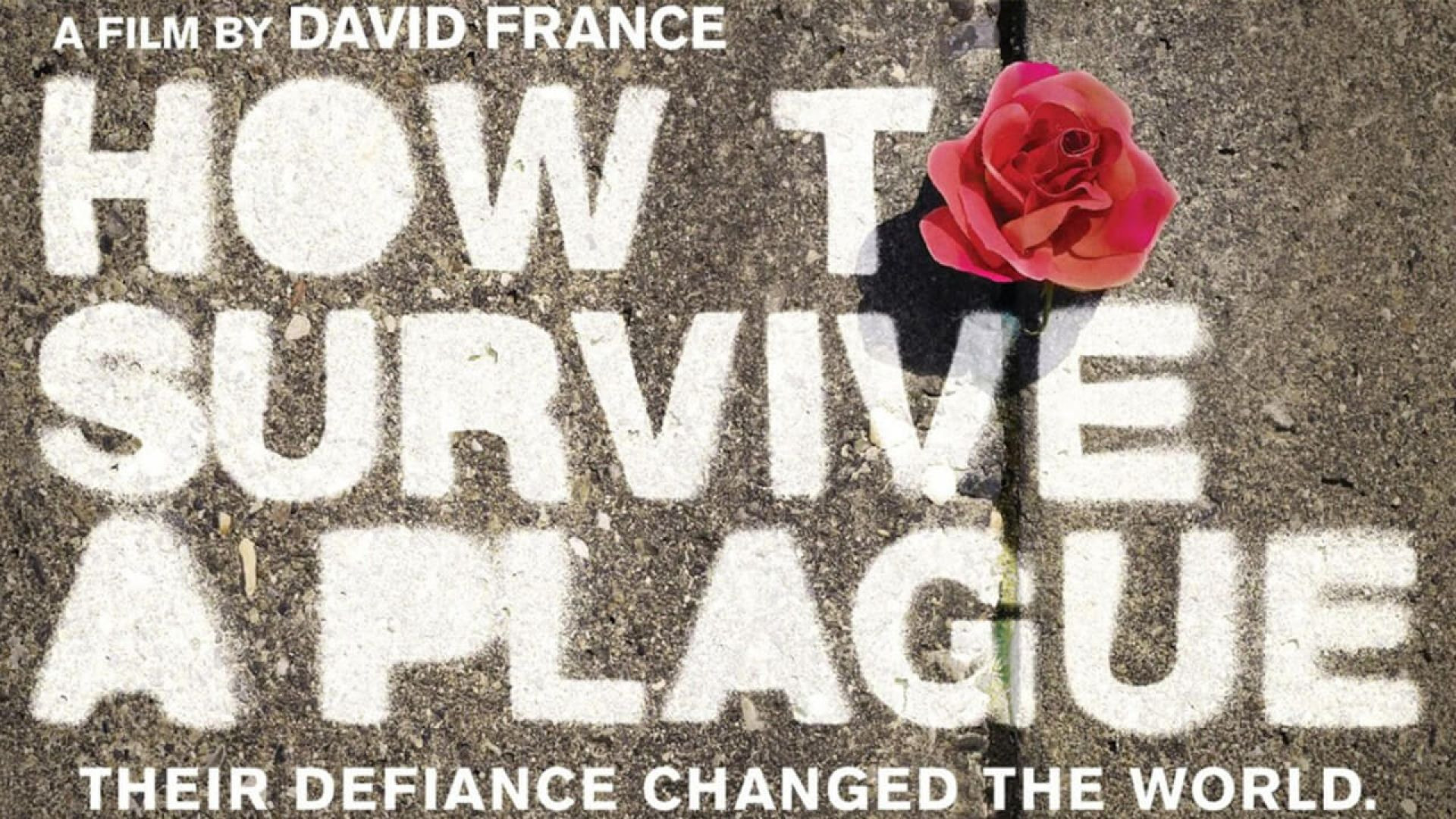
The story of activist group Act Up and its struggle with authority in the early years of Aids makes for a compelling and often moving documentary
"Plague!" howls screenwriter/playwright Larry Kramer like some Old Testament prophet in one of the many arresting moments from this urgent, heartbreaking, and ultimately empowering account of how Aids activists took control of their own destiny in the late 1980s when the US government and health services failed to do so. Kramer is addressing an increasingly heated Act Up (Aids Coalition to Unleash Power) meeting, silencing those who have fallen into factional bickering with a voice which conjures up rage, anger and defiance.
Kramer's outburst is extraordinary, captured in grainy footage along with 700 hours of archive material (TV interviews, news broadcasts, reportage), through which director David France sifts to put us right there in the middle of the emerging struggle. What's even more remarkable is just how effectively the disparate group Kramer calls to order manage to put aside their differences to become a dynamic and wide-ranging force for change, saving lives even as they look death in the face.
Like David Weissman and Bill Weber's equally powerful We Were Here, which movingly documented the response to the outbreak of Aids in San Francisco, How to Survive a Plague offers an enlightening portrait of community action in the face of appalling government negligence and barely concealed anti-gay prejudice. Footage of George Bush blithely advocating a "change of lifestyle" as the only cure for HIV sits alongside riotous film of Act Up members staging peaceful occupations that rattle the cages of both the government and the pharmaceutical industry.
In one gut-wrenching sequence, the ashes of lost loved ones are scattered on the lawns of the White House as baton-wielding policemen on horses attempt to prevent the protesters from making their stand (we think of Joe Hill's call to arms, "Don't mourn, organise!"). Yet even in the midst of such clashes, the authorities came to realise that, in the words of one federal official, "they know more than we do". Gradually, members of Act Up (who included scientists, chemists, and researchers) were accepted onto the boards of those struggling to oversee the crisis, their literate, informed and practical responses to floundering drug development becoming a key part of the search for a cure.
With its intimate footage of activists, several of whom fall by the wayside before the final credits, How to Survive a Plague is a compellingly watchable portrait of a battle fought under that most memorable rallying cry: "Silence = Death". Bravo.
... as 2023 gathers pace, we have a small favour to ask. A new year means new opportunities, and we're hoping this year gives rise to some much-needed stability and progress. Whatever happens, the Guardian will be there, providing clarity and fearless, independent reporting from around the world, 24/7.
Times are tough, and we know not everyone is in a position to pay for news. But as we’re reader-funded, we rely on the ongoing generosity of those who can afford it. This vital support means millions can continue to read reliable reporting on the events shaping our world. Will you invest in the Guardian this year?
Unlike many others, we have no billionaire owner, meaning we can fearlessly chase the truth and report it with integrity. 2023 will be no different; we will work with trademark determination and passion to bring you journalism that’s always free from commercial or political interference. No one edits our editor or diverts our attention from what’s most important.
With your support, we’ll continue to keep Guardian journalism open and free for everyone to read. When access to information is made equal, greater numbers of people can understand global events and their impact on people and communities. Together, we can demand better from the powerful and fight for democracy.
REVIEW RESOURCE: https://www.theguardian.com/fi....lm/2013/nov/10/how-t

As long as you accept there’ll be no genuine analysis in “My Generation,” Michael Caine’s joy ride through his youth offers significant pleasures. There’s a tremendous amount of pleasure to be had in David Batty’s “My Generation,” a sloppy wet kiss to Michael Caine and British youth culture of the 1960s. Loaded with great footage from the era and accompanied by superbly cleaned-up music tracks from the Kinks, the Beatles, the Rolling Stones and many others, this love letter-as-documentary offers 85 minutes of good old fun. What it doesn’t do is posit any genuine analysis or even make a head-nod to diversity.
But this is Caine’s narrative about the unapologetic working class taking over popular culture, and the writers as well as music mogul Simon Fuller, acting as top producer, have no interest in countering their star’s gleefully empowering chronicle of his youth. Voiceover interviews with such key players of the era as Paul McCartney, Marianne Faithfull, Twiggy and Mary Quant add to the overall feast, making the film an attractive offering for all platforms. Britain in the 1950s was dull, announces Caine, though doesn’t every generation say that about the era before their own gloriously self-satisfied arrival?
What’s undeniable is the momentous shift toward youth culture beginning in the 1960s, as well as the opening up of opportunities for white working-class creative types who no longer submitted to makeovers designed to smooth out their roughness. In one of the more telling anecdotes, Caine talks about auditioning for “Zulu,” his breakthrough role, and accurately suggests that had the director, Cy Endfield, been British instead of American, Caine’s working class London accent would have eliminated any hope of being cast in the role of an upper-class officer. That’s an undeniable fact.
Far more shaky is the suggestion that the working class in the 1960s was the first generation in Britain to thumb its collective nose at convention. On-the-street interviews from the era with stuffed shirts bemoaning the appearance of long-haired men in flowery blouses expose middle-class attitudes, but the filmmakers choose to ignore the fact that the upper class has always played with transgression in ways designed to shock the bourgeoisie. What made the 1960s different was that the working class was playing the same game, and emulating “our betters” was no longer an acceptable form of behavior.
Nor was emulating our elders: Freedom from convention was the hallmark of a social revolution that impacted everything from art, music and clothing to changing concepts of morality. Of course, every Englishman knows the class system remains the key determinant of opportunity, but in the art and entertainment world, coming from the wrong side of the tracks is actually now more desirable than a boarding school certificate, and that’s definitely due to the upheavals of the 1960s. Batty divides the film into three parts, roughly corresponding to the awakening, the flourishing and the decline of 1960s pop culture.
Alongside nods to expected historic markers like the Beatles performing at Liverpool’s Cavern Club are more unanticipated moments, such as Roger Daltry talking about the profound impact of seeing Elvis perform: “For the first time in my life, I saw someone who was free.” That’s about the only time in the film there’s a mention of transatlantic influences on the British scene. From there, the documentary plunges headlong into the intoxicating psychedelic playpen of Pop Art, Vidal Sassoon haircuts, and Mary Quant micro-miniskirts, reminding audiences (or teaching them for the first time) that in the 1960s, color and pattern were transgressive and hip, unlike today’s tediously conformist black monochromaticity.
Suddenly, thanks to the British Invasion, being young and British meant you were cool, stylish and glam, tuned into the best music, clothes and art movements. Models such as Jean Shrimpton and Twiggy set new standards for beauty, and groups like the Animals, the Kinks, the Stones and of course the Beatles set the tone, guiding a generation from the innocent charm of “Love Me Do” to the raucous hunger of “(I Can’t Get No) Satisfaction.” By the end of the decade, hedonism took a darker turn.
The Vietnam War acted as a political coming of age, and the destructive nature of so much heavy drug use began to take its toll, symbolized by the death of Brian Jones and Faithfull’s near-fatal drug overdose, both in 1969. For Caine, “My Generation” is a chance to look back in nostalgic delight at his salad days, allowing him to gamely reminisce about his time as one of the “it” boys of London. He even gets to swan around in the original Aston Martin DB4 he drove in “The Italian Job.”
None of the others interviewed are seen on screen — whether that’s because the producers wanted to maintain the aura of 1960s youth, or it was the only way to get these people to talk, remains open for speculation. It’s also likely that writers Dick Clement and Ian La Frenais allowed themselves to be guided by Caine’s insistence on working-class culture, ignoring the fact that some of those included, most especially Faithfull, are from posh backgrounds. If you set aside analytical skills however, it’s easy to sit back and enjoy the wealth of archival clips accompanied by fantastic music tracks that seem to have been remastered for the occasion (lord knows how much all the music rights must have cost).
Ben Hilton’s editing successfully crams in a great deal without a sense of whiplash. Reviewed at Venice Film Festival (Out of Competition), Sept. 4, 2017. (Also in London Film Festival – Journey.) Production: (Documentary — U.K.) An XIX Entertainment presentation, in association with IM Global, of a Raymi Films production, in association with Ingenious Media. (International sales: IM Global, Los Angeles.)
Producers: Simon Fuller, Michael Caine, Dick Clement, Ian La Frenais, Fodhla Cronin O’Reilly. Executive producer: James Clayton. Co-producer: Ben Hilton. CREW: Director: David Batty. Writers: Dick Clement, Ian La Frenais. Camera (color): Ben Hodgson. Editor: Ben Hilton. Music supervisor: Tarquin Gotch. Crew: With: Michael Caine Voices of David Bailey, Twiggy, Terry O’Neill, Roger Daltrey, Marianne Faithfull, Paul McCartney, Lulu, Joan Collins, Sandie Shaw, Penelope Tree, Dudley Edwards, Mary Quant, Mim Scala, David Putnam, Barbara Hulanicki.

"He's an outsider. He's a maverick." Vision Films is about to release this documentary, called Banksy & The Rise of Outlaw Art, this week - available on VOD. We missed this trailer when it first debuted a few months ago, but happy to catch up with it now. Elio Espana's doc Banksy & The Rise of Outlaw Art is a look at the modern street art / graffiti culture that Banksy elevated. "Banksy, the world's most infamous street artist, whose political art, criminal stunts, and daring invasions outraged the establishment and created a revolutionary new movement while his identity remained shrouded in mystery.
[This film] finally reveals Banksy's story, from his roots in a criminal subculture to his rise as the leader of an art revolution." Don't expect Banksy's identity to actually be revealed. Not only was there Banksy's own doc Exit Through the Gift Shop (from 2010), but we also had the Banksy Does New York doc a few years ago, too.
As the world’s most infamous street artist, Banksy’s political art, criminal stunts and daring invasions have outraged the establishment for over two decades, but despite being one of the most important figures of our times, Banksy has remained an enigma, with little known about the circumstances of his life and work.
His rise coincided with the emergence of Street Art, a form of illegal, public art that evolved from the graffiti scene to change the face of cities across the world. Banksy became the leading figure in this revolutionary new movement, assembling a multi-million dollar empire and changing the way that we think about art. Through it all, however, his identity has remained shrouded in mystery… Banksy & The Rise of Outlaw Art is directed by documentary producer / filmmaker Elio Espana, director of the films Dawn of the Dead: The Grateful Dead & the Rise of the San Francisco Underground, CSNY: Fifty by Four, Feats First: The Life & Music of Lowell George, and Hamilton: One Shot to Broadway previously.

Rodney Ascher's wry and provocative Room 237 fuses fact and fiction through interviews with cultists and scholars, creating a kaleidoscopic deconstruction of Kubrick's still-controversial classic The Shining.
What is "Room 237" really about? On the surface, Rodney Ascher's documentary exhibits the theories a few obsessive fans have put forward to reveal what they think Stanley Kubrick's "The Shining" is really about. According to them, Kubrick stashed "hidden meanings" in the vacancies, hallways, ballrooms, bathrooms, walk-in storage areas and hedge-mazes of the Overlook Hotel in his 1980 horror film.
Trouble is, the "Room 237" conspirators — er, contributors — don't seem to realize that those meanings are either not hidden, not meanings or not remotely supported by the secret evidence they think they've uncovered. "Room 237" isn't film criticism, it isn't coherent analysis, but listening to fanatics go on and on about their fixations can be kind of fun. For a while, at least.
Five off-screen narrators pitch various interpretations of "The Shining," accompanied by stock footage, illustrative recreations and clips from Kubrick's filmography. For Bill Blakemore, the subject of Kubrick's "Masterpiece of Modern Horror" is the genocidal slaughter of Native Americans by white European settlers; for Geoffrey Cocks, it's about the Holocaust in Nazi-dominated Europe; for Juli Kearns, it's an exploration of an impossible, Escher-like maze called the Overlook Hotel.
John Fell Ryan has discovered some interesting juxtapositions that occur if you project two prints of "The Shining" on top of each other at the same time, with one running forward and the other running backward. Jay Weidner, who characterizes himself as a "conspiracy hunter," insists "The Shining" is Kubrick's belated, life-risking confession/apology for faking the television footage of the Apollo 11 moon landing on the sets for "2001: A Space Odyssey" at the behest of the U.S. government.
"Room 237" could easily be (mis)taken for a comedic satire of fervent movie-geekery if the theories it presents — some more cockeyed than others — hadn't appeared on the Internet years ago. That's where Ascher found the inspirations for his documentary.
It starts off with a visual trick: In a digitally modified clip from Kubrick's final film, "Eyes Wide Shut" (1999), Dr. Bill Harford (Tom Cruise) stands outside the Sonata Cafe in Greenwich Village, which is actually a set at Pinewood Studios near London (which is the source of a little in-joke: The location is identified as "EUROPE"). But instead of inspecting a display featuring his old friend, pianist Nick Nightingale, he's looking at promotional materials for "The Shining." You could say that "Room 237" is based on a similar illusion, getting us to see things in a movie that either aren't there or aren't what they appear to be.
Let's rewind: Back in 2010, Ascher made a notably similar short film called "The S From Hell," a parodic inquiry into the off-the-wall proposition that the Screen Gems logo, which appeared after episodes of popular TV series such as "Bewitched" and "The Partridge Family" from 1965 to 1974, was so frightening, it traumatized a generation of unsuspecting children. Maybe you don't recall being terrified by this or any other logo? Me, neither. But we could've repressed it.
The goofy premise of "The S from Hell" is no less unlikely than some of the blarney put forward in "Room 237." The movie doesn't judge the relative merits of its subjects' opinions, probably because that might be construed as favoritism. That's understandable. But as a result, the movie lacks examples of sound critical thinking. All we have here are do-it-yourself interactive fan games.
In "The Shining," the genial hotel manager (played by Barry Nelson) mentions that the Overlook was built on an ancient Indian burial ground — a familiar horror-movie trope. Sure enough, the hotel decor is inspired by Native American motifs, as we can plainly see. But what, then, is the movie supposedly saying about the genocide of Native Americans? That their vengeful spirits might come back and kill people at a hotel? As the saying goes, that's not subtext, it's text.
The proponents of the Holocaust and staged-moon-landing scenarios undermine their own hypotheses by backing into them. They start with extraneous information (Kubrick wanted to make a Holocaust movie but could never figure out how; nobody was in a better position than Kubrick to fake moon footage in 1969). Then they scour the nooks and crannies of "The Shining" for anything that could be construed to support, or at least reference, their chosen preconceptions.
So is the recurrence of the number 42 (on Danny's jersey; in the movie "Summer of '42" on TV) an allusion to 1942, the year of the Wannsee Conference when Nazi officials met to plan the Final Solution? What about that German typewriter? And is Danny's hand-knit Apollo 11 sweater linked to the ultra-scary Room 237 because the average distance between the Earth and the moon is 237,000 miles? Even though it isn't 237,000 miles, but let's not allow facts and a few extra zeroes to spoil a juicy conspiracy plot. What if the first word in the famous typewritten "All work and no play makes Jack a dull boy" manuscript could be read as "A11" — as in "Apollo 11"?! What if, indeed.
The double-projection trick isn't a theory at all, just a nifty experiment in randomness somewhat less remarkable than the discovery that Pink Floyd's "Dark Side of the Moon" produces some striking juxtapositions when played along with "The Wizard of Oz." Likewise, it's sorta neat that the Outlook does not have an intelligible floor plan, as it fits with the movie's "lost in the maze" motif. But there's nothing unusual about it. That's the way movie sets are usually built — in disconnected bits and pieces, not as integral units.
Kubrick's longtime assistant and collaborator Leon Vitali (who played Lord Bullingdon in "Barry Lyndon") recently said that "Room 237" had him "falling about laughing most of the time" because he knows these ideas are "absolute balderdash." The Adler typewriter, for example, belonged to Kubrick himself, and that particular model was once as commonplace as late-model iPhones.
Any movie is the product of forethought, accident and improvisation. In the end, once the film is released, the filmmakers' intentions don't really matter anymore because it belongs to the audience. At that point, if something's there, it's there. "Room 237," regrettably, isn't all there.

It’s a commonplace to hear people say movies changed their life, but with Owen Suskind that statement is meaningful in an unexpectedly profound way. His remarkable story is so unusual you would dismiss it out of hand if it were fiction, but the documentary “Life, Animated” demonstrates that it’s completely true.
Not just any films changed Suskind’s life, but rather the classic animated features from the Walt Disney Company. Films like “Dumbo,” “Bambi,” “Peter Pan,” “The Lion King” and “Aladdin.” You’ve probably watched them yourself. But Owen Suskind has not just watched them, he’s absorbed them so completely he’s practically lived them.
As directed by Roger Ross Williams (who won Sundance’s documentary director prize) and based on the bestselling book by Owen’s father, Ron Suskind, “Life, Animated” joins Owen’s life at a pivotal moment and shows us where he’s been and what his future looks like.
At 23, Owen Suskind is a cheerful and energetic young man who wears his autism lightly. He has a girlfriend, is just finishing school and is nervous and excited about living by himself for the first time in an assisted living facility on Massachusetts’ Cape Cod.
Owen talks to himself when he’s anxious, but almost exclusively in the dialogue of Disney films. He has seen them so many times he’s memorized every word, and no wonder. They have proved to be a lifeline that has brought him back to the world and helped him make sense of it.
When we first meet Owen, it’s in a family home movie, an antic 2-year-old being read to by his father. Then, without warning, at age 3, this lively boy stopped talking entirely.
“His language processes broke down,” says his mother, Cornelia, who still tears up at the memory, while father Ron says it was as if his son “vanished,” adding “it was like looking for clues to a kidnapping.”
Doctors were initially baffled as well, eventually diagnosing “pervasive developmental disorder,” where the world and its noise become too intense.
One of the only things the Suskinds, including older brother Walt, could still do as a family was watch the Disney family movies Owen had always loved, and they did.
The specific circumstances and episodes of how Owen returned to speech are so remarkable they’re best left to be discovered in the film, but though he did return, it did not mean that things would always go smoothly for him, either as the child he was or the young adult he now is.
No matter what Owen is dealing with, starting with childhood bullying when he “walked the halls of fear” or more adult problems that make him wonder “why is life so full of unfair pain and tragedy,” he uses his Disney animation fascination to work through it.
As a child, for instance, he created an entire cartoon universe he called “The Land of the Lost Sidekicks” and cast himself as the protector of sidekicks against the evil Fuzzbutch. One of “Life, Animated’s” loveliest touches is a beautiful animated sequence, created by France’s Mac Guff Animation, that brings that world completely to life.
Better even than the animation, however, is the sense of the people involved that the film provides, especially of Owen, a remarkable young man who, as director Williams says, “has raw emotions - he doesn’t have filters.”
Williams, whose last feature-length documentary was the very different “God Loves Uganda,” an exposé of how evangelical fundamentalists demonized homosexuality, spent two years on this project, and the trust everyone involved placed in him allowed for an emotional honesty that is “Life, Animated’s” greatest strength.
By the time Owen says, “the future? I’m still searching for it,” we feel his life is in very good hands. His own
REVIEW RESOURCE: https://www.latimes.com/paid-posts/?prx_t=qU4HAx95SAfYAQA&ntv_acpl=1081469&ntv_acsc=2&ntv_ot=2&ntv_gsscm=853*5;839*16;2008*8;842*6;&ntv_ui=e1f13dc5-f00b-45a6-ab12-cb9178ba0059&ntv_ht=FvEkZAA
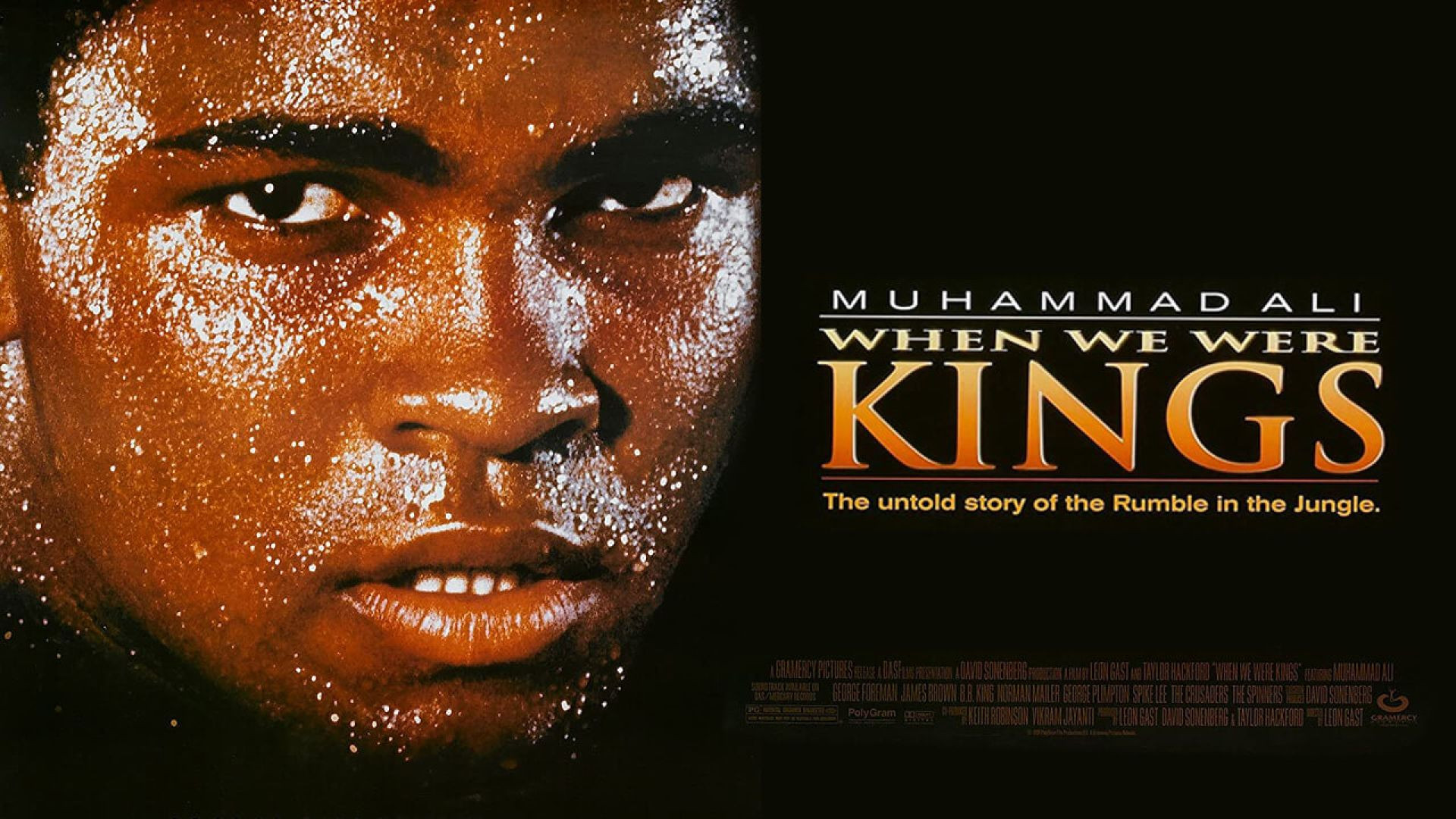
No comedian was ever funnier, no fighter ever faster than Muhammad Ali, who is caught at the top of his game in Leon Gast's valentine, "When We Were Kings."
The movie is built around the 1974 "Rumble in the Jungle" between Ali and George Foreman in Zaire. Though the Oscar-nominated documentary captures the fight and the fighters, it also explores Ali's role in reintroducing black Americans to their African culture.
Best of all, it resurrects Ali as bee, butterfly and maker of bons mots. Mind, mouth, muscles, all in accord, move a mile a minute as the 32-year-old prepares to wrest the heavyweight crown from the formidable, 26-year-old titleholder. Fit and fleet as Ali is, conventional wisdom has it that Ali's a dead man.
Ali, as Gast's film repeatedly and delightfully demonstrates, was hardly a conventional soul. He comes through as a maverick's maverick. And he's up against formidable competition in this film, including Don King. It was the ex-con with "the great uprush of hair" who managed to talk Mobutu Sese Seko, the Zairian dictator, into staging the fight. Persuaded that it would be good publicity for his country, Mobutu forked over $10 million, flew the fighters and their entourages to Kinshasa and began cleaning the blood of anti-government protesters from the floor of the outdoor arena where the fight was scheduled to take place that September.
Idolized by the people of Zaire for refusing to fight in Vietnam, the older boxer is greeted with chants of "Ali, bomaye!" which means "Ali, kill him!" Foreman, to Ali's great pleasure, was irritated with this turn of events, but Foreman was easily angered in those days. Ali later takes advantage of this weakness to defeat him in the ring. Using a combination of right-hand leads and verbal taunts, Ali tricks Foreman into punching himself out in the early rounds and subsequently flattens his opponent.
As Ali predicted:
"You think the world was surprised when Nixon resigned? Just wait'll I kick George Foreman's behind."
The boxing footage is terrific, but Gast has added archival film of other Ali-Foreman fights. Spike Lee, assorted sports columnists and other camp followers add compelling commentary, but Foreman, who was first devastated, then redeemed by the licking, isn't interviewed. And that's too bad, because it's almost as if Ali hammered something of himself into Foreman, who would go on to become every bit as affable as Ali. And then, Foreman, too, would challenge time.
Watching the picture, it's impossible not to think of Ali today, trembling and unsteady as he is. And you wonder as you stare at the dazzling young athlete: Would he do it all again if he knew the price? His biographer, Thomas Hauser, assures us that he would, that he loves every day of being Muhammad Ali.
Certainly, nobody ever looked as if he was having more fun than Ali does in "When We Were Kings." And the same goes for everybody around him -- except Foreman. Even cynical old sportswriters look like kids on Christmas morning when they recall memories of "Rumble in the Jungle" fever and those special moments they spent with Ali.
Though there were other kings on hand at the time -- Don, B.B., James "the King of Soul" Brown, not to mention Mobutu -- Ali was, in the words of producer David Sonenberg, "on a whole other level, he was King of the World."
REVIEW RESOURCE: https://www.washingtonpost.com..../wp-srv/style/longte

Man on Wire tells the story of how Philippe Petit planned and carried out what has been called the greatest artistic crime of the 20th century. On 7 August 1974, Petit strung a 60-metre tightrope wire 450 metres above the ground between the Twin Towers of the World Trade Centre and walked across it, nine times.
Through interviews and re-enactments, the movie depicts the relationships between Philippe and his then girl friend Annie Allix, close friend Jean-Louise Blondeau and co-conspirators David Forman, Barry Greenhouse, Jim Moore and Alan Welner. The movie shows archival footage of Philippe walking between the spires of Notre Dame Cathedral in Paris and between the pylons of the Sydney Harbour Bridge. Philippe and his co-conspirators describe how they spied for weeks on the Twin Towers, tricked their way in using fake ID cards and hauled nearly one ton of equipment to the top floor.
The movie contains no live footage of the walk or re-enactment of it. Instead, the event is represented through still images and commentary by Philippe and the team members. Following the walk Philippe is arrested, taken for psychiatric evaluation and then released. The media hail Philippe a hero. We hear accounts from eyewitnesses telling how watching Philippe walk the wire was a once-in-a-lifetime gift. The movie ends with the main characters discussing how both the event itself and the resulting fame caused the breakdown of friendships and relationships.
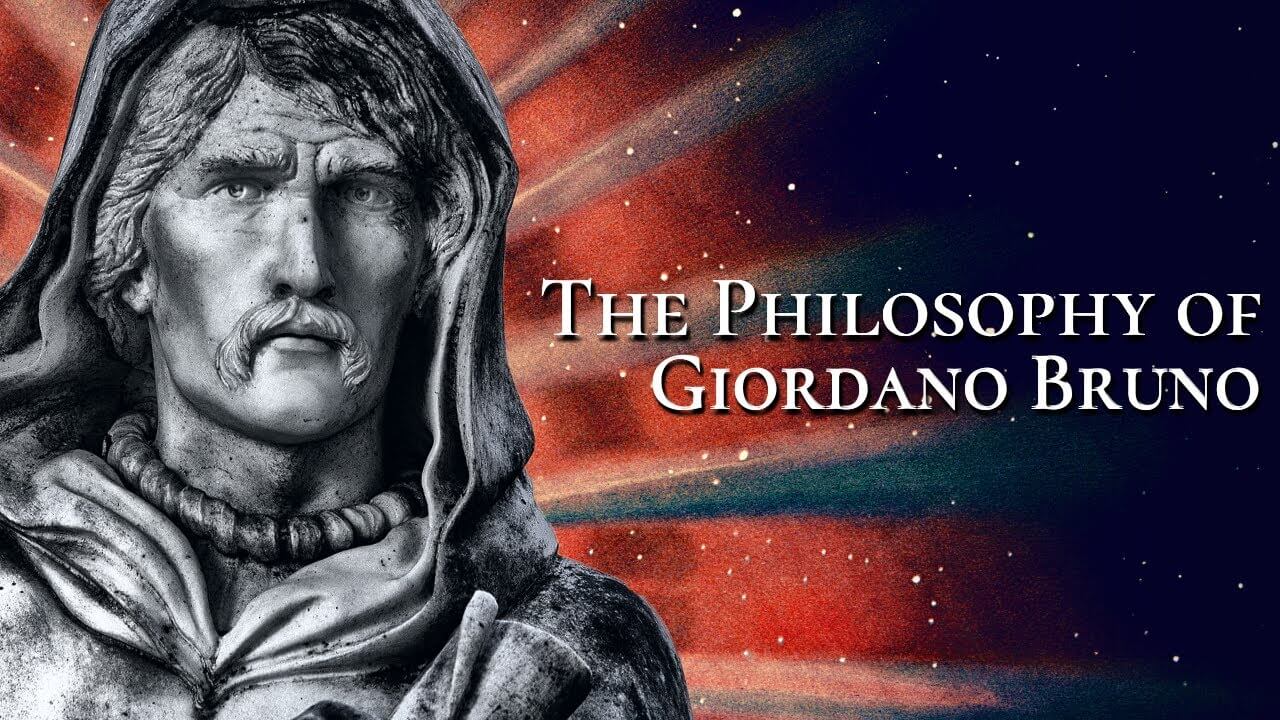
The philosophy of Giordano Bruno was unique for the Neoplatonic and Aristotelian dominated era during which it was conceived. Its uniqueness derives from its ability to combine metaphysics, physics, psychology, and ethics into a philosophy that, while presented in an unsystematic and at times seemingly disjointed way, manages to shine with an inner coherence.
Though this video may seem lengthy to my viewers, the feat of condensing down the vitals of his philosophy was exceedingly challenging as it would have been easy to exceed 45 minutes if the editing was not such a lengthy process. Thank you for taking the time to watch and I hope you can gain some understanding of Bruno’s eclectic philosophy!
Music:
'Cirrus' by Scott Buckley - released under CC-BY 4.0. www.scottbuckley.com.au
Sources: To the generous men and women who published these resources, especially Stanford’s article concerning Bruno, I cannot say thank you enough. Without such articles this video would not be possible without the purchase of countless books.
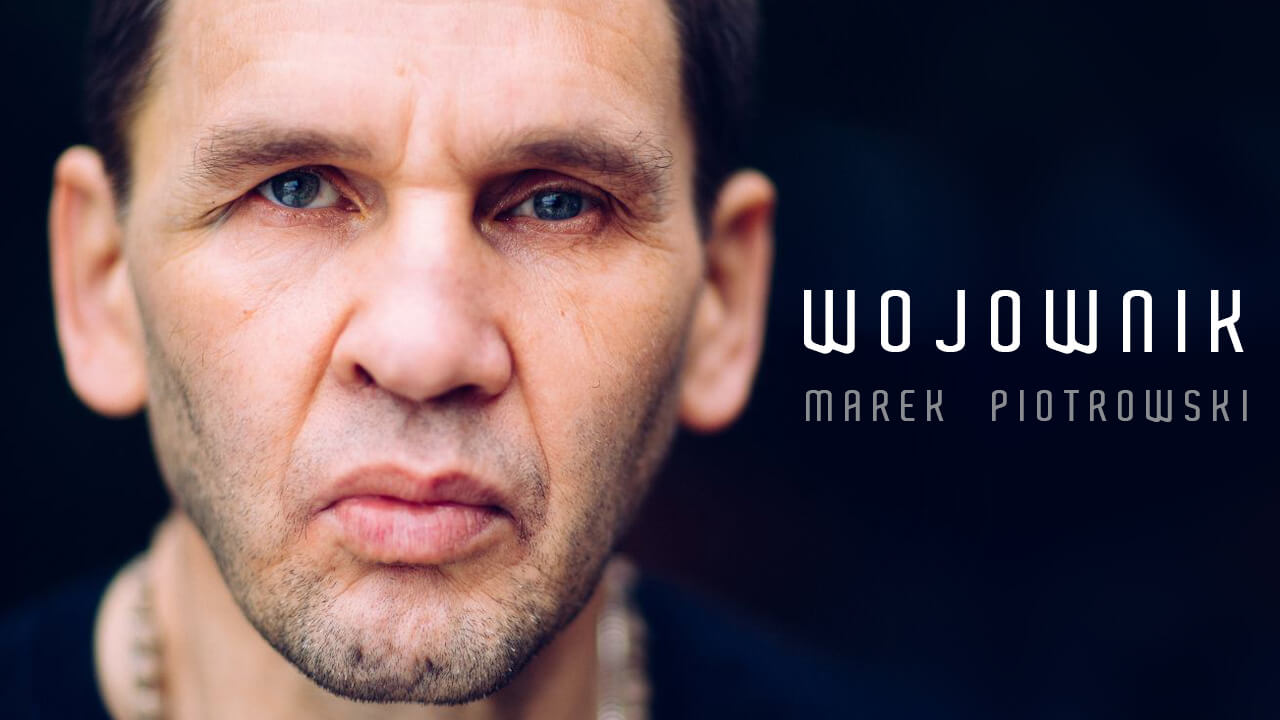
Marek Piotrowski (ur. 14 sierpnia 1964 r. w Dębe Wielkim koło Mińska Mazowieckiego) -- polski kick-bokser i bokser, zawodowy mistrz świata.
Kariera amatorska -- swoją karierę sportową rozpoczynał jako bardzo młody adept jujutsu, z czasem zainteresował się Karate Kyokushin. W 1984 r. zdobył w tej dyscyplinie mistrzostwo Polski juniorów. W 1985 r. powtórzył ten sukces w kategorii seniorów. W karate stoczył 13 oficjalnych pojedynków, wszystkie wygrał. W Lipcu 1993 r. stał się posiadaczem czarnego pasa (1 dan). Z początkiem 1987 r. rozpoczął uprawiać kick-boxing w formule full contact, mimo że dyscyplina ta była wówczas w Polsce zakazana.
11 października 1987 r. zdobył w Monachium amatorskie mistrzostwo świata w kategorii wagowej do 81 kg. Tego samego roku wygrał również mistrzostwo Polski, a na Węgrzech Puchar Świata, zostając uznanym za najlepszego zawodnika turnieju.
Kariera zawodowa -- w 1988 r. zdecydował się na wyjazd do USA, aby rozpocząć karierę zawodową. W październiku stoczył swoją pierwszą walkę. W Rockford znokautował Boba Handegana w 4. rundzie.
19 sierpnia 1989 r. w swej piątej walce za Oceanem zwyciężył jednogłośnie na punkty dotychczas niepokonanego Ricka „The Jet" Roufusa i zdobył zawodowe mistrzostwo Stanów Zjednoczonych organizacji PKC. Do jego nazwiska przyległ również ringowy przydomek Punisher.
4 listopada 1989 r. w Chicago pokonał Dona „The Dragon" Wilsona i został zawodowym mistrzem świata organizacji ISKA, PKC i FFKA.
Do 1991 r. stoczył sześć pojedynków, pokonując między innymi Boba „The Thunder" Thurmana oraz renomowanego Marka Longo. Był do tego momentu niepokonanym zawodnikiem na zawodowym ringu, legitymującym się bilansem 29-0-0 (19 KO). 22 czerwca 1991 r., pomimo problemów osobistych, stoczył rewanżowy pojedynek z Rickiem Roufusem, który przegrał w drugiej rundzie przez nokaut. Po tej porażce rozpoczął w lutym karierę w boksie zawodowym, wygrywając pierwszą walkę przed czasem w 4. rundzie. Następnie do 1992 r., chcąc odzyskać utracony tytuł MŚ, stoczył kilka walk w kickboxingu, wszystkie wygrywając.
W lipcu 1992 r. zdobył tytuł mistrza Ameryki Północnej wygrywając z Kanadyjczykiem Conradem Pla.
22 listpada 1992 r. stanął w Paryżu do pojedynku z wielokrotnym mistrzem Holendrem Robem Kamanem (zwanym także „Mr. Low-Kick"; 98 wygranych walk, 78 KO.) w formule low-kick. Przegrał przez TKO w siódmej rundzie po niezwykle dramatycznym boju. Po tej porażce raz jeszcze stanął do walki o utracone tytuły. Przez następne lata szukał szansy na rewanż z Kamanem i Roufusem, ale nigdy jej nie dostał.
22 czerwca 1993 r. pokonał w Montrealu przez TKO Michaela McDonalda. W tym samym roku zwyciężył Mike'a Winklejohna, zdobywając tytuł mistrz świata ISKA w formule oriental rules (odmiana dopuszczająca low-kick i uderzenia kolanem). W grudniu 1995 r. stoczył swoje ostatnie starcie w kickboxingu. W Krakowie pokonał Włocha Stefano Tomiazzo, zdobywając pas mistrza świata organizacji WKA i unifikując wszystkie światowe tytuły w full-contact. Tym samym stał się posiadaczem wszystkich najważniejszych pasów mistrzowskich: ISKA, KICK, PKC, WAKO-PRO, FFKA, WKA i TBC.
Równolegle ze startami w kickboxingu Piotrowski kontynuował karierę zawodowego boksera, staczając od 1992 do 1996 r. w sumie 21 pojedynków w wadze półciężkiej. Wygrał wszystkie.
Zawodową karierę zakończył 13 grudnia 1996 r. w Hanowerze wygraną walką bokserską. W 1997 r. dostał propozycję walki o zawodowe mistrzostwo świata w boksie organizacji IBF z Reggie Johnsonem, lecz ze względu na kłopoty zdrowotne musiał zrezygnować. W 2002 r. powrócił do Polski.
Wyróżnienia
W 1987 r. dostał nagrodę „Syrenki" od miesięcznika Sportowiec za największą niespodziankę sportową roku. Trzykrotnie wybierany do pierwszej dziesiątki najlepszych sportowców w Polsce w plebiscycie Przeglądu Sportowego (1987, 1989, 1990), dwukrotnie zajmując 2 pozycję. Prestiżowy magazyn Fighter klasyfikując największych kickboxerów lat 80., umieścił Piotrowskiego w wadze do 172 funtów (tj. 78 kg) na drugim miejscu. Dwukrotnie, w latach 1989 i 1994 został uznany przez amerykańskich fachowców kickbokserem roku. Został także wybrany przez amerykańską prasę na jednego z dwóch najlepszych fighterów lat 90. W 1991 r. Aleksander Bilik wydał książkę Kickbokser, opisującą karierę Piotrowskiego do roku 1990. W 2005 r. telewizja TVN24 nakręciła reportaż o Marku Piotrowskim zatytułowany „Wojownik" W 2005 r. powstał o nim nawet komiks pt. Kickbokser (zamieszczony w dodatku do Gazety Wyborczej). 2006 r. -- Marek Piotrowski otrzymał statuetkę Stanley Honorowy -- KICK BOXING
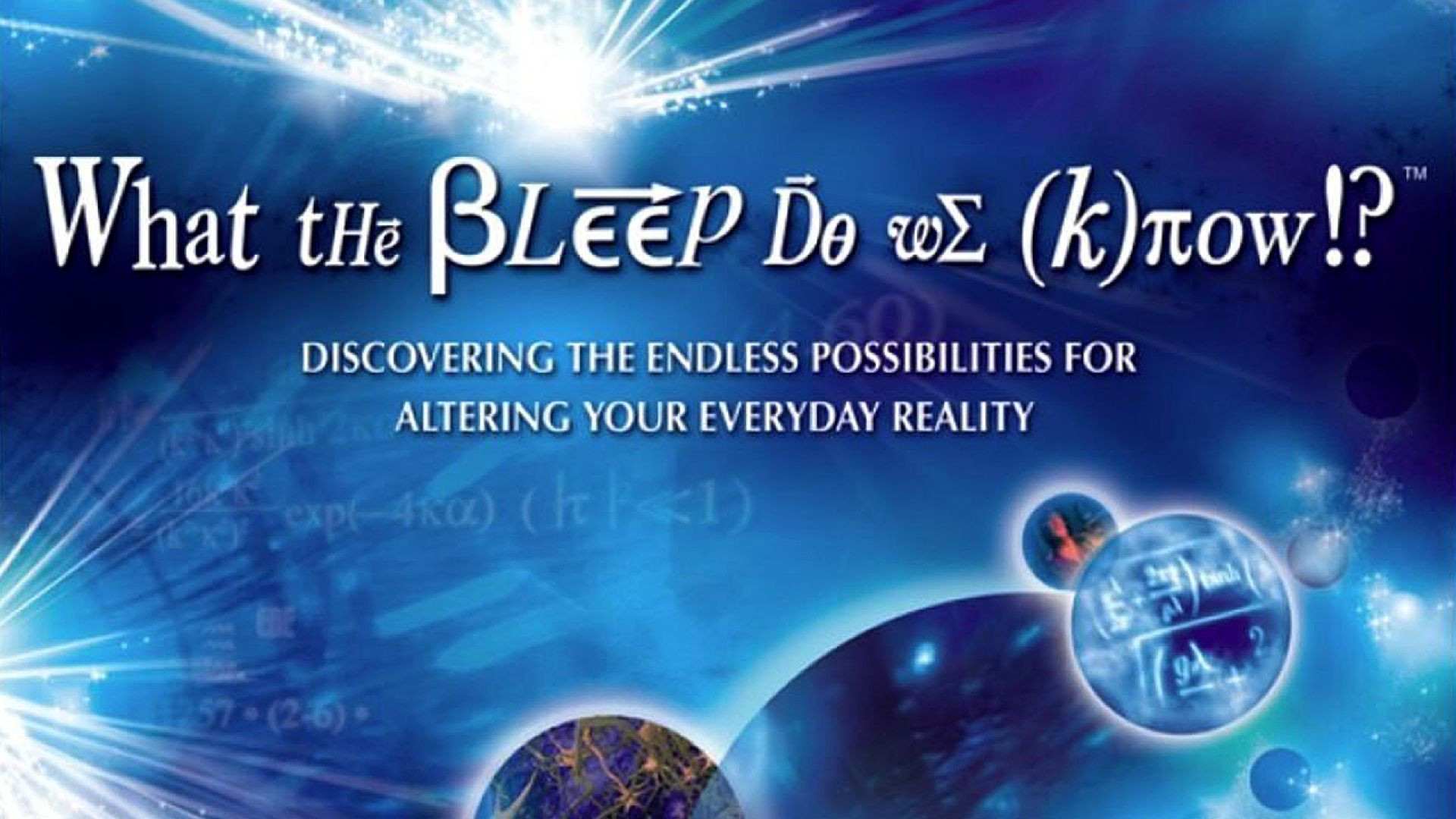
Directed by William Arntz, Betsy Chasse, and Mark Vicente, the film is an initially intriguing—and then gradually more outlandish—examination of quantum physics (“the physics of possibilities”), the theoretical brand of science that supposedly helps us understand life’s most fundamental question: What is reality? Unfortunately, the film’s answer isn’t half as interesting as those posited by The Matrix, Fight Club, or Waking Life.
A collection of talking-head physicists, philosophers, religious scholars, and mystics (all of whom are deliberately unidentified until the end credits to obscure their dubious authority) casually toss about terms like “epistemic” and “gifts of intentionality” in arguing that reality—rather than being an external force—is something we shape internally, thus meaning that what’s happening within us determines what happens around us. The ensuing, rambling discussion of quantum physics’ impact on notions of love, addiction, and Jesus is clumsily interspersed with scenes involving a fictional photographer named Amanda (Marlee Matlin) who, still smarting over her husband’s infidelity, embarks on a journey of self-discovery by learning to transcend humanity’s current perception of reality.
Engaging theories are sporadically contemplated (such as the idea that an object can exist in two places at the same time), yet by the film’s conclusion, it’s clear that the real modus operandi of these “experts” is promoting a new-agey version of spiritual enlightenment intended to replace traditional monotheism. Society’s “superstitious, backwater concept of God” is the filmmakers’ ultimate target, since it interferes with their belief that everyone is God and that all of us are “co-creating our future.” If people are truly able to construct their own destinies, then I can only hope that What the Bleep Do We Know?, with its hokey and derivative CGI, John Tesh-influenced score, and screeching electronic sound effects, will beget a future devoid of these filmmakers’ creepily cultish work.
REVIEW RESOURCE : https://www.slantmagazine.com/....film/what-the-bleep-
