Documentary
Alt Kategori

The first authorized documentary film exploring David Icke's work and life. He is the famed conspiracy theorist, known as the “mad man” who has been proved right time and time again.
David Icke has been warning the public for almost three decades about the coming global Orwellian state in which a tiny few would enslave humanity through New World Order tactics. Methods such as control of finance, government, media, and a military-police Gestapo overseeing 24/7 surveillance of a microchipped population. He has said that “physical reality is an illusion" and that the "world" really is a holographic simulation created by a non-human force to lockdown human perception in ongoing servitude.
He has been subjected to decades of ridicule and dismissal over his theories. However, now his books are read all over the globe and his speaking events are watched by thousands. Why? Because what he foretold is playing out in world events and even some mainstream scientists are concluding that reality is indeed a simulation or "Matrix."
REVIEW RESOURCE: https://www.gaia.com/video/ren....egade-life-story-dav

his piece was written during the 2023 WGA and SAG-AFTRA strikes. Without the labour of the writers and actors currently on strike, the movie being reviewed here wouldn’t exist.
As a child, I would often hear my grandfather say that with the creation of the atomic bomb, there wouldn’t be any world wars anymore. There would only be smaller wars. So far, he’s been right, although the prospect of a country using an atomic weapon on another has never left us. Even the threat of a so-called “dirty bomb” being used by a rogue organisation is a very real possibility that many governments fear and presumably have developed contingency plans for.
When University of California, Berkeley physicist J. Robert Oppenheimer was recruited to head up the Manhattan Project, America’s program to design and build the world’s first atomic bomb, he, like many others, had visions of war being a thing of the past. That view changed, however, when he saw how destructive his creation turned out to be. The two atomic bombs that were dropped over Hiroshima and Nagasaki incinerated both cities and killed between 150,000 and 225,000 people, with about half of those deaths occurring on the first day. Think about that. It means that about 100,000 people died of radiation burns and cancers in the days, months and years after the bombings took place. One can argue that the bombings hastened the end of the war with Japan but at what cost?
Coinciding with the release of Christopher Nolan’s new film, OPPENHEIMER, NBC in the US has released a feature-length documentary entitled TO END ALL WAR: OPPENHEIMER & THE ATOMIC BOMB. It follows Oppenheimer’s rise to the pinnacle of heroism in the eyes of most Americans and his subsequent fall.
Little known to most people these days, Oppenheimer was a tragic figure. Historians agree that his contributions to theoretical physics should have earned him a Nobel Prize if not for two things: the destructive nature of the bomb — the antithesis of why Alfred Nobel created the prize in the first place — and his outspoken opposition to America continuing its development of other weapons of mass destruction, the latter of which put him solidly in the crosshairs of Senator Joe McCarthy’s House Un-American Activities Committee (HUAC).
Prime Time Emmy Award-winning director Christopher Cassel (ROME) examines Oppenheimer’s early years as well as the legacy he left behind with a mix of archival footage, soundbites, animated scenes, heartbreaking footage of the blasts’ survivors, and interviews from Bill Nye (the Science Guy), Hiroshima survivor Hideko Tamura, grandson Charles Oppenheimer and Christopher Nolan among others. (If you’re wondering why Nolan would appear in this documentary, Universal Pictures, which is distributing his film worldwide, is the sister company of NBC.)
I now seen OPPENHEIMER and TO END ALL WAR complements the film rather than takes away from it. It’s a fascinating look at a complicated and tormented man at a time when his country wanted a hero more than it wanted a moral compass.
REVIEW RESOURCE: https://howardforfilm.com/2023..../07/18/movie-review-

Sound has the power to charm, annoy, and even change history. Sonic Magic: The Wonder and Science of Sound reveals the historic force, promise, and potential of sound – and a strange phenomenon called cymatics that has created a new scientific mystery.
Sonic Magic explores how sound has shaped our history, introducing us to fields of acoustic ecology and also research labs where sound is eliminating cancer tumours and much more.
RESOURCE: https://spark-doc.com

Stanley Kubrick: A Life in Pictures is a 2001 documentary about the life and work of Stanley Kubrick, famed film director, made by his long-time assistant and brother-in-law Jan Harlan. Its running time is 142 minutes long, it consists of several 15-minute chapters, each detailing the making of one of his films – and two more showing his childhood and life.
Jan Harlan got many of Kubrick's collaborators for interviews, including Tom Cruise, Nicole Kidman, Keir Dullea, Arthur C. Clarke, Malcolm McDowell, Peter Ustinov, Jack Nicholson, György Ligeti and Matthew Modine. It also has interviews from film directors who were inspired by Kubrick such as Woody Allen, Steven Spielberg, Martin Scorsese and Sydney Pollack.
The film contains some rare footage, including from the Kubrick family home videos and on film sets, and clips from Fear and Desire - Kubrick's first feature-length film.
It was released on DVD on October 23, 2007, and was featured on the tenth disc of Stanley Kubrick: The Essential Collection and Stanley Kubrick: Limited Edition Collection DVD and Blu-ray released May 31, 2011, respectively. The documentary was also bundled in a box set of some of Kubrick's other films released January 22, 2008.
The soundtrack of the film is by composer and musician Jocelyn Pook, who had previously worked with Kubrick on Eyes Wide Shut (1999).
Stanley Kubrick is one of the first names you hear when the word "director" is brought up. His career spanned many decades, and the movies he worked on were given his undivided attention. He was obsessive, reclusive, and demanding.
And if you've ever wanted to learn pretty much everything you could ever want to know about the iconic director, well, there's a movie for that. Originally released back in 2001, Stanley Kubrick: A Life in Pictures is a documentary that spans his life, offering behind the scenes looks at what went into his directing and thought process. As luck would have it, Warner Bros. has made it available to watch for free online, complete with an introduction by ReelBlend podcast hosts Sean O'Connell, Kevin McCarthy, and Jake Hamilton.
There are some real gems in this thing, from Jack Nicholson talking about the ways Kubrick made him feel satisfied as an actor to looking at the newsreels that helped him understand how to make Dr. Strangelove...including Martin Scorsese's reactions to watching Kubrick movies.
What about the music in A Clockwork Orange—what could be behind playing the William Tell Overture five times fast?
Kubrick's work has touched us all, and the step to understanding the themes and ideas he explores are all captured in this doc.

The story of Martin Armstrong
Can a computer model predict the world economy?
The year is 2014: Europe is stumbling from one emergency summit to the next. America has gone crashing through the 15-billion-dollar debt ceiling. People are taking to the streets across the world because they have realised that something has been thrown off kilter; that the market economy is tearing a vast rift between the super rich and the masses; that the banks have spiralled out of control; that governments have lost their grip on public debt.
And after eleven years off the radar, a man resurfaces in Philadelphia, a man who used a computer model and the number pi in the nineties to predict economic turning points with astounding precision: Martin Armstrong predicted the exact date of the October crash in 1987, the demise of the Japanese bull market in 1990, the turning point for the US and European markets in July 1998 and the Nikkei crash in 1989. He was one of the wealthiest Wall Street market analysts and was named economist of the decade and fund manager of the year in 1998. But he refused to play along with the bankers’ game and warned his customers that “the club” was manipulating currency and silver markets. He quickly made powerful enemies: New York investment bankers, hedge funds managers, Salomon Brothers, Goldman Sachs. The FBI and SEC, US Securities and the Exchange Commission, started to show interest in his computer model. In 1999 he was arrested on charges of fraud which he still disputes to this day. He was incarcerated for seven years for contempt of court. After time in solitary confinement and threats against his mother, he signed a partial confession and was sentenced to a further four years.
This documentary film portrays a man returning to his life after eleven years in prison. It follows him as he meets his old partners for the first time and depicts his first public speech to people who are still prepared to travel from across the globe and pay handsome sums to hear him speak. The film shows him attempting to prove his innocence and expose the power of the New York banks.
Martin Armstrong’s career thus began with a complete error of judgement. Even at this young age, he tried to understand the system, to grasp the logic according to which each boom was followed by a bust. Was Niccolo Machiavelli right in his belief that history repeated itself because man’s passions remain the same? He analysed the financial markets, studied the history of business cycles, stock market crashes and global monetary systems. He visited libraries and collected historical data: gold prices, exchange rates. He played around with figures and dates, he divided the time span between the Rye House Plot in 1683 and the year of the bankers’ panic in 1907 (224 years) by the number of market crashes during this period (26) and ended up with an average of 8.6
Eight point six – the global economy appeared to be based on this 8.6-year cycle. He multiplied the cycle by six which gave him 51.6 years and once again it all fitted perfectly: Black Friday in 1869, the commodity panic in 1920, and the Second and Third Punic Wars. He divided, subtracted and multiplied and established that 8.6 years equalled three thousand one hundred and forty-one days: 3,141, the magic number pi times a thousand. Did pi perhaps also govern the markets or the actions and moods that manifested themselves in these markets?
Armstrong was sure of one thing: there is a geometry of time. He may not be able to explain why, but there is some order to the chaos that exists around us.
Martin Armstrong had just published the secrets of pi when FBI men stormed his office. Soon his accounts and those of his partners in London, Australia and Japan had been frozen. They were not to meet for twelve years. “Is financier Armstrong a Con man, a crank or a genius” asked the New Yorker headline in an eight-page article written as Armstrong was in a maximum security wing in New York. What are the judicial facts, the legal peculiarities and the juristic doubts involved here? And who could have profited from Martin Armstrong’s lengthy sentence behind US bars? And: what does all this say about a system on which we are all dependent in one way or another?
12 years after the demise of Princeton Economics Martin Armstrong is released from prison after he signed a coerced guilty plead. His new life commences with a “World Economic Conference” in Philadelphia. Only three months after his release, he’s back again. As if nothing had happened. As if there’d been no twelve years where he was deprived of the world. Martin Armstrong lectures to 350 people, who travelled especially to Philadelphia to see him. He speaks of his initial approach towards solving the global financial crisis, which he compares to the fall of the Roman Empire. And twelve years later, some of his former partners are back to perhaps resume operations where they’d left off. Will Martin Armstrong and his former partners join forces and re-establish Princeton Economics to make their distinctive mark on the desolate landscape of the financial sector?
WITH
(IN ORDER OF APPEARANCE)
OFER COHEN
VICKY ARMSTRONG
DANIELLE WHITE
LARRY EDELSON
IDA ARMSTRONG
SAM COLAVITA
ANTHONY GODIN
MICHAEL CAMPBELL
BARCLAY LEIB
NIGEL KIRWAN
JUSTIN PFEIFFER
NEILL MACPHERSON
JANA ASPRAY
DAVID GLOVIN
TOMAS V. SJOBLOM
LESSLIE MACPHERSON
GEORG SPERBER
OLIVER BROWN

Filmworker charts the multiple decades that Leon Vitali spent as the jack-of-all-trades assistant to famously demanding film director Stanley Kubrick. It’s a glimpse into the ways Kubrick worked that is both fascinating and heartbreaking, especially in the ways the director, and then his estate after his death, treated someone who was unwaveringly loyal. The lone bonus feature is a Q&A with Vitali and director Tony Ziera.
Behind every Hollywood legend there’s usually at least one assistant who helps keep that person’s world turning in countless unsung ways. In the case of famous film director Stanley Kubrick, there was Leon Vitali, who was different from other assistants in film lore because he cut short a promising acting career to take on a thankless role.
He was also different because he did so much more than keep the trains running on time, so to speak. When needed, Vitali served as casting director, editor, film archivist and restorationist, and more. He even stepped in to play a masked role in Kubrick’s final film, Eyes Wide Shut, which, of course, didn’t allow him to shirk his other duties even as he was filming his lines over and over again, as the director famously liked to do.
Director Tony Zierra’s documentary about Vitali, Filmworker, takes its name from the occupation Vitali put on various forms. It was something he came up with, he says, because he saw himself simply as someone who works in film. He acted in many British TV shows and movies before being cast as Lord Bullingdon in the 1975 Kubrick film Barry Lyndon. While on the Lyndon set, he was fascinated by how the director was involved in every aspect of the production and how every crew member around him had a key role to play.
That fascination led him to essentially creating a job for himself with Kubrick, who, as Vitali tells it, was masterful at coming across as benign and gentle at first before later revealing his controlling and demanding side. In that context, Vitali notes that Kubrick loved to play chess, but I don’t know if that’s a masterful relationship move as much as someone who wants to hide their distorted personality until the other person is in too deep. Kubrick was brilliant, but he was also abusive – I’ve long felt that his infamous obsession with shooting even the most mundane moments over and over wasn’t so much about perfectionism as it was about a sadistic tendency to see how far he could push people.
In Vitali’s case, I don’t think there was ever a notion that he was in too deep. He seemed to revel in his relationship with Kubrick, enjoying the fact that he worked long hours seven days a week to serve all of the director’s whims and needs. The only times cracks seem to appear in that happy façade are when he relates moments where he’s perhaps considering that Kubrick went too far – such as when he horribly mistreated Vitali on Christmas Eve, gave him a present and sent him home, and then started calling him on Christmas Day to hound him about many tasks that needed to be done.
When Kubrick died, Vitali seemed to be cast aside by people closest to the director who took over his estate. It’s telling, for example, that this documentary doesn’t feature interviews with Kubrick’s widow Christiane and her brother Jan Harlan, who executive produced several of the director’s movies and was known as his right-hand man. Vitali was constantly at Kubrick’s home when he wasn’t on movie sets or doing prep work for movies such as location scouting and casting, so obviously the two of them would have been around him quite a bit.
REVIEW RESOURCE: https://www.flickeringmyth.com..../2021/03/blu-ray-rev

This documentary looks inside the life of a high-powered music publicist who became a techno-age philosopher.
For the past 20 years, in his second career as a best-selling author, Howard Bloom has been grappling with the big questions, all of which can be boiled down to, as he puts it here, “What does the universe want from you and me?” Bloom has, in the pre-Covid-19 world chronicled in this documentary about him, a strict routine that helps him in this discipline.
It includes morning exercise and consulting a list of reminders of what to take with him when he ventures out of his Brooklyn brownstone. It also involves a staggering number of medications, which he needs to combat his chronic fatigue syndrome, which struck him in 1988 and left him unable to step out of his bed, let alone his apartment, for many years.
Directed by Charlie Hoxie, “The Grand Unified Theory” is a moderately engaging documentary that credibly portrays Bloom’s indefatigability. He speaks of his aspiration to be a “24 hour-a-day information processing device” and defends his auto-didacticism by saying “Grad school looked like Auschwitz for the mind.” That eyebrow-raising simile is emblematic of Bloom’s bluff offhandedness, which likely served him well in his first career as a high-profile music publicist. (Recalling his tenure representing Run-DMC, he says, “We made rap.” Kurtis Blow and others might like a word.)
The movie spends more time on Bloom’s personality than it does on the ideas promulgated in such volumes as “The Lucifer Principle,” for which the actor Jeff Bridges contributes an onscreen blurb. And when Bloom confides his plan to let a Dubai-based fitness instructor and gym entrepreneur handle his archives, we get into what looks like some P.T. Barnum territory.
REVIEW RESOURCE: https://www.nytimes.com/2020/0....7/21/movies/the-gran

Raoul Peck’s outstanding, Oscar-nominated documentary is about the African American activist and author James Baldwin, author of Go Tell It on the Mountain and The Fire Next Time. Peck dramatises Baldwin’s unfinished manuscript Remember This House, his personal memoir of Malcolm X, Martin Luther King Jr and civil rights activist Medgar Evers, murdered by a segregationist in 1963. Baldwin re-emerges as a devastatingly eloquent speaker and public intellectual; a figure who deserves his place alongside Edward Said, Frantz Fanon or Gore Vidal.
Peck puts Samuel L Jackson’s steely narration of Baldwin’s words up against a punchy montage of footage from the Jim Crow to the Ferguson eras, and a fierce soundtrack. (It’s incidentally a great use of Buddy Guy’s Damn Right I’ve Got the Blues, which never sounded so angry or political.) There is a marvellous clip of Baldwin speaking at the Cambridge Union Society, and another on the Dick Cavett Show – the host looking sick with nerves, perhaps because he was about to bring on a conservative intellectual for balance, whom Baldwin would politely trounce.
Baldwin has a compelling analysis of a traumatised “mirror stage” of culture that black people went through in 20th-century America. As kids, they would cheer and identify with the white heroes and heroines of Hollywood culture; then they would see themselves in the mirror and realise they were different from the white stars, and in fact more resembled the baddies and “Indians” they’d been booing.
The film shows Baldwin refusing to be drawn into the violence/non-violence difference of opinion between King and Malcolm X that mainstream commentators leaped on, and steadily maintaining his own critique – although I feel that Peck’s juxtaposition of Doris Day’s mooning and crooning with a lynch victim is a flourish that approximates Baldwin’s anger but not his elegance. There is a compelling section on Baldwin’s discussion of dramatist Lorraine Hansberry, author of A Raisin in the Sun. It is vivid, nutritious film-making.
REVIEW RESOURCE: https://www.theguardian.com/fi....lm/2017/apr/07/i-am-

This documentary from Jeff Orlowski explores how addiction and privacy breaches are features, not bugs, of social media platforms.
That social media can be addictive and creepy isn’t a revelation to anyone who uses Facebook, Twitter, Instagram and the like. But in Jeff Orlowski’s documentary “The Social Dilemma,” conscientious defectors from these companies explain that the perniciousness of social networking platforms is a feature, not a bug.
They claim that the manipulation of human behavior for profit is coded into these companies with Machiavellian precision: Infinite scrolling and push notifications keep users constantly engaged; personalized recommendations use data not just to predict but also to influence our actions, turning users into easy prey for advertisers and propagandists.
As in his documentaries about climate change, “Chasing Ice” and “Chasing Coral,” Orlowski takes a reality that can seem too colossal and abstract for a layperson to grasp, let alone care about, and scales it down to a human level. In “The Social Dilemma,” he recasts one of the oldest tropes of the horror genre — Dr. Frankenstein, the scientist who went too far — for the digital age.
In briskly edited interviews, Orlowski speaks with men and (a few) women who helped build social media and now fear the effects of their creations on users’ mental health and the foundations of democracy. They deliver their cautionary testimonies with the force of a start-up pitch, employing crisp aphorisms and pithy analogies.
“Never before in history have 50 designers made decisions that would have an impact on two billion people,” says Tristan Harris, a former design ethicist at Google. Anna Lembke, an addiction expert at Stanford University, explains that these companies exploit the brain’s evolutionary need for interpersonal connection. And Roger McNamee, an early investor in Facebook, delivers a chilling allegation: Russia didn’t hack Facebook; it simply used the platform.
Much of this is familiar, but “The Social Dilemma” goes the extra explainer-mile by interspersing the interviews with P.S.A.-style fictional scenes of a suburban family suffering the consequences of social-media addiction. There are silent dinners, a pubescent daughter (Sophia Hammons) with self-image issues and a teenage son (Skyler Gisondo) who’s radicalized by YouTube recommendations promoting a vague ideology.
This fictionalized narrative exemplifies the limitations of the documentary’s sometimes hyperbolic emphasis on the medium at the expense of the message. For instance, the movie’s interlocutors pin an increase in mental illness on social media usage yet don’t acknowledge factors like a rise in economic insecurity. Polarization, riots and protests are presented as particular symptoms of the social-media era without historical context.
Despite their vehement criticisms, the interviewees in “The Social Dilemma” are not all doomsayers; many suggest that with the right changes, we can salvage the good of social media without the bad. But the grab bag of personal and political solutions they present in the film confuses two distinct targets of critique: the technology that causes destructive behaviors and the culture of unchecked capitalism that produces it.
Nevertheless, “The Social Dilemma” is remarkably effective in sounding the alarm about the incursion of data mining and manipulative technology into our social lives and beyond. Orlowski’s film is itself not spared by the phenomenon it scrutinizes. The movie is streaming on Netflix, where it’ll become another node in the service’s data-based algorithm.
REVIEW RESOURCE: https://www.nytimes.com/2020/0....9/09/movies/the-soci

A horrific tale of misogyny, rape and 10,000 deaths
This shocking, methodical documentary uses first-hand testimonies to expose a toxic culture where abusers prey on the vulnerable – while hiding behind a cloak of saintliness.
Not the United Nations as well. We live resigned to the knowledge that our political parties, law enforcers, independent standards agencies and sport governing bodies are functionally corrupt and deeply chauvinistic. Now Whistleblowers: Inside the UN (BBC Two) is here to tell us that the nearest thing we have to an expression of global conscience is a source of shame as much as hope.
Anyone who has studied the mechanics of the UN security council knows the United Nations is an instrument of iniquitous power, not a check upon it, but Whistleblowers suggests the parts you could still naively have thought of as pure – the collective effort to fight disease, hunger and climate change – ripple with the familiar stench of powerful people who are concerned, it seems, only with how to preserve and abuse their positions.
The documentary combines disparate accounts from former senior UN staff, to accumulate a breadth and depth of evidence that becomes crushing.
We start with Emma Reilly, claiming a boss overruled her when she refused to let China see the names of Uyghur activists who were to attend a human rights council meeting. She feared they would be targeted by state repression. One of those activists says his family was targeted.
OK, perhaps that’s just one blase manager, and in any case the programme-makers have been sent a UN statement contesting Reilly’s claim. But then we hear from James Wasserstrom, who says he found evidence that the tendering process for the construction of a power station in Kosovo was compromised by kickbacks, and John O’Brien, who raised concerns that an environmental programme in Russia had succumbed to local money-laundering scams.
Reilly, Wasserstrom and O’Brien all separately allege that once they spoke out, the UN went after them. O’Brien was suddenly accused of solicitation and viewing nude photographs on his phone at work (O’Brien sees the allegations as vexatious). Wasserstrom was promised whistleblower protection, then had his identity leaked to the very people he had accused. Reilly has footage of Swiss police entering her flat and refusing to leave: she says the UN had sent them, and had told them Reilly was a suicide risk. “Effectively,” she recalls, “the UN tried to have me sectioned.”
By the time she’d convinced them it was a false alarm, she had missed an online meeting at which she had planned to raise the disclosure of activists’ identities – it so happened that the cops arrived just as the meeting was beginning.
Still, although the trio’s tears seem real, perhaps the odd viewer might, somehow, think all three are lying and the UN’s flat denials are the truth. But we are not even halfway into a 90-minute programme that never feels short of material.
Next, the journalist Jeremy Dupin relates how he came to suspect that leaking latrines at a UN base in Haiti caused a catastrophic cholera outbreak that began in 2010 and ended up costing more than 10,000 lives. Attempts to hold anyone accountable were stonewalled.
Somehow, after this allegation the programme manages to be shocking in a new way.
Because, of course, we’re not talking here about powerful people. We are largely talking about powerful men and, in its latter stages, Whistleblowers switches its focus to an organisational culture of misogyny and rape. We hear how peacekeeping troops in Haiti and Central African Republic were implicated in numerous horrific sexual assaults against vulnerable locals, and we meet one of the victims – as well as the former assistant secretary-general Tony Banbury, who resigned in dismay at the UN’s indifferent response to a child in CAR being raped: “I needed the organisation to prioritise that girl. They prioritised the perpetrators.”

Purna Sen, former UN spokesperson on sexual harassment … Whistleblowers: Inside the UN. Photograph: Ben Steele/BBC
The most pained testimonies – presented, like everything else in this methodical dossier, with a sober lack of sensationalism – are from three women who worked for the UN to help those affected by floods, poverty or Aids. They make detailed allegations about their careers being derailed when they reported senior colleagues for serious sexual misconduct.
When Purna Sen, formerly the UN’s spokesperson on sexual harassment, claims that the United Nations badge is “a fantastic cloak for abuse”, it highlights what’s so particularly disturbing here: the nature of its work ought to make the UN a safer institution to work in or deal with than, say, a multinational corporation, but its supposed inherent goodness gives bad apples natural impunity. One is reminded of the infallibility afforded to the Catholic church in the 20th century; in the 21st, the UN’s secular saintliness offers the same sort of men similar protection. A stronger one, in fact, since – as the Haitian cholera victims discovered when they tried to sue – if you work for the UN, you generally enjoy legal immunity.
And so Whistleblowers slots in with one of the themes of the age: we have placed our trust in certain institutions to enforce vital rules, but we’ve constructed those institutions as toxic boys’-club hierarchies where the rules, depending on who you are and how much power you wield, do not always apply.
REVIEW RESOURCE: https://www.theguardian.com/tv....-and-radio/2022/jun/

The Pyramid Code is a made-for-television documentary series of 5 episodes that explores the pyramid fields and ancient temples in Egypt, as well as ancient megalithic sites around the world, looking for clues to matriarchal consciousness, ancient knowledge and sophisticated technology in a golden age.
The ancients knew about an Earth grid of powerful energies and believed they coalesced in designated patterns. Learn how such knowledge translated into an extraordinary mathematical precision, as revealed in monuments including the great pyramids of Egypt, Stonehenge, Teotihuacán and many others.
The series is based on the extensive research done in 25 trips to Egypt and 51 other countries around the world by Dr. Carmen Boulter. The Pyramid Code features interviews with more than a dozen prominent scholars and authors in multidisciplinary fields.
Episode 1 (44 mins)
The Band of Peace
The Band of Peace raises questions about the purpose of the pyramids, challenging the story traditional Egyptology tells.

When the 13th amendment was ratified in 1865, its drafters left themselves a large, very exploitable loophole in the guise of an easily missed clause in its definition. That clause, which converts slavery from a legal business model to an equally legal method of punishment for criminals, is the subject of the Netflix documentary “13th.” Premiering tonight at the New York Film Festival, “13th” is the first documentary to open the festival in its 54 year history. Director Ava DuVernay’s takes an unflinching, well-informed and thoroughly researched look at the American system of incarceration, specifically how the prison industrial complex affects people of color. Her analysis could not be more timely nor more infuriating. The film builds its case piece by shattering piece, inspiring levels of shock and outrage that stun the viewer, leaving one shaken and disturbed before closing out on a visual note of hope designed to keep us on the hook as advocates for change.
“13th” begins with an alarming statistic: One out of four African-American males will serve prison time at one point or another in their lives. Our journey begins from there, with a slew of familiar and occasionally surprising talking heads filling the frame and providing information. DuVernay not only interviews liberal scholars and activists for the cause like Angela Davis, Henry Louis Gates and Van Jones, she also devotes screen time to conservatives such as Newt Gingrich and Grover Norquist. Each interviewee is shot in a location that evokes an industrial setting, which visually supports the theme of prison as a factory churning out the free labor that the 13th Amendment supposedly dismantled when it abolished slavery.
We’re told that, after the Civil War, the economy of the former Confederate States of America was decimated. Their primary source of income, slaves, were no longer obligated to line Southerners’ pockets with their blood, sweat and tears. Unless, of course, they were criminals. “Except as punishment for a crime whereof the party shall have been duly convicted” reads the loophole in the law. In the first iteration of a “Southern strategy,” hundreds of newly emancipated slaves were re-enlisted into free, legal servitude courtesy of minor or trumped-up charges. The duly convicted part may have been questionable, but by no means did it need to be justifiably proven.
So begins a cycle that DuVernay examines in each of its evolving iterations; when one method of subservience-based terror falls out of favor, another takes its place. The list feels endless and includes lynching, Jim Crow, Nixon’s presidential campaign, Reagan’s War on Drugs, Bill Clinton’s Three Strikes and mandatory sentencing laws and the current cash-for-prisoners model that generates millions for private bail and incarceration firms.
That last item is a major point of discussion in “13th”, with an onscreen graphic keeping tally of the number of prisoners in the system as the years pass. Starting in the 1940’s, the curve of the prisoner count graph begins rising slowly though steeply. A meteoric rise began during the Civil Rights movement and continued into the current day. As this statistic rises, so does the level of decimation of families of color. The stronger the protest for rights, the harder the system fights back against it with means of incarceration. Profit becomes the major by-product of this cycle, with an organization called ALEC providing a scary, sinister influence on building laws that make its corporate members richer.
Several times throughout “13th” there is a shock cut to the word CRIMINAL, which stands alone against a black background and is centered on the huge movie screen. It serves as a reminder that far too often, people of color are seen as simply that, regardless of who they are. Starting with D.W. Griffith’s “The Birth of a Nation”, DuVernay traces the myth of the scary Black felon with supernatural levels of strength and deviant sexual potency, a myth designed to terrify the majority into believing that only White people were truly human and deserving of proper treatment. This dehumanization allowed for the acceptance of laws and ideas that had more than a hint of bias. We see higher sentences given for crack vs. cocaine possession and plea bargains accepted by innocent people too terrified to go to trial. We also learn that a troubling percentage of people remain in jail because they’re too poor to post their own bail. And regardless of your color, if you’re a felon, you can no longer vote to change the laws that may have unfairly prosecuted you. You lose a primary right all Americans have.
“13th” covers a lot of ground as it works its way to the current days of Black Lives Matter and the terrifying videos of the endless list of African-Americans being shot by police or folks who supposedly “stood their ground.” On her journey to this point, DuVernay doesn’t let either political party off the hook, nor does she ignore the fact that many people of color bought into the “law and order” philosophies that led to the current situation. We see Hillary Clinton talking about “super-predators” and Donald Trump’s full-page ad advocating the death penalty for the Central Park Five (who, as a reminder, were all innocent). We also see people like African-American congressman Charlie Rangel, who originally was on board with the tough on crime laws President Clinton signed into law.
By the time we get to the montage of the deaths of Philando Castile, Tamir Rice, Eric Garner and others (not to mention the huge, screen-covering graphic of names of African-Americans shot by law enforcement), “13th” has already proven its thesis on how such events can not only occur, but can also seem sadly like “business as usual.” It’s a devastating finale to the film, one that follows an onscreen discussion about whether or not the destruction of Black bodies should be run ad nauseum on cable news programs. DuVernay opts to show the footage, with an onscreen disclaimer that it’s being shown with permission by the families of the victims, something she did not need to seek but did so out of respect.
Between the lines, “13th” boldly asks the question if African-Americans were actually ever truly “free” in this country. We are freer, as this generation has it a lot easier than our ancestors who were enslaved, but the question of being as completely “free” as our White compatriots hangs in the air. If not, will the day come when all things will be equal? The final takeaway of “13th” is that change must come not from politicians, but from the hearts and minds of the American people.
Despite the heavy subject matter, DuVernay ends the film with joyful scenes of children and adults of color enjoying themselves in a variety of activities. It reminds us, as she said in her Q&A with NYFF director Kent Jones, that “Black trauma is not our entire lives. There is also Black joy.” That inspiring message, and all the important, educational information provided by this excellent documentary, make “13th” a must-see.
REVIEW RESOURCE: https://www.rogerebert.com/reviews/13th-2016

14 Peaks: Nothing Is Impossible’ - Climbing at a Breakneck Pace
A documentary follows the Nepalese mountaineer Nirmal Purja as he tries to add cultural depth to the sport’s highs.
As the mountaineering genre continues its ascent into the mainstream, there’s a thesis awaiting a graduate student about male climbers and their mothers, wives or partners. Touched on in the Oscar winner “Free Solo” and summer’s “The Alpinist,” those relationships get screen time in “14 Peaks: Nothing Is Impossible,” about the Nepalese climber Nirmal Purja, known as Nimsdai, and his attempt to summit the world’s 14 highest peaks in seven months. (The previous record was seven years.)
While his wife, Suchi Purja, charmingly attempts to explain her husband’s embrace of risk to civilians, it’s his ailing mother who underscores more tender lessons about her son’s drive but also about the mortality we all face.
As a young man, Purja enlisted in his country’s legendary armed forces, the Gurkhas, and later joined the United Kingdom Special Forces. He seized on the climbing endeavor, which he called “Project Possible,” as a way to highlight the contributions of Nepalese mountaineers, who are more than the Sherpas to Western expeditions.
Early on, the project’s four other climbers — Mingma David Sherpa, Geljen Sherpa, Lakpa Dendi Sherpa and Gesman Tamang — get introduced as vital characters. They are as devoted to Purja’s seemingly mad mission as he is.
Much of the documentary’s climbing footage was taken by Purja and his team. The director Torquil Jones uses those images, as well as fresh interviews (the alpine legend Reinhold Messner waxing beautifully existential) and some vivid animation to craft a documentary exploring themes of generosity, danger, drive and national character.
In widening its aperture — from the ascents to visits to Purja’s childhood home as well as brief dives into Nepal’s history — “14 Peaks” expands a genre often focused on the feats of individuals to celebrate lessons about vast dreams and communal bonds.
REVIEW RESOURCE: https://www.nytimes.com/2021/1....2/01/movies/14-peaks

Himalaya of the hypocrisy!!!
I am aware that most of the materials on this channel are very pessimistic and always worse news from the world. I because of that I decided to put this movie not on DocumentaryArchive but here to make my followers laugh until their stomach aches.
I come from the communist block, I grew up in the 70s in Poland and this film clearly reminds me of classic Soviet Propaganda. The level of sweetness and exaggerated concern for the public good can make you vomit in this story.
However, there is so much hypocrisy, naive deception, and caricature pride here that all you can do is laugh out loud.
Have fun watching this movie.
Official description :-))))))))))
With his signature blend of scientific acumen, candor and integrity, Dr. Anthony Fauci became America’s most unlikely cultural icon during COVID-19. A world-renowned infectious disease specialist and the longest-serving public health leader in Washington, D.C., he has valiantly overseen the U.S. response to 50 years’ worth of epidemics, including HIV/AIDS, SARS and Ebola. FAUCI is an unprecedented portrait of one of our most vital public servants, whose work saved millions while he faced threats from anonymous adversaries.
Directed by Emmy winners John Hoffman (The Weight of the Nation, Sleepless in America) and Janet Tobias (Unseen Enemy), the film is executive produced by Academy Award winner Dan Cogan (Icarus) and two-time Academy Award nominee Liz Garbus (What Happened, Miss Simone?, The Farm: Angola, USA). The documentary features insights from President George W. Bush, Bill Gates, Bono, former U.S. Department of Health and Human Services secretary Sylvia Burwell, former national security advisor Susan Rice, National Institutes of Health director Dr. Francis Collins, former Centers for Disease Control and Prevention director Dr. Tom Frieden and key AIDS activists, plus Dr. Fauci’s family, friends and former patients.
RESOURCE: https://films.nationalgeographic.com/fauci?

Director John Dullaghan's biographical documentary about infamous poet Charles Bukowski, Bukowski: Born Into This, is as much a touching portrait of the author as it is an exposé of his sordid lifestyle.
Interspersed between ample vintage footage of Bukowski's poetry readings are interviews with the poet's fans including such legendary figures such as Lawrence Ferlinghetti, Joyce Fante (wife of John), Bono, and Harry Dean Stanton.
Filmed in grainy black and white by Bukowski's friend, Taylor Hackford, due to lack of funding, the old films edited into this movie paint Bukowski's life of boozing and brawling romantically, securing Bukowski's legendary status. Born Into This relies on interviews with Bukowski for biographical information instead of cheesy voiceovers, bringing the viewer even closer to the author.
For example, in one amazing sequence, Bukowski rides the viewer around in the backseat of his car, telling us through his rear-view mirror of his stint as a post office worker which inspired the novel, Post Office.
Scenes splicing interviews with Bukowski's ex-wife, Linda Lee, and R. Crumb's comic strip panels portraying Bukowski as a sex-crazed maniac, set the tone for bawdier parts of the film.
Occasionally the film displays lines of Bukowski's poetry on the screen, as reminders that he was not only a raging alcoholic with a fierce sense of humor but also a talented and beloved writer. With so much hilariously shocking footage of "Hank," Bukowski: Born Into This presents Bukowski as a troubled but classic genius.

A documentary alleging that the CDC, the government agency charged with protecting the health of American citizens, destroyed data on their 2004 study that allegedly showed a link between the MMR vaccine and autism.
In 2013, biologist Dr. Brian Hooker received a call from a Senior Scientist at the U.S. Centers for Disease Control and Prevention (CDC) who led the agency's 2004 study on the Measles-Mumps-Rubella (MMR) vaccine and its link to autism.
The scientist, Dr. William Thompson, confessed that the CDC had omitted crucial data in their final report that revealed a causal relationship between the MMR vaccine and autism. Over several months, Dr. Hooker records the phone calls made to him by Dr. Thompson who provides the confidential data destroyed by his colleagues at the CDC. Dr. Hooker enlists the help of Andrew Wakefield, the British gastroenterologist falsely accused of starting the anti-vax movement when he first reported in 1998 that the MMR vaccine may cause autism.
In his ongoing effort to advocate for children's health, Wakefield directs this documentary examining the evidence behind an appalling cover-up committed by the government agency charged with protecting the health of American citizens. Interviews with pharmaceutical insiders, doctors, politicians, and parents of vaccine-injured children reveal an alarming deception that has contributed to the skyrocketing increase of autism and potentially the most catastrophic epidemic of our lifetime.

Koyaanisqatsi is a visual concert of images set to the haunting music of Phillip Glass. While there is no plot in the traditional sense, there is a definite scenario. The film opens on ancient native American cave drawings, while the soundtrack chants "Koyaanisqatsi" which is a Hopi Indian term for "life out of balance".
The film uses extensive time lapse photography (which speeds images up) and slow motion photography to make comparisons between different types of physical motion. In one of the first examples, we see cloud formations moving (sped up) inter-cut with a montage of ocean waves (slowed down) and in such a way we are able to see the similarities of movement between these natural forces.
This technique of comparison exists throughout the film, and through it we learn more about the world around us. The film progresses from purely natural environments to nature as affected by man, and finally to man's own man-made environment, devoid of nature yet still following the patterns of natural flow as depicted in the beginning of the film, yet in chaos and disarray. Through this the film conveys its key message, which is Koyaanisqatsi: life out of balance; crazy life; life in turmoil; life disintegrating; a state of life that calls for another way of living.
Director: Godfrey Reggio
Writers: Ron Fricke(scenario)Godfrey Reggio(scenario)Michael Hoenig(scenario)
CAST: Edward Asner(archive footage)Pat Benatar(archive footage)Jerry Brown(archive footage)

The people interviewed for "Kedi," Ceyda Torun's documentary about the teeming street cat population in Istanbul, are not experts, or talking heads, or academics. They are citizens, moving through their lives, interacting with the cats in their neighborhoods, and their comments are casually contemplative, off-the-cuff and profound. The human beings take it upon themselves to care for the cats, feed them, and—even more tellingly—just enjoy observing them. They note each cat's personality quirks, likes and dislikes. They freely admit what these cats bring to their own lives. I am a cat owner, I admit, but even I was surprised at the power of "Kedi." Where did all that emotion come from? It's because what Torun really captures in her unexpectedly powerful film is kindness in its purest form.
The cats of Istanbul are everywhere. They curl up on stoops, car hoods, and cafe benches, they sit on piers and in doorways. They sneak beneath tables at flea markets and leap on scraps outside the fish markets. Torun's film profiles seven individual cats, each with its own distinct life, routine and personality. Considering the sneaky crepuscular habits of cats, following these beasts must have been quite a feat. The footage is astonishing. The film opens with a tabby cat stalking with purpose down a crowded city street, looking for food to bring back to her litter of kittens (stashed in a stairwell). Torun's camera is low to the ground, on the cat's level, following the tabby's determined progress. Watching "Kedi" is like lying down on a quickly-moving skateboard. Cats are wily creatures, and when they don't want to be found, they are not found. But Torun finds them!
There's one cat who hangs out at a restaurant by the water, taking care of the mice. (There's a hilarious night-vision section showing the cat creeping through a drain pipe, eyes ablaze.) There's a cat who dominates the area in front of a busy cafe, fighting off interlopers, harassing her "husband" (pushing him out of the way so she can eat first), and chasing off the floozy cats vying for her man's attention. ("She's the neighborhood psychopath," says a neighborhood resident.) One woman spends a day cooking fresh chicken and then wanders her neighborhood, leaving food for the cats, who swarm around her. She says that she has a lot of pain and the cats are helping her heal. There's one cat who sits outside a bakery, and bats on the windows frantically when it gets hungry. There's a freeform style of communication between cats and humans. They share space. Some cats adore being petted. Others can't abide it. A man who owns a textile store demonstrates that the cat who hangs out in his shop likes pats only when they're rough. Gentle pats drive her crazy. "She gets so much pleasure she almost passes out," he says, and then there's footage of her sprawled on the floor, lost in the sensations. One cat shows up at a woman's window every day for a visit. She lets him in, he strolls around, he eats, and then he clambers back down the tree.
The focus is on the cats, but "Kedi" is really a portrait of community. Torun gives a sense of life in Istanbul, its diversity and beauty, its storefronts and waterfronts, its people. Why there are so many cats in Istanbul, and how they all came to be there, is not explained (except for a casual comment from an interview subject). Political upheaval and turmoil is not addressed at all, although there are disturbing signs everywhere, thrumming underneath the everyday routines. One woman says that it is very difficult to be a woman in Turkey, and that the cats in her neighborhood remind her of what is good in being feminine. There is a lot of concern expressed about the brutal knocking down of old neighborhoods to make way for high-rises. Gentrification disrupts entire ways of life, and the residents worry about that but they also worry about the cats. Where will they go? What will become of them? It can be a heartless world. Caring for one another and caring for animals may seem like a small thing, but Torun's affectionate portrait of these cats—and the people who love them—makes it seem like the most important thing in the world. A restaurant owner keeps a tip jar on the counter, and the money goes into a fund for vet visits for the cats who hang around outside. Imagine that. Torun combines her up-close-and-personal footage of the cats with transcendent drone shots of Istanbul in all its moods and weather.

A personal look at the extraordinary life, career and artistry of Alexander McQueen. Through exclusive interviews with his closest friends and family, recovered archives, exquisite visuals and music, McQueen is an authentic celebration and thrilling portrait of an inspired yet tortured fashion visionary. Directed by Ian Bonhôte and co-directed/written by Peter Ettedgui.
This moving documentary looks at the legacy of Lee A McQueen, the mercurial, anti-establishment fashion designer better known as Alexander McQueen. Co-directed by Ian Bonhôte and Peter Ettedgui, it divides his life into chapters or “tapes” titled after his most iconic collections. It’s a thrill to relive McQueen’s shows, from Jack the Ripper Stalks His Victims to Highland Rape and Plato’s Atlantis. Their theatrics have a tense, cinematic quality, only helped by Michael Nyman’s twisting, needling score.
McQueen grew up daydreaming of dresses in Stratford, east London, before an apprenticeship at Anderson & Sheppard of Savile Row that would eventually lead to a creative director role at Givenchy. Described as “funny and disrespectful”, McQueen had an equal interest in sabotage and tradition (and an obsession with Sinéad O’Connor), and was inspired by fetish culture, Francis Bacon and the grim history of London’s East End. The film does well to capture its subject’s cheekiness.
Bonhôte and Ettedgui stress that he came of age at Central Saint Martins, catching the attention of soon-to-be mentor Isabella Blow, who was struck by the emotional quality of his work. By combining cheaply shot home videos of the designer goofing off in the studio with archive of his shows and talking head interviews with some of his closest colleagues (though not all – fashion heads will surely spot the omissions), the film-makers capture the impact he had on the people around him.
However, this is also a film about McQueen the Londoner, surviving on unemployment benefit while he established himself and coming up in the 90s among controversial celebrity artists like Tracey Emin and Damien Hirst. Much of the film’s context is cocaine and overwork, liposuction and New Labour – a cocktail of unhappiness that drove McQueen to suicide in 2010.
RESOURCE: https://bleeckerstreetmedia.com/mcqueen
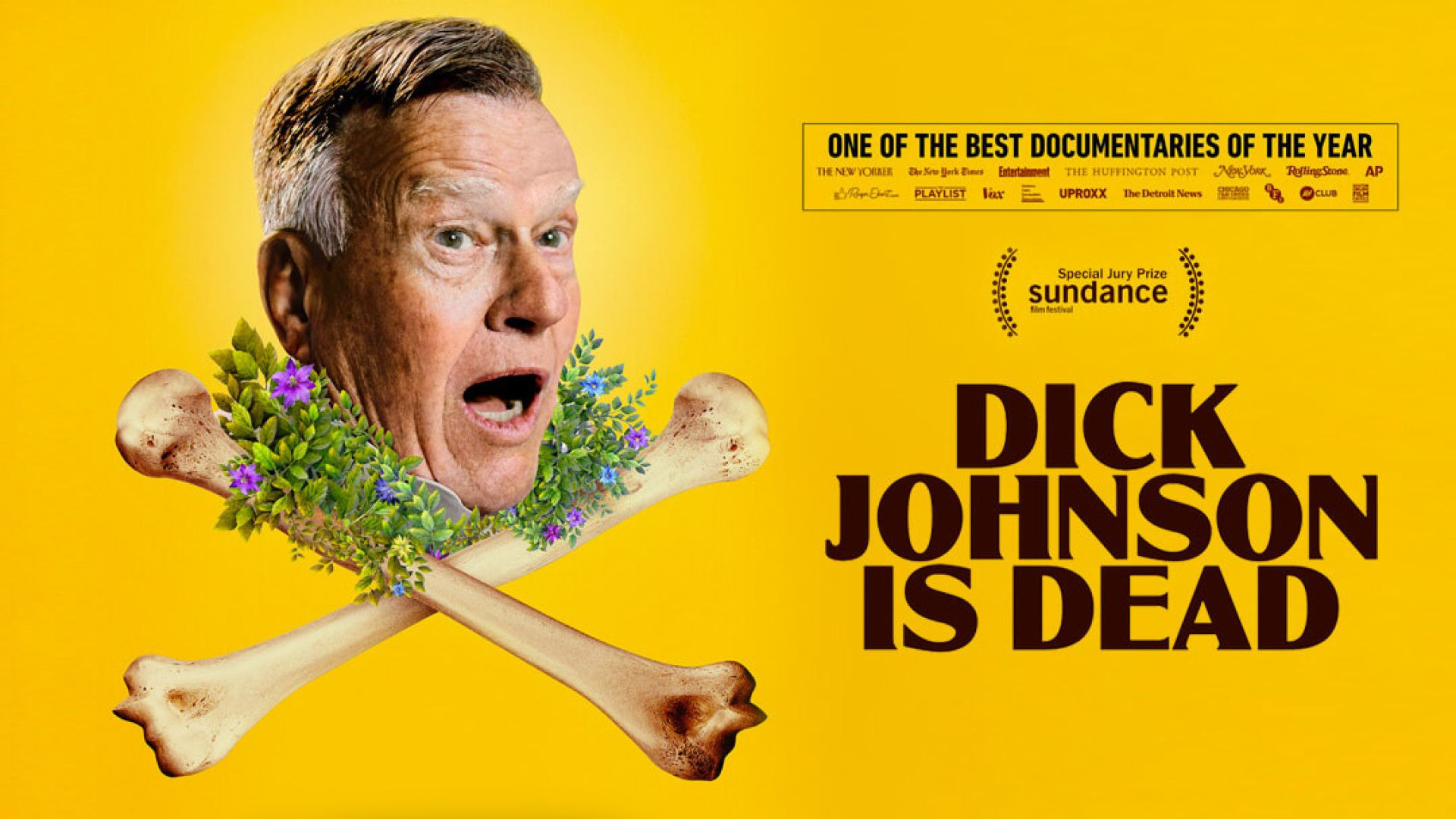
Dick Johnson Is Dead is a 2020 American documentary film directed by Kirsten Johnson and co-written by Johnson and Nels Bangerter.
A lifetime of making documentaries has convinced award-winning filmmaker Kirsten Johnson of the power of the real. But now she’s ready to use every escapist movie-making trick in the book — staging inventive and fantastical ways for her 86-year-old psychiatrist father to die while hoping that cinema might help her bend time, laugh at pain and keep her father alive forever.
The darkly funny and wildly imaginative DICK JOHNSON IS DEAD is a love letter from a daughter to a father, creatively blending fact and fiction to create a celebratory exploration of how movies give us the tools to grapple with life’s profundity. DICK JOHNSON IS DEAD was filmed, produced and directed by Kirsten Johnson (Cameraperson), produced by Katy Chevigny and Marilyn Ness, co-produced by Maureen A. Ryan and executive produced by Megan Ellison.
Cast:
Kirsten Johnson
Charles Richard "Dick" Johnson
Development:
Director Kirsten Johnson at the Miami Film Festival
Kirsten Johnson was inspired to make the film after having a dream in which "there was a man in a casket and he sat up and said, 'I'm Dick Johnson and I'm not dead yet'". When she pitched the idea to her father, she asked him, "Dad, what if we make a movie where we kill you over and over again until you really die? And he laughed".
The film incorporates Johnson family photographs and home movies, including that of Richard Johnson's wife who died from Alzheimer's disease in 2007.
Release:
The film premiered on January 25, 2020 at the 2020 Sundance Film Festival. It was released on October 2, 2020 via Netflix.
RESOURCE: www.dickjohnsonisdead.com
