Latest videos

A documentary exposing the evil Satanists plans to create a New World Order.
Soon after World War I and in connection with the formation of the League of Nations the American president Woodrow Wilson used the term ‘new world order’, hoping that it would finally become possible to create a system for maintaining international peace and security; meanwhile, the political order had already existed in the Western world for several centuries. In historical terms it would be more precise to speak about the international order when the European order transformed into the global one. Moreover, prior to the European order the inchoate international order could be found in other regions of the World System (the most famous here being the Pax Romania).
Thus, with respect to globalization, the search for the origins of the world order leads back to the ancient times. Yet, in historical terms the notion of the world order seems rather amorphous. The humanity has passed a long and perilous way to the establishment of certain international rules and foundations of co-existence. It is worth analyzing them just in terms of the formation (and development) of the world order and the way in which the obtained experience can be employed for making predictions on the forthcoming transformations.
The notions of globalization and world order have become rather closely connected today. The countries' mutual influence as well as the impact of global processes on nations and states are evident today (Ilyin and Leonova 2015). Within the political realm globalization considerably affects the transformation of the states' sovereign prerogatives since it contributes to the change and reduction of the scope of the states' sovereign powers.
It is obvious that the unfolding globalization cannot but complete with some institutionalizing of the relations in the foreign policy sphere although this path is difficult and ambiguous.

"2000 Mules," a documentary film created by Dinesh D'Souza, exposes widespread, coordinated voter fraud in the 2020 election, sufficient to change the overall outcome. Drawing on research provided by the election integrity group True the Vote, "2000 Mules" offers two types of evidence: geotracking and video.
“2000 Mules” is not as much the hard-hitting expose of the 2020 election that viewers might expect from its marketing. The movie is actually a great overview of election fraud that has been taking place for the past decade. And the research it features leaves a big question wide open.
Still, “2000 Mules” is a major, real bombshell.
The documentary comes from political pundit Dinesh D’Souza and familiar collaborators, including director Bruce Schooley, and D’Souza’s wife, Debbie, who has also produced his other movies, most recently “Trump Card” in 2018. It features research conducted by election integrity watchdog True the Vote.
Much criticism has been leveled at the use of cellphone data in “2000 Mules” to track “mules,” or ballot traffickers, and estimate the number of fraudulent votes in the 2020 election that gave Joe Biden the win over Donald Trump. This writer finds the cellphone data to be credible. The data is what makes “2000 Mules” a bombshell, the kind that comes along once in a century. It is the research methodology that is flawed. (More on this later.)
First, the findings that D’Souza presents to viewers are shocking. He asks incisive questions of True the Vote’s founder Catherine Engelbrecht and top researcher Glenn Phillips, leading the viewer through the complex data. Here is what they tell us:
Atlanta: 242 mules that went to an average of 24 ballot dropboxes and eight organizations in a two-week period.
Phoenix, 200+ mules
Milwaukee, 100 mules
Michigan, 500 mules
Philadelphia, 1,100 mules going to 50 dropboxes each. People driving to New Jersey possibly to pick up ballots.
The movie estimates that calculating for the ballot trafficking, Trump would have won with 305 electoral votes.
The movement of the mules shows that the fraud was deliberate.
“To get to some of these dropboxes, it had to be intentional. You had to get off the highway, go on some street, you had to turn in somewhere in order to get to those dropboxes,” Phillips said.
And Engelbrecht remarks on the gaslighting by the media in the aftermath.
“Now the narrative needs to be that this is the most secure election, this is the most fabulous election we have ever had. Pay no mind to the millions of Americans that are saying something is not right,” Engelbrecht said.
The movie also takes the audience through other kinds of ballot harvesting and ballot trafficking, including the exploitation of the disabled and the elderly, and the bullying of vulnerable populations, immigrants and the homeless.
It also mentions the well-known case in North Carolina of the Mark Harris campaign in 2018 as a prime example of ballot trafficking.
All of this information makes “2000 Mules” a great overview on election fraud. But the methodology of the research into the 2020 presidential election has one glaring flaw.
True the Vote seems to make assumptions on the nonprofits, or the “stash houses” where the fraudulent ballots are kept, as one of the starting point of its research along with the ballot dropboxes, for pinpointing the movements of the mules. Additionally, D’Souza never explains or even gives a hint of who these nonprofits are. So the viewer is left in the dark. This begs the question: Did True the Vote have a preset list of nonprofits they knew were stash houses from previous research, instead of determining who the stash houses are from the mules? Is the research completely nonpartisan?
D’Souza has answered a similar question from a viewer here, but has not addressed this concern. In journalism, you can provide hints for who the nonprofits are. For example, are they big nonprofits with obvious political leanings or small nonprofits doing unrelated work, like animal rescue? D’Souza and his producers not giving any hints at all leaves a big piece of the puzzle off the table.

Some good news and some troubling news, from Professor Sucharit Bhakdi, M.D. Oracle Films recently produced an interview with Professor Sucharit Bhakdi in collaboration with Oval Media in Germany, for an upcoming documentary.
As an aside to the interview, Dr. Bhakdi emphasised the urgent need to share the following information that has emerged from new scientific literature.
PLEASE take the time to process this presentation. Dr. Bhakdi explains clearly, based on new scientific evidence, why he believes:
Your immune system is your best defence against SARS-CoV-2, and indeed all coronaviruses.
If you have been infected, even if you experienced no symptoms at all, you are immune to all variants.
We have already reached herd immunity.
There is no scientific reason to vaccinate against SARS-CoV-2. There is simply no benefit and the rollout must be stopped.
And much more.
Scientific literature references for Dr. Bhakdi's presentation:
https://www.sciencedirect.com/........science/article/
(v important DK)
https://journals.plos.org/plos........one/article?id=1
v. imp. IgG IgA response to mRNA vacc. +++
https://academic.oup.com/cid/a........dvance-article/d
(key spike and IgG after vacc)
https://doi.org/10.1016/j.cell.2021.06.005 (third IgG response to vaccine paper)

This is a message from Dr. Anne McCloskey from Londonderry. She speaks about the traumatised people that she comes across. Most double jabbed with an experimental genetic therapy.
These people might have been bribed, bullied, coerced, because of the removal of their basic human rights.
The hospitals are full of double jabbed people and increasingly younger people - and next they are coming for the children.
Let me know your thoughts in the comments?
Check out my other channels as well:
RESOURCE: https://plandemic.co/2021/08/2....2/a-message-from-ann

A very important public speech by a doctor with 25 years of medical internship in several specialisations and an expert in the field of vaccines. (June 2021)
Senate committee hearings and other Capitol events are posted to this page soon after they are announced, and removed at the end of the day. You are invited to revisit this page often for the most current version. For links to individual Senate committee websites, please visit the Senate's Committee portal.
For live, streaming video broadcasts of committee hearings and other events within the Capitol complex you may visit the Senate Live Video Broadcasts page. Official Senate hearings and events are archived and can be accessed from the Senate Audio/Video Archives page or from the individual committee pages.
Events listed on this page will be carried live on the Senate Live Broadcasts page unless otherwise noted. Due to technical limitations, most out-of-town committee hearings and all "desk meetings" held on the Senate floor can not be carried live. For such events, audio recordings will be posted to the main Audio/Video Archives, as well as the relevant committee pages, as soon as possible.
A complete Senate room reservation schedule may be be found at
https://roomsched.senate.texas.gov/
Original resource: https://tlcsenate.granicus.com..../MediaPlayer.php?cli

Metallica doesn't do anything small. Their songs are relentless assaults of sound, sometimes topping the 8 or 9-minute mark. It's not a surprise then that "Metallica: Through the Never," their 3-D IMAX concert film/apocalyptic Mad Max story, directed by Nimród Antal, is a gigantic spectacle, a virtual-reality experience that is both ridiculous and sublime, sometimes in the same moment.
The band members, lead singer/guitarist James Hetfield, lead guitarist Kirk Hammett, drummer Lars Ulrich, and bassist Robert Trujillo, came up with the concept, giving it a personal stamp which longtime Metallica fans will recognize. The Metallica concert in the film features laser beams, a Tesla coil shooting actual lightning bolts through the air, a gigantic statue of Lady Justice which crumbles to bits around the band members, white crosses emerging from beneath the stage floor, dry ice…the only thing missing from that arena stage is an 18-inch tall Stone Henge. Meanwhile, there's a fictional storyline that runs alongside the concert: a young roadie named Trip (Dane DeHaan) is sent on an important mission to retrieve a bag needed by the band. "Metallica: Through the Never" moves back and forth, from concert to Trip and back.
The concert was filmed at Rexall Place, an arena in Edmonton, Alberta. The stage is huge and cross-shaped, with Lars Ulrich's drum set placed in the transept. The three other guys wander around freely, sometimes meeting up, but mostly facing out, communicating with the masses of gyrating fans. Twenty-four cameras were used, and cinematographer Gyula Pados brings us in close enough that we can almost feel the sweat flying off of Trujillo's long hair as he spins his head, and also pulls us back, way back, to give a sense of the sheer scope of the production and the audience. The fans are packed in tight, pushing against the barriers near the stage, pulsing their arms in the air. The effect of all of this is so visceral and immediate that it really is the next best thing to being there.
Cutting away from the concert to follow Trip's attempt to retrieve the missing bag is a risky device and doesn't work initially, because the concert is so engrossing you resent being made to leave it. But it grew on me as the film progressed, and ended up having a startlingly emotional resonance by the closing shots of the film. Here's what happens. Trip takes off in a battered van to go get this missing bag. Civilization appears to have broken down. Cars are on fire. Riot police and mobs face off. People are strung up from lampposts and dangle in the wind. (There's a reason "Metallica: Through the Never" is rated R.) Trip finds himself singled out by the mob. A literal horseman of the Apocalypse, wielding a gigantic mallet and wearing a gas mask, gallops after him. Trip is beaten up, set on fire, dragged behind a horse, chased through dark alleys. What is in the bag that Metallica needs? Well, if you've seen your Hitchcock, then you know that doesn't matter.
All of these scenes are tied thematically to Metallica's concert song list, which span the 30 years of Metallica's career, from early songs like "Creeping Death," to later songs like "Cyanide." All the major hits are covered: "Master of Puppets," "One," "The Memory Remains," "Enter Sandman," "And Justice For All," "Battery," "Nothing Else Matters." Metallica's music is not light. They are not carefree guys. Even their ballads are gloomy. Trip's struggle to survive in a violent dystopian world is reflective not only of Metallica's most common themes, but also echoes what the music actually sounds like. Metallica's music is fast, aggressive, and demanding. As macho as Metallica's collective stage presence is, what they tap into is a very dark place where they are alone, helpless, and isolated. Music critic Steve Huey once observed that "in one way or another, nearly every song on 'Master of Puppets' deals with the fear of powerlessness." That's where the rage comes from.
Trip, as played by Dane DeHaan, is a skinny kid in black jeans and a hoodie. He is overwhelmed by forces larger than him. He is not physically strong. He is an outcast. James Hetfield may be a tattooed rock god, wearing all black and a bullet belt, stalking around on a stage the size of St. John the Divine like he owns the joint, but he still identifies with guys like Trip. He identifies with the outcasts, the scared kids of the world ("Enter Sandman." their most famous song, features a child's voice praying), and Trip is the stand-in for all kids who feel like they don't fit in, who are scared and feel powerless, who find strength in music like Metallica's. That's when the device stopped feeling like a device and felt like an expression of the band's identification with its own fan base, with the guys they used to be.
It was 1983 when Metallica's first album came out, a year where The Police and Michael Jackson dominated the pop charts. Heavy metal fans were part of a vibrant underground scene, where bootleg cassette tapes were passed around. Metallica are Rock and Roll Hall of Famers now. Their actions (and albums) have not always pleased their hard-core fan base. Remember when they sued Napster? Remember "Load," their sixth album, seen by many fans as a betrayal of what the band was all about? Some of the oldest fans think Metallica sold out with what is known as "the black album." These things are still being argued about on heavy metal websites and fan forums. And then of course, they all went into therapy in order to heal the rifts in their relationships, a process documented in the fascinating 2004 documentary "Some Kind of Monster." The album that resulted from that therapy process, "St. Anger," received mixed reviews but still sold millions of copies. You can see that up-and-down journey in the concert itself, as technical snafus threaten to derail the whole thing, forcing the band to go back to basics.
Some of the best moments in the film involve footage of the concert audience. There is one audience member I keep remembering, and he appears for only a second. He was pushed up against the barrier. He had his shirt off, like a lot of the guys did, and his arms were in the air, eyes closed, lost to everything else but that immediate moment. There are millions more of him around the world. And there were thousands more in that arena. The sound of the audience singing along is so powerful it sounds like a political rally about to turn violent. Even James Hetfield at one point seems a bit taken aback at the collective sound of thousands of people singing his lyrics. At the end of the film, during the credits, the words "To the Metallica Family of Fans" scroll by on the screen. "Metallica: Through the Never" is a vehicle that could reach a new generation of fans, who wouldn't even know what the term "bootleg cassette tape" meant, but know great music when they hear it.
With all of the dazzling special effects "Metallica Through the Never" offers, and with all of the violent encounters poor fictional Trip experiences, it's that shirtless fan, arms raised, that encapsulates what the film is all about, encapsulates what Metallica is all about. To paraphrase one of Metallica's most famous lyrics, that's the memory that remains.
REVIEW RESOURCE: https://www.rogerebert.com/rev....iews/metallica-throu

Facebook has a director of social good. She is called Hema and if she has a surname, we weren’t privy to it. The BBC’s Horizon team, as if bewitched at being granted unprecedented access to the social network, bowed to its ethos by captioning interviewees by first name only. But access is like sex: it’s not what you have, but what you do with it that matters.
We met David, the director of harmful behaviour (tough gig, if his task is to stop it, rather than enable it), Monika, who is head of global policy management, and Vlad, Facebook’s head of artificial intelligence, though he will always be The Impaler to me. Sadly, we didn’t get to see Nick, but David Cameron’s former fig leaf has become Mark Zuckerberg’s now he is Facebook’s vice-president of global affairs. Mention Cleggmania in Menlo Park and nobody will know what you are on about.
By rolling over and waving its paws in this way, Horizon abolished critical distance from the global techno-oligarchy with 3.1 billion users and pretensions to ensnare the rest of us. (Facebook is building eight more data centres in the next few years with the aim of doubling storage to accommodate our data.) It put us on chummy terms with the outfit at a vexed moment. Can it change after last week’s $5bn (£4bn) fine for privacy violations in the Cambridge Analytica data breach?
In a meta sense, that was fitting: murdering distance and importuning strangers with simulations of friendliness is Facebook’s MO. It is why revenue exceeded $55bn last year. In another sense, though, this documentary almost amounted to an hour-long commercial for which Zuckerberg didn’t pay.
We witnessed how Facebook is ostensibly striving to use technical fixes to annihilate the human bugs out there – the scammers, hatemongers, sextortioners, e-groomers, Nazis, hackers and black marketeers. This was fascinating in its own right. Can artificial intelligence be used to detect other artificial intelligences posing as humans? How can hate speech by emoji be eliminated?
Fascinating, too, was the cult-like induction ceremony for incoming engineers, tens of thousands of whom are being hired, to ensure Facebook no longer has difficult years like 2018. Soon, they will join the Facebook faithful. Why are there so many balloons in Facebook offices? Because staff have two birthdays, the second celebrating when they joined this evangelising outfit.
“We’re not a company that is designed to make money,” Kyle, director of product, told a room of so-called Newbs in London. No one so much as rolled an eye. “That means every product we make is tuned for ‘does it do good in the world?’” he continued. But what is good? Maybe connecting the world to Facebook, monetising data and believing both are self-evidently good are the problems.
Facebook treats its difficulties as external ones and its task is to seal itself from them. But the corruption is inside, part of the very organisation’s ethos. It is Horror Movie 101. Everyone interviewed here was, as it were, wearing Clegg’s fig leaf to hide that unacceptable truth. “We’re a community that is designed to create communities and let those communities make a difference in the world,” Kyle added.
But Facebook is a business not a community, and when it creates communities they sometimes make a difference in a bad way. “We don’t tolerate dicks,” said Jonny, head of internal communications. Instead, Facebook enables them. Tommy Robinson was jailed earlier this month for live streaming, via Facebook, defendants arriving at court in a sexual grooming trial.
One critic complained about how Facebook had “destabled democracy”. Horizon needed more eloquent dissenters. Maybe she meant that if Facebook is a horse and democracy is a door, the former has bolted and the latter is coming off its hinges. It was hard to be sure.
Back to the commercial. Hema told how her father, who had liver cancer, lost a litre of blood an hour. If there had been an online facility matching blood supply to demand, he need not have died so quickly.
So she made it her mission to establish just that facility for 70 countries where blood transfusions don’t happen because of supply problems. Cut to her team, thrilled that 11 million users have signed up to its blood market. We learned later, though, this initiative enables a black market for blood in India. An unintentional consequence, perhaps, but given earlier online scams, a foreseeable one.
The Horizon team never met Hema’s opposite number, the director of social bad. Chet (no surname) works in a basement tasked with reversing what happened in Facebook’s difficult 2018. Not the data breaches or live-streamed mass murder in Christchurch, but the really unacceptable thing, namely how 20% was slashed from the value of Facebook shares on news that its ad revenue per user was declining and user growth slowing. Such things can never happen again, Chet realises.
Fake news. Facebook has no director of social bad. No Chet in a basement. Nobody in the social network is tasked with squeezing more money from its users. Facebook is all good.
REVIEW RESOURCE: https://www.theguardian.com/tv....-and-radio/2019/jul/

In 2020 London Real TV - Icke claimed pandemic was a cover story. As we know now - he was right.
The local television station London Live is facing sanctions after the media regulator, Ofcom, found it had posed a threat to the public’s health by showing a lengthy interview with David Icke about the coronavirus pandemic.
The little-watched channel, owned by Evening Standard boss Evgeny Lebedev, broadcast an 80-minute interview with the former footballer and noted conspiracy theorist earlier this month.
Icke used the broadcast to claim without evidence that the pandemic was cover for a supposed global world order to purposefully crash the economy, end the use of cash payments, and track every individual.
In a separate ruling on coverage relating to Covid-19, ITV was also warned to take care how it reports on repeatedly debunked claims linking 5G mobile phone networks to coronavirus, following comments by This Morning’s Eamonn Holmes.
Ofcom said London Live’s decision to broadcast the Icke interview “had the potential to cause significant harm to viewers in London during the pandemic” because his views were not sufficiently challenged by the host and viewers were not given extra context on the claims.
The channel had argued that it should not be sanctioned for showing the interview with Icke on the basis he was exercising freedom of expression. London Live said this was particularly important in the current circumstances, when civil liberties are being “constrained” and “threatened”. The station also said it was essential to question “conventional wisdom” and government action in a “responsible” manner.
Among the material London Live covered were assertions by Icke that Covid-19 was being used as a weapon of war by the US and Israel against Iran, as well as suggestions that any plan to immunise the world with a coronavirus vaccine was a plot to infect people with a “tidal wave of toxic shite”.
The broadcast was edited by London Live staff from a longer interview conducted for the similarly named but unrelated YouTube channel London Real.
David Icke had his visa revoked just hours before boarding a flight to Australia for a speaking tour
Conspiracy theorist David Icke hits back after Australia revokes visa.
In a sign of how different forms of media are regulated, the London Live broadcast was watched by just 80,000 people, but has attracted regulatory scrutiny and sanctions. Meanwhile, a version of the original London Real interview remains available on YouTube, where it has racked up almost 6m views with no regulatory issues.
London Live unsuccessfully argued that it would be “illogical” and “unfair” for Ofcom to penalise it for broadcasting material that was still available on YouTube. A different interview involving Icke and London Real has been removed by YouTube, although none of it was broadcast on London Live.
Icke has enjoyed the attention paid to him as a result of the controversy around the broadcast, with Google search interest in his name spiking as a result.
Ofcom separately concluded that Holmes’s comments on ITV’s This Morning that people should challenge “the state narrative” around 5G phone masts “were ill judged and risked undermining viewers’ trust in advice from public authorities and scientific evidence”.
Although it said this was irresponsible, given recent attacks on mobile phone masts in the UK, it concluded that his subsequent clarification and other comments making clear the link was “fake news” meant there was no need to formally sanction ITV.
REVIEW RESOURCE: https://www.theguardian.com/me....dia/2020/apr/20/tv-s

“Project Nim,” a new documentary by James Marsh, is a probing, unsettling study of primate behavior, focusing on the complex dynamics of power, sex and group bonding in a species whose startling capacity for selfishness and aggression is offset by occasional displays of intelligence and compassion.
His name — a human imposition, like everything else in this creature’s remarkable, heartbreaking life — is Nim Chimpsky. In the 1970s he enjoyed (or endured) a season of fame as a research subject. Shortly after his birth at an primate behavior, Nim was taken from his mother’s side and delivered to New York, where he became part of an experiment, led by a Columbia professor, Herbert Terrace, to determine whether an ape could be taught human language.
It is a bit curious that Mr. Marsh’s film has nothing to say about the roots of Nim’s name, a jab at the influential linguist Noam Chomsky, whose theories about the innateness and uniqueness of language to humans were the implicit target of Dr. Terrace’s work. His project was an effort to discern if a chimpanzee could learn sign language and if that learning could proceed beyond the mimicry of specific gestures into the creation of grammatical sentences. If Nim could be raised more or less as a human child, and could master human communication, that would challenge the Chomskyan idea of language as a special, hard-wired trait fundamentally separating us from other animals. (Koko the gorilla, another celebrated signing ape born around the same time as Nim, also tested this hypothesis.)
“Project Nim” glances briefly at the scientific controversy that shaped Nim’s fate, but Mr. Marsh is less interested in comparatively dry matters of linguistics or neurobiology than in a humid, messy domain of identity and emotion that has, in the past, been the terrain of psychoanalysis. And of literature: Nim, thrown from one home to another, vulnerable to cruelty and neglect and dependent on the kindness of strangers, resembles the titular hero of a Dickens novel, an orphan buffeted by circumstances whose biography is also a fable of individual virtue and social injustice.
A helpless innocent compared with his protectors and tormentors, Nim bounces like a long-armed David Copperfield from one unnatural home to another — a Manhattan brownstone, an estate in the Bronx, a medical testing center upstate — living through periods of pastoral bliss and gothic horror. His tale is Dickensian, but also Kafkaesque, since he is at the mercy of powerful forces beyond his ken or control.
Red Peter, the learned ape in Kafka’s devastating “Report to an Academy,” dreams, above all else, of a “way out,” and to watch footage of the young Nim at play and in confinement is to infer that he must have known a similar longing. Unlike the Kafka character, however, this educated primate never acquired enough words to tell us his story, and so “Project Nim” relies on human interlocutors, some of whom cared about Nim a great deal, almost all of whom wind up telling us more about themselves.
They are a remarkable collection, often at odds and sometimes in bed with one another, with Nim as their pawn, rival or surrogate child as well as the blank slate on which they inscribe their fantasies and intellectual conceits. Dr. Terrace, speaking with precision and detachment in present-day interviews, is either resigned to being the film’s designated villain or oblivious to being set up for that role. His former colleagues, some of them also former lovers, don’t have much good to say, and the ’70s footage, showing an academic dandy with a comb-over, a BMW and a Burt Reynolds mustache, is hardly flattering.
For the first few years of Nim’s life, Dr. Terrace was the master of his fate, though not always a significant presence in the chimp’s day-to-day routine. After leaving Oklahoma, Nim was installed in the home of Stephanie LaFarge, where he became part of a household that included seven children, at least one dog and Ms. LaFarge’s husband, a poet and “rich hippie” who appears to have been Nim’s romantic rival.
Ms. LaFarge, an open and genial interview subject, drops a few casual bombshells testifying to what the psychobabble of our own time might call boundary issues. “It was the ’70s,” her now grown-up daughter Jenny Lee says, but even then, and even on the Upper West Side, it might have been a bit unusual for a woman to breastfeed a baby chimpanzee.
After a while, Nim was transferred to an estate in Riverdale, cared for and tutored by young people — most of them women — who come before Mr. Marsh’s camera in middle age to recall the pleasures and dangers of working with their spirited simian charge. It is hard not to be charmed by the affection that passes between these humans and the chimp, or to appreciate what seems to be a reciprocated effort at communication. But at the same time it is difficult to avoid a certain queasiness at the sight of a wild creature forcibly and irrevocably alienated from his nature — dressed in clothes, tethered and caged, smoking a joint out in the woods with his pals. You laugh, sometimes, to force the lump out of your throat.
There is no doubt that Nim was exploited, and also no doubt that he was loved. Mr. Marsh, by allowing those closest to Nim plenty of room to explain themselves, examines the moral complexity of this story without didacticism. He allows the viewer, alternately appalled, touched and fascinated, to be snagged on some of its ethical thorns. He also engages in a bit of manipulation, using sleight-of-hand re-enactments and Dickon Hinchliffe’s nerve-rackingly melodramatic score to sensationalize a drama that hardly requires it.
Mr. Marsh, whose last documentary was the lovely, Oscar-winning “Man on Wire,” is a patient listener and an able storyteller, but the subject of “Project Nim” is so rich and strange that it might have benefited from the hand of a wilder, bolder filmmaker. An obsessive like Errol Morris or Werner Herzog might have pushed beyond pathos and curiosity, deeper into the literal no man’s land that lies between us and our estranged animal relations. But it is also possible that our language and our science do not equip us to understand the truth about Nim — or the truth about us that he may have discovered through years of rigorous, involuntary research.
“Project Nim” is rated PG-13 (Parents strongly cautioned). Strong language, drug use, sexual references and depictions of animal suffering.
REVIEW RESOURCE: https://www.nytimes.com/2011/0....7/08/movies/project-

[Merlin] Absolute Label Services (on behalf of Marc Martel / The Fuel Music); LatinAutorPerf, LatinAutor - Warner Chappell, SOLAR Music Rights Management, Warner Chappell, Global Music Rights LLC, LatinAutor - SonyATV, UNIAO BRASILEIRA DE EDITORAS DE MUSICA - UBEM, MINT_BMG, Sony Music Publishing, ASCAP, Abramus Digital, and 5 music rights societies
http://www.marcmartelmusic.com
http://www.twitter.com/marcmartel
http://www.facebook.com/marcmartelmusic

Recorded at Weltklang Studio Plauen, Germany in November 2018 by the Martin Miller Session Band in one continuous take.
Matthias Proctor - Vocals
Martin Miller - Guitar & Vocals
Nico Schliemann - Guitar & Vocals
Marius Leicht - Keyboards & Vocals
Benni Jud - Bass & Vocals
Felix Lehrmann - Drums
Martin Miller - Audio Mix & Video Edit
https://www.bennijud.com/
http://www.martinmillerguitar.com/
http://www.nicoschliemann.de/
https://www.youtube.com/nicoschliemann
https://felixlehrmann.de/
http://bit.ly/youtube_BIIDmusic_Matth...
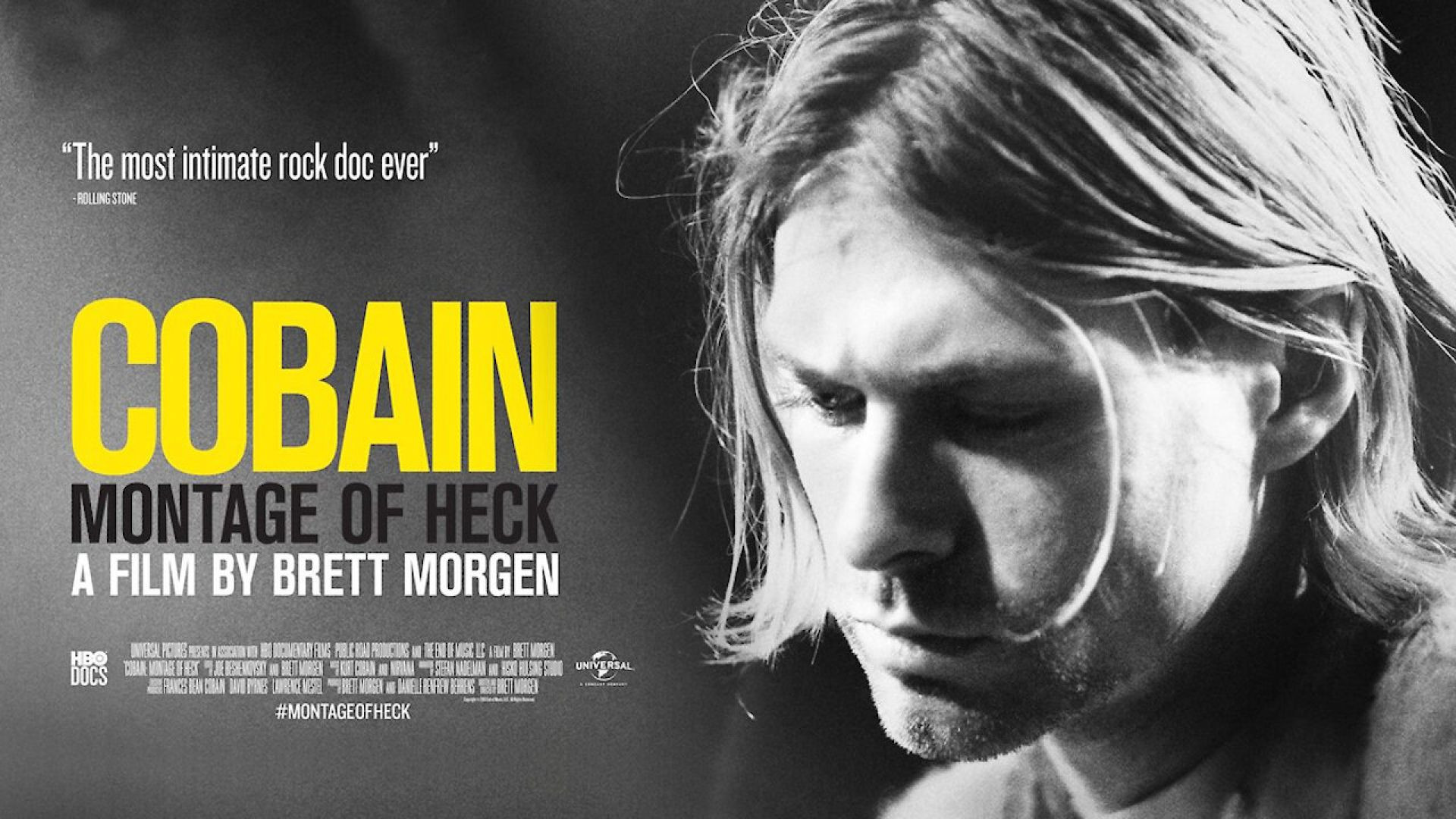
Kurt Cobain: Montage of Heck is a 2015 American documentary film about Nirvana lead singer Kurt Cobain. The film was directed by Brett Morgen and premiered at the 2015 Sundance Film Festival.
It received a limited theatrical release worldwide and premiered on television in the United States on HBO on May 4, 2015. The documentary chronicles the life of Kurt Cobain from his birth in Aberdeen, Washington in 1967, through his troubled early family life and teenage years and rise to fame as front man of Nirvana, up to his suicide in April 1994 in Seattle at the age of 27.
The film includes artwork by Cobain as well as music and sound collages composed by him. Much of music and sound collages were released on the film's soundtrack, Montage of Heck: The Home Recordings. A companion book was also released containing animation stills from the film as well as transcripts of interviews, photographs, and Cobain's artwork that were not featured in the film.

he film focuses on the historic files of the Disclosure Project and how UFO secrecy has been ruthlessly enforced-and why. The best evidence for extra-terrestrial contact, dating back decades, is presented with direct top-secret witness testimony, documents and UFO footage, 80% of which has never been revealed anywhere else.
The behind-the-scenes research and high-level meetings convened by Dr. Steven Greer will expose the degree of illegal, covert operations at the core of UFO secrecy. From briefings with the CIA Director, top Pentagon Generals and Admirals, to the briefing of President Obama via senior advisor John Podesta, chairman of the Hillary Clinton Campaign, we take the viewer behind the veil of secrecy and into the corridors of real power where the UFO secrets reside.
The viewer will learn that a silent coup d'état has occurred dating back to the 1950s and that the Congress, the President and other world leaders have been sidelined.

A true twentieth-century trailblazer, Harvey Milk was an outspoken human rights activist and one of the first openly gay U.S. politicians elected to public office; even after his assassination in 1978, he continues to inspire disenfranchised people around the world. The Oscar-winning The Times of Harvey Milk, directed by Robert Epstein and produced by Richard Schmiechen, was as groundbreaking as its subject.
One of the first feature documentaries to address gay life in America, it’s a work of advocacy itself, bringing Milk’s message of hope and equality to a wider audience. This exhilarating trove of original documentary material and archival footage is as much a vivid portrait of a time and place (San Francisco’s historic Castro District in the seventies) as a testament to the legacy of a political visionary.
This documentary examines the political life of the self-proclaimed "Mayor Of Castro Street," N.Y. stockbroker turned San Francisco activist Harvey Milk, the first openly gay politician elected to public office in California. Milk was elected to a City Supervisor position in the '70s, when a successful gay politician was an anomaly, but Milk made the most of his brief time in power. When Dan White killed Milk and Mayor George Moscone, the loss experienced by Milk's supporters was profound.
White robbed the gay-rights movement of a charismatic leader and eloquent voice, but he accidentally gave it something a smart political operative like Milk would surely have appreciated the power and value of: a bona fide martyr.

In this ground-breaking original series, experts explore the history and use of psychedelic plants including political ambitions, the perceived shadow side and the proper environment to experience these substances.
From the origins of Shamanism to the spiritual expression of modern awakenings, discover the role of sacred medicine as a gateway to expanded consciousness, and its continued influence on humanity.
“Psychedelics are illegal not because a loving government is concerned that you may jump out of a third story window. Psychedelics are illegal because they dissolve opinion structures and culturally laid down models of behaviour and information processing. They open you up to the possibility that everything you know is wrong.” ― Terence McKenna
RESOURCE: https://www.gaia.com/seeking-t....ruth/original-progra

Watch Part TWO (2) here => https://vajratube.com/watch/ge....orge-harrison-living
George Harrison first became known to the world as 'The Quiet Beatle', but there was far more to his life than simply being a part of The Beatles. This film explores the life and career of this seminal musician, philanthropist, film producer and amateur race car driver who grew to make his own mark on the world.
Through his music, archival footage and the memories of friends and family, Harrison's deep spirituality and humanity are explored in his singular life as he took on artistic challenges and important causes as only he could.
Using unseen photos and footage, Academy Award®-winning director Martin Scorsese traces the life of George Harrison in a personal film, weaving together performance footage, home movies, rare archival materials and interviews with his family and friends including Eric Clapton, Terry Gilliam, Eric Idle, George Martin, Paul McCartney, Yoko Ono, Tom Petty, Phil Spector, Ringo Starr and Jackie Stewart.
Watch Part Two( 2) here => https://vajratube.com/v/zHSaEe

I Know What I Saw is a documentary guaranteed to change the way we see the universe. Director James Fox assembled the most credible UFO witnesses from around the world to testify at The National Press Club in Washington D.C. including Air Force generals, astronauts, military and commercial pilots, government and FAA officials from seven countries who tell stories that, as Governor Fife Symington from Arizona stated, "will challenge your reality".
Their accounts reveal a behind-the-scenes U.S. operation whose policy is to confiscate and hoard substantiating evidence from close encounters to the extent that even Presidents have failed to get straight answers. 'I KNOW WHAT I SAW' exposes reasons behind government secrecy from those involved at the highest level. James Fox has won the support of several key media, government and military personnel, and has made numerous television and radio appearances.
Additionally, because of the strength of his ratings and the high level of interest from his audience, Larry King has indicated to James Fox an interest in promoting I Know What I Saw. With the worldwide unrelenting UFO fascination and the phenomenal success of fictional UFO films, it is high time for an up-to-date documentary about UFOs for worldwide release.
REVIEW RESOURCE: https://topdocumentaryfilms.com/i-know-what-i-saw

The Hollywood Vampires take their name from an all-star social club that drank itself to oblivion during the mid 1970s at the Rainbow Bar and Grill on The Sunset Strip. The 2019 documentary The Rainbow chronicles the restaurant’s place in the Los Angeles music scene and is an engaging profile of the family that’s run it for three generations (that is, when it’s not indulging in lazy nostalgia). Directed by Zak Knutson, it is currently streaming on Amazon Prime.
Since opening in 1972, the Rainbow has offered food and drinks to successive generations of rockers. Located in West Hollywood, betwixt a cluster of music venues, it was popular with bands visiting Los Angeles as well as those living and trying to make it in the City of Angels. Besides the Hollywood Vampires – which included Alice Cooper, a couple Beatles and riotous Who drummer Keith Moon, Led Zeppelin picked up groupies there, The Runaways ate there and a teenage Slash snuck in dressed as a woman. Motörhead’s Lemmy loved the place so much he bought an apartment within walking distance and was often found drinking Jack Daniel’s and playing video poker at the bar for hours on end.
Behind it all was the Maglieri family, led by tough talking patriarch Mario, who came to Los Angeles from Chicago in the early 1960s to help run another storied local institution, the Whisky A Go Go. Mario is hard not to like, dropping one-liners like “I had rock n’ roll in my bar in Chicago before you ever heard of rock n’ roll,” calling Jim Morrison “a good kid,” and telling stories about throwing Charles Manson out on his ass, like a real life Cliff Booth. “He says, ‘I’m Jesus.’ I tell him, ‘I’m God motherfucker. Now get up from that chair.’ He got up or I’d have had to beat the shit out of him. Either one.”
Though its capacity was in the hundreds, the Whisky became one of the most important L.A. music clubs of the ‘60s and ‘70s. The Doors and Chicago were the house bands at various times, Van Halen used it to built their audience and scores of trailblazing acts made their area on its stage. As Kiss’ Gene Simmons says, “When you first start out and before you figure out your game, the Whisky’s the place to do it.” In fact, the Maglieri have an interest in both the Whisky and the Rainbow, and the film is as much about the venue as the bar up the street.
As the ’70s turned to the ’80s, hard rock turned to metal, from glam to thrash, and again found a home on the Sunset Strip. W.A.S.P. and L.A. Guns drummer Steve Riley says he went to the Rainbow the first night he moved to L.A. and it became a great place to meet other hungry young rock musicians looking to form bands. Thought it all, Mario Maglieri was there to comp musicians a bowl of soup or offer fatherly advice, telling young rock stars when they were drinking too much or doing too many drugs.
REVIEW RESOURCE: https://decider.com/2020/02/24..../the-rainbow-documen

For more than 20 years the CIA studied psychic abilities for use in their top-secret spy program. With previously classified details about ESP now finally coming to light, there can be no more secrets.
Two physicists discover psychic abilities are real only to have their experiments at Stanford co-opted by the CIA and their research silenced by the demands of secrecy. Yet, as both these 'remote viewers' and our audience learn, the 'more you hide something, the more it shines like a beacon in psychic space and this ancient truth can no longer be suppressed.'
The true story of Russell Targ and America's cold war psychic spies, disclosed and declassified for the first time, with evidence presented by a Nobel Laureate, an Apollo Astronaut, and the military and scientific community that has been suppressed for nearly 30 years, now able to speak for the first time.
Targ's understated mantra that "the evidence for extra sensory perception is overwhelming and shows a talent we all share and deserve to know about, leaves us not just with a greater understanding of this unique chapter in U.S. history, but perhaps most importantly a greater understanding of who we are and our larger connection to the world. The CIA, NSA and DIA used it, your tax dollars paid for it, and now you deserve to know about it.

Hunter Biden’s business dealings in China served the “strategic interests” of the country’s communist government and military — and may have imperiled American national security, claims a new documentary exclusively previewed by The Post.
“Riding the Dragon: The Bidens’ Chinese Secrets” highlights several deals that Hunter Biden was involved in as a board member of the Beijing-based BHR Partners investment firm.
The film also alleges that Hunter was only able to get meetings with Chinese officials — and secure $1 billion in funding — “because of who his father was: vice president of the United States” and then-President Barack Obama’s “point person on US policy towards China.”
The 41-minute documentary is narrated by best-selling writer Peter Schweizer, who authored 2015’s “Clinton Cash: The Untold Story of How and Why Foreign Governments and Businesses Helped Make Bill and Hillary Rich” and has previously written about Hunter’s business dealings in China.
