Documentary
Sottocategoria

Oliver Stone has not left the assassination of John F. Kennedy behind. One of his best films, 1991’s “JFK” became a major event in the analysis of the death of one of the most popular world leaders in history, adding fuel to the fires already burning around The Warren Commission Report that, bluntly, a lot of people don’t believe. Three decades after that narrative feature that's as much about obsession as it is assassination, Stone has returned with a documentary that basically reiterates many of the details of the case with a heavy focus on what’s been learned via declassified reports, books by witnesses, and other analysis in the last 30 years.
Playing in theaters today and on Showtime's streaming app, and airing on Showtime on the anniversary of the assassination on November 22rd, “JFK Revisited: Through the Looking Glass” is an exhaustive and sometimes exhausting documentary, a film that can sometimes feel like it’s so packed with information and detail that Stone has lost the path through this dense forest of conspiracy theories.
At its best, it reminds one how tightly Stone can assemble a film like this one as he makes a convincing case that some things about the assassination of JFK don’t add up. At its worst, it can be like a drunken conversation, moving wildly from point to point in a way that gives you no time to stop and ask some pertinent questions. One thing is true in both cases—it’s never boring. And our true crime-obsessed era seems primed to revisit one of the most famous crimes of all time.
Stone was smart to basically divide “JFK Revisited” into two hour-long chapters—it leads one to wonder if he wasn’t considering making this into a docuseries instead of a film. The first half, narrated by Stone and Whoopi Goldberg, focuses heavily on the evidence of that day in 1963—ballistics, exit wounds, reports from people who saw Kennedy’s body. Was the bullet entry wound in the back, as the Warren Commission asserted, or in the front, as several witnesses claimed after seeing the body?
Why are the memories of the state of Kennedy's brain different than the photographs? And how does one possibly explain the retrieved bullet that reportedly went through Kennedy and hit John Connally looking practically pristine when it was recovered? Stone’s approach is to layer inconsistency on inconsistency. Some don’t add up to much—a witness is not going to be able to remember exactly how long it took her to descend the book depository stairs on a good day much less a historic one—but there is an unsettling sense that, at the very least, mistakes were made in the investigation. (Just the chain of custody of some of the evidence was clearly messed up.)
The second half of “JFK Revisited,” narrated by Donald Sutherland (who had a pivotal role in “JFK”), isn’t as strong because it feels more rushed and leans into some of the wilder ideas with less focus. In this half, Stone sets out to provide motives for an assassination and cover-up, basically pointing the finger at the CIA. He flies down the rabbit hole of history, compiling stories about Castro, Vietnam, and the Military-Industrial Complex in a manner that sometimes feels haphazard, and then he ends far too abruptly, suggesting that conspiracy and assassination destroys the fabric of society without really digging into what that means in 2021.
Stone can get a little too confident for his own good—“Conspiracy theories are now conspiracy facts,” he says in one such moment—but when one has devoted as much of his life to the death of Kennedy as the Oscar-winning director has then hesitancy isn’t an option. I was concerned going into the film that Stone’s obsession would lead to a documentary that only he could understand—conspiracy theorists have a habit of foregoing accessibility to those who haven’t read dozens of books on the subject—but I was reminded how expertly Stone can orchestrate a film like this one, even as the second half was spinning theory after theory. Most of all, I was left thinking that this isn’t so much Stone's final word on the subject as it is a hope to restart the conversation.
RESOURCE: https://www.rogerebert.com/rev....iews/jfk-revisited-t

The official version of human history is a construct of lies. We are in a state of collective amnesia. Let's free ourselves from the artificial matrix that has been imposed on us. This part covers the World's Fairs and the time in which they took place.
Written by: dreamtime & Mosaic, https://stolenhistory.net
Narrated by: Sovereine & David Glenney
Post-production: Bart van der Zwaan https://youtube.com/bartingman
WATCH FULL SIERIES:
Part 1: Nothing is as it seems => https://vajratube.com/v/MBtVx6
Part 2: The Destruction of the Old World => https://vajratube.com/v/4Kya4M
Part 3: The Mystery of the World's Fairs => https://vajratube.com/v/lmqIAN

The official version of human history is a construct of lies. We are in a state of collective amnesia. Let's free ourselves from the artificial matrix that has been imposed on us. This part covers the World's Fairs and the time in which they took place.
Written by: dreamtime & Mosaic, https://stolenhistory.net
Narrated by: Sovereine & David Glenney
Post-production: Bart van der Zwaan https://youtube.com/bartingman
WATCH FULL SIERIES:
Part 1: Nothing is as it seems => https://vajratube.com/v/MBtVx6
Part 2: The Destruction of the Old World => https://vajratube.com/v/4Kya4M
Part 3: The Mystery of the World's Fairs => https://vajratube.com/v/lmqIAN

The official version of human history is a construct of lies. We are in a state of collective amnesia. Let's free ourselves from the artificial matrix that has been imposed on us. This part covers the World's Fairs and the time in which they took place.
Written by: dreamtime & Mosaic, https://stolenhistory.net
Narrated by: Sovereine & David Glenney
Post-production: Bart van der Zwaan https://youtube.com/bartingman
WATCH FULL SIERIES:
Part 1: Nothing is as it seems => https://vajratube.com/v/MBtVx6
Part 2: The Destruction of the Old World => https://vajratube.com/v/4Kya4M
Part 3: The Mystery of the World's Fairs => https://vajratube.com/v/lmqIAN

The Pyramid Code is a made-for-television documentary series of 5 episodes that explores the pyramid fields and ancient temples in Egypt, as well as ancient megalithic sites around the world, looking for clues to matriarchal consciousness, ancient knowledge and sophisticated technology in a golden age.
The ancients knew about an Earth grid of powerful energies and believed they coalesced in designated patterns. Learn how such knowledge translated into an extraordinary mathematical precision, as revealed in monuments including the great pyramids of Egypt, Stonehenge, Teotihuacán and many others.
The series is based on the extensive research done in 25 trips to Egypt and 51 other countries around the world by Dr. Carmen Boulter. The Pyramid Code features interviews with more than a dozen prominent scholars and authors in multidisciplinary fields.
Episode 2
44 mins
High Level Technology
High Level Technology shows evidence that the ancient Egyptians used sophisticated engineering and high science to construct pyramids and temples.

his piece was written during the 2023 WGA and SAG-AFTRA strikes. Without the labour of the writers and actors currently on strike, the movie being reviewed here wouldn’t exist.
As a child, I would often hear my grandfather say that with the creation of the atomic bomb, there wouldn’t be any world wars anymore. There would only be smaller wars. So far, he’s been right, although the prospect of a country using an atomic weapon on another has never left us. Even the threat of a so-called “dirty bomb” being used by a rogue organisation is a very real possibility that many governments fear and presumably have developed contingency plans for.
When University of California, Berkeley physicist J. Robert Oppenheimer was recruited to head up the Manhattan Project, America’s program to design and build the world’s first atomic bomb, he, like many others, had visions of war being a thing of the past. That view changed, however, when he saw how destructive his creation turned out to be. The two atomic bombs that were dropped over Hiroshima and Nagasaki incinerated both cities and killed between 150,000 and 225,000 people, with about half of those deaths occurring on the first day. Think about that. It means that about 100,000 people died of radiation burns and cancers in the days, months and years after the bombings took place. One can argue that the bombings hastened the end of the war with Japan but at what cost?
Coinciding with the release of Christopher Nolan’s new film, OPPENHEIMER, NBC in the US has released a feature-length documentary entitled TO END ALL WAR: OPPENHEIMER & THE ATOMIC BOMB. It follows Oppenheimer’s rise to the pinnacle of heroism in the eyes of most Americans and his subsequent fall.
Little known to most people these days, Oppenheimer was a tragic figure. Historians agree that his contributions to theoretical physics should have earned him a Nobel Prize if not for two things: the destructive nature of the bomb — the antithesis of why Alfred Nobel created the prize in the first place — and his outspoken opposition to America continuing its development of other weapons of mass destruction, the latter of which put him solidly in the crosshairs of Senator Joe McCarthy’s House Un-American Activities Committee (HUAC).
Prime Time Emmy Award-winning director Christopher Cassel (ROME) examines Oppenheimer’s early years as well as the legacy he left behind with a mix of archival footage, soundbites, animated scenes, heartbreaking footage of the blasts’ survivors, and interviews from Bill Nye (the Science Guy), Hiroshima survivor Hideko Tamura, grandson Charles Oppenheimer and Christopher Nolan among others. (If you’re wondering why Nolan would appear in this documentary, Universal Pictures, which is distributing his film worldwide, is the sister company of NBC.)
I now seen OPPENHEIMER and TO END ALL WAR complements the film rather than takes away from it. It’s a fascinating look at a complicated and tormented man at a time when his country wanted a hero more than it wanted a moral compass.
REVIEW RESOURCE: https://howardforfilm.com/2023..../07/18/movie-review-

The Pyramid Code is a made-for-television documentary series of 5 episodes that explores the pyramid fields and ancient temples in Egypt, as well as ancient megalithic sites around the world, looking for clues to matriarchal consciousness, ancient knowledge and sophisticated technology in a golden age.
The ancients knew about an Earth grid of powerful energies and believed they coalesced in designated patterns. Learn how such knowledge translated into an extraordinary mathematical precision, as revealed in monuments including the great pyramids of Egypt, Stonehenge, Teotihuacán and many others.
The series is based on the extensive research done in 25 trips to Egypt and 51 other countries around the world by Dr. Carmen Boulter. The Pyramid Code features interviews with more than a dozen prominent scholars and authors in multidisciplinary fields.
Episode 1 (44 mins)
The Band of Peace
The Band of Peace raises questions about the purpose of the pyramids, challenging the story traditional Egyptology tells.

In this film Dr. David Martin gives an education in the history of the United States where we went wrong and what are the mechanisms of that deviation of the grand experiment.
In American R/Evolution, David tells the story of the financial and commercial history of the United States. He revisits the vision for America that was postulated by Thomas Jefferson, and explains where this vision was derailed. The film delivers a message that challenges existing paradigms and inspires viewers to engage their communities in a greater capacity.
Our financial history is a subject typically distorted beyond comprehension. But through the film, Dr. David Martin narrates it in a way that is approachable, entertaining, and utterly mind-blowing for people of all walks of life.
“We believed in a world where there was always something beyond. We believed in a world where somehow our fear of death needed to change how we live. We believed in a world where we had to look to ourselves rather than look to our neighbours and to our network to support us. We believed in a world where we wanted to surrogate our responsibility because even though we got rid of a monarch, we got rid of a pope… We still believed that someone somewhere else was responsible for our lives.“
David Martin
Dr Martin's Youtube channel => https://www.youtube.com/@DavidMartinWorld
Official website => https://www.davidmartin.world/
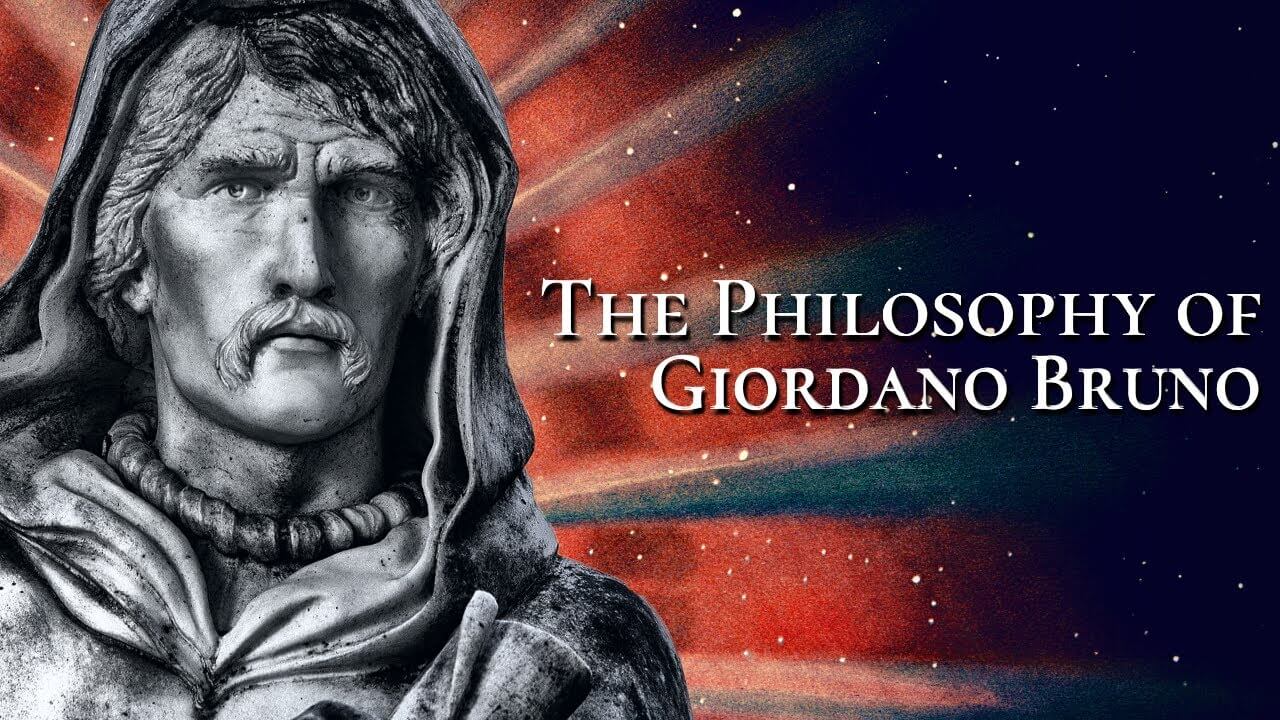
The philosophy of Giordano Bruno was unique for the Neoplatonic and Aristotelian dominated era during which it was conceived. Its uniqueness derives from its ability to combine metaphysics, physics, psychology, and ethics into a philosophy that, while presented in an unsystematic and at times seemingly disjointed way, manages to shine with an inner coherence.
Though this video may seem lengthy to my viewers, the feat of condensing down the vitals of his philosophy was exceedingly challenging as it would have been easy to exceed 45 minutes if the editing was not such a lengthy process. Thank you for taking the time to watch and I hope you can gain some understanding of Bruno’s eclectic philosophy!
Music:
'Cirrus' by Scott Buckley - released under CC-BY 4.0. www.scottbuckley.com.au
Sources: To the generous men and women who published these resources, especially Stanford’s article concerning Bruno, I cannot say thank you enough. Without such articles this video would not be possible without the purchase of countless books.

The Revelation of the Pyramids, narrated by Brian Box, takes an extensive look into the Great Pyramid of Giza, which is widely believed to have been built as a tomb for the country’s pharaohs during ancient times. Based on the works of Jacques Grimault who has studied pyramids for over 40 years, it presents an alternative theory on its origins. It questions the traditional viewpoints of Egyptology, asserting that they rely on unverified assumptions such as the lack of machines, its twenty-year construction period, and its ‘coincidental’ equinox-orientation.
The Revelation of the Pyramids then goes into comparisons between Giza’s pyramids and those of other regions like China, Easter Island and the various native cultures of the Americas. The film posits that Giza’s construction implies that Egyptians would have to have been incredibly advanced mathematicians, using equations centuries before they were discovered by the rest of the world. It therefore draws the conclusion that the pyramids were not built by Egyptians, but by a significantly older civilisation that has long-since faded away into the mists of time.

Based upon Theosophy (the Secret Doctrine) this documentary focuses on the evolution of consciousness over millions of years while revealing the secret chronology of human history from ancient Lemuria and Atlantis to our current root race, while following the natural cyclic deluges between races.
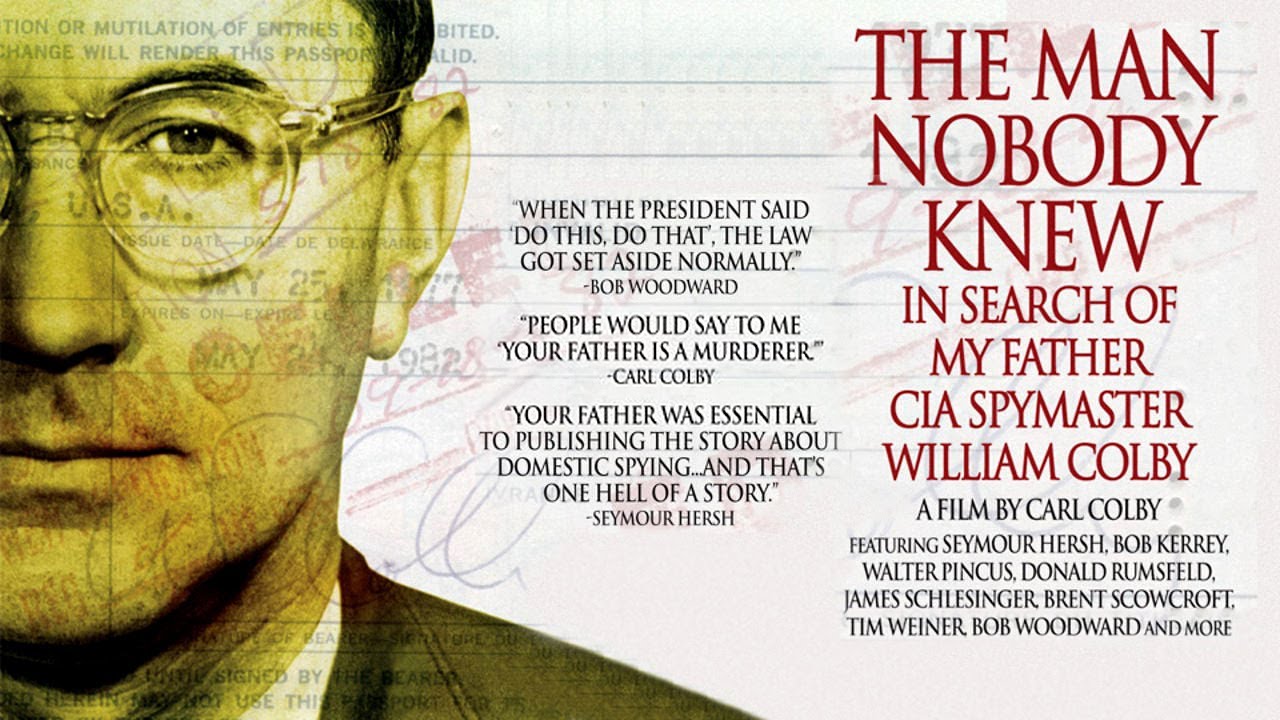
Carl Colby’s smart, fact-packed film “The Man Nobody Knew” operates on many levels, all riveting. Primarily an account of the career of his father, William Colby, director of the Central Intelligence Agency from 1973 to 1976, it traces a history ending in 1996, when his body washed ashore eight days after he embarked on a late-afternoon solo canoe outing in Maryland.
While reviewing the turbulent period spanning Vietnam and President Richard M. Nixon’s resignation, we also witness the arc of a marriage, the death of a daughter and the seeming disillusionment of a selfless, if steely-eyed and implacable, civil servant.William Colby was molded by the Office of Strategic Services in World War II, when he aided anti-Nazi insurgents in France and Norway. Working closely with the Vatican he fought the postwar Communist ascendance in Italy and helped coordinate the coup against President Ngo Dinh Diem of South Vietnam. As C.I.A. director he embraced covert activities until “the family jewels“ — memos revealing the agency’s domestic wiretapping and foreign assassination attempts, among other sordid pursuits — were leaked.
After disclosing details on such programs (several preceding his tenure) in Congressional hearings, he was replaced by George H. W. Bush.The Beltway insiders interviewed include the former national security adviser Brent Scowcroft, the journalist Seymour Hersh and, at his most smugly cynical, former Defense Secretary Donald H. Rumsfeld. Carl Colby’s mother, Barbara, meanwhile, is the embodiment of diplomatic poise and eloquence. Conspiracy theorists can have a field day with William Colby’s death, but “The Man Nobody Knew” suggests that the culprit may have been no more than a cold warrior’s crumbling facade.Directed by Carl Colby; edited by Jay Freund; music by Michael Bacon; produced by Mr. Colby, David Johnson and Grace Guggenheim; released by First Run Features. At the Lincoln Plaza, Broadway at 62nd Street. Running time: 1 hour 44 minutes. This film is not rated.
REVIEW RESOURCE: https://www.nytimes.com/2011/0....9/23/movies/man-nobo out the documentary channel: https://rumble.com/DocumentaryArchiveLet me know your thoughts in the comments.
